The Small UP District Quietly Sitting on 4,000 Years of History
What if one of the places linked to the Mahabharata was hiding in a district you’ve probably never even heard of?
That district is Baghpat, in western Uttar Pradesh.
And its story goes much further than the Mahabharata.
Baghpat's Mahabharata Connection
According to the district administration, Baghpat has long been associated with the Pandavas and was traditionally known as Vyaghraprastha.
Nearby Barnawa is traditionally identified with Varnavat, the place linked to the Lakshagriha, the house of lac from the Mahabharata where Duryodhana is said to have planned to burn the Pandavas alive.
But there is an important distinction here.
This is tradition, not proven history. No archaeological discovery has confirmed that the events of the Mahabharata happened at these exact places.
Still, these stories have been passed down for generations, and they have become part of how the region understands its own history.
But Baghpat has something else that doesn’t depend on legend.
What Baghpat Actually Has Proof Of
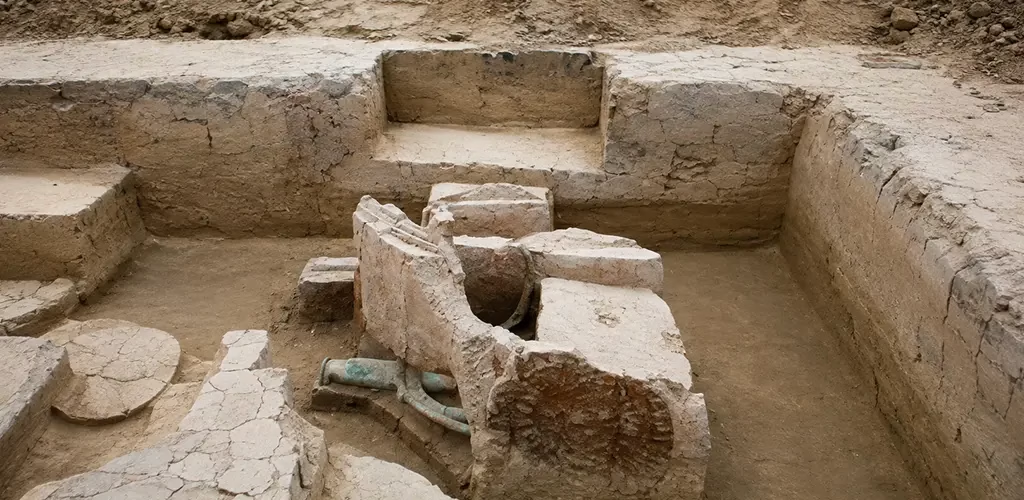
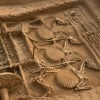
At Sinauli, the Archaeological Survey of India has uncovered something that has nothing to do with the Mahabharata tradition: an important Bronze Age burial site.
An excavation in 2004-05 uncovered 116 burial remains. When archaeologists returned in 2018, they found eight more, including three wooden coffin burials, along with copper ornaments, pottery and swords.
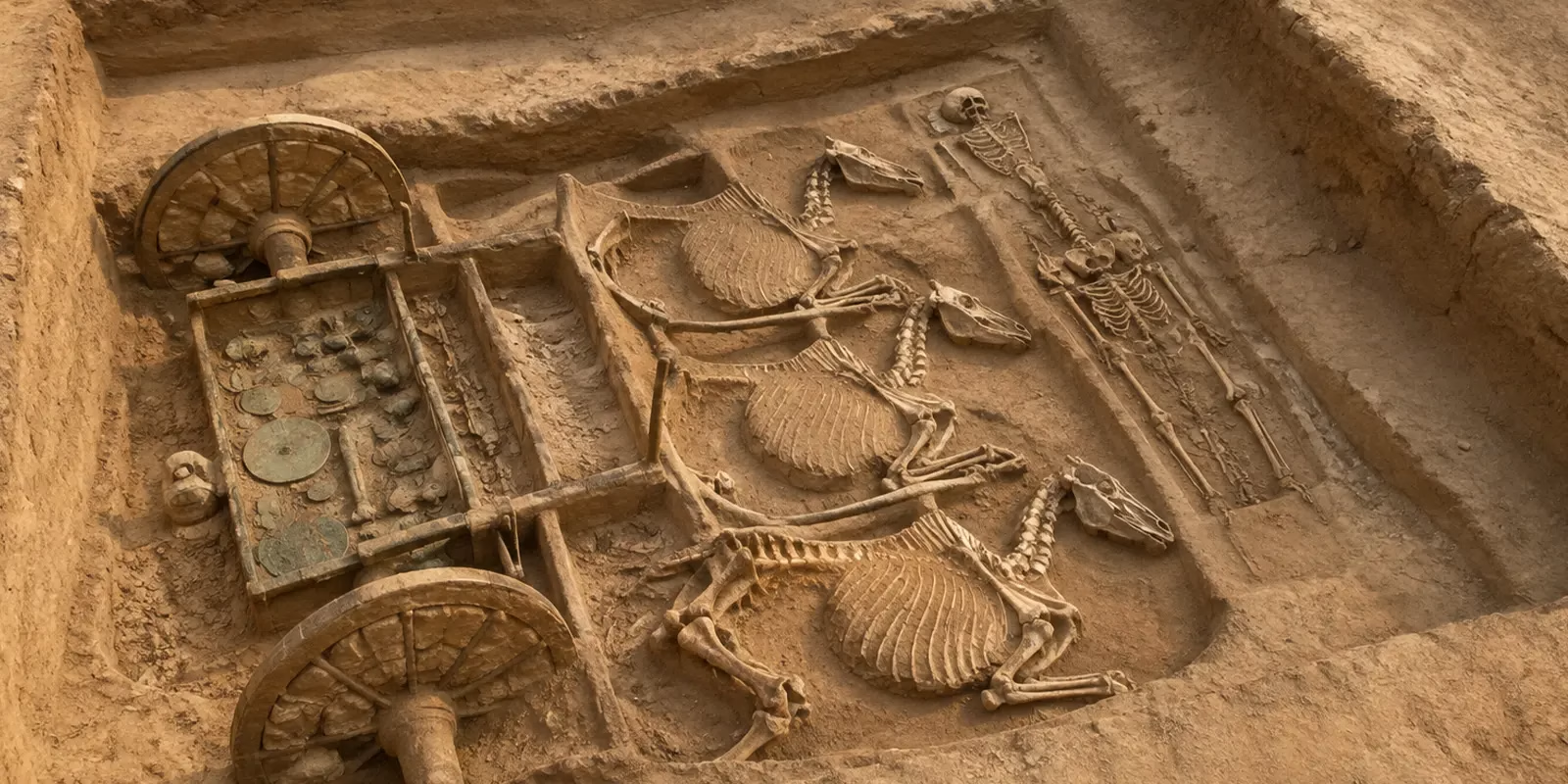
ASI’s preliminary findings dated the burial culture to around 2000 to 1800 BCE. The excavation also produced evidence suggesting the use of animal-drawn chariots.
So, thousands of years ago, people were living, dying and being buried in this part of what is now Uttar Pradesh.
And that is what makes Sinauli so interesting.
You don’t need to connect it to the Mahabharata to understand its importance. The archaeological evidence already tells us that this region had a complex society around 4,000 years ago.
But the old stories are only one part of Baghpat’s identity.
Old Temples, New Tourism Push
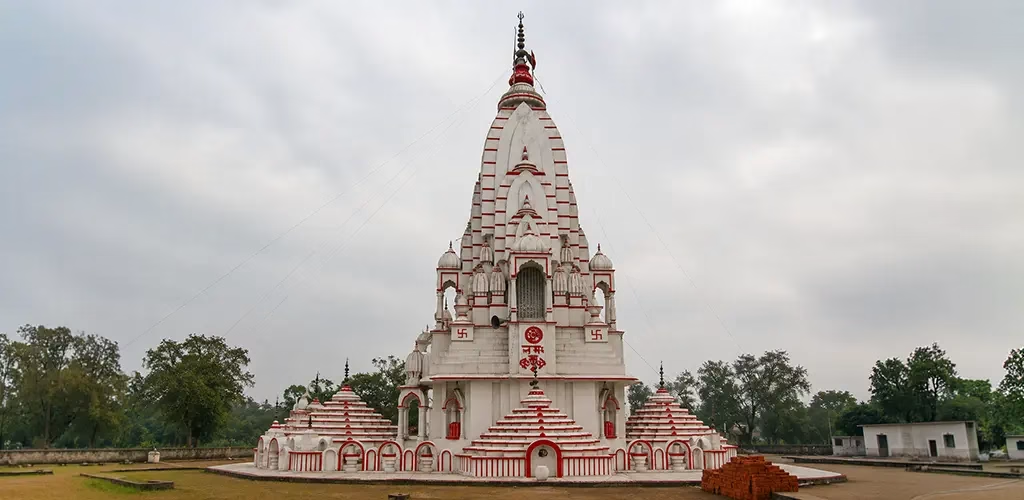
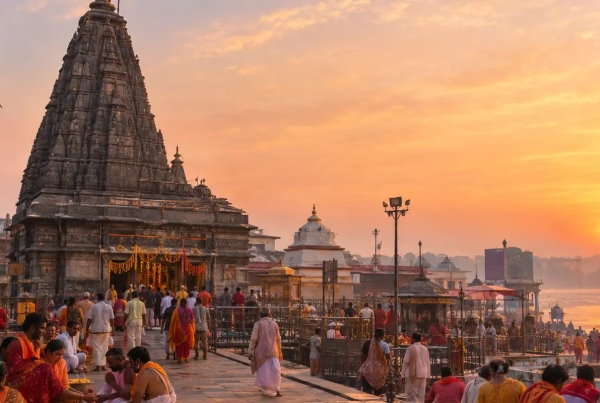
Baghpat also has a long list of religious sites.
Pura Mahadev, Trilokteerth Dham and the Jain temple at Barnawa are among the places that form part of the region’s religious heritage. Several Baghpat sites were included in tourism projects under the Government of India’s Swadesh Darshan scheme as early as 2016.
More recently, Uttar Pradesh’s tourism policy placed Barnawa on its official Mahabharata Circuit, alongside better-known places such as Hastinapur, Mathura and Kaushambi.
And then came another step.
On 18 April 2026, Baghpat launched its first Heritage Trail, with the district administration describing it as an effort to bring together heritage, tourism, employment and local culture.
Suddenly, these places were no longer just separate points on a map.
They were being brought together as one story.
So What's the Real Story Here?
Baghpat’s story isn’t just about the Mahabharata.
It is also about what archaeologists have uncovered, the temples that are still alive today, and a new effort to bring these stories together. The legends and the evidence may be different, but both have shaped the identity of this small district.
Now, its new Heritage Trail is giving people a reason to discover it.