The Boon That Made Gaya India's Holiest Ground for the Dead
Every year, millions of Indian families travel to one particular city in Bihar to perform the final rites of their ancestors.
Not to Varanasi. Not to Haridwar or Prayagraj.
They come to Gaya.
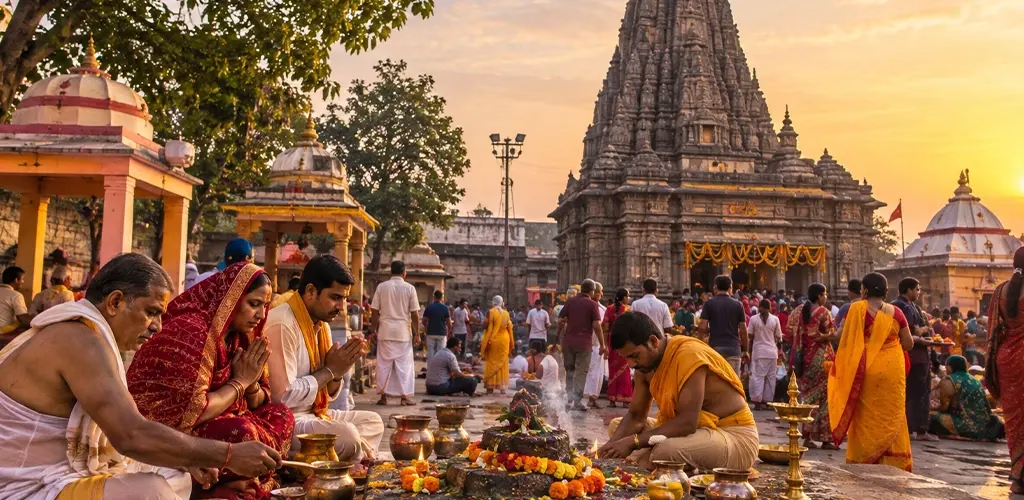
In Hindu tradition, pind daan is an offering made to ancestors, with the belief that it helps their souls find peace and move on. The ritual can be performed at several sacred places, but Gaya holds a special place in this tradition.
The reason goes back to an old story about one demon, one unusual boon and a dying wish that eventually shaped the identity of an entire city.
A Devotion That Became a Problem
According to Hindu tradition, a demon named Gayasura once performed such intense penance that Lord Brahma granted him a remarkable boon: anyone who saw or touched him would be purified of their sins.
At first, it sounds like a blessing. But it soon created a problem.
People began believing they could simply erase their sins by going to Gayasura. As more people sought him out, Yama’s realm began emptying. The usual cycle of karma, life and death was being disrupted because of the boon given to one devotee.
The gods now had to find a way to stop this without turning against Gayasura himself.
Their solution was something he never expected.
The Body That Couldn't Stay Still
The devas approached Vishnu, who suggested that they ask Gayasura for his body to be used for a sacred yagna. His body was considered pure enough to serve as the altar.
Gayasura agreed.
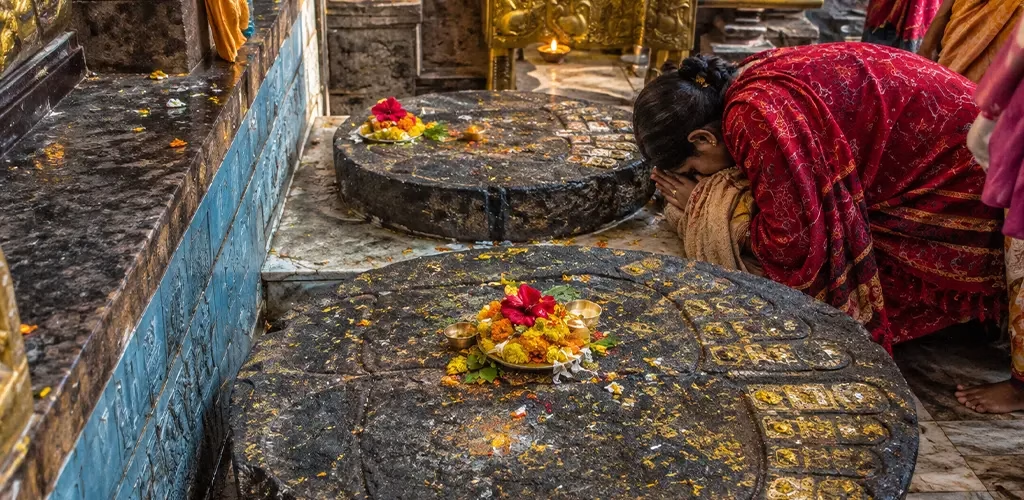
He lay down, and the gods placed a sacred stone called the Dharmashila over him to keep him still during the ritual. But even then, his body continued to move.
One by one, the gods tried to hold the stone down, but none could stop it from trembling.
Finally, when Vishnu stepped forward and placed his own foot on the stone, only then did Gayasura become still.
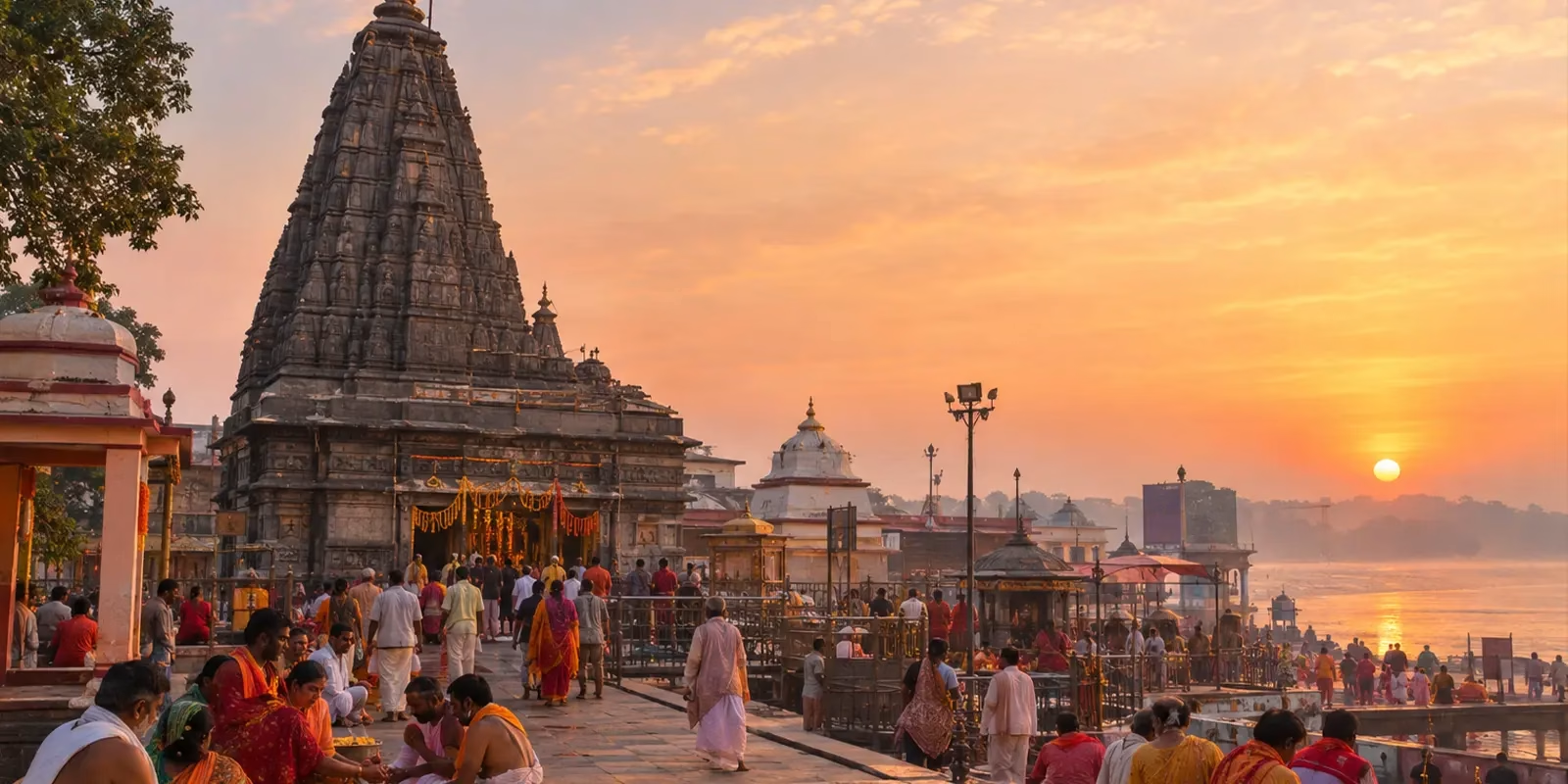
According to tradition, Vishnu’s footprint remained pressed into the stone, and pilgrims still come to see it today at the Vishnupad Temple in Gaya.
But Gayasura had one final request.
A Dying Wish That Outlived Him
As Gayasura’s life was coming to an end, he asked Vishnu for something that would outlive him.
He wanted his body to remain sacred ground forever. More importantly, he asked that offerings made to ancestors at this place would help them attain liberation.
Vishnu granted his wish.
The place became known as Vishnupad, meaning “the foot of Vishnu”. According to the legend, the land of Gaya itself is connected with Gayasura’s body, which is believed to stretch beneath the city.
His story also lives on in the Gaya Mahatmya, which describes pind daan performed here as having the power to liberate ancestors across fourteen generations of a family.
So Gaya was not simply another place where people could perform pind daan.
According to the tradition, the ground itself had become sacred because of Gayasura’s final wish.
And there is another story that connects this place to an even older river and a very unusual curse.
The River That Still Remembers
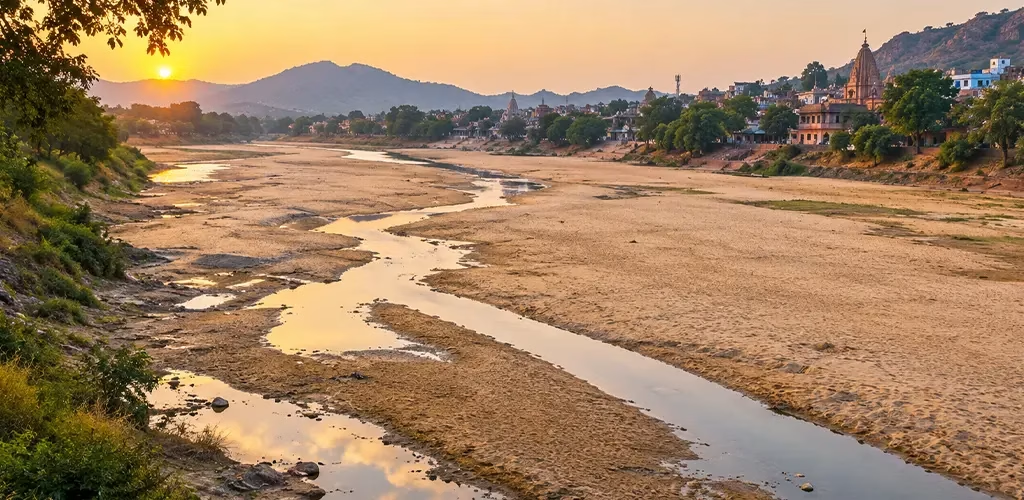
Gaya’s story does not end with Gayasura.
According to the Ramayana, Lord Rama and Sita once came here to perform pind daan for King Dasharatha.
When witnesses later denied seeing Sita perform the ritual, almost everyone refused to support her account. The one exception was the Akshayavat, an ancient banyan tree, which told the truth.
Sita is said to have blessed the tree with immortality, declaring that offerings made beneath it would carry great merit.
The Falgu River, however, remained silent.
According to the story, Sita cursed the river for not speaking the truth and said it would flow underground.
Even today, much of the Falgu flows beneath its wide, sandy bed. Pilgrims often dig into the sand to reach the water they need for their rituals.
A river that, according to tradition, still carries the memory of one very old lie.
Why the City Still Fills Every Year
The stories of Gaya did not remain inside old scriptures.
Every year, families from across India still travel here with the names of parents, grandparents and ancestors they may never have met. They come to perform pind daan at the place where Gayasura’s final wish is believed to have turned the land itself into sacred ground.
And perhaps that is what makes Gaya’s story so unusual.
The spiritual identity of an entire city is connected to the final request of a being who began the story as a demon.
Gayasura was not remembered simply for the boon that caused trouble.
He was remembered for what he asked for at the end: that his body could remain a place where generations of families could come to honour their dead.
And thousands of years later, people are still making that journey.