The Vikramaditya Vedic Clock: Where Time Follows the Cosmos
What can trace the cosmos?
This wasn’t even a point of curiosity in ancient India. It was the clocks that were set back, not by hours, minutes, and seconds, but rather by the position of the moon, the planets, and when the universe shall align to produce the best outcome. These clocks never reset at midnight at 12 AM like the clocks do today. They were rather about sunrise.
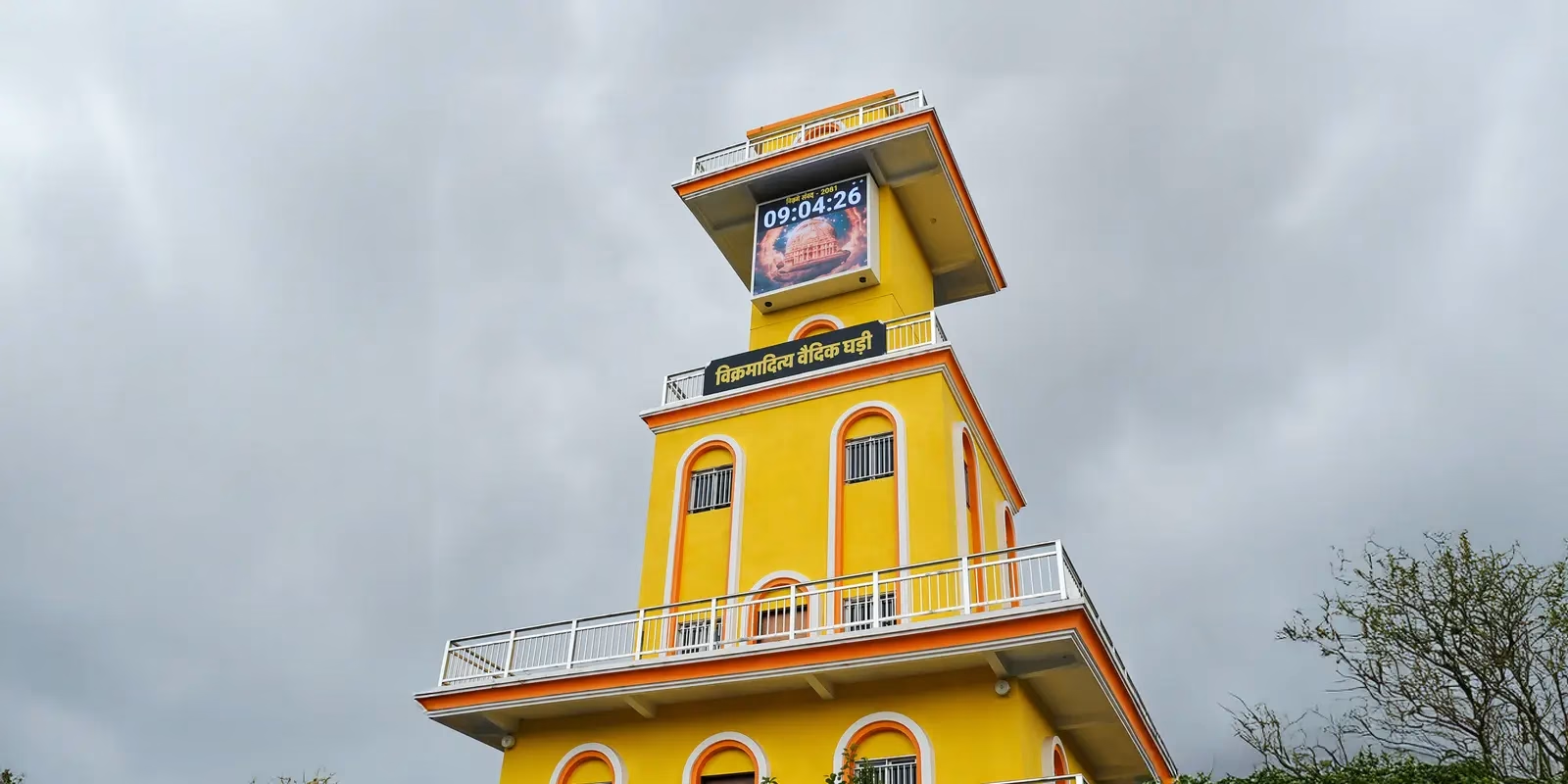
In Ujjain, ancient India lives even today, as a modern structure. This is the Vikramaditya Vedic Clock, a clock deeply rooted in ancient Indian knowledge. Installed near the historic observatory, this clock redefines how time is understood today, comparing it to a picture of how it worked ages ago.
But how does this clock operate?
A Modern Clock Inspired by Ancient Wisdom
The Vikramaditya Vedic Clock is known to be the world’s first clock based entirely on the Hindu Panchang calendar. This clock was developed by the Maharaja Vikramaditya Research Institute in collaboration with the Ujjain Municipal Corporation. And, it stands today as a rare intersection of tradition and technology. The clock was inaugurated in 2024, and it is situated near Jantar Mantar.
This is not simply a clock for India – it is akin to Indian heritage, continuing a legacy of astronomical observation that dates back centuries. The conventional clocks today hardly capture the astronomical essence of the universe, and unlike them, it does not rely on the standard 24-hour system. Instead, it follows a cadence that is defined by celestial movement. To add to its modern existence is an integrated mobile application that extends its functionality beyond physical presence on the map. This app offers Panchang data, muhurta alerts, and historical time records spanning thousands of years to anyone who has downloaded it, expanding the reach of the astronomical clock that follows the ancient Indian legacy into lives today.
Time That Begins With the Sun
At the core of the Vedic clock is a simple yet profound idea – a day does not begin at midnight.
For Indians, and especially the ones who follow the Hindu Panchang, it begins at sunrise. This system, strictly following the ancient Indian texts, divides the day into 30 muhurtas, each lasting approximately 48 minutes. Further, it breaks time into smaller units like ghati and kala. The clock continuously adjusts to location-specific solar times and also displays modern references like IST and GMT, allowing users to bridge ancient and contemporary systems.
Why Ujjain Has Always Been the Centre of Time
Historically known as Ujjayini, the city of Ujjain has been a centre for astronomy and mathematical calculations in India. Ancient scholars like Aryabhata and Varahamihira used Ujjain as a reference point for tracking planetary motion and eclipses. Texts such as the Surya Siddhanta describe that in ancient India, the prime meridian passed through this region, and thus, this is the perfect location to buttress the time calculations.
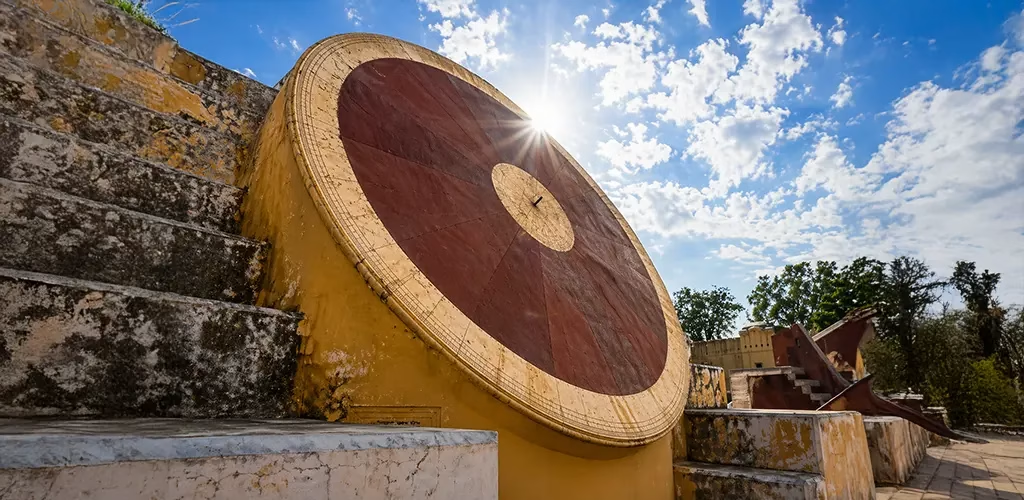
The presence of Jantar Mantar, built by Maharaja Jai Singh II, further strengthens its legacy. Even today, many traditional calendars are aligned with Ujjain’s time, aligning themselves with their identity as India’s historical centre of timekeeping.
More Than a Clock: A Living Panchang
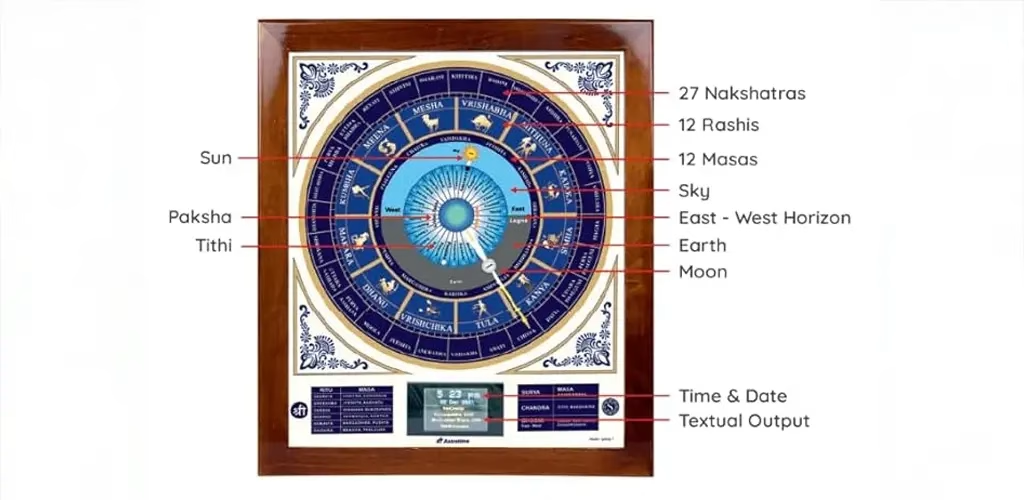
What sets the Vikramaditya Vedic Clock apart from the clocks we use today is its ability to display multiple dimensions of time simultaneously. It shows tithi, the lunar day that governs rituals and festivals. It tracks nakshatra, the constellations through which the Moon travels. It highlights muhurta, guiding auspicious timings for important decisions. It also reflects planetary positions, yoga, karana, and other elements from the Hindu Panchang.
In simple words, it transforms linear measurement into a cyclical, interconnected system.
Where Science Meets Spirituality
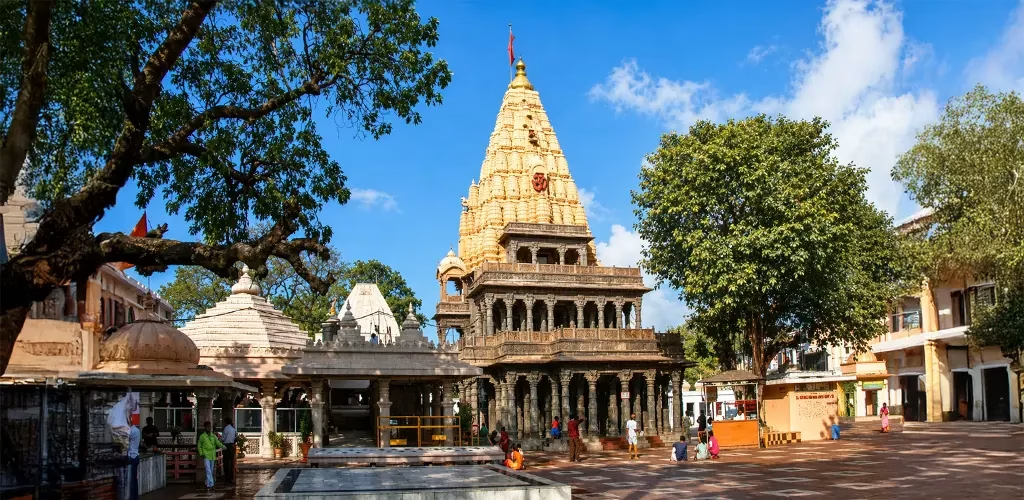
Ujjain is not just a centre of astronomy in India. It is also home to the Mahakaleshwar Temple, where Lord Shiva is worshipped as Mahakal – the lord of the time. This connection between cosmic calculation and spiritual belief gives the clock a deeper meaning – about understanding time as a force that shapes existence.
A Step Towards Reviving Ancient Knowledge
The Vikramaditya Vedic Clock is more than just a device that measures the time. It is an attempt to bring ancient Indian time tracking back into public consciousness. While the world is driven by seconds and schedules, this clock constantly reminds us that time was once perceived much differently. It flowed with the sun, the moon, and the stars. It guided rituals, agriculture, and daily life.
By combining digital technology with Vedic principles, the Vikramaditya Vedic Clock does not replace modern systems. It complements them in a way true to the educational heritage of India.