Ramman Festival: Uttarakhand celebrates Gods, Memory, and Movement
A village in the Himalayas performs, but the theatre there has no script, gods have no fixed form, and memory is the only archive.
In Saloor-Dungra, a small Garhwali village in Chamoli, the Ramman Festival begins not as a performance but as a reality. For 10 to 13 days every year, sometime after Baisakhi, the village transforms into a sacred stage where mythology, history, and everyday life merge seamlessly. There are no written dialogues, no rehearsed scripts, and no modern staging. Everything you see has been carried forward through generations, not through history written on paper, but in performances, faith, and memories of the people.
Recognised by UNESCO as Intangible Cultural Heritage in 2009, Ramman is not just a festival. It is a rare form of ritual theatre that exists nowhere else in this exact form.
The Faith In Bhumiyal Devta
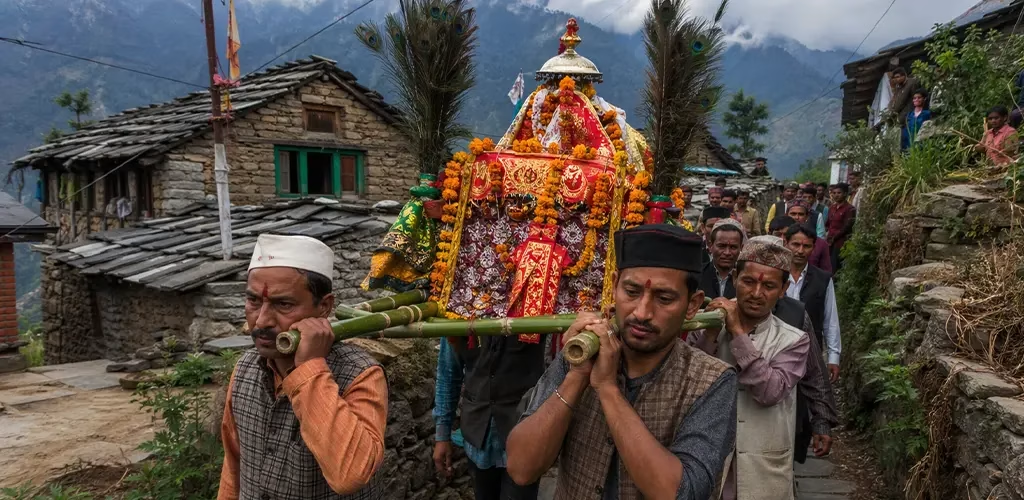
At the heart of Ramman lies faith.
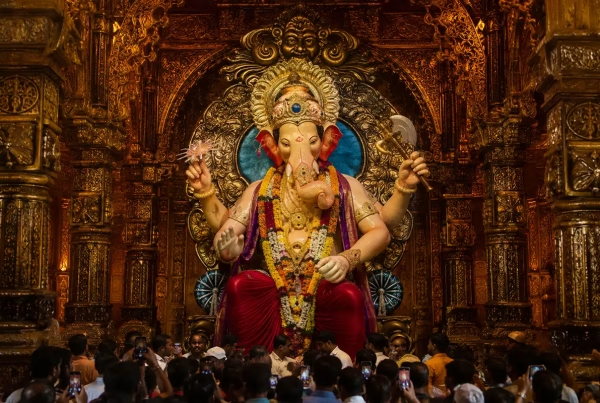
The festival is dedicated to Bhumiyal Devta, the guardian deity of the village, who is believed to protect land, crops, and people. Unlike conventional idols, Bhumiyal Devta is represented through a decorated bamboo staff adorned with cloth and sacred elements. Every year, the deity resides in a different household, chosen by the village council, turning everyday homes into sacred spaces.
Before the festival begins, a ceremonial procession carries the deity back to the temple courtyard. From that moment, the village shifts into a different rhythm. Rituals begin, preparations intensify, and slowly, the spirit of the Ramman festival takes over the entire village.
Ramman Festival Dance, Performance, or Prayer?
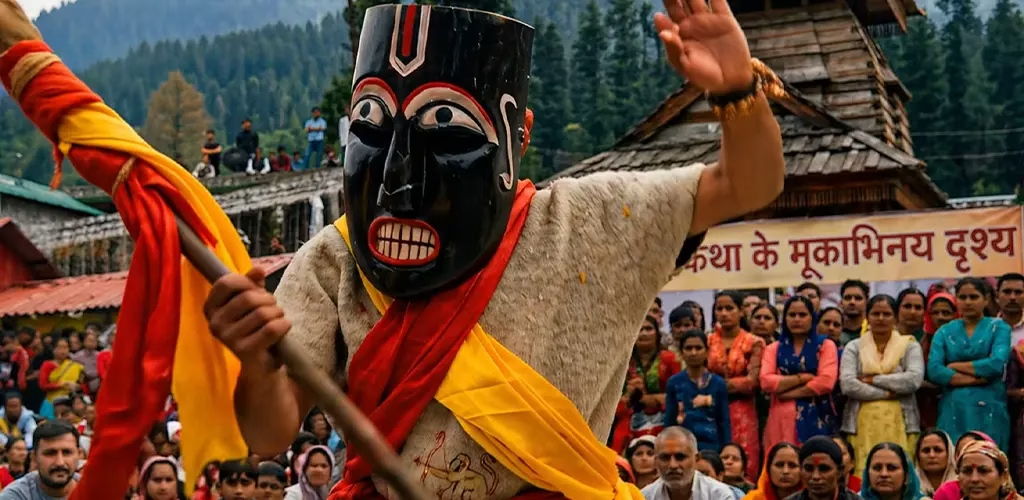
What makes Ramman extraordinary is how it tells stories without words.
The central performance is a local version of the Ramayana, expressed entirely through movement, rhythm, and masked dance. Eighteen performers, wearing eighteen sacred masks, execute 324 intricate steps to narrate the journey of Rama, from his travels to Janakpur to the final victory over Ravana.
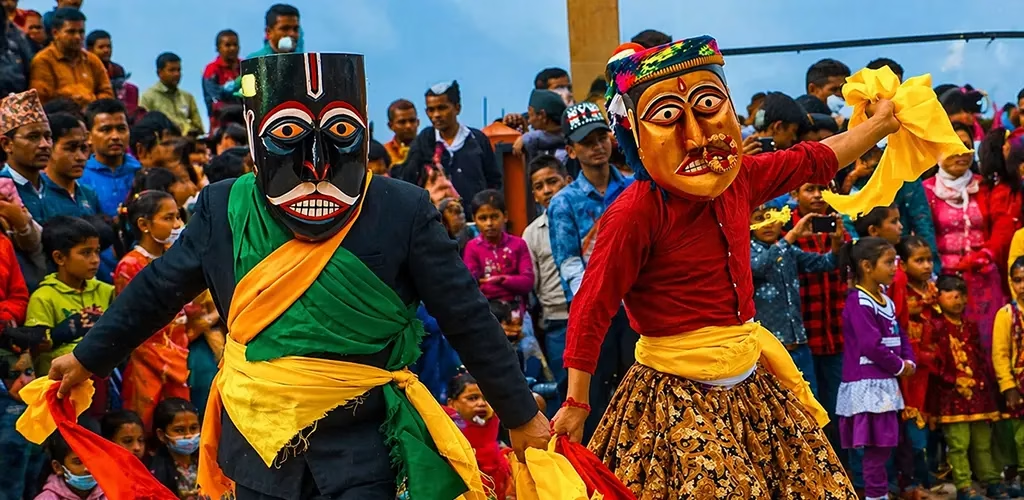
But Ramman is not limited to mythology. It also reflects the lived experiences of the village. In one performance, a buffalo herder is attacked by a tiger, capturing the dangers of forest life. In another, a trader couple is robbed, reflecting everyday struggles. A historical sequence retells Garhwali battles with Gorkhas, blending pride with humour. These performances are not separate acts but fragments of a shared cultural memory, stitched together through rhythm and belief.
Unique Ramman Masks - A Himalayan Identity
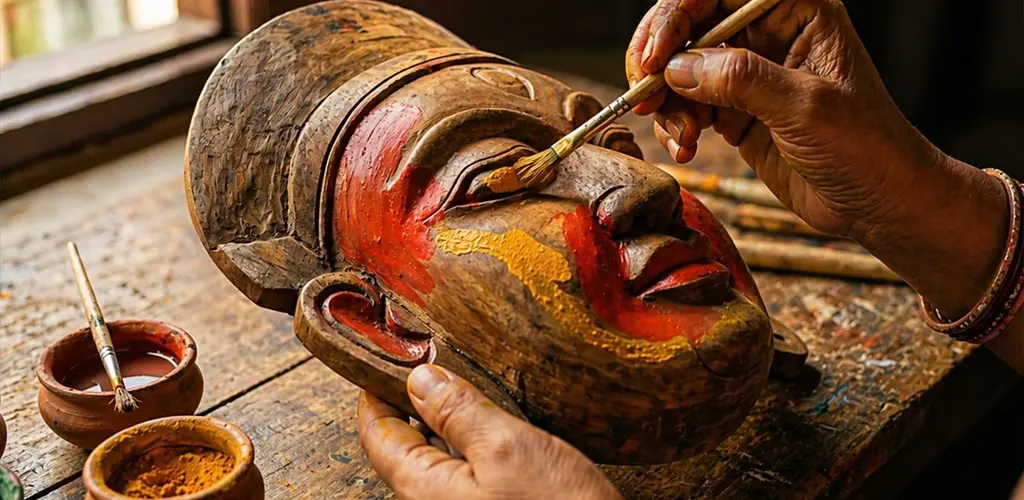
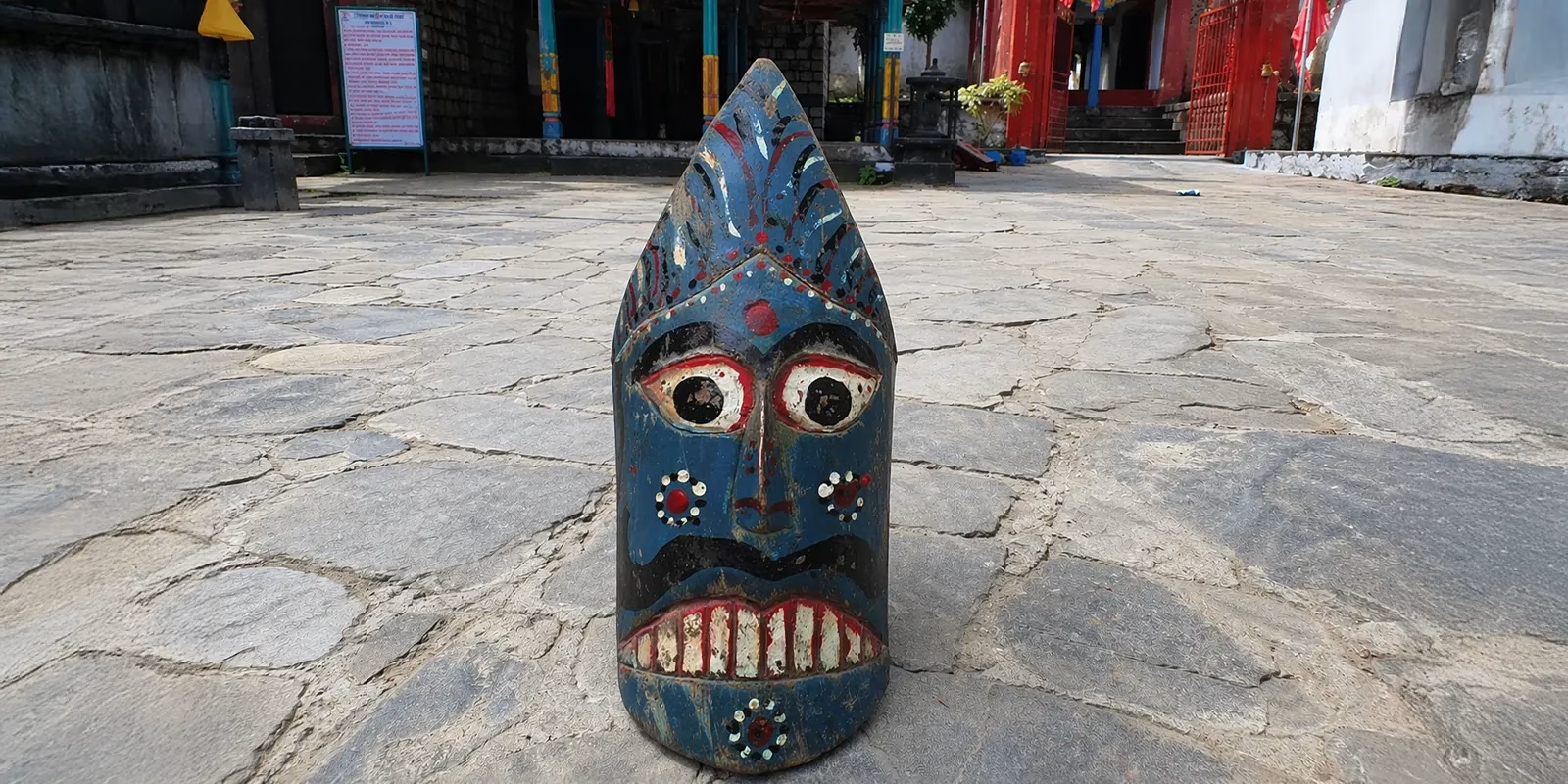
The masks are central to the transformation in the Ramman festival. Made from local wood such as Himalayan birch and painted using natural colours, they are treated as sacred objects, not props. Each mask represents a character, a force, or a deity.
The most powerful among them is the Narasimha mask. Weighing nearly 25 kilograms, it is worn only by members of the Bhandari community. The performer balances it on his head, facing upward, and dances for hours to the rhythm of drums. It is physically demanding, even dangerous, yet it is performed with unwavering devotion.
Jagar Ritual That Lights Up The Night
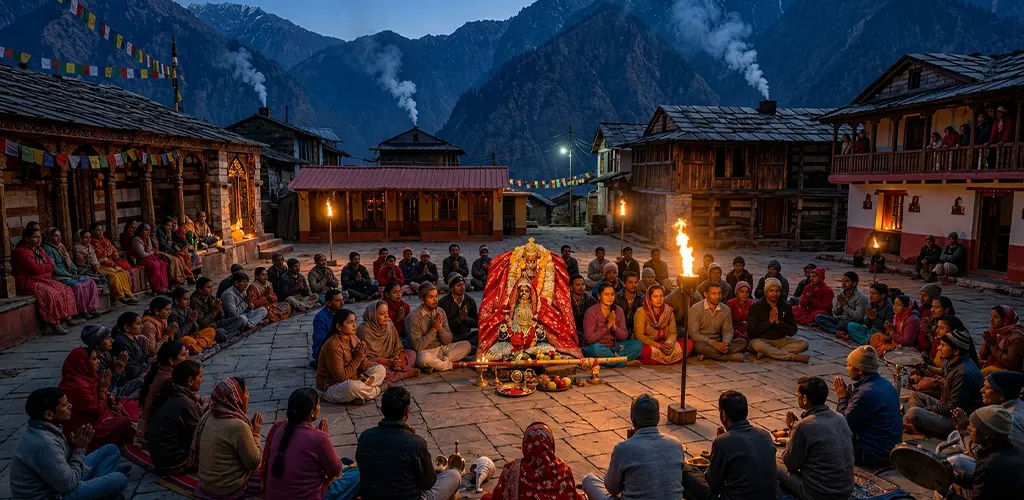
As the festival approaches its final night, the Jagar ritual begins.
Unlike the earlier performances, this is where sound takes over – drums grow louder, rhythms intensify, and chants call upon the deities. It is believed that at the peak of this ritual, a deity enters a participant’s body. The person begins to tremble, speak differently, and sometimes even answer questions or offer guidance.
For the villagers, this is a divine presence. A moment where the boundary between human and god dissolves. Science may interpret it as a trance state triggered by rhythm and repetition.
But in Saloor-Dungra, the explanation is simpler. The gods have arrived.
A Tradition That Lives Through People, Not Paper
Despite its recognition and cultural importance, Ramman stands at a fragile crossroads. The festival has survived for centuries without documentation, passed down purely through observation and participation. But today, migration, changing lifestyles, and the loss of traditional artisans threaten its continuity.
The masks are becoming harder to make, the singers of Jagar are fewer, and the younger generation is moving away.
And with them, this living tradition is at the risk of fading.