
The Sumitra Case: When A Woman Died And Came Back As Someone Else
What happens after death?
Is it an end, a transition, or something we simply do not understand yet?
In 1985, in a small village in Uttar Pradesh, a case emerged that continues to disturb, intrigue, and divide opinions even today. It was not just about death. It was about what seemed to come after it. A young woman died. And, when she returned, she insisted she was someone else.
But is this a case of horror, a simple delusion, or anything else?
The Day Sumitra “Died”
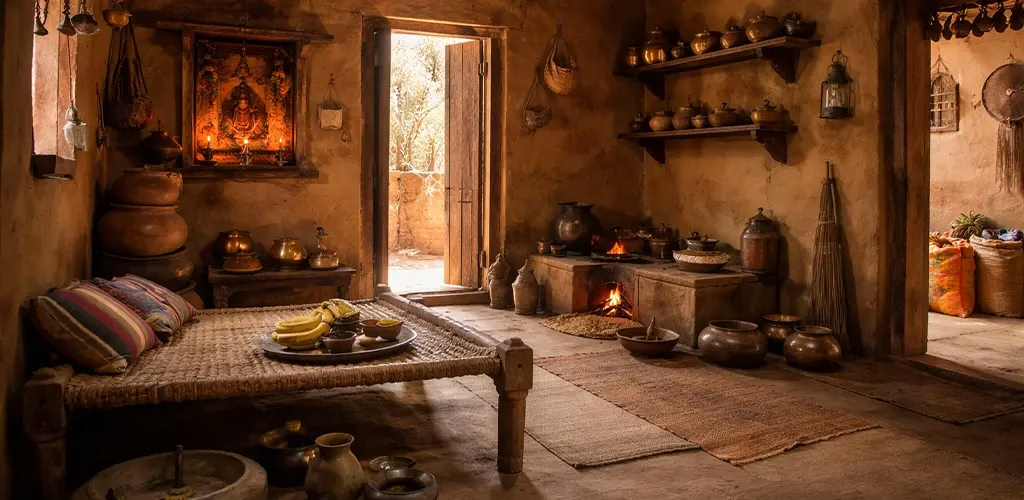
Sumitra Singh was around seventeen years old and a young mother, living in a joint family in rural Uttar Pradesh. Her life was simple, predictable, and deeply rooted in tradition. But in July 1985, something happened that changed her life completely.
For months, she had been experiencing strange episodes, trances, loss of consciousness, and moments where she spoke as if someone else was speaking through her. Her family sought help from local healers, attributing it to possession or divine influence.
Then came July 19, when she collapsed. Her breathing stopped, and her pulse could not be felt. For several minutes, she was still, lifeless, and her family started preparing for her funeral. But then, she woke up, just to shock everyone.
“I Am Not Sumitra”
When Sumitra regained her consciousness, everyone had questions – how did she wake up, was she dead for a while and if she was not, why was she not breathing? Too many questions, and just one shocking response – “I Am Not Sumitra”.
She said her name was Shiva.
Sumitra spoke of another life, another home, another family. She claimed she had been murdered by her in-laws in a town called Dibiyapur, over sixty kilometres away. She demanded to be taken back to her children. She failed to recognise her husband and referred to him with distance, almost as a stranger. She did not even recognise her own child. Instead, she cried for children who did not belong to Sumitra at all but to some other woman named “Shiva” whom she claimed to be.
A Life That Matched Someone Else’s Death

What made the case unsettling was not just the claim. It was the verification.
A woman named Shiva Tripathi had died just two months earlier. Her body was found on railway tracks under suspicious circumstances. Her parents alleged murder, while her in-laws claimed suicide. When contacted, Shiva’s parents visited Sumitra.
While Sumitra failed to recognise her own husband and children, she recognised Shiva’s parents instantly. She called her father “Papa” and used private nicknames to address the relatives that no outsider could have known. She identified relatives, family friends, and even details from old photographs with startling accuracy. She spoke of her marriage, her children, her college, and even specific objects kept in her home. Details that Sumitra, a minimally educated village woman from a different caste and location, had no way of accessing.
A Personality Replaced
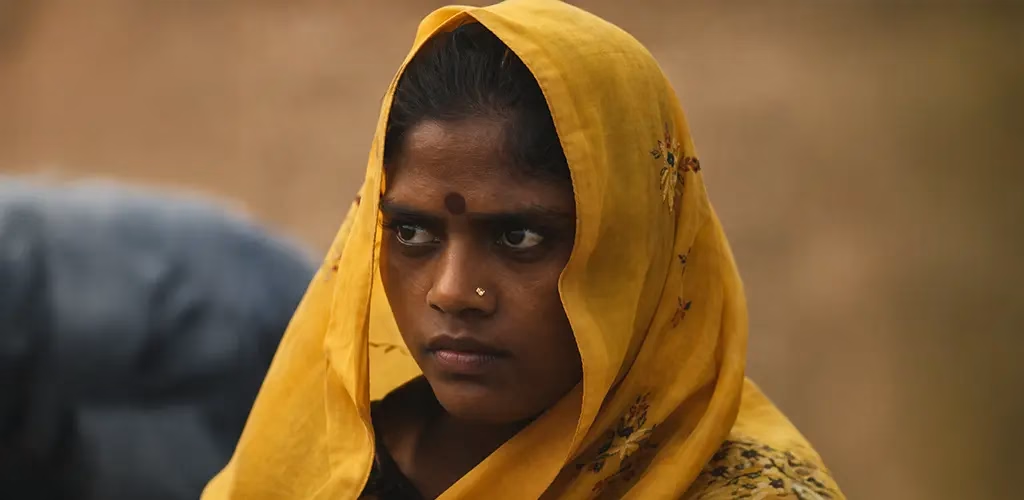
With time, Sumitra’s behaviour changed completely. She adopted habits that aligned with Shiva’s life. She woke earlier, spoke differently, and carried herself with a confidence she never had before. Her literacy improved, and she began writing letters, something she could barely do earlier. Her preferences shifted, which was a very unexpected thing considering the life Sumitra had. From food to clothing to social behaviour, everything reflected a different upbringing. She even displayed caste consciousness aligned with Shiva’s Brahmin background, distancing herself from her own Thakur identity. She was no longer pretending to be Shiva, but she was rather herself.
The Psychological Question
One that was bound to happen with this case was scrutiny.
Researchers Ian Stevenson and Satwant Pasricha investigated the incident extensively. Through interviews, cross-verification, and repeated field visits, they documented over fifty witnesses and numerous details that aligned with Shiva’s life. Their conclusion was that this case could not be easily explained through normal means.
From a psychological perspective, such incidents are often classified under dissociative disorders, where identity, memory, and behaviour fragment under stress. Some experts compare it to Dissociative Identity Disorder, where alternate personalities emerge. But this case challenges that framework.
Possession Or Something Else?
In cultural contexts like rural India, the explanation is different: possession.
The idea that a spirit can enter a body, especially one that has temporarily “died”, is deeply rooted in belief systems. Many viewed Sumitra’s case as Shiva’s soul finding a new vessel. Researchers themselves referred to it as a “possession-type case”, rather than a typical reincarnation. Unlike common reincarnation claims, which involve children recalling past lives, this was a sudden replacement in adulthood.
Sceptics argue alternative explanations. Hidden information transfer, coincidence, or exaggerated accounts. They point out the lack of medical confirmation of death and the influence of cultural belief systems. But even within scepticism, one question lingers: How did she know what she knew?
Between Science And Belief
The Sumitra case sits uncomfortably between two worlds: Science demands evidence, structure, and repeatability. Belief allows for experiences that do not fit within those boundaries.
This case offers both.
Over time, Sumitra reportedly began to accept parts of her former life. She acknowledged her husband and child, balancing two identities within one existence. But the core of the case never faded. It remains one of the most discussed examples in parapsychology, often cited in studies exploring consciousness beyond death.
Because at its heart is a question: can identity survive death?