Dhop Khel: The Forgotten Game That Defines Assam’s Spring
In Assam, spring does not arrive with just the blooming flowers. It bursts into life with drums, dance, colour, and movement. And somewhere in the midst of this celebration, a game begins. From sports like players sprint, leap, dodge, and throw, the celebrations bring out a healthy competitive spirit with precision that outshines.
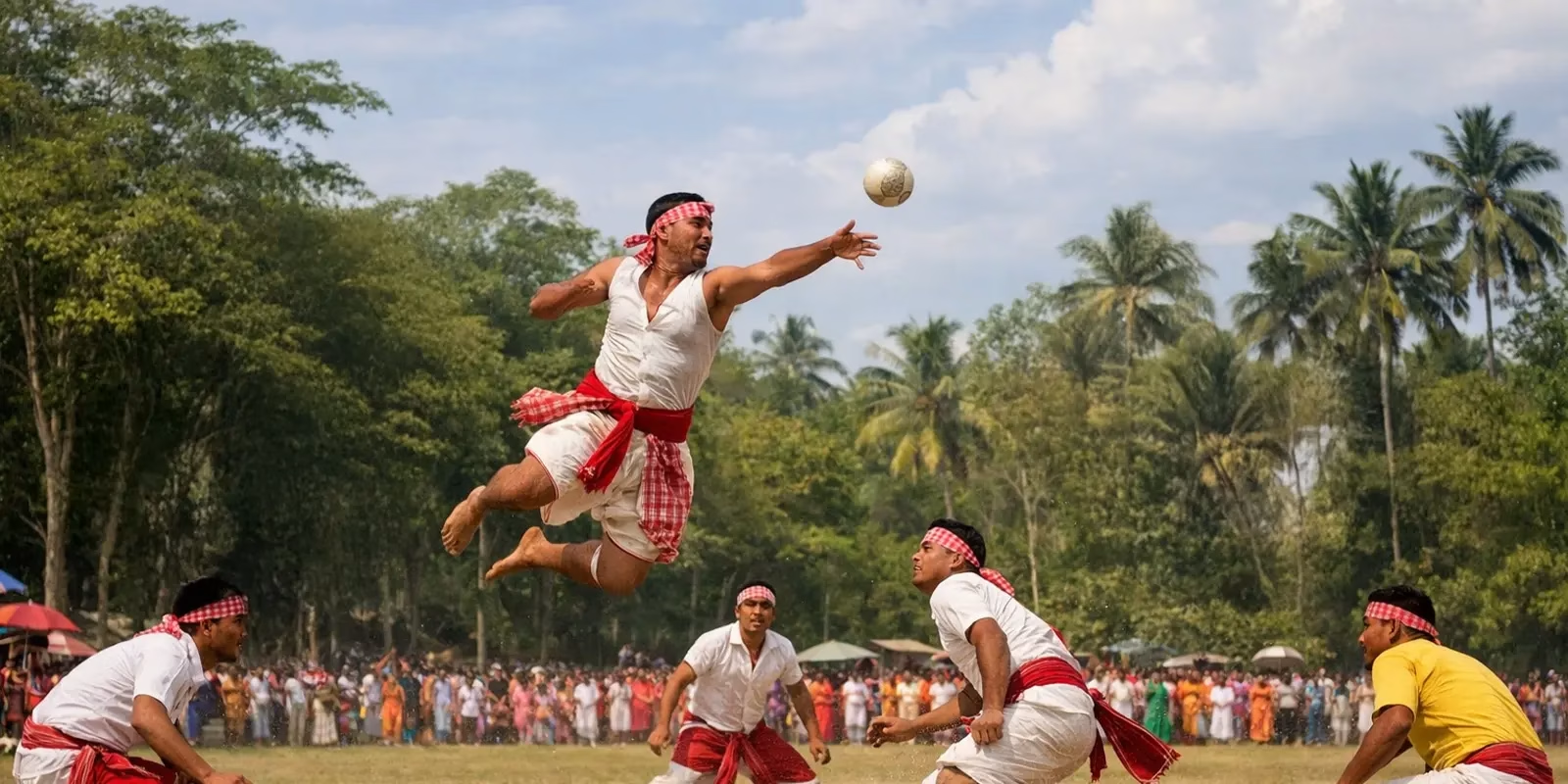
These are the unique festivities of Dhop Khel, a sport that is not just played, but performed. While to an outsider it may look like a mix of dodgeball and kabaddi, to Assam it is a symbol of youth, rhythm, and community energy accompanied by the unending spirit of spring.
The Legend of Dhop Khel
Long before modern sports entered the region, Dhop Khel thrived under the patronage of the Ahom Kingdom. Kings and nobles watched it as a spectacle, while villages embraced it as a celebration of strength and coordination. But the true reason for these games has always been the festival of Rongali Bihu. This is Assam’s New Year, and the festivities of Dhop Khel offer a grand welcome to spring.
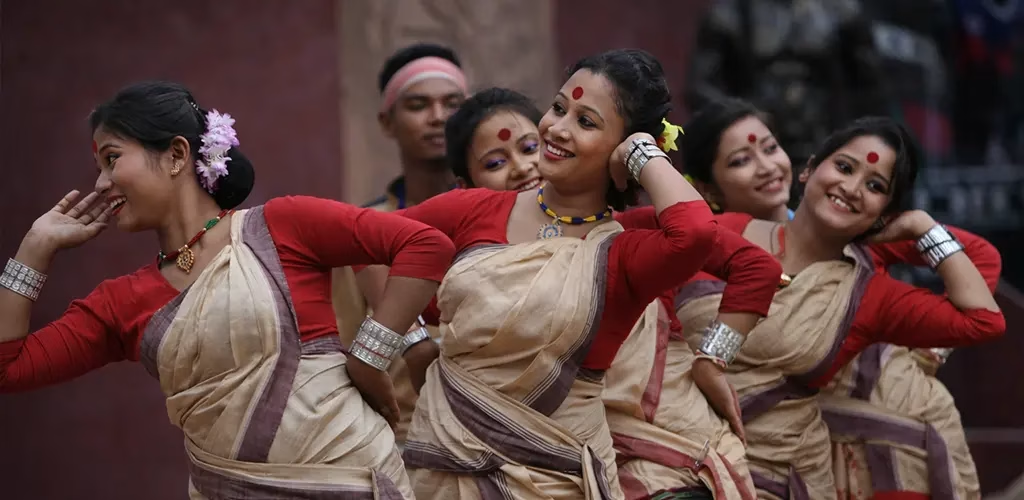
During Bihu, everything in Assam comes alive. The music fills the air, traditional attire shines in colour, and open fields transform into arenas of joy. Thus, Dhop Khel becomes the heartbeat of this celebration, where competition coincides with festivity.
The Field Where Energy Meets Strategy
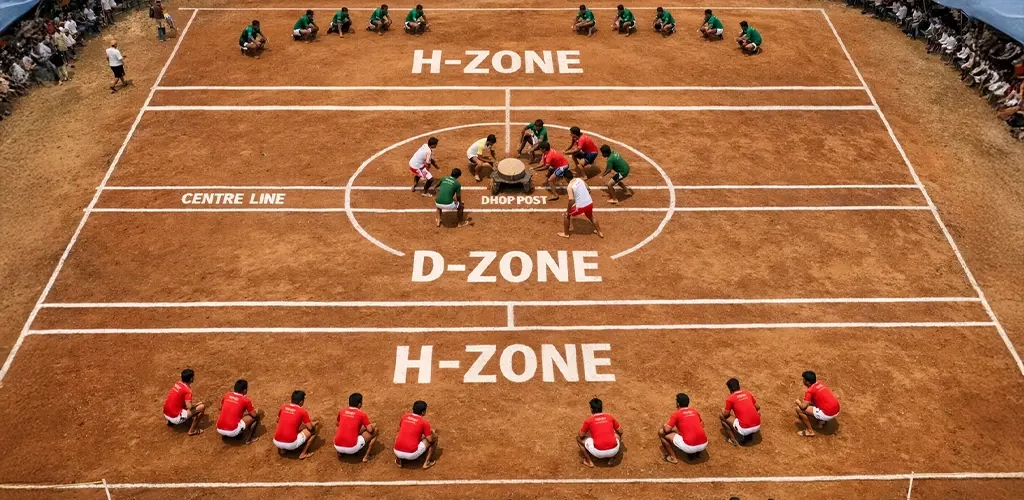
At first glance, the game looks simple: two teams, a ball, and an open field. But step closer, and you’ll see the precision behind it. The field is carefully marked, divided into zones, with circles called gher and boundary indicators guiding movement. Each team has 11 players, and every position carries a purpose, especially the katoni, who stands deep in the opponent’s territory, constantly under threat. The ball is called the dhop. It is small, but it controls the entire game.
How the Game Unfolds
The match begins with a throw: a high arc into the opponent’s side. What follows is a blur of motion. A catch can shift momentum instantly, and a simple miss can cost the game. Players aim carefully, targeting below the waist to eliminate opponents. One precise hit, and a player’s role changes – they become bondha, crossing into enemy territory, disrupting rhythm, creating chaos.
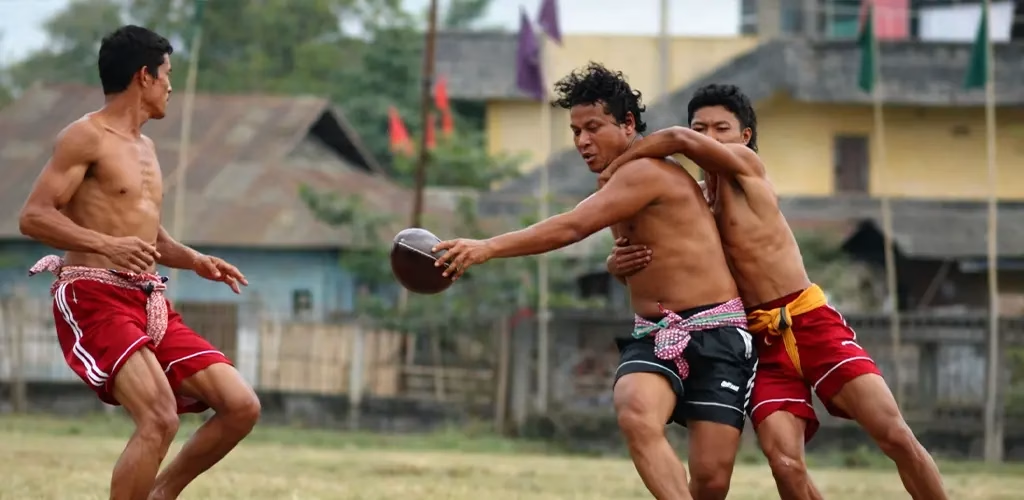
But this is where it becomes thrilling: a bondha is not out of the game. If they manage to catch the ball and return safely, they are reborn into play. Dhop Khel is not just about strength. It is about timing, awareness, and survival within movement.
More Than a Game: A Cultural Expression
Dhop Khel cannot be separated from the rhythm of Bihu. Around the field, you’ll hear the beat of the dhol, the sharp call of the pepa, and the laughter of spectators.
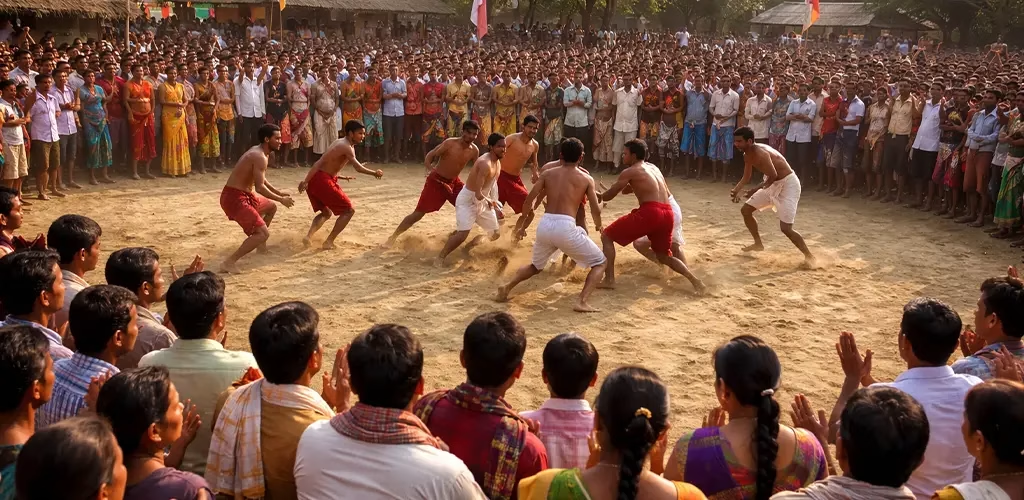
It exists alongside traditions:
- Husori performances move from home to home.
- Plates filled with pitha and laru.
- New clothes mark new beginnings.
The game reflects everything Bihu stands for: renewal, strength, and togetherness. It is not just about winning. It is about participating in a shared cultural moment.
The Slow Fading and Revival
Like many traditional games, Dhop Khel began fading as modern sports took over fields and attention. But it has not disappeared. Across Assam, cultural groups, schools, and local festivals are bringing it back, organising matches during Bihu melas, teaching younger generations, and reclaiming it as a symbol of identity. Because some traditions return through movement.