Majuli Island: A Place That Refuses To Stay Still And A Culture That Refuses To Move
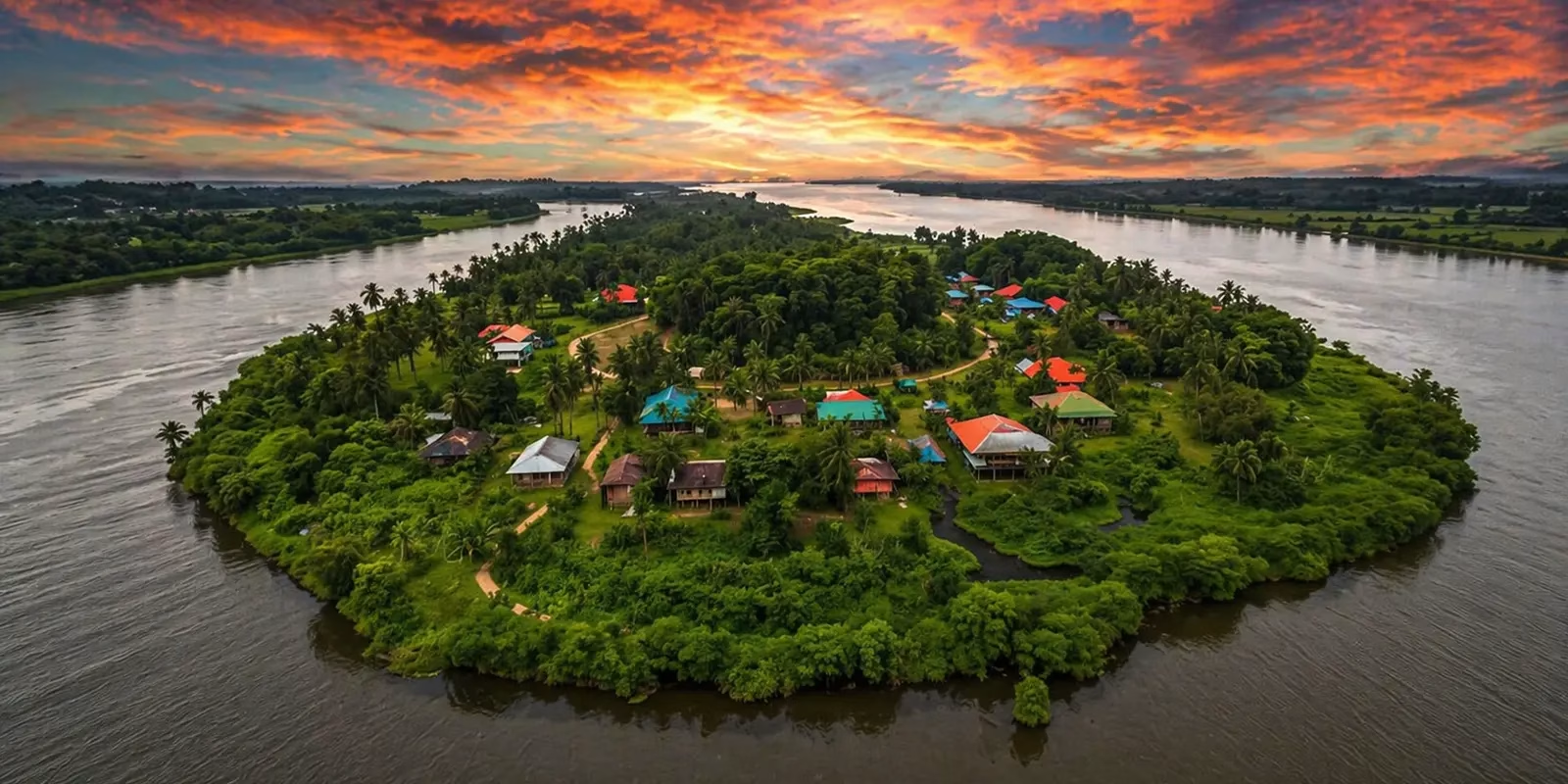
There is a quiet island on the river banks of the Brahmaputra that changes its course every single day. Known as the world‘s largest river Island, Majuli is far more than just a geographical wonder. It is a cultural location where spirituality, art, and everyday life coexist. But there is something interesting about this coexistence.
At the Majuli Island, religion is not bound by the tram lines of temples, art is not limited by galleries, and performance does not seek its reliance on applause and appreciation. Everything that happens at Majuli Island is indeed a continuous cycle of devotion, and this is exactly what makes it different.
Majili is not a place you must visit. But it is a place that you need to experience once in your lifetime.
The Satras Where Faith Becomes A Way Of Life
At the heart of the Majuli Island is the Satras. These are basically monastic institutions, which were established in the 15th and 16th centuries by the saint reformer, Srimanta Sankardev. Back in time, these Satras started as centres of Neo-Vaishnavite worship. But with time and passing generations, these centres evolved into a more expensive experience where philosophy, discipline, and artistic expression merged into one single ecosystem of living.
Every Satra functions at the Majuli Island as a cultural university. They have young monks who are often known as bhakats. These bhakats are not only trained in scriptures, but also in dance, music, and theatre. The classical dance form that is performed on Majuli Island is Sattriya. While it is now recognised across India, its origin can actually be traced to these centres. Borgeet is a very unique form of devotional music, which is also prominently practised here with reverence. And lastly, the theatrical tradition of Ankiya Naat is also performed here with precision.
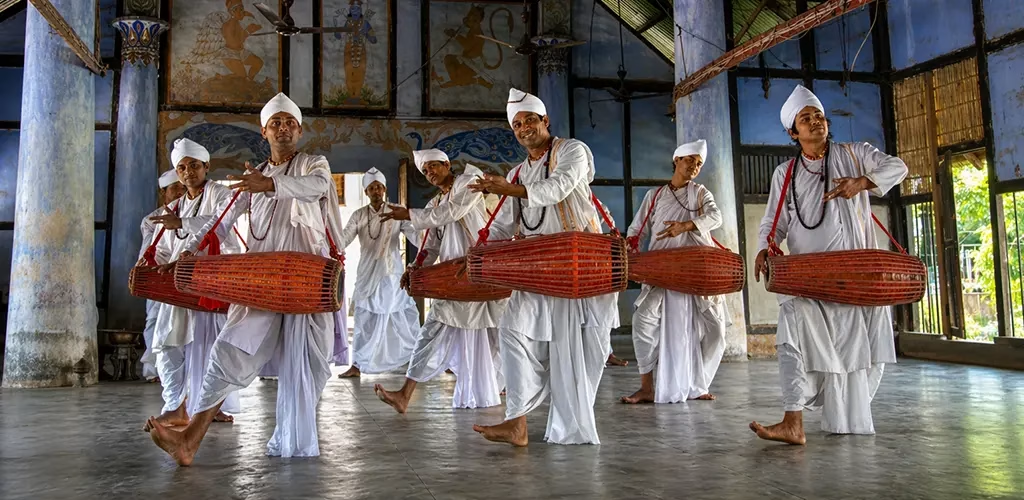
One thing that is remarkable about these Satras is their adaptation to both society and nature. The society is led into the centres with alternative restrictions. There are some centres which strictly allowed couples to experience these cultural universities. The main aim is to ensure that the philosophy extends beyond the monastic life, and the broad community gets to experience and leave it.
When we talk about architecture, the Satras reflect resilience as well. They are built on slightly elevated ground with a flexible layout, and that makes them easier to relocate, as there are floods and erosion that often endanger them. However, they are built in a way that they can bear the physical displacement, and the traditions always remain intact.
The Mythological Connection of Mask Making
There are many things that are extremely fascinating about the Majuli Island, but one thing that stands out is its fascinating tradition of mask-making art. It is very, especially preserved throughout the island, and centres like Samaguri Satra consider them extremely sacred. When someone would first look at them, the mask might look like theatrical props, but in reality, they are extremely pious and act as a bridge between the human and the divine.
The making of these masks requires very basic ingredients, such as bamboo, clay, cloth, and natural adhesive like cow dung. This makes the masks extremely biodegradable, also connecting spirituality and religion to sustainability. While most people focus on the final creation when they are crafting something, in the Majuli Island, the process of creating these masks is extremely important. For them, it is nothing less than a journey, and each layer and element that they add to the mask is built with patience as every feature is shaped with meaning.
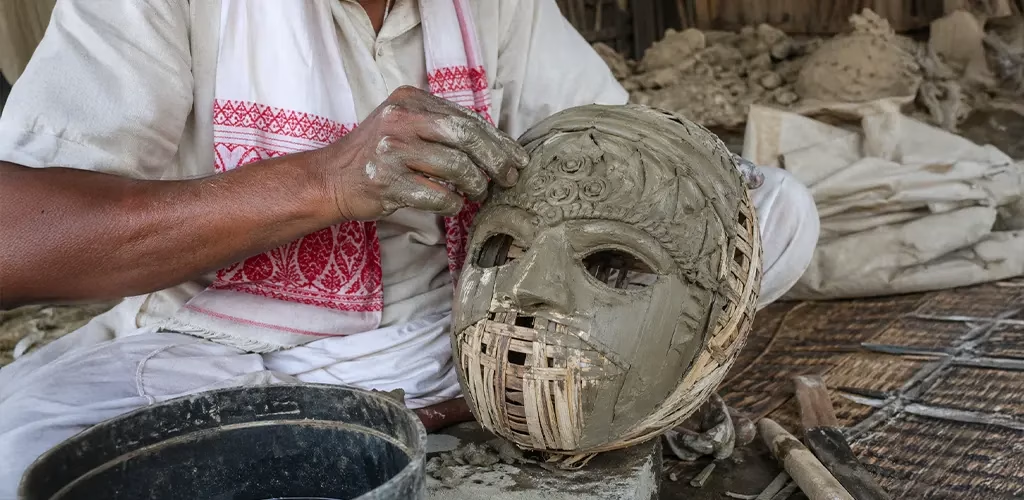
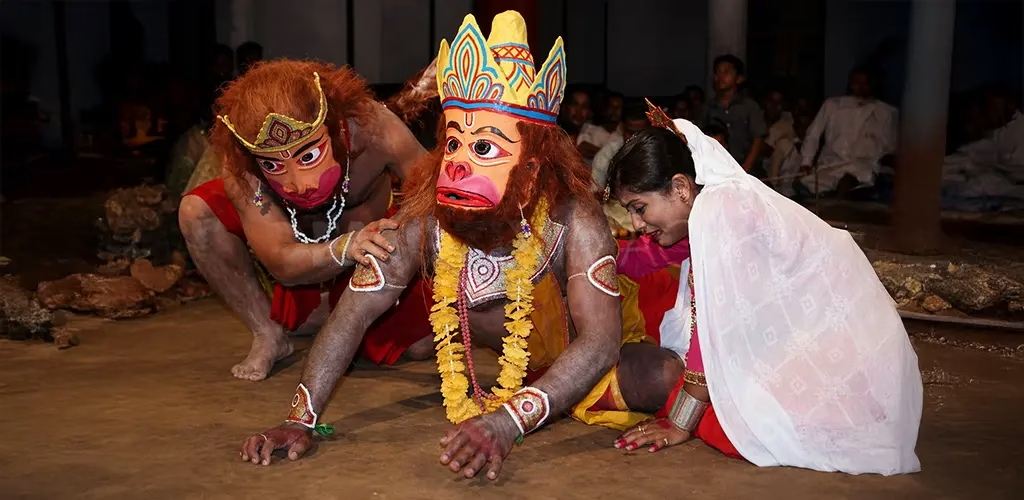
These masks are generally used during the Bhaona performances. In these performances, stories from the Ramayan and the Mahabharat are enacted. One thing that is also very fascinating about these masks is that some of them are designed with movable parts like jaws that open, and eyes that can shift, so that the expression can transform. During the performance, these masks feel extremely mechanical, but they are entirely handcrafted. This almost feels like animatronics rooted in devotion.
While people mostly associate masks with the face, in the Majuli Island, every mask serves a different purpose. The Mukha masks are meant to cover the face, the Lotokai masks extend to the full body, and the Cho masks are two exaggerated expressions in order to drive a dramatic effect. Moreover, the colours of the mask matter too, as each carries a different meaning. Every mask has a symbolism in terms of colour; for example, red signifies power, white reflects purity, and black represents evil.
A Culture That Does Not Stay Still
The culture at Majuli Island is always changing and transforming with time. Cradled by the Brahmaputra River, the Island finds its edges eroding every year. Due to this, its size is slowly reducing. Additionally, the constant floods also cause the Satras to move inland in an attempt to survive. Thus, on the island, homes shift, landscapes get altered, spiritual centres move, and the identity of Majuli evolves within itself.
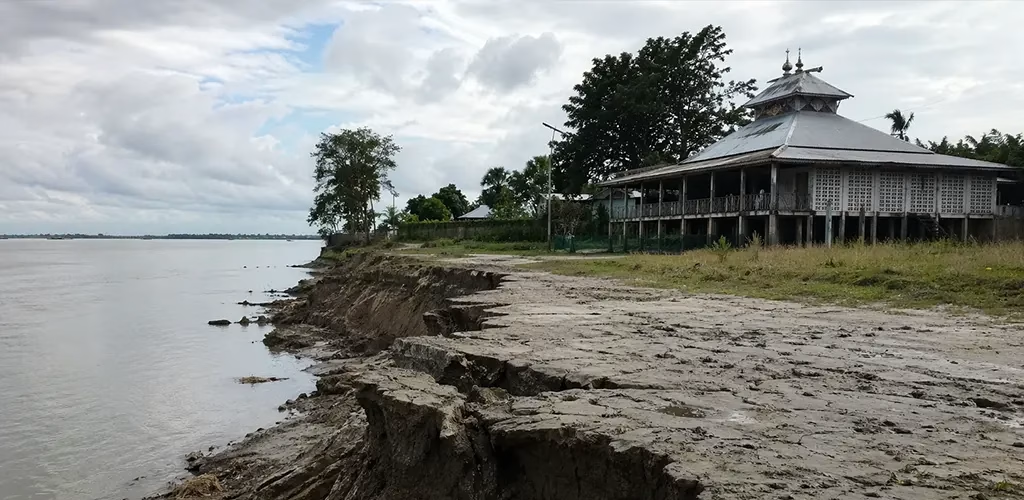
But this also opens a conversation about port heritage. The entire island has built a portable heritage for itself where the land can move, the culture might change its address, homes might be temporary, but the heritage refuses to lose itself within this evolution. Thus, the culture always travels with its people.
Theatre That Signifies Devotion
Why would a person watch the theatre?
The answer is extremely simple – entertainment.
But on the Majuli Island, it is never a performance. Here, theatre is a form of worship. Before people participate in the Bhaona performance, they fast and prepare themselves mentally and spiritually. When they step on the stage, they are not actors, but playing the roles of characters who are deeply rooted in devotion to the spiritual stories. Become vessels that carry stories, beliefs, and centuries of tradition with an edge of art. The music, dance, masks, and storytelling at the Majuli Island are never distinct from each other. They are extremely interconnected, and a performance is incomplete without all of them, collaborating and coming together in harmony.
Here’s Why Majuli Island Is An Experience
Majuli Island is not just about culture and heritage. It is a story of unity.
Here, the Satras signify philosophy, the masks symbolise mythology, the performance is devotion, and the architecture is portable. But everything coexists. At the Majuli Island, everything comes together and never exists in isolation. Majuli Island is a place where faith is not just about believing, but lifestyle and art are not just Entertainment but devotion. Despite geological adversities, such as erosion, floods, and evolving time, the culture continues to thrive and flow as steadily as the river that surrounds it.
Majuli Island is not just a story of culture, but also of how heritage must be taken forward without any change. The island always keeps evolving, adapting, surviving, but it also keeps carrying forward the legacy.