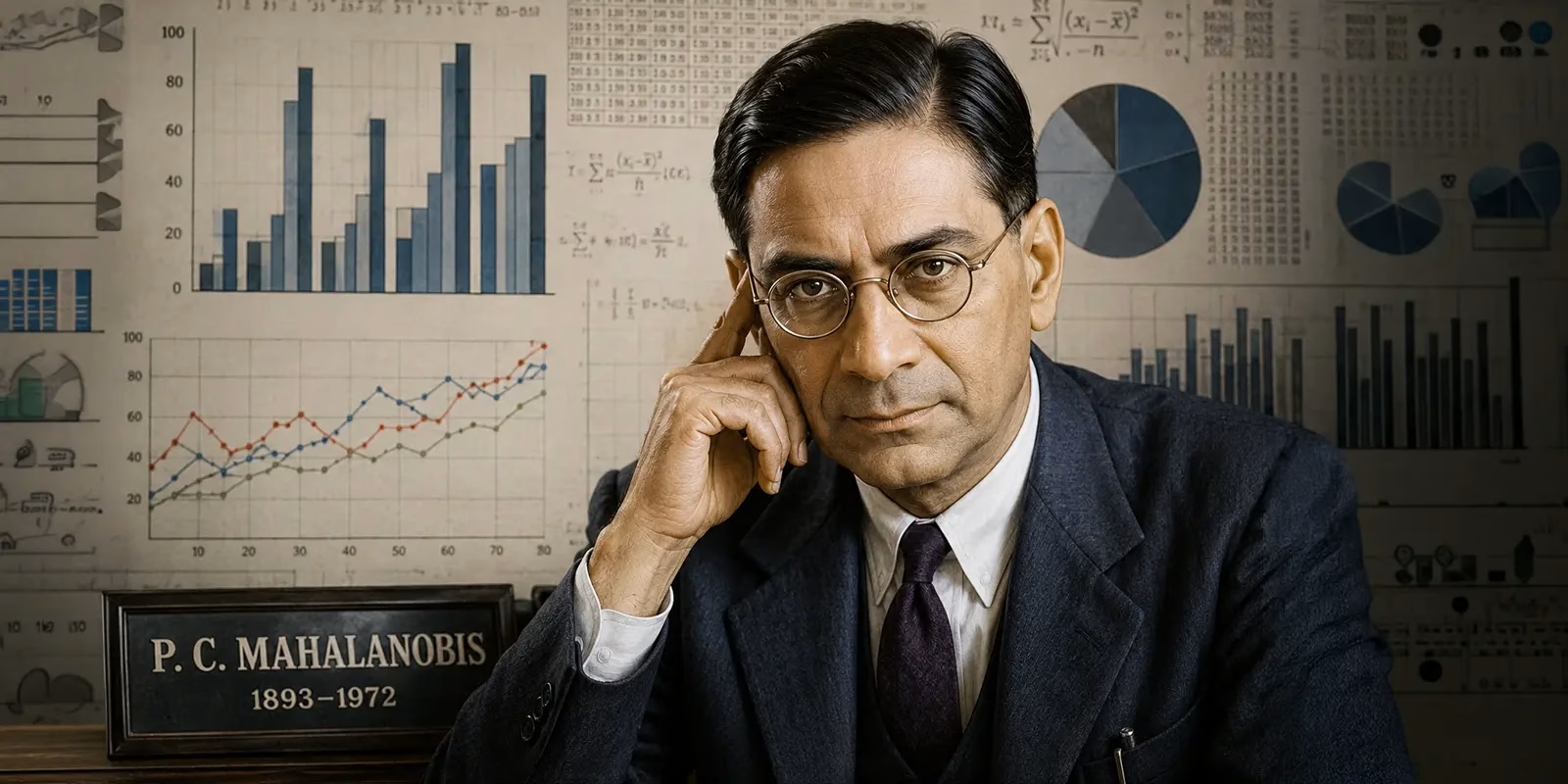
June 29: The Birthday That Became National Statistics Day
How does a man who spent his entire life calculating everything down to the last decimal point manage to miss his own 79th birthday by exactly twenty-four hours?
When Prasanta Chandra Mahalanobis passed away on June 28, 1972, he fell just one day short of that milestone.
Yet, in a beautiful piece of irony, that missed date became immortal. Today, June 29, is celebrated across the nation as National Statistics Day, dedicated to his birth and the quiet science he championed.
But Mahalanobis didn’t build this data empire from scratch; he was inheriting a legacy.
Chanakya Niti: The Mauryan Spy Network
Long before today’s big data, India’s information empire began in the ancient world.
Over two thousand years ago, in the courts of the Mauryan Empire, a sharp strategist named Chanakya sat down to write the Arthashastra, an ultimate guide on how to run a country.
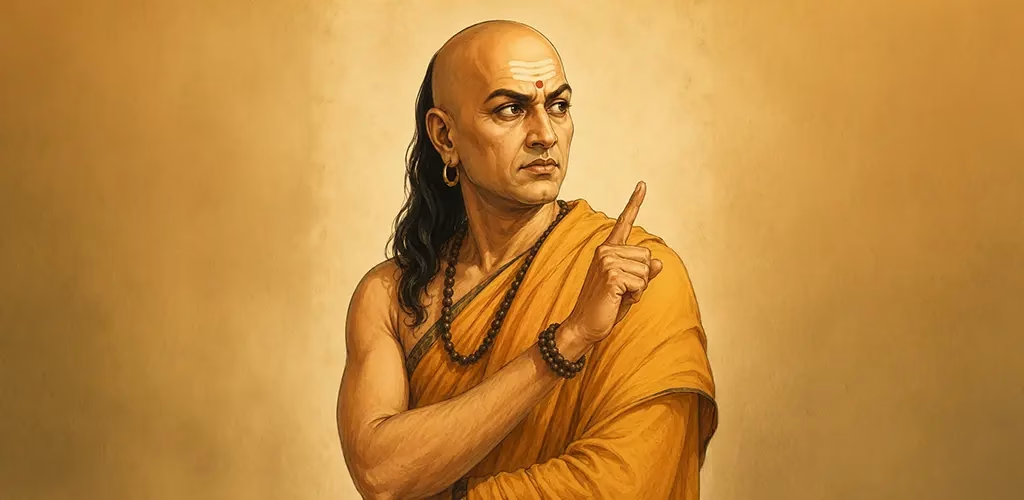
Chanakya’s advice to the king went way beyond swords, fortresses, and walls. For him, good ruling was actually about counting and effortless statistics. He set up a massive network of village officials and secret spies to track everything: every house, every cow, every grain of gold, and even local crimes. He believed that to protect and rule a kingdom, you first had to measure its pulse.
For Chanakya, an uncounted kingdom was an unprotected one.
But as empires fell and new kings rose, this need to measure didn’t go away. Instead, it changed. What started as a survival tool for wartime turned into a clever way to manage a wealthy kingdom.
Akbar’s Art of Numbers: The Empire of the Ain-i-Akbari
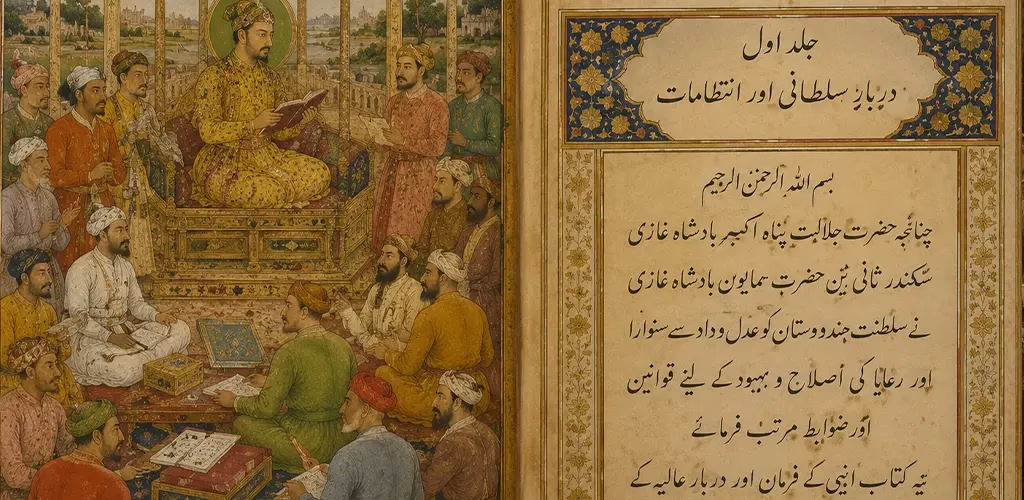
Centuries later, the Mughal Emperor Akbar took Chanakya’s love for numbers and turned it into an art form.
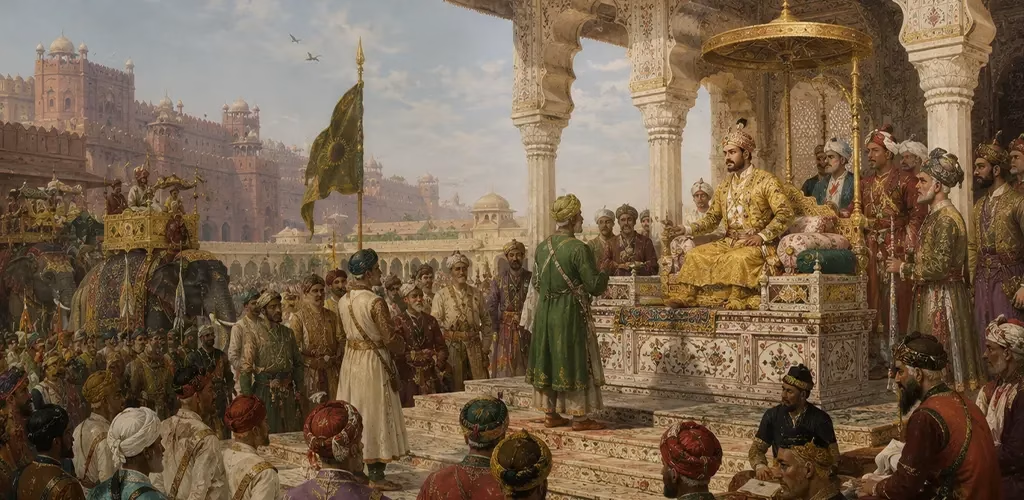
His close advisor, Abul Fazl, put together a massive record called the Ain-i-Akbari. It worked just like a modern data dashboard, but made of paper.
Chanakya used data to spot threats and keep his kingdom safe, while Akbar relied on it to manage a rich and complex empire. The Ain-i-Akbari tracked more than just the size of armies. It included the average weight of a royal pineapple, the daily cost of feeding a royal elephant, and the crop yields for each region across different seasons. Akbar understood that without precise numbers, setting taxes was just guesswork, and in a huge empire, such guesswork often led to rebellion.
But as the centuries rolled on, India grew far too big for simple notebooks and ledger books. By the time the country was heading toward independence in the mid-20th century, the old ways of counting simply wouldn’t work anymore. The young nation didn’t just need a bigger notebook; it needed a miracle worker.
As it turned out, India’s miracle worker had already packed the answer into his bags decades earlier.
Prasanta Chandra Mahalanobis: The Man Behind Indian Statistics
Back in the summer of 1915, a young Indian student waited at a British port. His journey home was put on hold by the war that had shaken the world. With ships delayed and time moving slowly, he wandered into the quiet library at King’s College, Cambridge. There, he came across a stack of old journals filled with numbers and calculations. He bought nine of them out of curiosity and packed them in his suitcase, and when his ship finally left, he took them with him across the sea.
That unexpected delay changed the course of an entire nation.
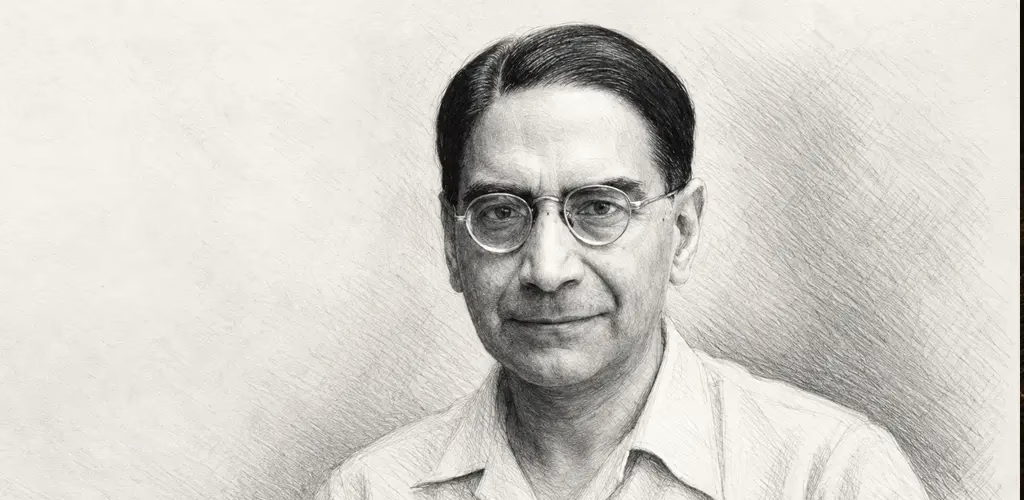
The young man was Prasanta Chandra Mahalanobis, a physicist who had just accidentally discovered his true calling. He didn’t know it yet, but those packed journals would lay the foundation for modern India’s data empire, earning him the title of the Father of Statistics in India.
But how does a country like India begin to count itself?
The Man Who Counted Without Counting
The newly independent government was facing a major headache: how do you figure out what millions of poor families need without spending a fortune and taking decades to count every single person?
This is where Mahalanobis stepped into the picture with his suitcase from Cambridge and a brain full of wild new ideas.
He started what we now call the National Sample Survey (NSS). Instead of counting every single head, Mahalanobis proved that if you scientifically pick and study a tiny, diverse group of people, you can accurately understand the whole country. To prove his point, he once predicted Bengal’s entire crop harvest just by testing a few scattered fields.
The traditional desk clerks were left completely stunned.
From Ancient Notebooks to the Age of AI
As we live in an era run by artificial intelligence, face scanners, and massive tech centres, it is easy to forget where it all began. It started with ancient spy networks, imperial notebooks, and a delayed ship back in 1915.
Today, every second we spend online, we are being tracked, sorted, and turned into data points.
If Chanakya, Akbar, and Mahalanobis could see the mountain of digital data India creates every single day, would they see their dream come true, or a machine that has grown far too big to control?