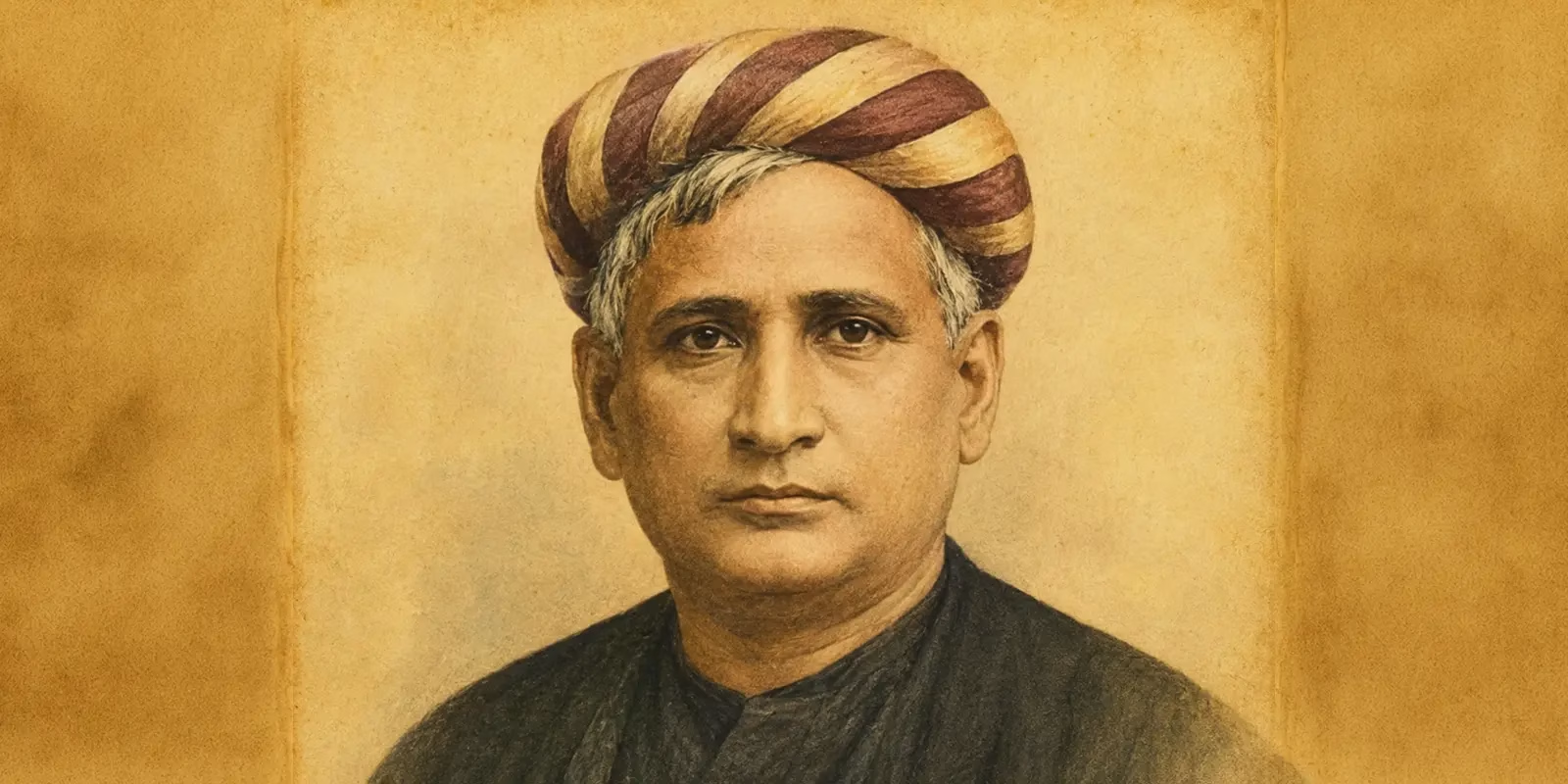
Bankim Chandra Chattopadhyay: The Man Beyond Vande Mataram
What is the first thing that comes to your mind when you hear the name Bankim Chandra Chattopadhyay?
Probably Vande Mataram.
But there is an untold story that lies far beyond that, not the usual textbook reference of how he wrote Vande Mataram, but a journey into the hidden corners of a man with a conflicted mind. Behind the famous anthem is the secret story of a brilliant mind torn between two completely different worlds.
The Dual Life of Bankim Chandra
Born in 1838 in Bengal, Bankim Chandra Chattopadhyay was a brilliant student and one of the very first graduates of Calcutta University. Because of his sharp mind, Bankim was quickly hired by the British government as a Deputy Magistrate.
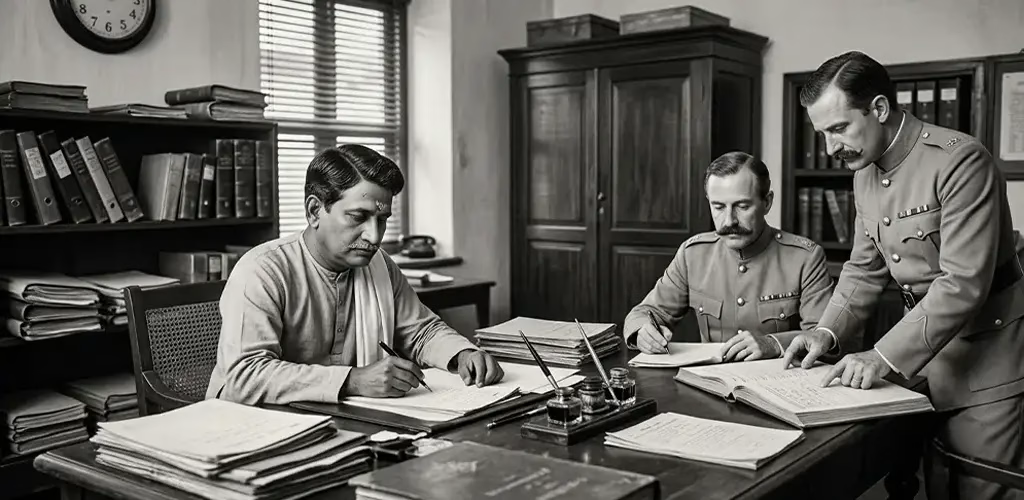
For over thirty years, Bankim lived a double life, working as a loyal officer for the very empire he wanted to bring down.
Bankim wore the uniform of the colonial rulers, sitting in dusty courtrooms and managing tax files. During the day, he took their orders. But by night, he sat by candlelight, picked up his pen, and used his words to wake up his people. He completely revolutionised Bengali literature, transforming it from old verse into modern, gripping novels.
The Joke With A Hidden Sting: What “bent” Bankim?
Bankim’s daily tension with the British led to a famous meeting with the great mystic saint, Sri Ramakrishna Paramahansa.
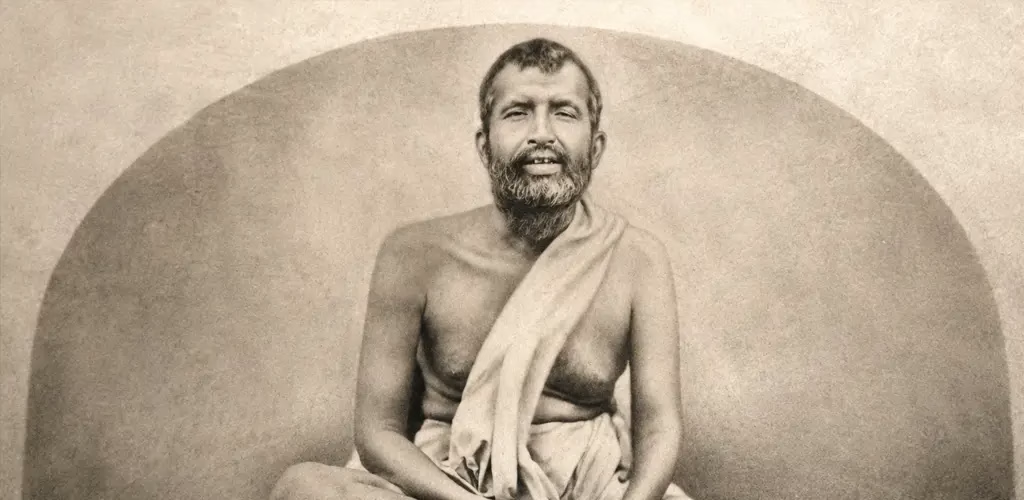
Ramakrishna loved simple jokes and wordplay. Knowing that “Bankim” translates to “bent a little” or “curved,” the saint looked at him and asked with a smile, “What is it that has bent you?”
Without missing a beat, Bankim replied, “It is the kick from the Englishman’s shoe!”
Everyone in the room laughed, but the joke carried a painful, raw truth. It revealed the daily humiliations Bankim endured as a colonial officer, and this exact burning resentment fueled his secret nightly writing.
The History of Vande Mataram
What if I told you that one of the most powerful songs in Indian history was originally used simply to fill a blank space on a page?
While editing his literary magazine, Bangadarshan, Bankim’s printers ran into a sudden problem. They had a blank space on a page and desperately needed a short piece of text to fill it.
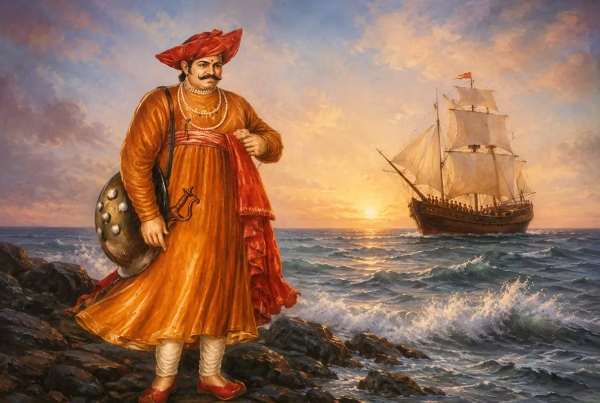
Bankim reached into his desk drawer and pulled out an old poem. He had written this poem spontaneously around 1875, captured by a sudden wave of inspiration while sitting on the beautiful banks of the Hooghly River.
When Bankim handed over the poem to his printing assistants, they mocked it. The assistants told him that the strange mix of heavy Sanskrit and simple Bengali words sounded completely awkward.
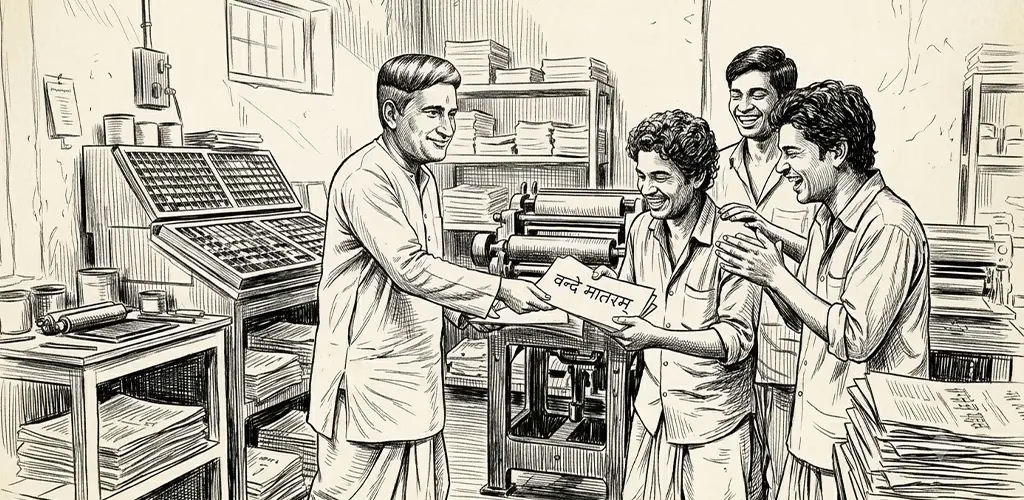
But Bankim looked at them and replied: “You cannot understand it now, but a day will come when everyone in India will sing this.”
He wasn’t wrong.
Decades later, those exact words became Vande Mataram.
When Bankim later incorporated this song into his famous novel Anandamath, it became a fierce anthem for freedom. It terrified the British government so deeply that they banned it outright. Since then, simply singing it on a street corner became a heroic act of rebellion, one that could throw you straight into a dark prison cell.
The Clash of Science and Saints
Most people see Bankim as a traditional voice focused only on the past, but his night writing proved he was a sharp, modern thinker.
In his book Krishna Charita, he acted like a detective. Instead of viewing Lord Krishna as a magical figure from old stories, Bankim studied him as a real, living human being to show that he was a great historical leader.
Yet, this practical mind often clashed with his spiritual world.
During another chat with Sri Ramakrishna, the saint asked him what the true purpose of human life was. Bankim cynically joked that it was just eating, sleeping, and indulging in pleasures. Ramakrishna was shocked by this bleak view. He looked at Bankim and compared him to a vulture.
It was a perfect description of the clash inside Bankim.
A Life of Contradictions
This deep clash between modern thinking and old tradition didn’t just exist in his books; it shaped his personal life.
Bankim was married at just 11 years old to a 5-year-old bride, following traditional religious customs. She passed away in a tragedy when he was only twenty-two. Though he later remarried happily and raised three daughters, his views on society remained incredibly complicated.
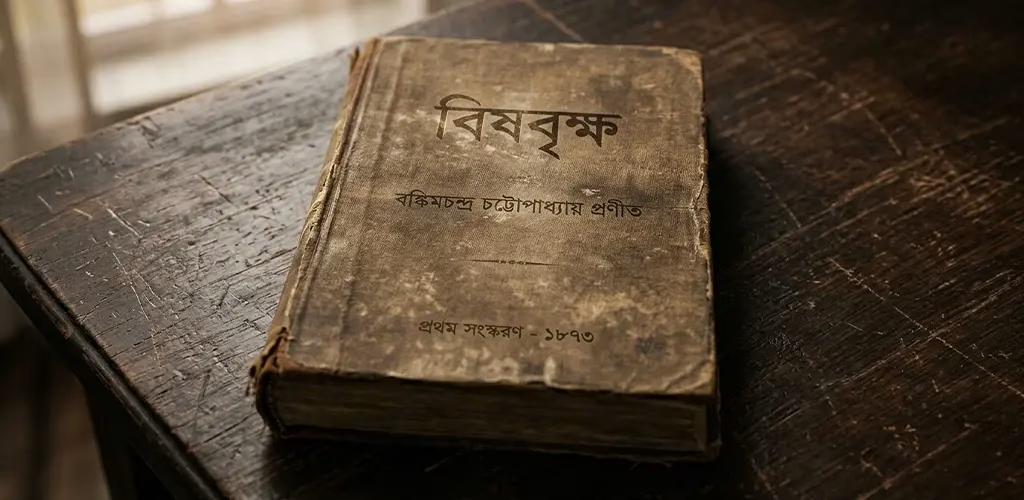
Despite his brilliant modern education and scientific mind, Bankim strongly opposed the remarriage of widows in his newspaper articles. He even wrote a tragic novel called Vishabriksha to show the social chaos that he believed widow remarriage would cause.
While Bankim fiercely advocated for women’s education and respect, he was terrified of rapid change. He truly believed that hurrying into modern ways would shatter traditional Indian families.
The Unresolved Riddle of Bankim
Bankim Chandra Chattopadhyay passed away in 1894 as a retired British officer, leaving behind his legacy through a song that sparked a revolution.
Yet, Bankim remains a puzzle.
He created the ultimate cry for liberty, but feared women’s social freedom.
He loved modern science, yet defended rigid traditions.
This contradiction raises a major question: Was he a progressive hero born too early, or a traditionalist trapped in a changing world?