The Black Hole of Calcutta That Shaped History
History is full of big moments that change the world. Usually, these moments involve a huge battle.
But the event known as the Black Hole of Calcutta was different. It happened because a sleepy ruler went to bed early on a boiling hot summer night in June 1756.
For a very long time, British schoolbooks told a story of pure cruelty. But what if the British were actually trying to hide a list of embarrassing mistakes?
British Captivity at Fort William
Imagine being packed in a room so tight that you cannot even turn around, while the air outside feels scorching and suffocating.
This was the nightmare the British faced at Fort William, their guarded trading post in Calcutta.
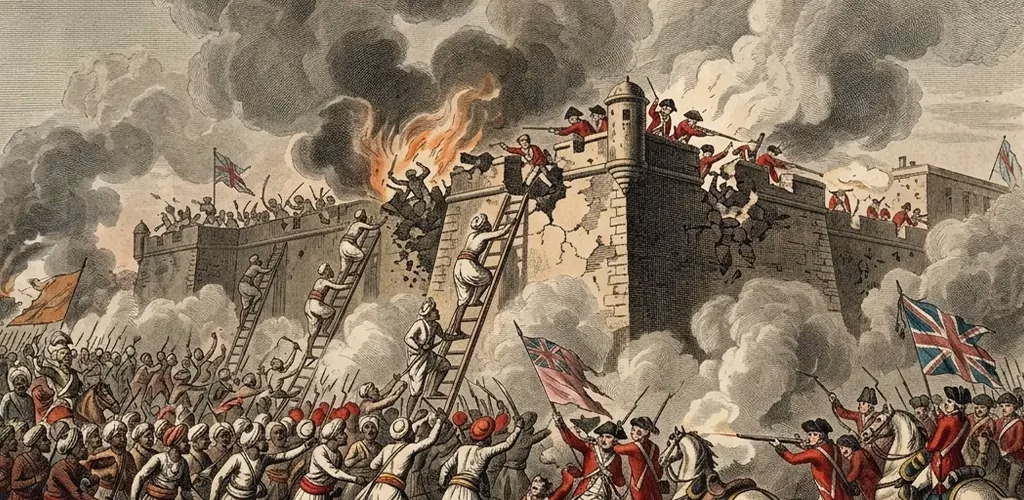
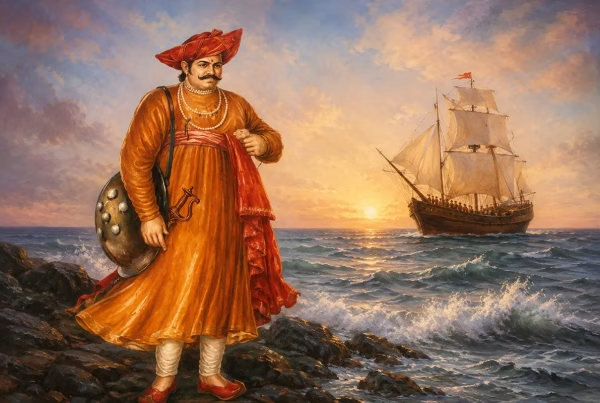
The local Indian ruler named Siraj-ud-Daulah, was angry that the Britishers were building up weapons on his land without asking. He didn’t just send a warning; he marched in with a massive army and took over the fort in a flash.
But the real horror did not start until the sun went down.
A Locked Cell and a Night of Suffocation
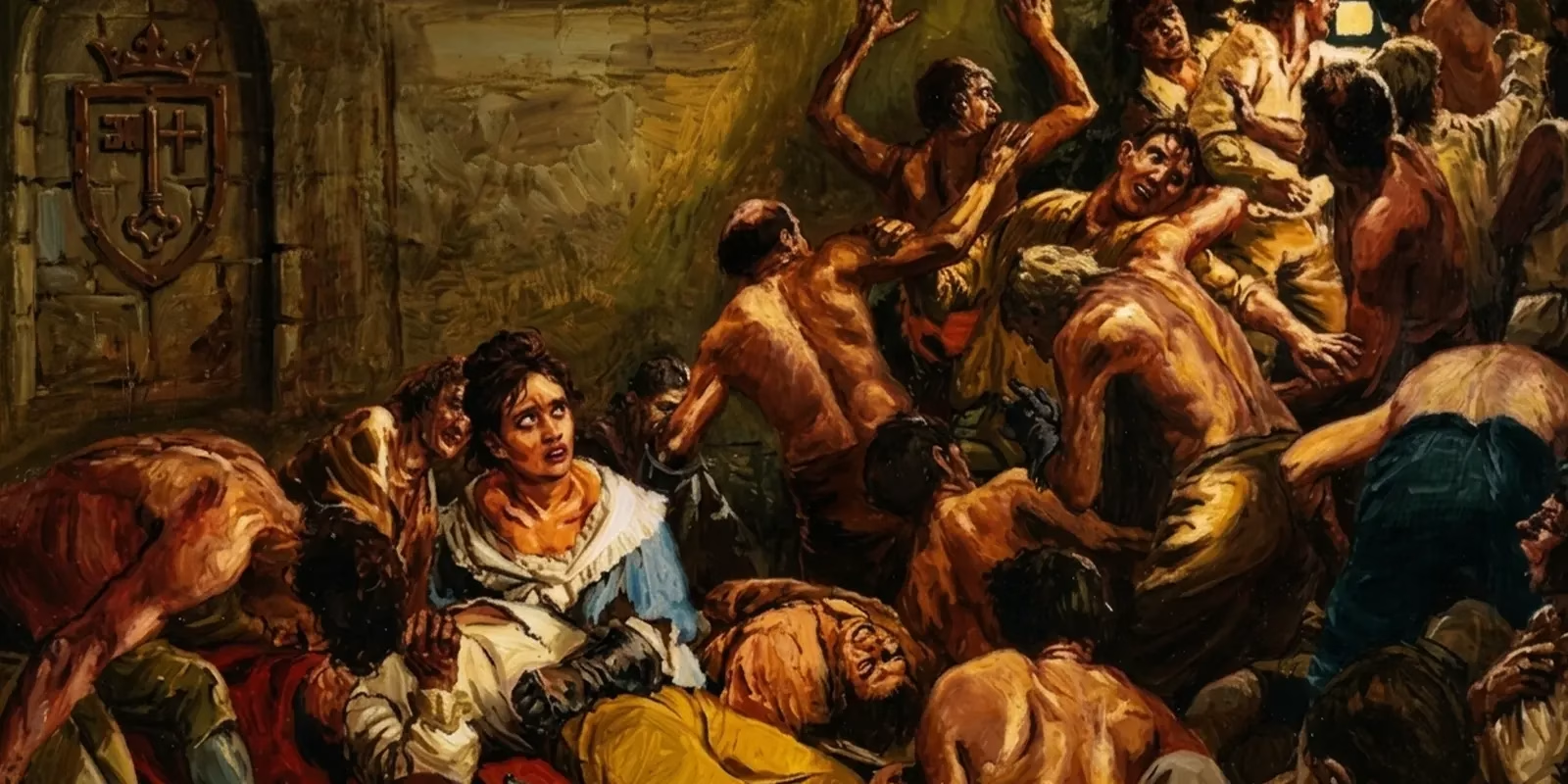
That evening, the ruler left his guards to lock up the captured Britishers. The guards wanted a safe place to keep them until morning, so they chose the fort’s small jail cell. The room was tiny, measuring just 14 by 18 feet. It had only two small windows with thick iron bars.
As the heavy door slammed shut, the British prisoners realised there was no escape.
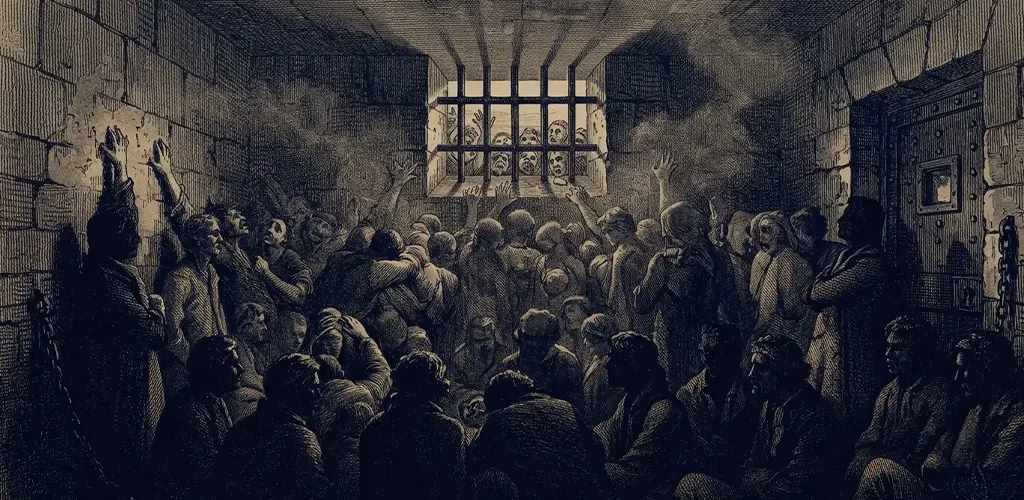
With almost no water and the unbearable summer heat of June, people began to panic. By morning, many of the Britishers had died because they could not breathe in the thick, hot air.
It was a horrible tragedy. However, the British survivors used the story to make people back in England angry enough to start a war.
But how did a powerful British company lose its biggest fort so easily in the first place?
The Already Defeated Army
You might think a rich British company would have great weapons, but the reality inside the fort was a joke.
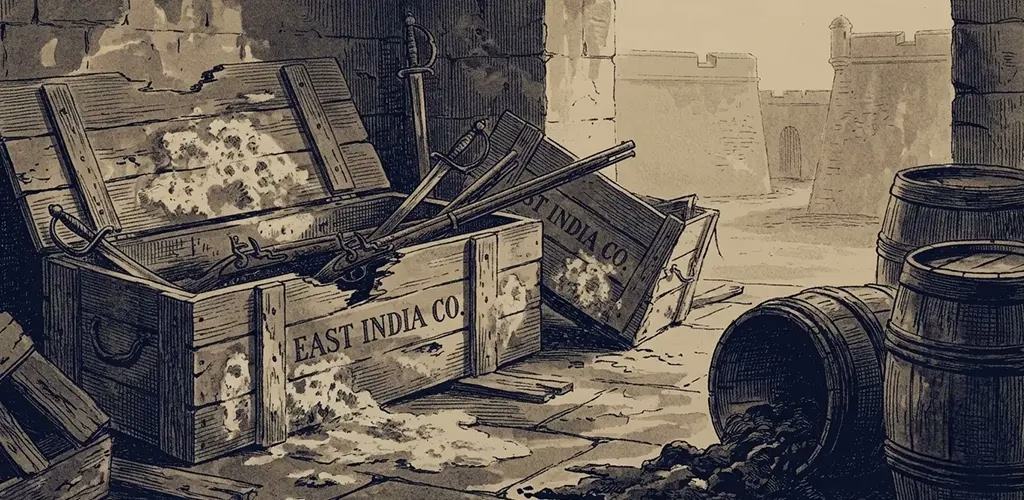
When the Indian army surrounded the walls of the fort, British soldiers ran to get their bullets, only to find that termites had eaten right through their wooden crates and ammunition supplies. To make things worse, their gunpowder had been stored in a damp place, turning it into useless mud. The Britishers were trying to defend a major fortress with nothing but wet dust and rotten wood.
Seeing the inevitable disaster, the top military governor did something incredibly bold.
He abandoned his post, snuck onto a boat, and sailed away, leaving his men behind. With the real leaders gone, the defence was handed to a man named John Holwell.
Fake Numbers of a Tax Collector
Holwell was not a soldier; he was a corporate tax collector who had a talent for writing dramatic stories. But how much of his famous survival story was actually true?
Holwell survived the night in the cell and later claimed that 146 people were crammed into that tiny room and 123 of them died. Years later, historians checked the company’s official lists and found that the math did not work. The actual number of Britishers in the room was closer to 64, and about 43 died. It was still a terrible event, but Holwell made up higher numbers to look like a hero and to make the British public furious.
His plan worked perfectly.
People in England demanded revenge, which gave the British company the perfect excuse to invade and conquer India. But was the Indian ruler really the villain the British claimed he was?
A Sleepy King and the Bribe That Failed
The official British stories painted Siraj-ud-Daulah as a cruel monster who planned the whole thing. But the truth was completely different. He had actually gone to bed and had no idea where the guards had put the Britishers.
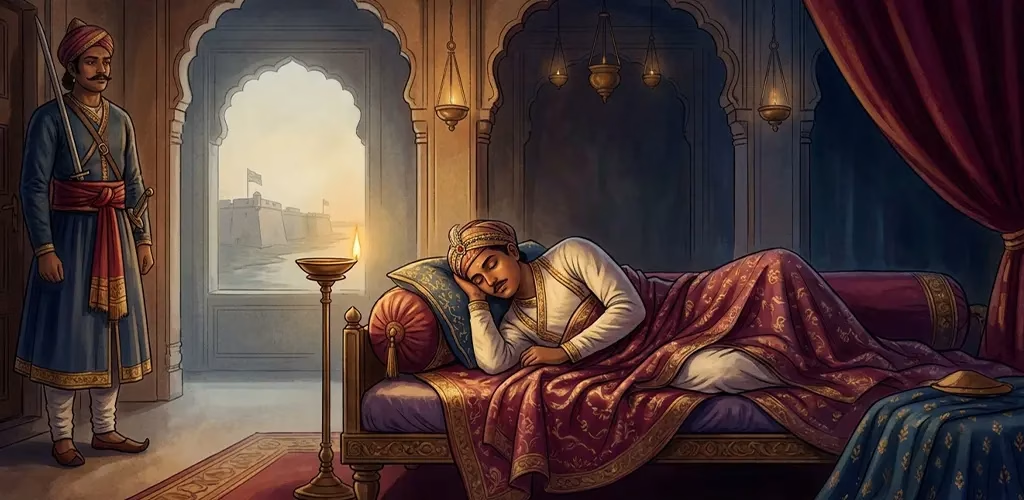
Inside the boiling dungeon, Holwell managed to call a guard over to the window. He offered him a huge bribe of 1,000 rupees, which was a life-changing fortune back then, just to move them to a bigger room. The guard tried to get permission but came back empty-handed. His reason was simple: the ruler was asleep, and the guards were too scared to wake up their boss.
The sad reality is that the event was caused by low-level guards who were just looking for a locked room. They did not understand that putting dozens of people in a closed space during summer would kill them. The ruler was shocked when he found out the next morning, but it was too late to stop the rumour.
Yet, through all this chaos, the most surprising survivor was someone the history books forgot to mention.
A History-Defining Mistake
Out of all the survivors, only one was a woman named Mary Carey.
She refused to leave her British husband when the fort was attacked, and though he died in the cell, Mary miraculously survived, outliving almost everyone else involved until she died in 1801.
Mary’s survival shows that the Black Hole was not a planned plot, but a tragedy caused by bad air, wet gunpowder, and a sleeping king. Yet, in the hands of clever writers, this chaotic accident became the exact story the British needed to build an empire.
And it makes us ponder: if those guards had just knocked on the ruler’s bedroom door that night, would the history of India look completely different today?