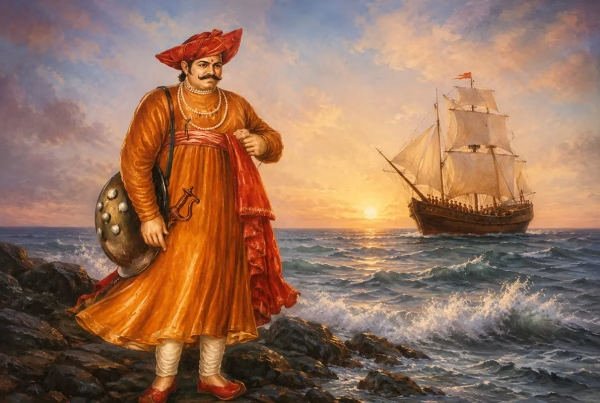

National Doctors' Day: When The White Coat Became a Target
What goes through your mind when you hear about National Doctors’ Day?
You probably picture a doctor in a crisp white coat, a stethoscope around their neck, rushing to save lives. But what if the very profession dedicated to saving lives became the reason your own life was in danger?
Why No Doctor In Bihar Felt Safe After Sunset?
During the late 1990s and early 2000s, a period popularly known as the Jungle Raj, a sense of fear fell over Bihar’s medical hubs. Evenings did not just mark the end of regular clinic hours; they signalled the start of a terrifying countdown for doctors.
For the criminal gangs of Bihar, kidnapping wasn’t something they did once in a while; it was their full-time business, and ransom was their main source of money.
Doctors became their ideal targets because they appeared to have high incomes, followed fixed routines, and their families were believed to be able to arrange hefty ransom payments. Because of this, even the most predictable day for a doctor could turn into a sudden nightmare.
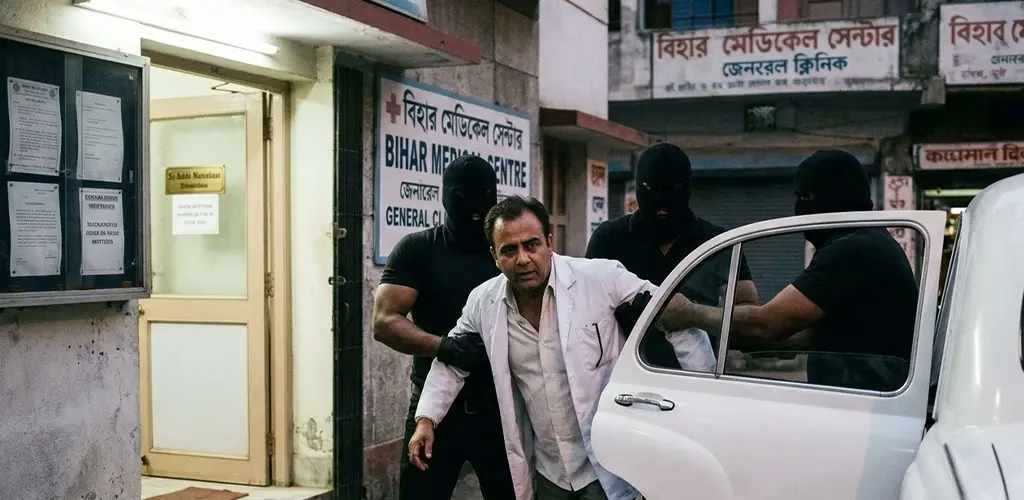
A surgeon would walk out of a successful operation, step toward their car in the evening, and simply vanish into the back of an unmarked vehicle before the hospital staff even noticed they were gone.
But how did these gangs choose which doctor to grab next?
The Cost of Being a Doctor
The reality inside these criminal networks was shocking and highly calculated.
Gangs did not pick their targets randomly. They calculated a doctor’s ransom value based entirely on their medical speciality.
The price tag of a general family doctor on the criminal market was modest. But an orthopaedic surgeon or a senior heart specialist was treated like a jackpot. The gangs knew these specific specialists handled expensive surgeries, meaning their families could pull together massive amounts of cash within a few hours.
Soon, the doctors realised that the profession they had worked so hard to build had turned into a liability.
When Doctors Begged for Protection
With an increase in kidnappings, the medical groups of the state organised massive protests.
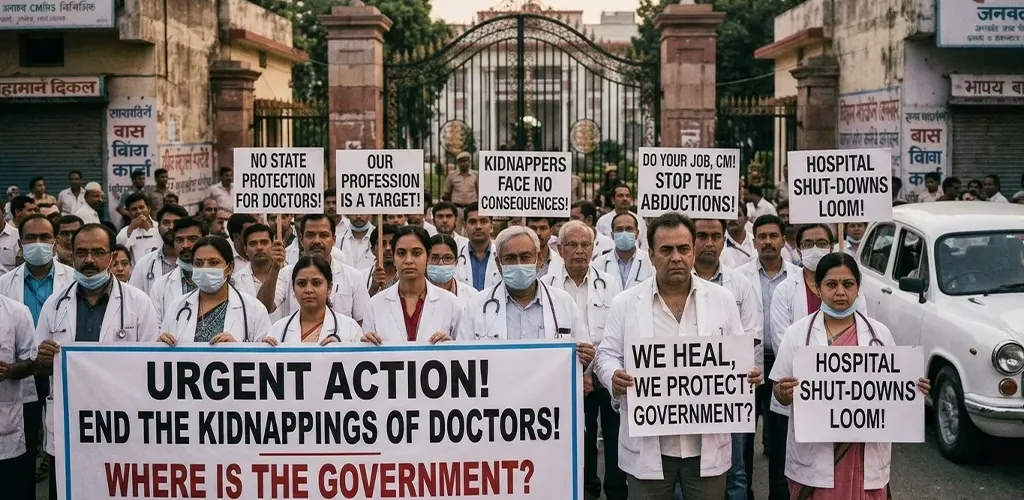
They marched directly to the Chief Minister’s residence to beg for urgent government protection, but instead of receiving any help, they were met with a shocking reply.
The Chief Minister of that era told the doctors to hire their own private security guards and look after themselves.
This blunt response made one thing absolutely clear: the government was not going to help them.
Where the Law Failed Its Doctors
When security forces finally tracked down and rescued kidnapped doctors, the truth was even more disturbing than expected.
During the Jungle Raj period, around 38 doctors were kidnapped for ransom from the streets. Out of these, 10 were killed when large ransom demands could not be met in time.
But the real shock came when the hideouts were uncovered.
The victims were not hidden in remote jungles or abandoned buildings.
They were often found locked inside the properties of powerful local politicians. The very people meant to protect the law were sheltering the gangs holding doctors hostage, leaving the medical community with a deep sense of betrayal from the system itself.
With no state protection in sight, a silent crisis unfolded as waves of helpless physicians realised their only choice was to pack up and flee the region entirely.
The Vanishing of Bihar’s Medical Community
This terrifying environment caused a massive, silent flight of medical talent from the state.
Fearing for their lives and their children, prominent doctors stopped buying nice cars. Instead, they drove old, rusted scooters and started wearing faded, torn clothes to look poor. When that disguise failed, they packed their bags in the middle of the night and left. Entire towns lost their healthcare systems overnight as waves of doctors fled to safer cities like Delhi and Kolkata, or even abroad.
The remaining medical community realised that waiting for outside rescue was no longer an option. They had to make a choice: either abandon their homes and patients entirely, or find a way to fight back.
From Stethoscopes to Revolvers
In a desperate bid to survive, the Indian Medical Association did something that shocked the entire country.
They stopped begging the police for help and started applying for bulk gun licenses.
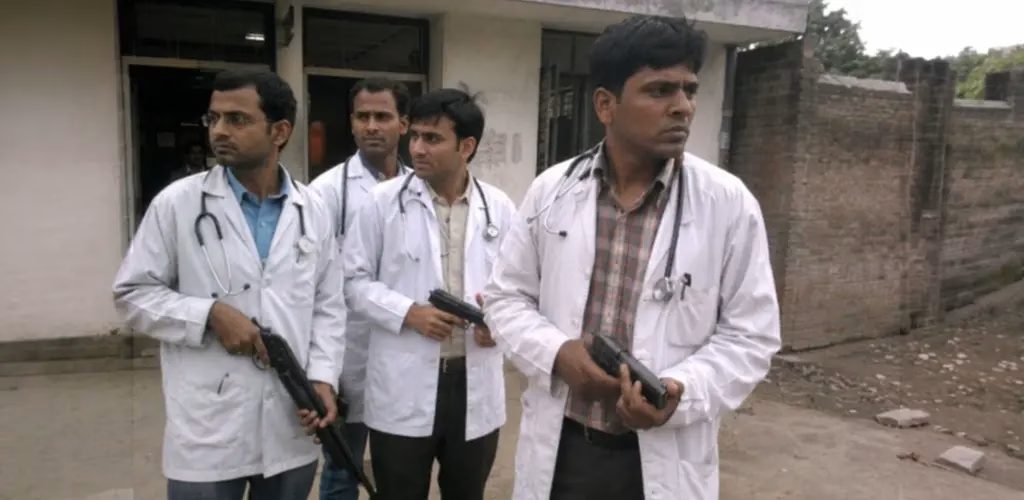
This led to an extraordinary sight where doctors, whose hands were meant to hold stethoscopes and scalpels, were carrying licensed revolvers to protect themselves from kidnappers.
When Saviours Become Survivors
This dark era eventually ended as laws shifted, but the deep scars on India’s medical history remain.
For a generation of doctors who lived through those terrifying nights, life outside their clinics changed forever. They could no longer walk out freely or feel safe.
Decades later, as we celebrate National Doctors’ Day to honor the healthcare professionals of our country, it forces us to remember a time when doctors, whose only job was to save lives, had to learn how to save themselves first.