MHIP: The Unknown Movement by Women of Mizoram
What if the fight for women’s rights began with something as ordinary as a handful of rice?
That is exactly what happened in Mizoram, where a group of women refused to accept the life they had been given. With no money, no political power, and no loud protests, they built a movement that went on to become the strongest women’s organisation in the state.
But before the Mizo women could change the future, they first had to face the reality of the past.
Life Before MHIP for Mizo Women
Traditional Mizo society was a very difficult place for women.
From morning until night, Mizo women worked in the fields, managed their homes, and looked after their families. Yet, despite all their hard work, they had very few rights. If a husband chose to divorce his wife, she had to leave her home immediately. She could not take her children with her or claim the property they had built together. In a single day, she could lose everything.
Things became even harder during the conflict that affected Mizoram in the 1960s and 1970s. As many men left their villages to fight, mothers and grandmothers were left to care for their families on their own. During those difficult years, Mizo women leaned on one another for support, sharing whatever they had and helping each other through uncertain times.
Without knowing it, they were laying the foundation for something much bigger. That shared strength would soon grow into a movement that changed the lives of women across Mizoram.
The Birth of MHIP: How Women United in Mizoram
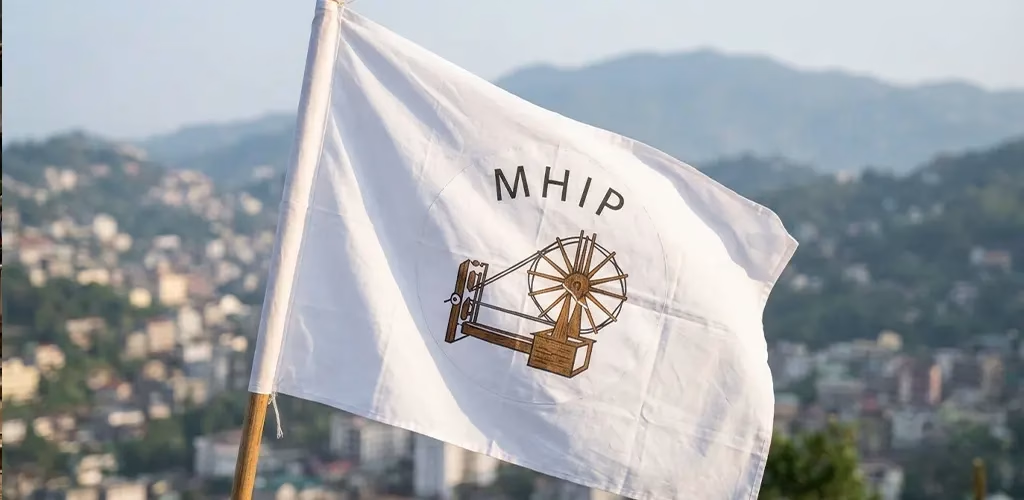
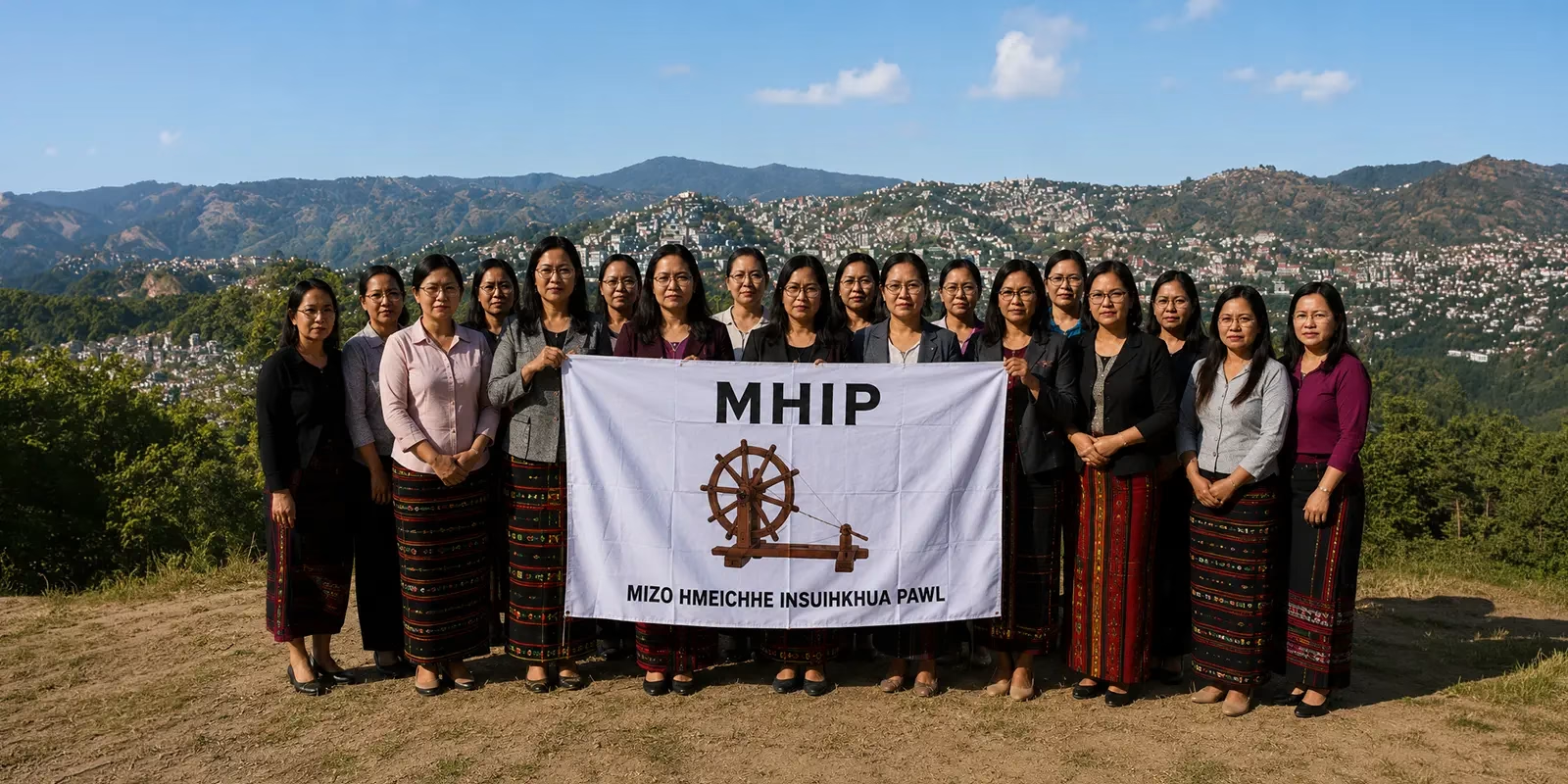
On July 6, 1974, a group of Mizo women came together with one simple goal. They wanted women to have a voice of their own. With that goal, they formed the Mizo Hmeichhe Insuihkhawm Pawl, better known today as MHIP.
The founders chose the Hmui, a traditional wooden spinning wheel, as the organisation’s logo. It reflected the everyday lives of Mizo women and the values of hard work, unity, and self-reliance.
Forming the organisation was only the beginning. Keeping it alive was the real challenge. The women had no wealthy supporters, no big donations, and very little money to carry their work forward.
The answer, however, was waiting in almost every Mizo home.
Buhfai Tham: The Handful of Rice That Built MHIP
Imagine trying to fund an entire movement with nothing but a handful of rice. It seems too small to matter, but for the women of MHIP, it became the foundation of an entire movement.
Instead of waiting for donations or outside support, they started a tradition called Buhfai Tham, which means “a handful of rice.”
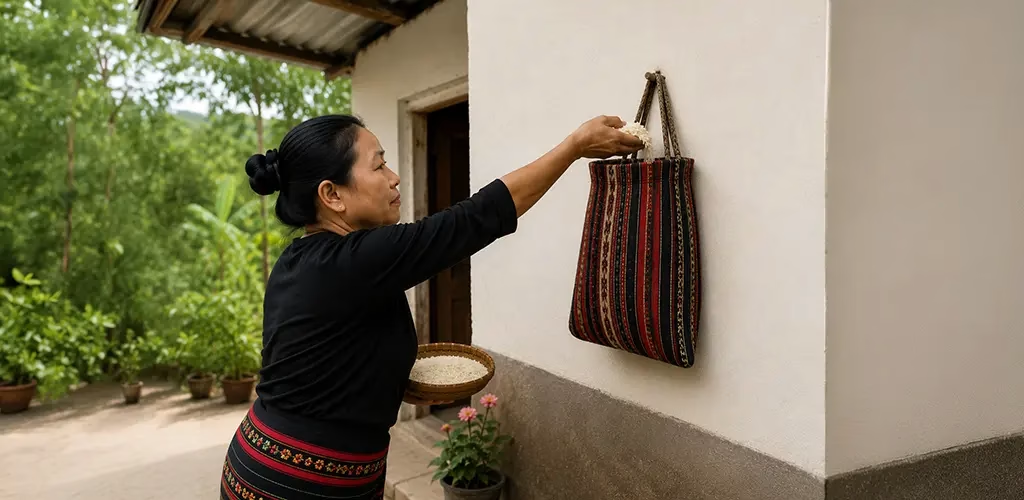
The idea was simple. Every time a woman cooked rice, she set aside one handful in a separate bag. By the end of each month, the women collected the rice, sold it at the local market, and used the money to support their work. It helped them build schools, support families in need, and keep the organisation running without depending on anyone else.
One handful of rice at a time, MHIP built a strong support system that spread across Mizoram. Today, the organisation has more than 740 branches across the state.
But supporting communities was only part of the story. Mizo women now wanted to change the laws that had held them back for generations.
How MHIP Rewrote the Laws for Women in Mizoram
The women had built schools and supported families, but one problem still remained. The laws that once allowed a divorced Mizo woman to lose everything were still in place. The leaders of MHIP, led by Pi Sangkhumi, knew that changing this law would take patience, not protests.
For more than ten years, they travelled across Mizoram to attend public meetings, quietly filling the front rows and handing lawmakers legal proposals they had prepared themselves. They returned again and again until their voices could no longer be ignored.
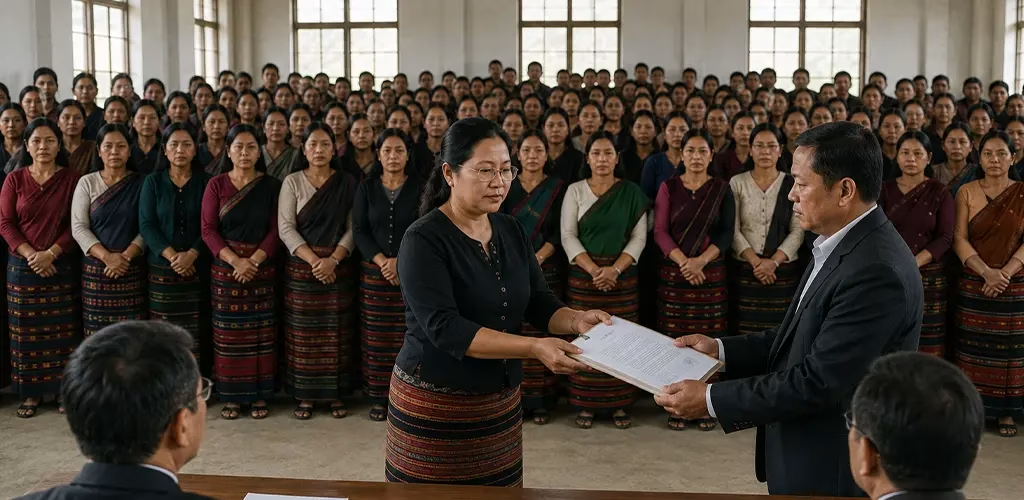
In 2014, their efforts paid off when divorced Mizo women gained the right to claim up to half of their family property. But for MHIP, changing the law was never the end of the story. Their next mission was just as important: making sure no one in their community felt alone.
MHIP Christmas Box: The Mizo Tradition of Giving
Changing laws was one way to strengthen a community. Looking after the people in it was another. That is exactly what MHIP has done every Christmas for decades.
Every year, they prepare Christmas Boxes filled with blankets, clothes, and food, then deliver them to hospitals, orphanages, and prisons across the state.
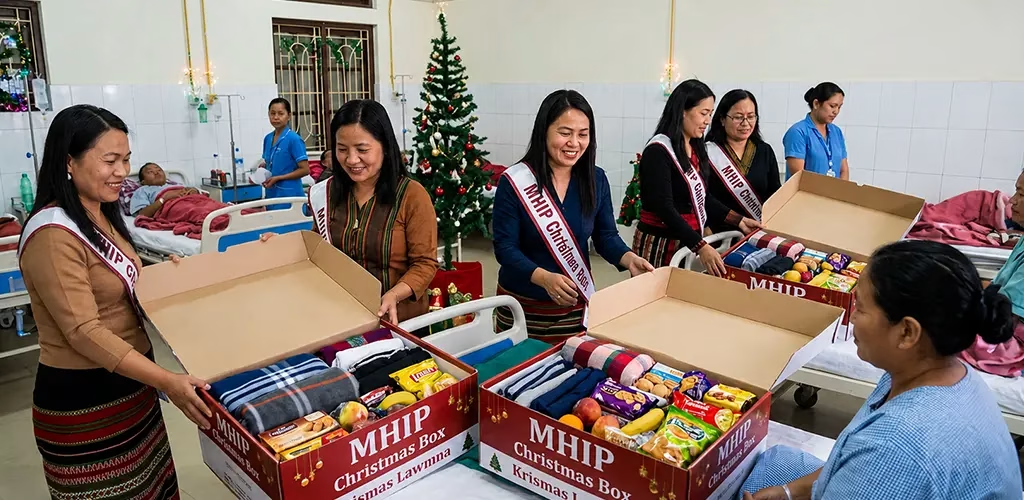
One winter, this very tradition helped save patients from a freezing night.
A local hospital ran out of blankets after a delivery was delayed. When MHIP volunteers saw the situation, they used the village loudspeakers to ask for help. Within two hours, families arrived carrying quilts from their own homes so every patient could stay warm.
For MHIP, helping others is not limited to Christmas. It has become a part of everyday life, and one of the many reasons the organisation holds a special place in the hearts of the people of Mizoram.
How Mizo Women Changed Mizoram Forever
What began with a small meeting and a handful of rice has become one of the most respected women’s movements in India. Their work has become such an important part of Mizoram that it remains the only state in the country to declare a public holiday for a women’s organisation. Every July 6, schools, banks, and government offices close for MHIP Day, as people across the state honour the women who refused to accept things as they were.
This powerful legacy forces us to rethink everything we know about empowerment, standing as a beautiful question mark against the loud debates of modern feminism.