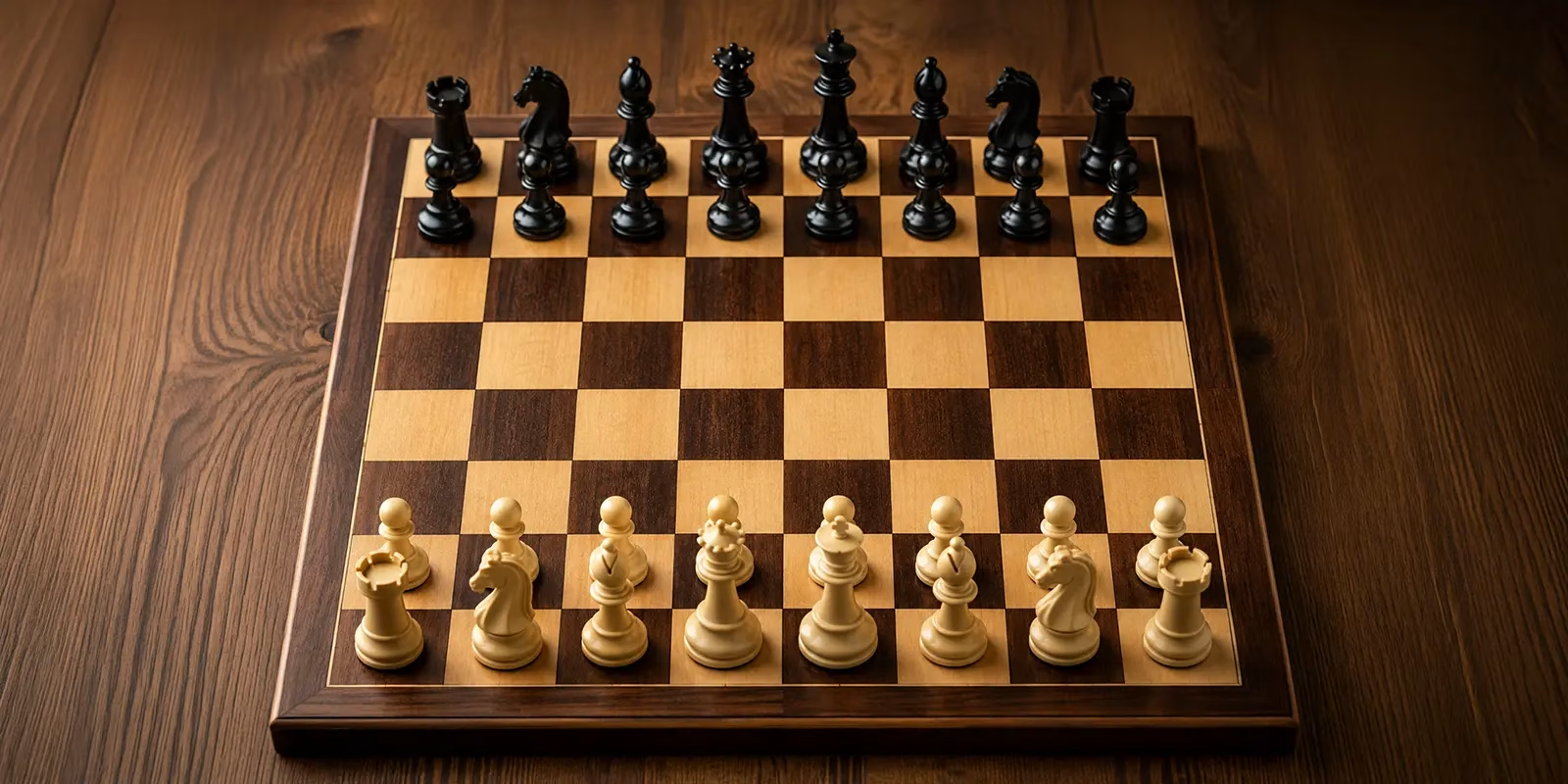
The Ancient Origins of Chess
Long before chess became a global sport, it was played in ancient India.
It all began in the royal courts, where kings once used a simple board game to understand war, strategy, and leadership.
So, how did an ancient Indian game become one of the world’s most popular sports?
Chaturanga: The Indian Game That Became Chess
The story takes us back to the Gupta Empire, around the 6th century.
Long before computers and digital timers, Indian royalty played a strategy board game called Chaturanga. The word Chaturanga means “four divisions”, named after the four parts of an ancient Indian army.
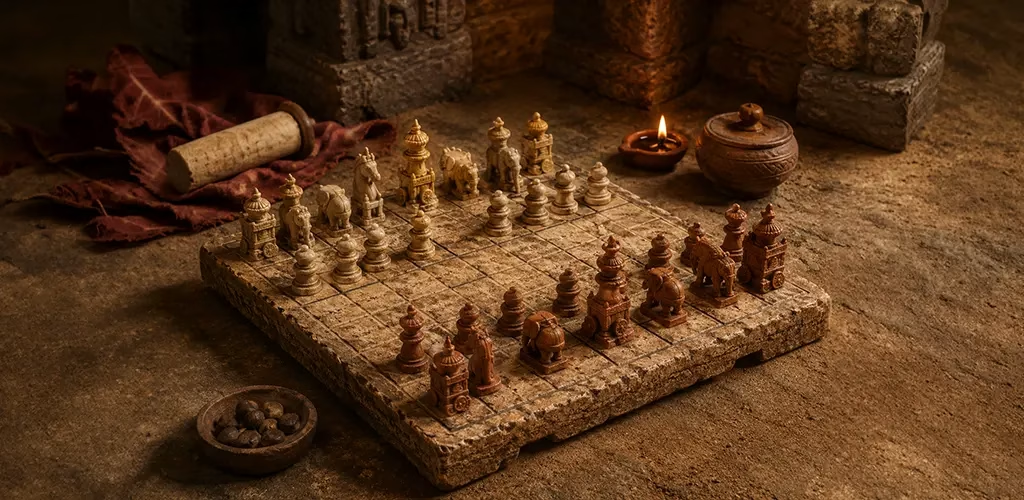
Each piece on the board represented a military unit: the infantry became today’s pawn, the cavalry became the knight, the elephants evolved into the bishop, and the chariots became the rook. At the centre of the board stood the King and his Counsellor, a piece that later became the modern Queen.
For the rulers of that time, Chaturanga was much more than a game. It was used to think ahead, plan their moves, and simulate a battlefield on a wooden board.
But the story of Chaturanga did not stay inside India’s royal courts for long.
How Chaturanga Became Chess
As trade routes expanded, the game began its long journey out of India. Merchants and travellers carried the board and pieces with them to Persia, where people quickly grew fond of it and gave it a new name, Shatranj.
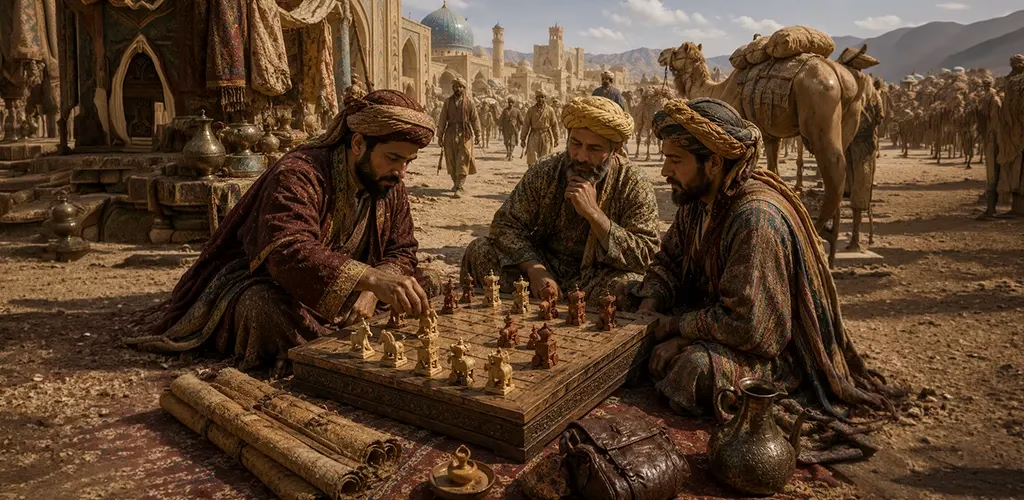
It was here that one famous expression was born. Whenever a king could no longer escape, players would say “Shah Mat,” meaning “the king is helpless.” Over time, these words changed into the English term “checkmate.”
The game continued travelling with traders and kingdoms until it reached Europe.
By the fifteenth century, Europeans modified the game. The board had changed. The rules had changed. The ancient Indian game had officially become global.
For a very long time, the world’s greatest chess players came from Europe and Russia.. But the spirit of the game never truly left its birthplace.
The Grandmaster Who Revived Indian Chess
In 1988, a turning point came when a young player from Chennai named Viswanathan Anand became India’s first Grandmaster; with this, India made its return to the global stage.
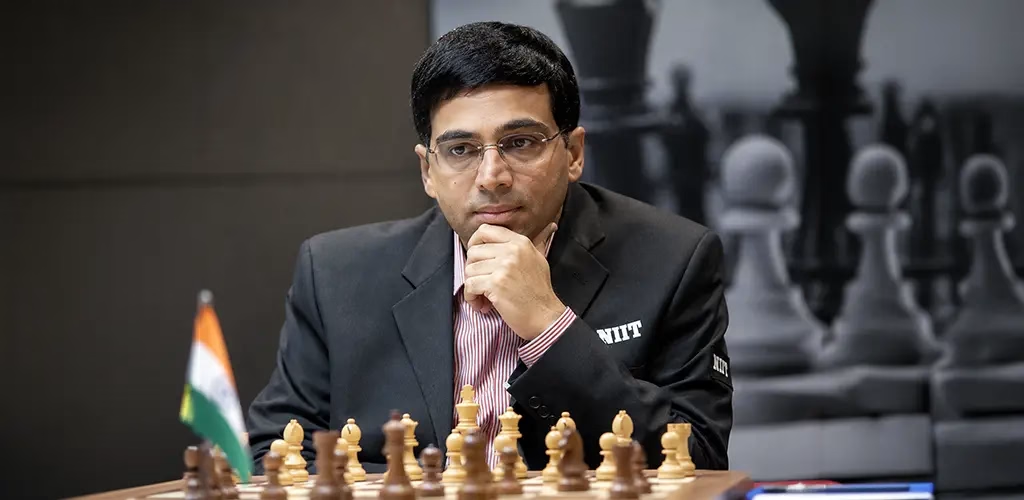
Anand won the World Chess Championship five times, and soon became one of the finest players in the world. His success did much more than earn medals. It sparked a massive chess revolution across the country.
Schools started chess clubs. Children began learning the game at a young age. Parents saw chess as more than just a hobby.
The country that had once introduced chess to the world was slowly becoming one of its strongest forces again.
The Future of Indian Chess
Today, India is producing world-class players one after another.
Young stars like D Gukesh, R Praggnanandhaa, and Arjun Erigaisi are dominating international boards.
Their biggest achievement came when India delivered an outstanding performance at the Chess Olympiad, proving that the country is now one of the biggest powers in international chess.
Every tournament, every victory, and every new grandmaster adds another chapter to a story that began centuries ago.
Every time a modern grandmaster sits down at a table and moves a piece, they are carrying forward a quiet tradition that started in India more than fifteen centuries ago.
How Chess Came Full Circle
More than fifteen centuries ago, kings in ancient India sat around a wooden board, carefully planning their next move in a game called Chaturanga.
Today, that same game is played in almost every corner of the world.
The names of the pieces have changed, the rules have evolved, and the competition has become global. Yet the spirit of the game remains the same.
The journey of chess is a complete circle.
It began as an ancient Indian war game played by kings in royal courts, travelled across oceans to change its rules, and has now returned home to a new generation of minds.