Bank Nationalisation In India: The Day Private Banks Lost Their Independence
What if just one late-night decision could change where millions of Indians kept their money?
Today, visiting a government bank is part of everyday life. Whether it is opening a savings account, taking a loan, or receiving government benefits, public sector banks have become a normal part of India.
But there was a time when most of India’s biggest banks were privately owned, and getting a bank loan was almost impossible for ordinary people.
So, how did India’s banking system change almost overnight?
Why India Wanted to Change Its Bank System
The story takes us back to 1969.
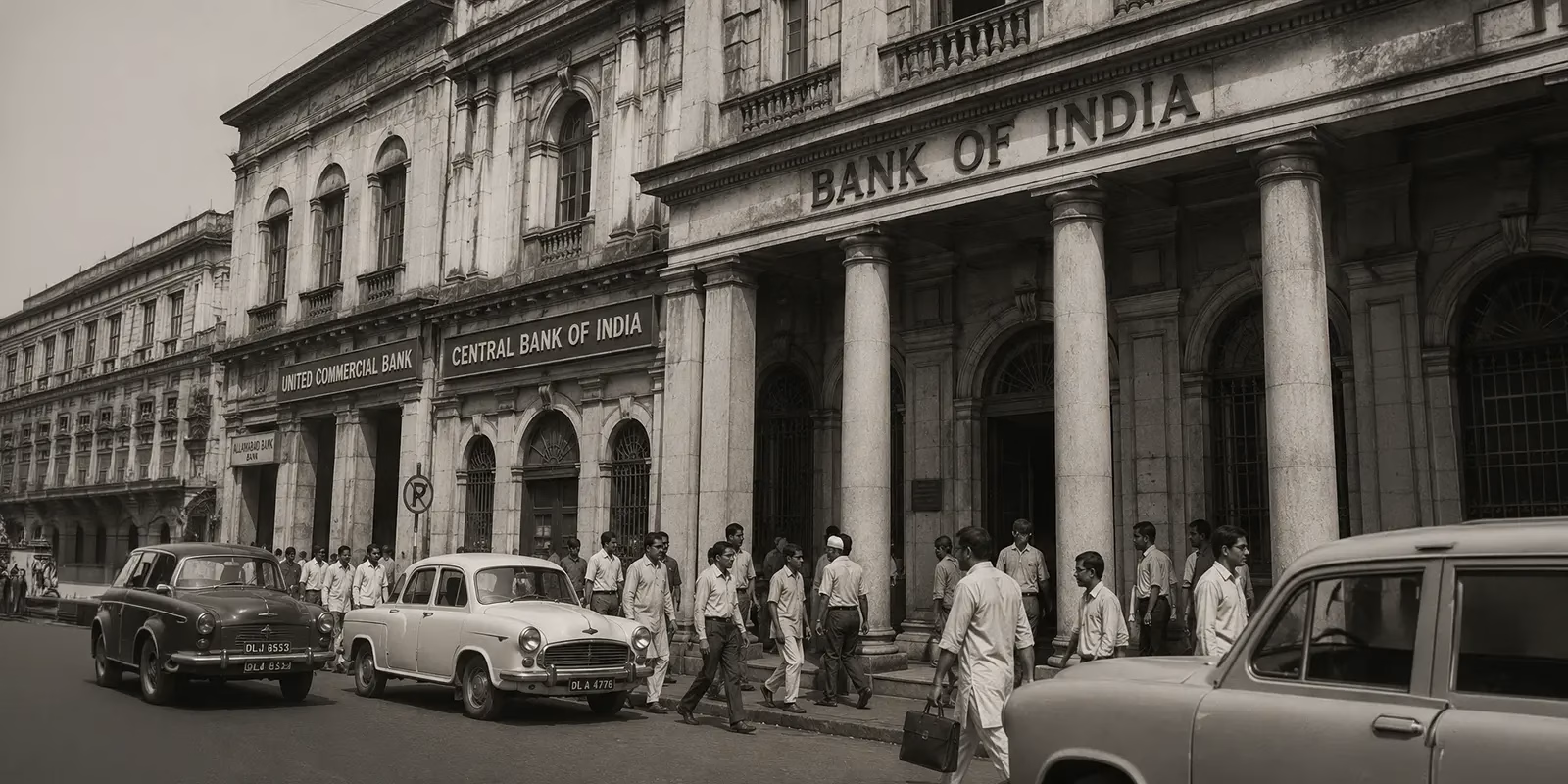
At the time, almost all of India’s major banks were privately owned. These banks mostly lent money to large businesses and wealthy industrialists because that was where they earned the highest profits.
For small farmers, shopkeepers, and people living in villages, getting a bank loan was extremely difficult. Many had no choice but to borrow money from local moneylenders, who often charged very high interest rates.
Prime Minister Indira Gandhi believed this had to change. She wanted banks to serve the entire country, not just a small section of society. Her idea was simple. If banks were controlled by the government, their money could be used to support farming, rural development, and small businesses.
But not everyone agreed with her.
And the biggest disagreement came from someone sitting beside her.
The Bank Dispute That Divided The Cabinet
Morarji Desai, the finance minister of Indira Gandhi, had a very different opinion. He believed that the government should gradually increase its control over the banks rather than taking them over completely.
The disagreement between the two leaders quickly became one of the biggest political conflicts inside the government.
Finally, in July 1969, Indira Gandhi took a bold step. She removed Morarji Desai from the Finance Ministry. Feeling insulted, Desai resigned from the Cabinet.
With her strongest opponent out of the way, she was ready to move quickly. But there was one problem.
Parliament was about to meet.
The Midnight Decision That Changed Every Bank
Indira Gandhi decided not to wait.
On the evening of Saturday, July 19, Indira Gandhi bypassed Parliament entirely. She drafted an emergency law called an ordinance. She rushed to the Acting President, V.V. Giri, and had him sign it late at night.
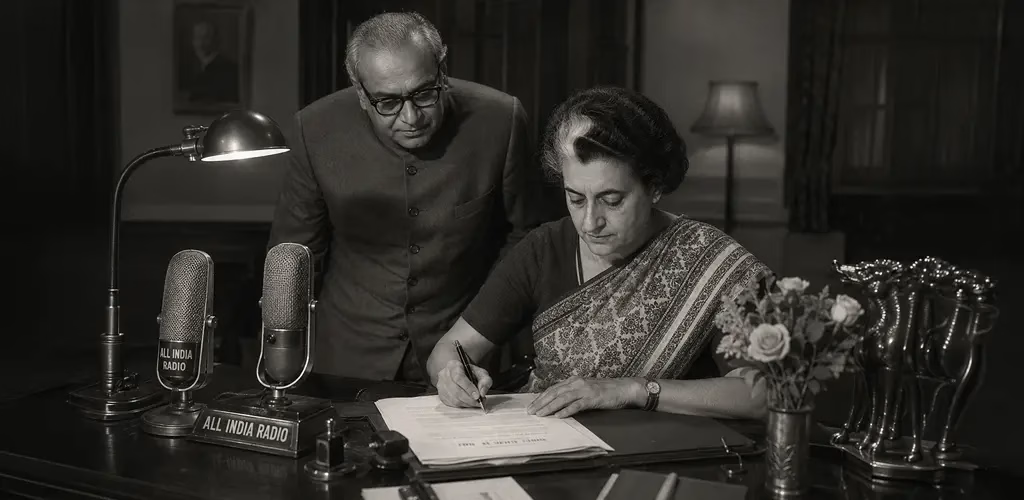
At 8:30 PM, Indira Gandhi addressed the nation over All India Radio. She announced that 14 of India’s largest private banks, which held around 70 per cent of the country’s bank deposits, would now belong to the government.
The announcement stunned the nation.
The Man Who Sued The Government
The owners of the banks were furious, but it was a shareholder named R.C. Cooper who took the fight to court. Cooper was a businessman and a director of the Central Bank of India.
He believed that the government could not take over private banks without paying fair compensation. Cooper challenged the decision before the Supreme Court in what later became known as the R. C. Cooper Case.
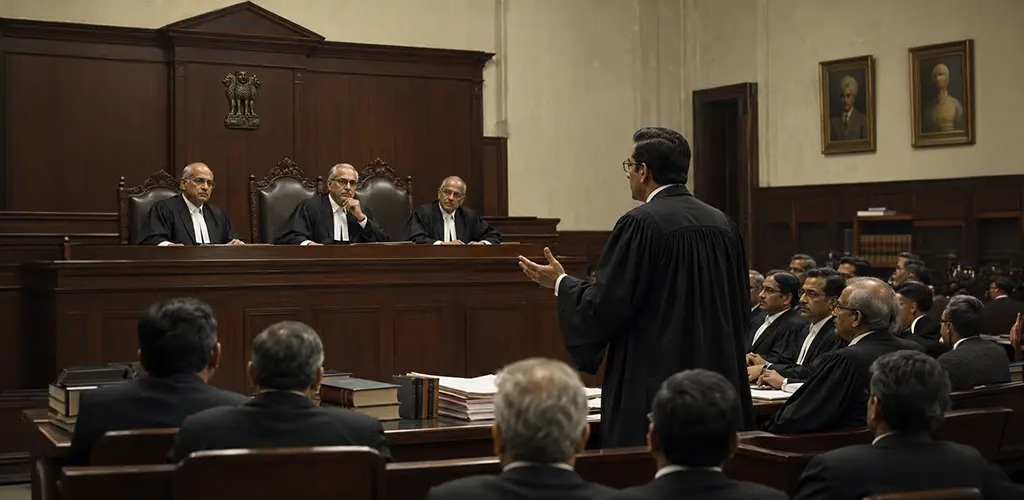
After months of arguments, in February 1970, the Supreme Court ruled in Cooper’s favour, striking down the nationalisation act.
For many, it looked like the government’s plan had come to an end. But Indira Gandhi had no intention of giving up.
Within days, her government prepared a fresh law, made changes to address the Court’s concerns, and passed it through Parliament. The banks remained under government ownership.
The Legacy of India's Bank Nationalisation
The journey that began with a disagreement inside the Cabinet and a late-night decision changed India forever. Thousands of bank branches soon opened in villages across the country. Farmers finally got access to safer loans, and bank nationalisation helped support the Green Revolution, which made India self-sufficient in food.
Every July 19, we remember this chaotic chapter in India’s history. It reminds us how one week of major political decisions changed the way millions of Indians managed their money, bringing banking services closer to even the poorest people in the country.