What If Nature Conservation Isn't As New As We Think?
Imagine treating plants as a patient.
A farmer had to notice when the soil was changing, understand when a plant needed water, and figure out what to do when a tree became sick.
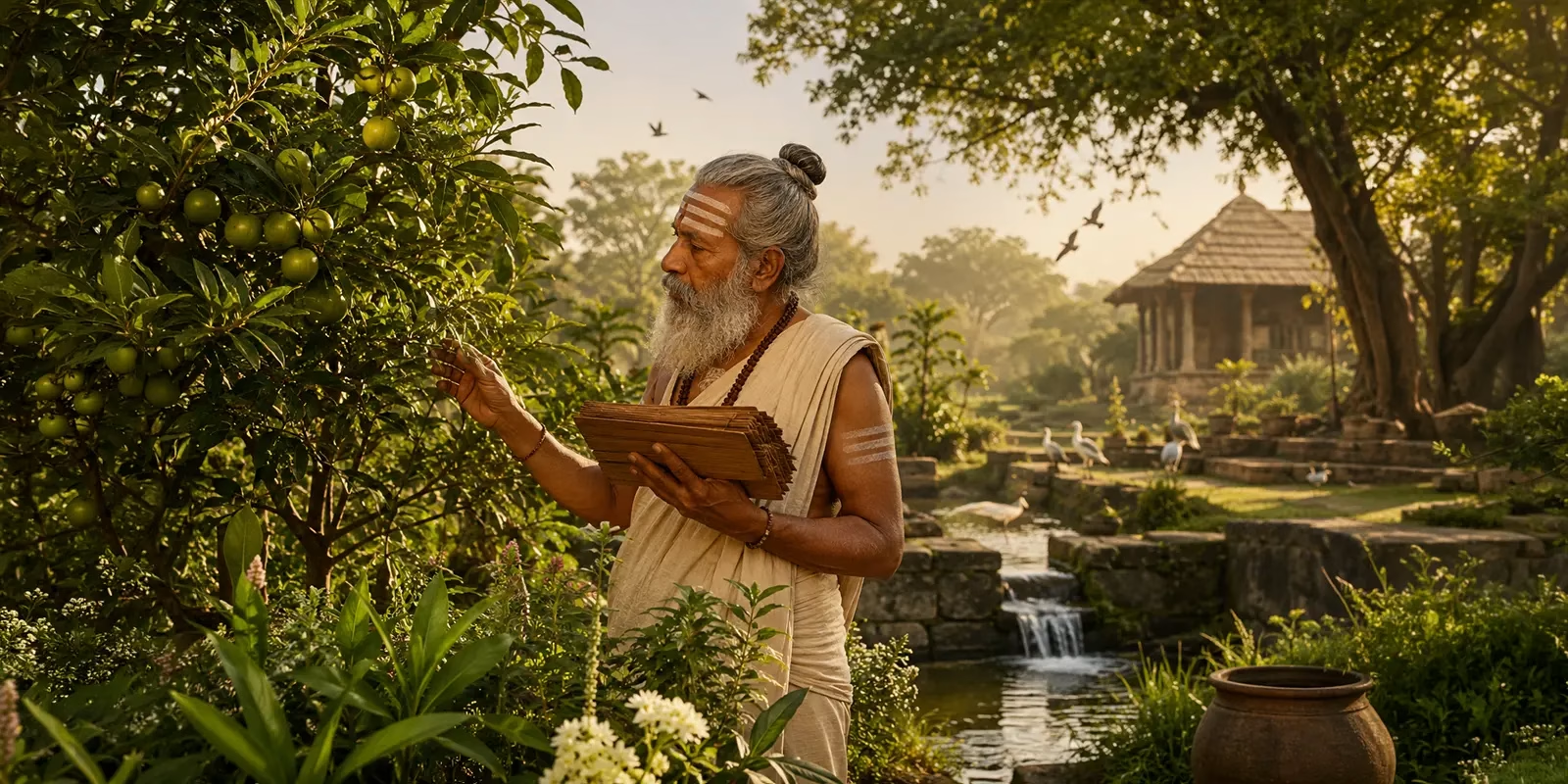
This knowledge was recorded in Vrikshayurveda, an ancient Indian tradition of plant care. The word literally refers to the science of plant life. One of the best-known texts on the subject is associated with Surapala, who wrote about planting, seeds, soil, watering, plant diseases and nourishment.
But what makes Vrikshayurveda worth talking about today is not simply its age.
It is the way it looked at a plant.
Before the Seed, There Was the Soil
Imagine preparing a field for planting. The easiest thing would be to put the seeds into the ground and wait for them to grow.
But Vrikshayurveda took a different approach.
Before planting, it discussed choosing suitable land, examining the soil and preparing planting pits. It also dealt with selecting, treating and sowing seeds.
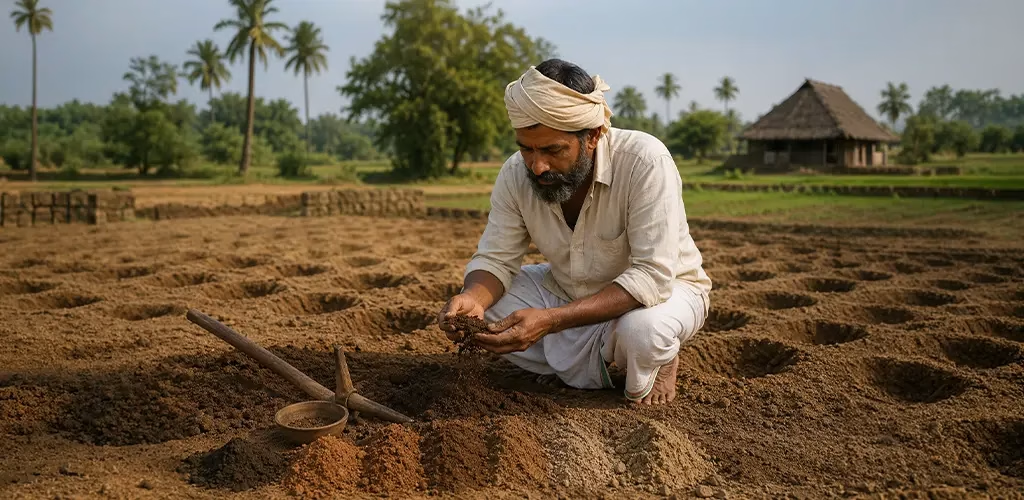
The reason was simple. Not every plant grows well in the same place.
So instead of asking only, “What should I plant?”, the farmer also had to ask, “Where will it grow best?”
That small change in thinking leads to another question.
Once the right seed was in the right soil, how much water should it get?
Water Was Not a One-Rule-Fits-All Job
A plant needs water, but more water does not always mean better growth.
Vrikshayurveda included different methods of watering and considered factors such as the plant, soil and surrounding conditions. It treated plant care as something that needed attention rather than one fixed rule for every tree.
That meant the farmer had to watch what was happening around the plant.
And this careful observation mattered even more when the plant started showing signs that something was wrong.
Because Vrikshayurveda did not only explain how to grow a healthy plant.
It also asked what to do when a plant became sick.
What Did They Do When a Tree Became Sick?
Vrikshayurveda contains descriptions of plant diseases and their possible causes. It also discusses ways to protect plants from pests and treat different problems. One important idea was to look at the signs of the problem before deciding what to do.
That sounds quite practical.
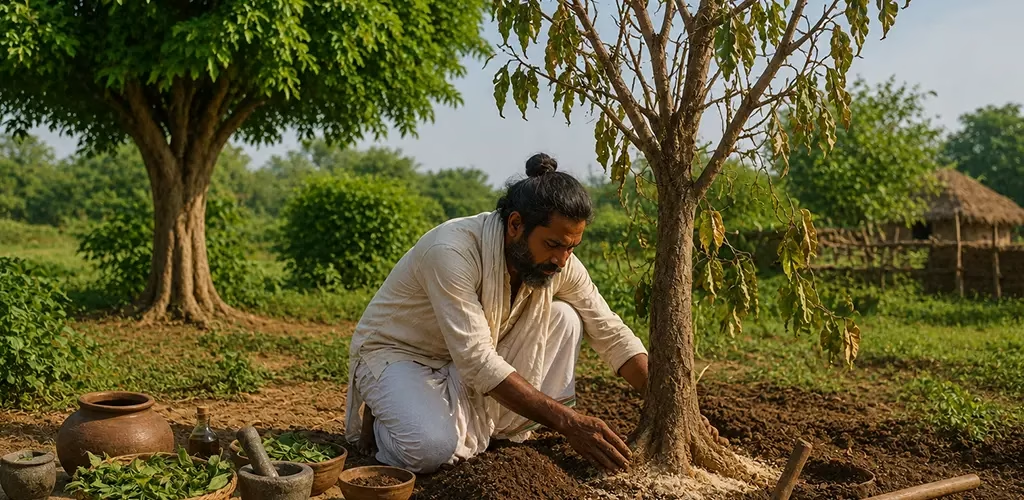
If a tree was drying, losing leaves or failing to grow, the answer was not simply to cut it down.
There is an even more interesting detail.
The text describes transplanting trees that did not recover from other treatments. In some cases, moving a tree to another suitable place was considered another way to help it survive.
So a struggling tree could be given another chance.
But even after choosing the right land, water and treatment, a plant still needed food.
And this is where one of Vrikshayurveda’s most unusual ideas comes in.
The Strange Plant Food Called Kunapa
Among the preparations described in Vrikshayurveda is Kunapa, a fermented liquid manure used to nourish plants.
Its preparation used a mixture of organic materials. The text describes ingredients including animal matter, milk, sesame oil cake, black gram, honey and ghee, which were left to ferment before being used for plants.
The recipe may sound very different from the fertilisers we see today, but the basic idea is easy to understand – use natural materials to put nutrients back into the soil.
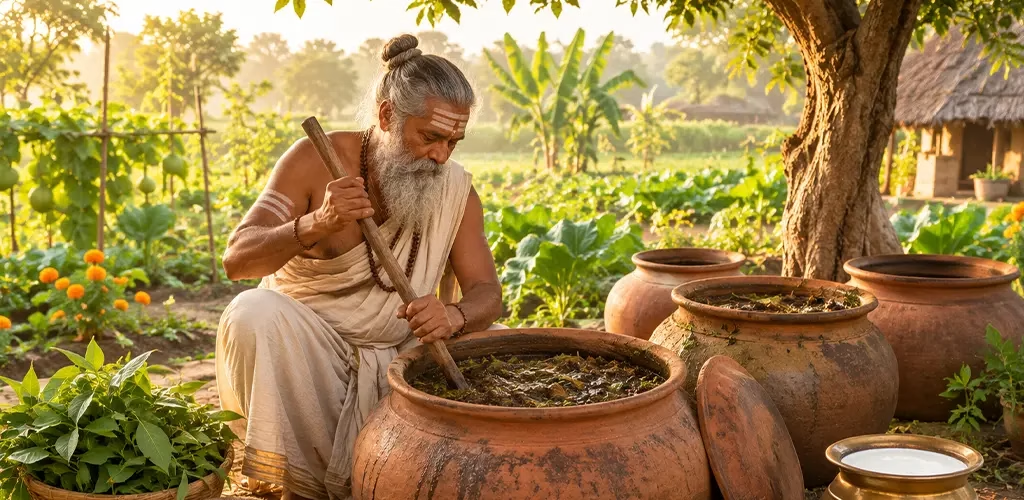
What is interesting is that this was not treated as a separate trick. It was part of a much bigger way of looking at plant life.
The soil was connected to the plant, water affected its growth, the season mattered, and even the place where a tree was planted mattered. And that brings us back to the reason this old knowledge is worth looking at today.
What Vrikshayurveda Says About Nature Conservation
On World Nature Conservation Day, we often think about what we can do to protect forests, save water or reduce damage to the environment.
Vrikshayurveda offers a much older way of looking at the same relationship. It shows a system in which plants were not simply something to be planted, harvested and replaced. Their soil, water, health and surroundings all needed attention. That does not mean every old method should be brought back exactly as it was. Modern agriculture has its own knowledge, tools and research.
But there is something worth noticing here.
Centuries ago, caring for a plant meant watching it closely enough to understand what it needed. Maybe that is the part we have not changed much after all.
A seed can be planted in a few seconds. A tree can take years to grow. And perhaps nature conservation begins somewhere between those two moments!