Munshi Premchand: More Than Just a Writer
What is the cost of giving up comfort and risking your career just to speak up, especially when staying silent would have been much easier?
The answer lies in the life of Munshi Premchand.
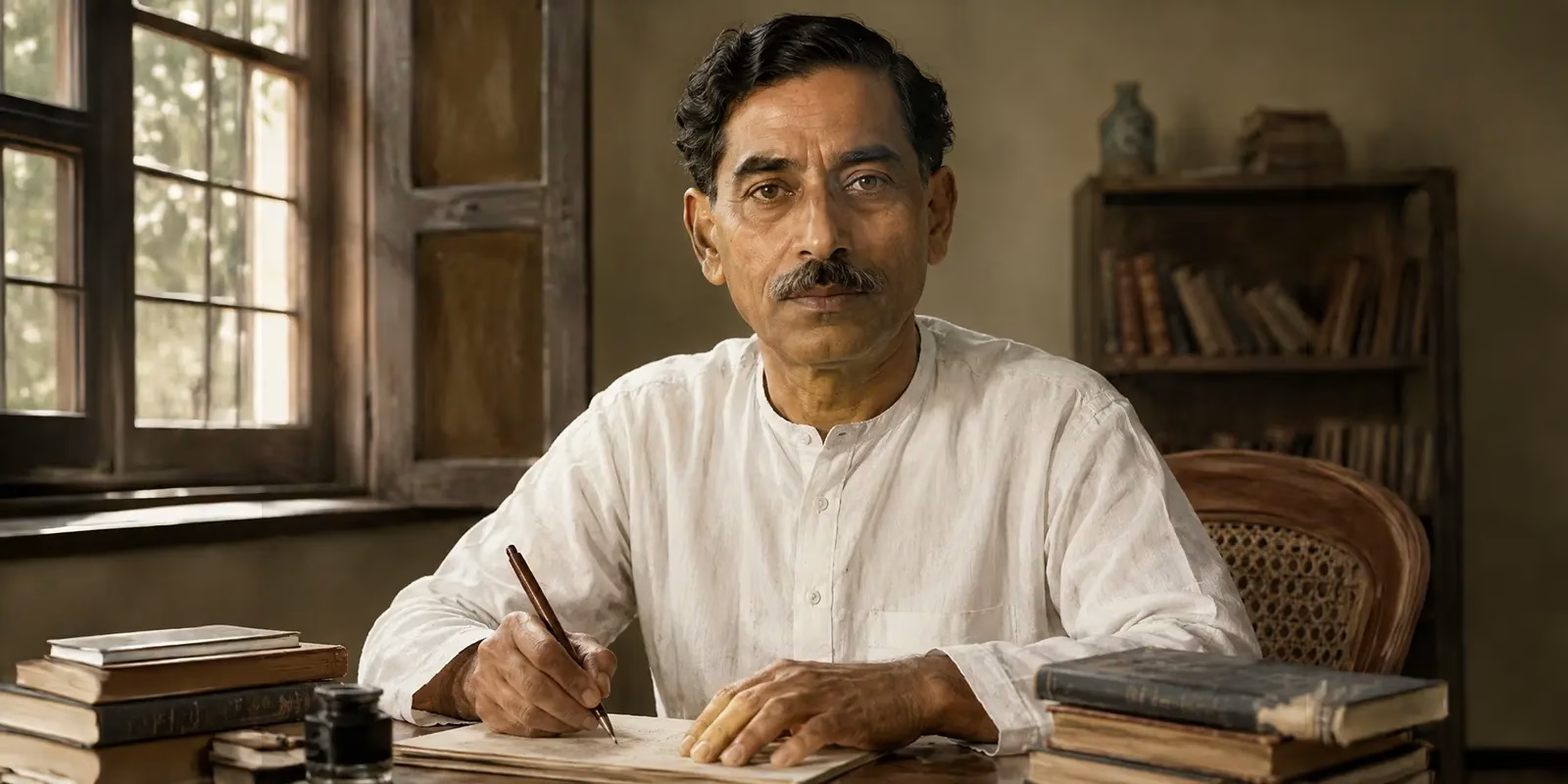
Most of us know him for stories like Godan and Idgah. But before he left his mark on Hindi literature, Premchand was a man who questioned the world around him.
He did not rebel with sharp weapons or fiery speeches. His ammunition was the one thing that he carried along with him – his pen.
Premchand Who Was Once Nawab Rai
Long before the world knew him as Munshi Premchand, he was Dhanpat Rai Srivastava, a young man who started writing under the name Nawab Rai.
In 1907, Premchand published Soz-e-Watan, a collection of stories filled with love for the country and a desire for freedom. The British government soon realised that these stories could inspire people to rebel against colonial rule.
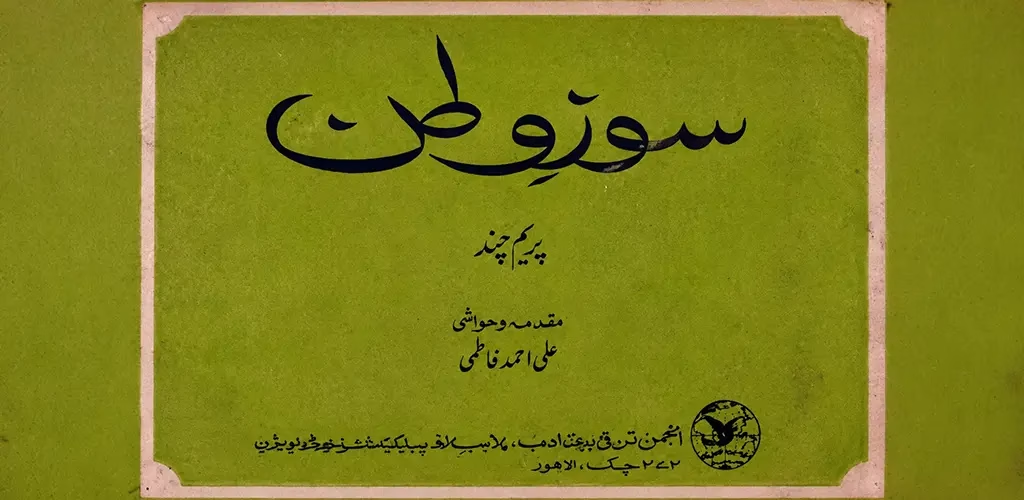
So, the District Magistrate of Hamirpur summoned him, declared his writings seditious and ordered the copies of the book to be confiscated and burned. Premchand was also warned against writing anything similar ever again.
But the British authorities were only focusing on the name, not the person behind it.
So Premchand found another way.
He dropped the name Nawab Rai and began writing under a new identity: Premchand, proving that changing a name was far easier than silencing a writer.
And that voice would soon begin questioning not just foreign rule, but the problems within society itself.
Premchand’s Rebellion Beyond the Pages
In early 20th-century India, widow remarriage was still considered unacceptable in many communities. Widows often faced isolation and harsh social restrictions, leaving them with little freedom over their own lives.
The same man who questioned unfair traditions through his stories was also ready to challenge them in his own life. At a time when widow remarriage was still criticised by many, Premchand made a decision that invited social judgement. In 1906, he married Shivrani Devi, a young widow. It was not just a personal choice. It was a statement against the customs he believed were unfair.
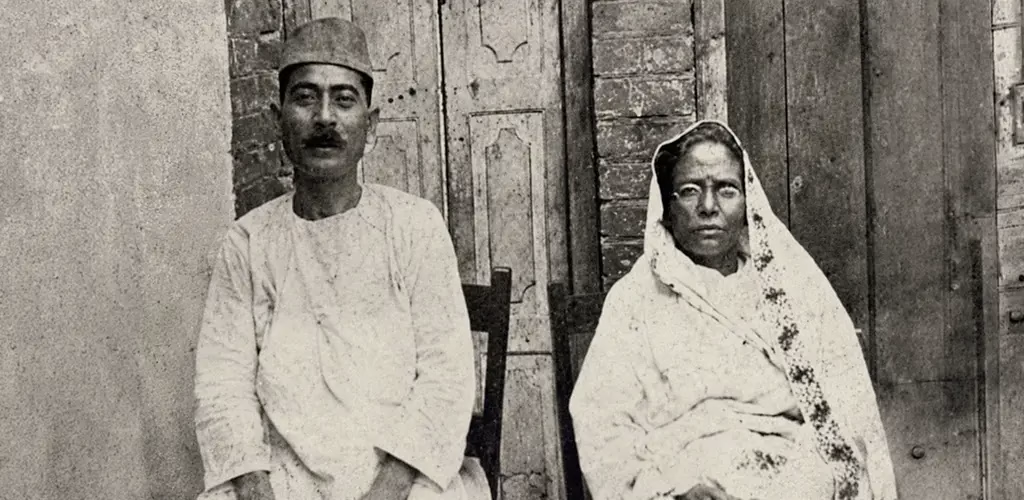
Premchand wrote about breaking social barriers. But he also showed that change had to begin with personal choices. Yet the hardest choice of his life was still waiting for him.
The Choice That Changed Premchand's Life
By 1921, Premchand had something many people dreamt of: a secure government job. As the Deputy Inspector of Schools under British rule, he had built a respectable career and a steady source of income.
Around the same time, Mahatma Gandhi launched the Non-Cooperation Movement. Indians were encouraged to leave government institutions and refuse cooperation with British rule. For Premchand, this was not an easy decision – he had a family to support, his health was not always strong, and walking away simply meant leaving behind a reliable income.
But after years of using his pen to question injustice, he could not continue serving the same system he criticised. So, he resigned.
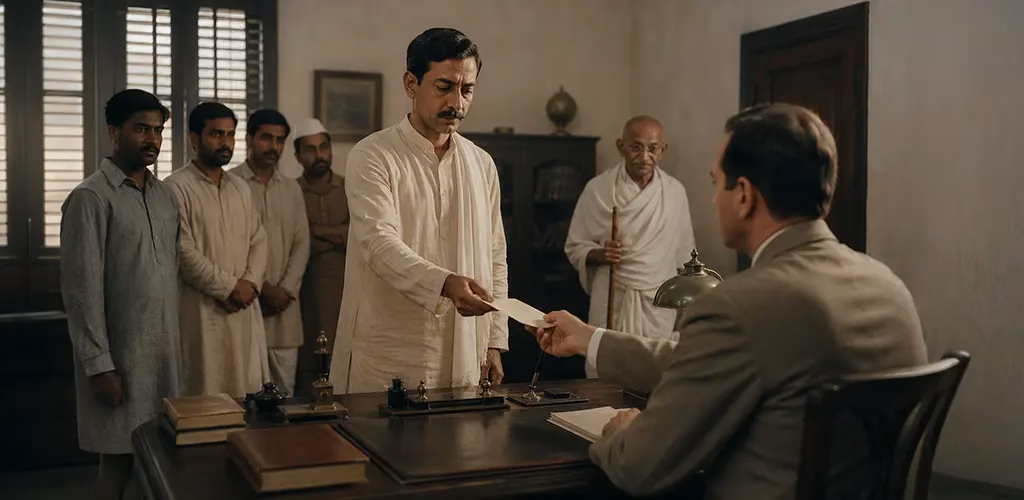
He gave up a secure government job for an uncertain future to support the freedom movement – he had no army behind him and no political power. What he had was his pen, and it had already proven his strength.
But the real impact of his writing was not just limited to that era. It continued long after, through the stories that generations would grow up reading.
More Than Stories, A Voice for Change
Today, Premchand is a writer whose stories became a part of our classrooms. But behind every character he composed was a purpose that went far beyond the story itself.
Over the years in his life, he lost the identity he initially started writing with, but later found a name that made him memorable forever. He left behind a secure career to stand by his beliefs and lent a voice to struggles that many people were afraid to speak of.
And perhaps Premchand’s greatest achievement was never the stories he wrote but the courage with which he chose to put words on paper!