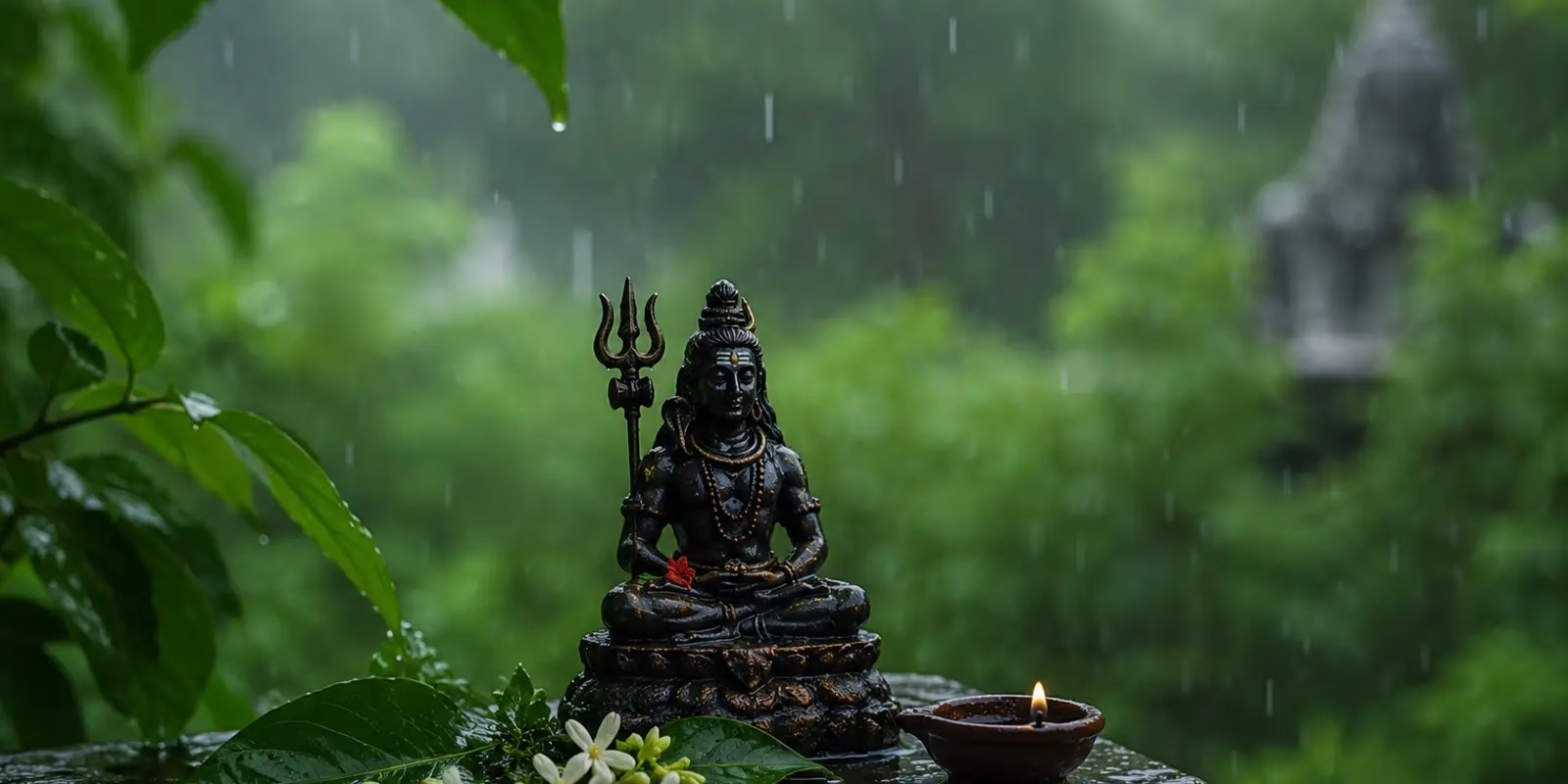
Sawan: The Sacred Side of the Monsoon
India is often called a land of the sacred, where even the simplest things can carry a deeper meaning.
But there’s one month when almost everything seems to become part of that sacred world: the rain falling from the sky, the three-lobed bael leaves offered to Shiva, the first Monday of the week, and even the food we eat.
That month is Sawan.
What looks like a rainy month on the calendar is, in Hindu tradition, a season filled with devotion, fasting, rituals and ancient stories.
But what story inspires the month to be one of the most revered traditions in Hindu calendars?
Why Sawan Is the Month of Lord Shiva
Why is the month known as Sawan or Shravan tied to Lord Shiva?
According to legend, it begins with the Samudra Manthan, when gods and demons came together to churn the cosmic ocean in search of Amrit, the drink of immortality. But before the Amrit could appear, something far more dangerous came out of the ocean: Halahal, a deadly poison. It was so strong that it started burning the whole universe.
To save the world, Lord Shiva stepped forward and drank the poison to stop it from spreading. Seeing the danger, Goddess Parvati held his throat so the poison would not enter the rest of his body. The poison never went into his body and remained in his neck, turning it blue, which is why he is also called Neelkanth, the Blue-Throated One.
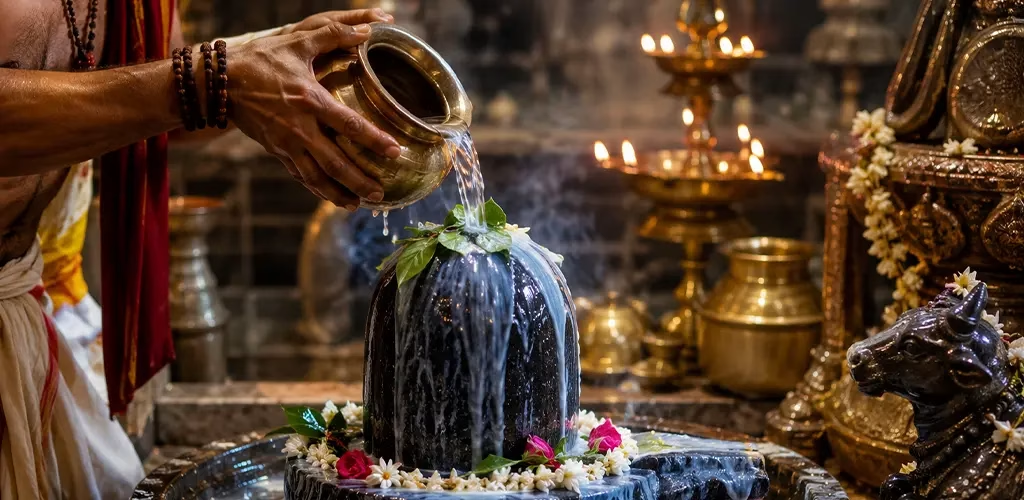
Drinking that poison made Lord Shiva’s body burn with intense heat. Seeing this, the gods began pouring water and milk over him to cool him down, while rain fell from the sky. Over time, this act of devotion became part of the worship we see during Sawan. Devotees pour water (Jalabhishek) and milk over the Shiva Lingam to thank the lord who saved the world.
And this devotion doesn’t just happen at local temples; it sends millions of people on an incredible journey on foot.
From Ganga to Shiva: The Kanwar Yatra
In the month of Sawan, you will see thousands of devotees dressed in bright orange clothes walking barefoot on the roads. They are called Kanwariyas, and they are on a special pilgrimage called the Kanwar Yatra.
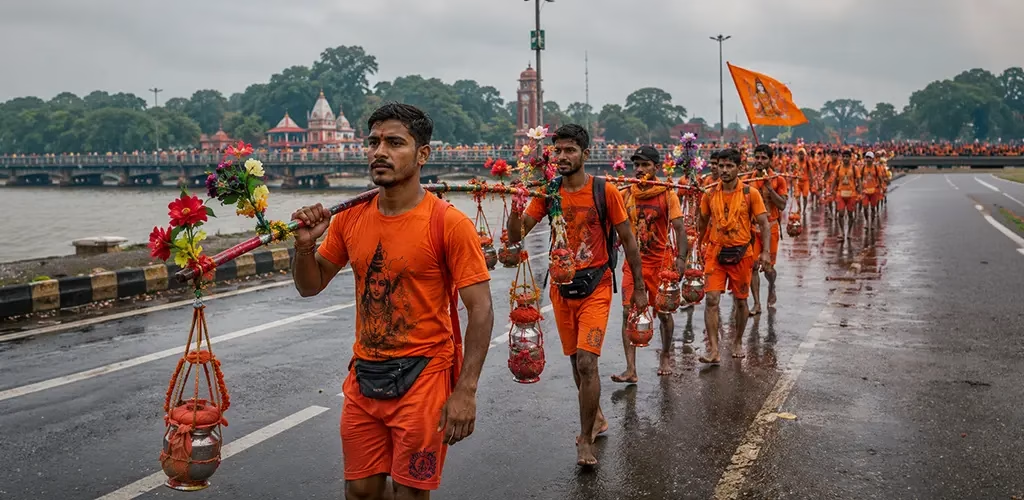
For days, the road becomes their pilgrimage. With a decorated Kanwar on their shoulders and pots of Ganga water hanging from either side, they walk miles to bring the sacred water and offer it to Lord Shiva.
But the story behind this tradition goes much further back.
It begins with King Bhagirath, who wanted to bring salvation to the souls of his ancestors. He prayed for years to bring the sacred river Ganga down from heaven to Earth. But when Ganga finally descended, her force was so powerful that it could have split the Earth. That was when Lord Shiva stepped in and caught the mighty river in his matted hair, holding back its force so Ganga could descend gently to Earth.
King Bhagirath wanted to honour Lord Shiva for saving the Earth. So he carried Ganga water on his shoulders in a Kanwar and walked barefoot to offer it to Lord Shiva. This is believed to be the beginning of the Kanwar Yatra. Today, millions of pilgrims carry that same spirit, walking endless miles with the same energy and faith to honour his legacy.
The Food Rules of Sawan: Where Faith Meets Science
While Sawan brings colourful processions and prayers, it also completely changes what goes on in the kitchen.
If you live in an Indian household, you know the biggest rule of Sawan: no non-veg, and often no onions or garlic. While this feels like purely a religious rule, there is a fascinating mix of faith and science behind it.
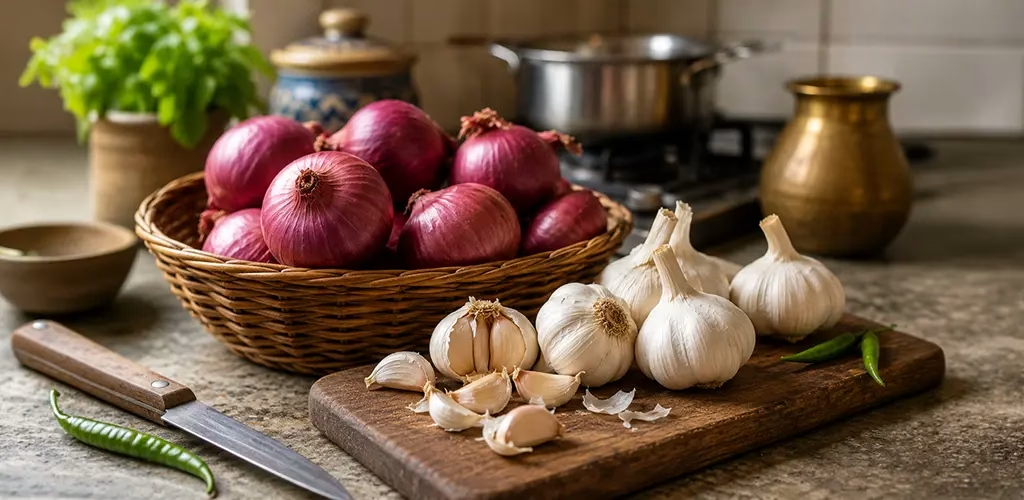
In Hindu traditions, Sawan is a time for Sattvic living, which is about keeping the mind and body calm, simple, and focused on spirituality. This is why many people avoid meat because it involves harming other beings, while onions and garlic are traditionally considered Tamasic foods, believed to bring heat and restlessness and make it harder to stay peaceful during prayers and meditation.
But there is also a practical side to these food habits.
There is also a practical reason behind some of these food habits. The monsoon brings humidity, changing temperatures, and conditions in which food can spoil more quickly. Meat, especially, needs to be stored and handled carefully during this time. So, these old food practices may have also encouraged people to be more mindful about what they ate during the rainy season.
The Changing Sound of Sawan
Sawan is traditionally seen as a month to slow down. It reflects in the way people eat, pray, and even in the Kanwar Yatra, where devotees walk for miles carrying Ganga water to offer to Shiva.
But over the years, something has changed.
While the stories, habits and traditions of Sawan have always pointed towards its pious and reflective nature, most Kanwar Yatras now come with heavy bass DJs, blaring music, and loud celebrations.
With everything that Sawan stands for, perhaps the real question is: do festivities always demand celebration, or can some be better honoured through quiet observation?