
Mitra: The Forgotten God Behind the Word Friend
Every Friendship Day, our phones get filled with messages, wrists with friendship bands and feeds with posts about the people who make life a little better.
But have you ever wondered where our idea of a friend actually comes from?
Before Friendship Day became a celebration on the calendar, ancient Indians had a very different way of looking at trust between people. They believed that keeping promises, staying loyal and living peacefully with others were important enough to have a divine guardian.
His name was Mitra.
But who was this forgotten god, and how did his name survive long after his worship faded?
The God Who Watched Over Friendship
Long before grand temples became common, ancient Indian thinkers composed hymns of the Rigveda. Among the many gods mentioned in these hymns was Mitra, a deity linked with friendship, harmony, truth and agreements.
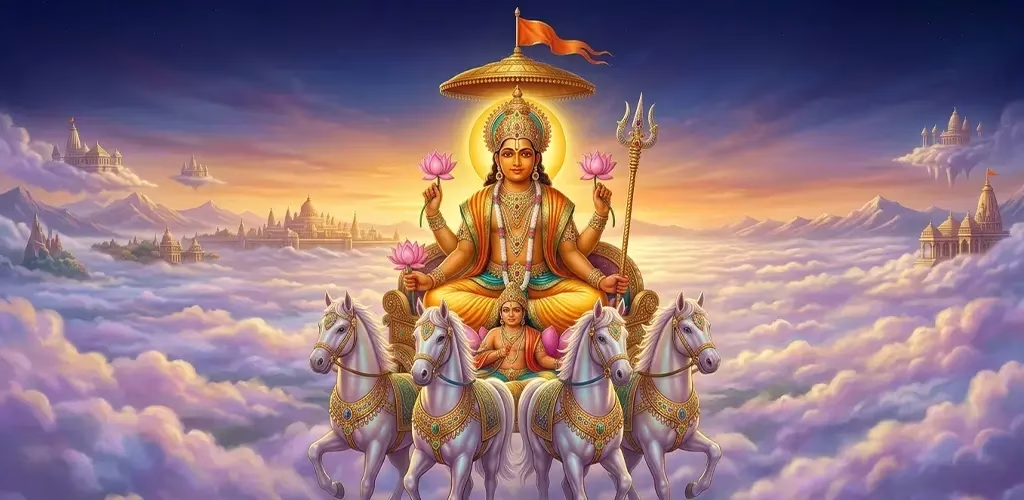
Mitra was not known for fighting monsters or controlling storms.
His power was much quieter.
He represented the trust that allowed people to live and work together. A promise between two people, an agreement between rulers or a bond between companions could all be seen as things that Mitra watched over.
In a world where a person’s word mattered greatly, that was no small role.
But there was something else about Mitra that makes his story even more interesting.
He was rarely seen alone.
Mitra and Varuna: The Vedic Guardians of Trust
Mitra was closely linked with Varuna, another important Vedic deity. Together, they were associated with truth, order, and keeping promises.
Their roles were different, but they worked together.
Mitra represented the warmer side of trust, friendship, goodwill and honest relationships. Varuna represented the stricter side, watching over truth and the consequences of breaking an oath.
It is almost like two sides of the same friendship.
One reminds you to care about people. The other reminds you that trust comes with responsibility.
And this tells us something important about how ancient people understood friendship.
It was not simply about having fun together.
It was about keeping your word.
But if Mitra was once such an important figure, why don’t we see his temples everywhere today?
The God Who Disappeared, But Not His Name
As Indian religious traditions changed over the centuries, Mitra became less central than many of the other gods we know today.
His worship faded.
His name did not.
The Sanskrit word mitra, which meant friend or companion, continued to be used. Over time, forms of the word became part of several Indian languages, including mitr in Hindi and related words in other languages.
And Mitra’s story travelled even further.
In ancient Iran, a related form of the name became Mithra, a figure connected with truth, agreements and light. The name later appeared in the Roman world as well.
So while people gradually stopped praying to Mitra in the way they once had, his name continued to travel from one generation to another.
And that leaves us with a rather strange thought.
Every time we use the word mitr, are we unknowingly carrying a tiny piece of that ancient story?
The Vedic Idea Behind True Friendship

Today, friendship can look as simple as a message, a picture or a friendship band. But Mitra’s story takes us back to a time when friendship meant something deeper. It was about trusting someone, keeping your word and standing by them when it mattered.
Mitra may have faded from temples, but the idea behind his name never really disappeared. It stayed in our language, passed from one generation to another, until mitr became an everyday word for the people we call friends.
And perhaps that is what makes his story so interesting. We may have forgotten the god, but we never forgot what he stood for.
Maybe Mitra was never really forgotten. We simply stopped calling him a god and started calling him a friend.