
Aadi Perukku: The Celebration of a River in Tamil Nadu
Every year, when the monsoon arrives and the rivers begin to fill, water becomes a reason to celebrate.
On the 18th day of the Tamil month of Aadi, a festival called Aadi Perukku, also known as Pathinettam Perukku, is celebrated across Tamil Nadu. The festival is a way of thanking water and nature for supporting crops, families and everyday life.
What began as a way of showing gratitude for water has also become part of some of the most important moments in family life.
Karur: Where the Festival Meets the River
In Karur, Aadi Perukku brings people closer to the Kaveri. Families gather near the river with offerings, flowers, food and lamps, turning the riverbank into a place of prayer and celebration.
People offer their prayers for good rains, healthy crops and prosperity. For families who have depended on the river for generations, the rising water is more than just a change in the river. It is a sign of hope.
But Aadi Perukku in Karur has another tradition that is very different from the peaceful celebrations by the river.
A short distance away, the festival takes a very different turn, with a temple tradition that has surprised visitors for generations. And at the centre of it is something as simple as a coconut.
The Coconut Ritual at Mahalakshmi Temple
At the Mahalakshmi Temple in Mahadanapuram, near Karur, Aadi Perukku is marked by a ritual that can surprise anyone seeing it for the first time.
Devotees who have made a vow or come seeking blessings sit in rows inside the temple. A priest then breaks a coconut on their heads as part of the ritual.
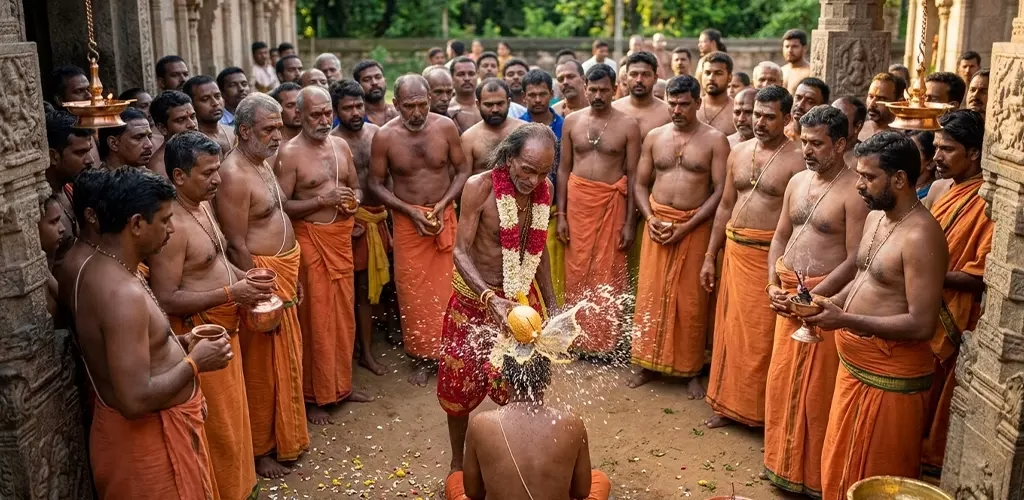
It might sound painful and even strange, when you think of it.
But the devotees who take part see it as an act of faith.
There is also a story behind the practice. The coconut is traditionally linked with Lord Shiva because of the three marks on its surface, which are said to resemble his three eyes. According to a local tradition, villagers once prayed to Shiva for help and began offering coconuts in this way. The deity is said to have answered their prayers, and the practice eventually became part of the temple’s Aadi Perukku tradition.
But the coconut ritual is only one side of the festival.
Away from the temple, Aadi Perukku also becomes part of family life, especially when a marriage enters a new stage.
How Aadi Perukku Became Part of a Marriage Tradition
For some Tamil families, Aadi Perukku is considered an auspicious time for Thaali Pirithal.
The thaali is the wedding thread worn by a married woman. During Thaali Pirithal, the original yellow thread is replaced with a chain or another form of the thaali.
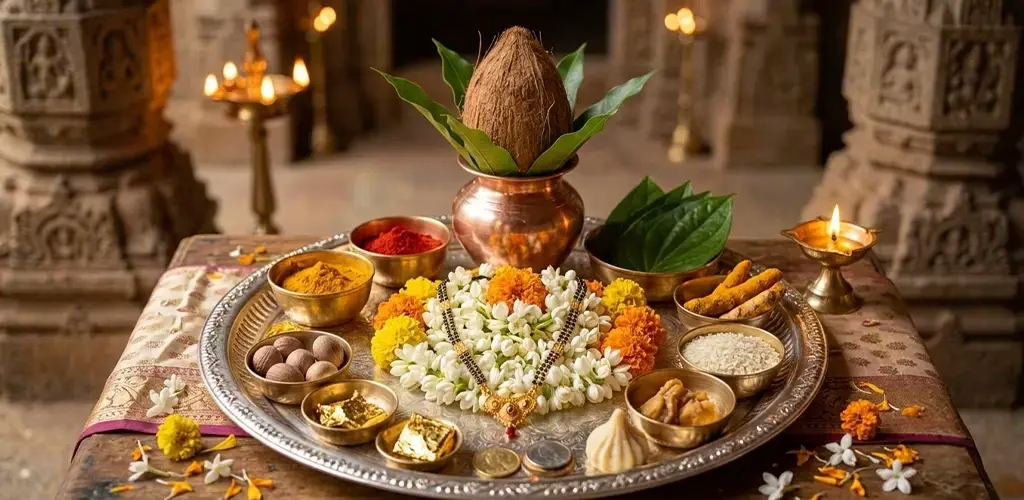
It may seem like a small change, but the ritual carries a bigger meaning. It marks another stage in a marriage and is often done in the presence of family.
And if marriage is one stage of family life, what comes when the family is about to grow?
Seemantham: From Marriage to Motherhood
Seemantham is a traditional ceremony performed during pregnancy to bless the mother and unborn child.
Families come together for prayers, blessings, food and gifts. The exact customs can differ from one family to another, and in some Tamil households, Seemantham may be held alongside or separately from Valaikappu.
The ceremony is less about one fixed ritual and more about bringing the family together to celebrate the arrival of a new member.
And after all the prayers and blessings, there is another side to these celebrations that is much more playful.
The Thoori Swing: Another Side of Aadi Perukku
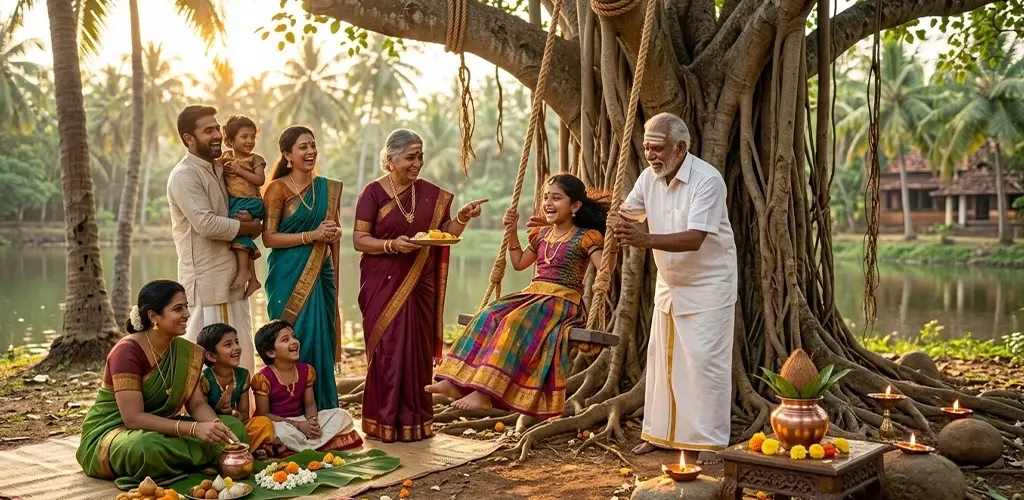
The Thoori, a traditional swing, has also been part of Tamil family and festive life.
A swing may seem like a small detail compared with temple rituals, marriage traditions or pregnancy ceremonies. But festivals have always had room for simple moments of happiness too.
Families gather, food is shared, children and adults take turns on the swing, and conversations continue around them.
From the river to the temple, from marriage to motherhood, Aadi Perukku brings together traditions that may look completely different at first.
Yet they all follow the same idea: life, family and nature are closely connected.
More Than a Festival About Water
Aadi Perukku is about being grateful for water and the life it supports. But that is not the only reason these traditions have lasted.
A festival that begins by thanking the river can slowly become part of a marriage, a pregnancy, a family gathering and even a moment of simple joy.
Maybe that is what keeps a tradition alive. The ritual may stay the same, but every generation finds its own reason to celebrate it.