Jharia’s Burning Ground: The Fire Beneath the City
Imagine waking up, stepping out of bed, and feeling the floor beneath your feet warm – not from the sun, but from a fire burning deep underground.
This is not a hypothetical scenario but an everyday reality for the people of Jharia.
Known as the “Burning City of India” and even “India’s Paatal Lok”, this city is built over a giant fire that started a hundred years ago.
So how did a century-old fire end up becoming part of normal life?
When Coal Mining Set Jharia on Fire
Jharia, a city in Jharkhand, is one of India’s most important coal-producing regions. Its coal is particularly valuable because it contains coking coal, which is essential for steel production.
This very importance, however, came with a cost.
Coal mining grew rapidly in Jharia during British rule as demand kept rising. But as miners dug deeper into the earth, they triggered a chain reaction that would last for over a century: coal fire.
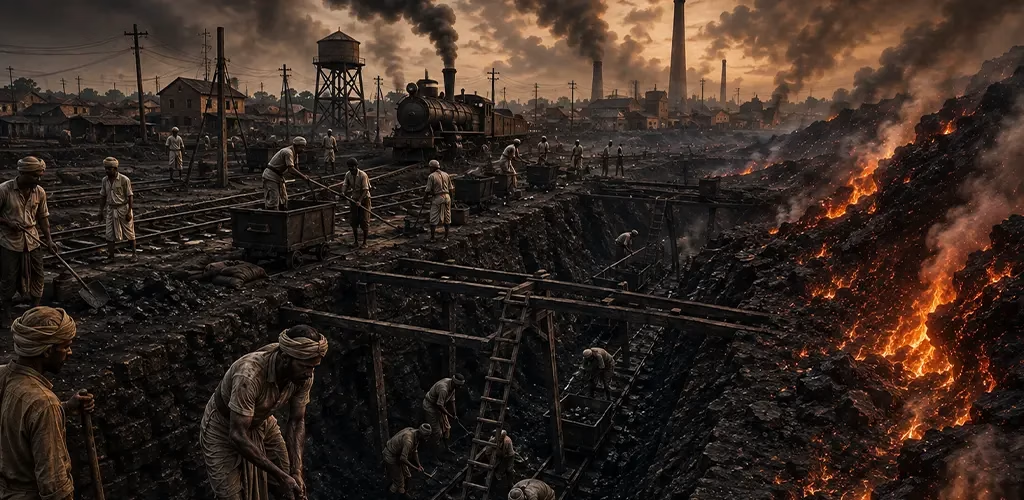
The flames did not stay in one place. They moved through the underground coal seams, sometimes following old mine workings and cracks in the earth. Over time, the fire spread further beneath the surface.
The first recorded underground fire here dates back to 1916 at Khas Jharia. There, the burning ground became so unstable that the earth suddenly sank by 18 feet, swallowing a local landholder’s house.
And the fire did not stop there.
The situation grew worse when the 1934 Nepal-Bihar earthquake tore open fresh cracks in the ground, letting in waves of oxygen that fed the hidden flames. By the 1970s, government records indicated that the fire covered nearly 18 square kilometres.
And this is where Jharia’s story stops being just about a mine.
Life Above Jharia’s Underground Fire
How do you live in a place where the ground beneath your home is burning?
In Jharia, people have learned to do exactly that. The fire that began deep inside the coal seams did not stay hidden underground. Over time, its heat, smoke and damage began reaching the surface, turning the danger beneath the ground into something people could see and feel around their homes.
Cracks appeared in the ground, smoke rose through openings, and in some places, the earth became dangerously hot. The heat could also reach homes, while the ground beneath them became less stable as the coal continued to burn.
Yet life continued above it. Families cooked, slept, worked and raised their children here, knowing that the fire beneath them had never really gone away.
The danger is not something that exists only in the distance. It is part of the place they call home.
And when darkness arrives, the landscape becomes even more unsettling.
When Jharia Glows After Dark
During the day, smoke, cracks and heat reveal what is happening beneath Jharia.
At night, the view changes completely.
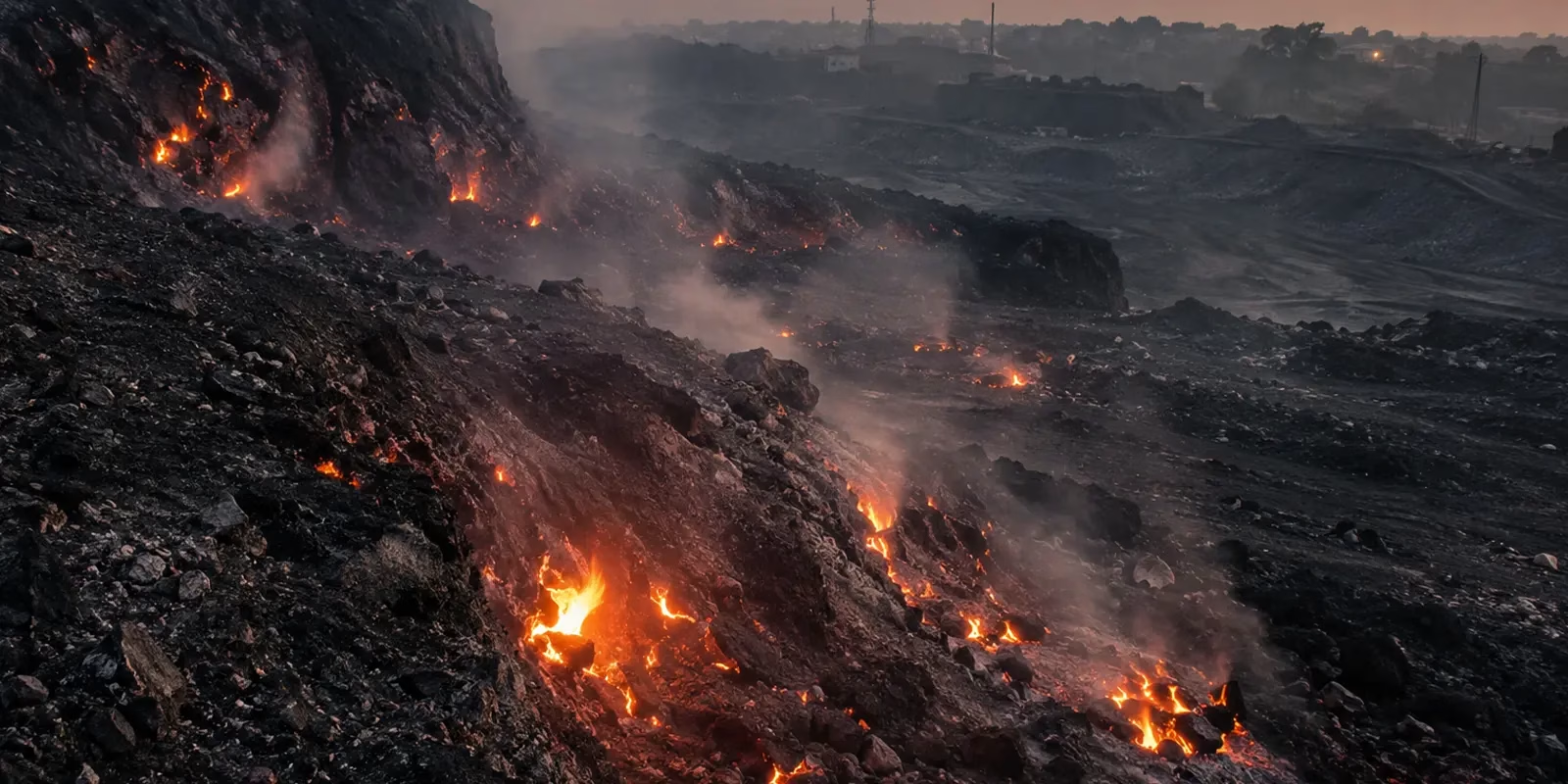
The ground glows through cracks, with blue and yellow light appearing from beneath the surface. In some spots, small flames rise right out of the earth, lighting up the neighbourhood. It looks nothing less than a horror movie.
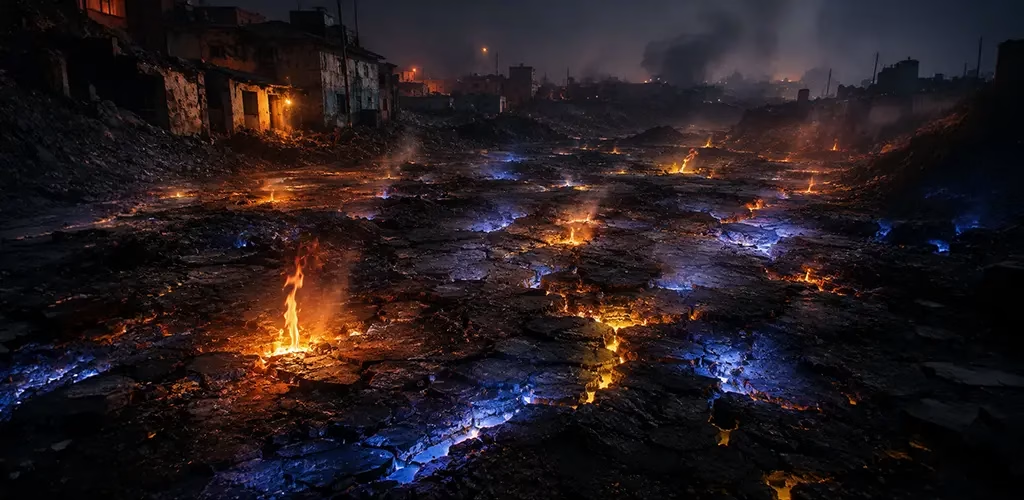
But there is nothing fictional about the people living just a few feet above these burning coal seams.
These fires are so huge that satellites in space can actually pick up their heat patterns. Yet what looks like a strange sci-fi image from space is just normal life for the people living on the ground.
Across the world, other countries have dealt with underground coal fires, but usually with very different outcomes.
Jharia’s Toxic Air: The Fire You Cannot See
While you can see the fire’s glow at night, its most dangerous impact is something you can only feel with every breath.
As the coal keeps burning beneath the town, it constantly pumps toxic gases like carbon monoxide, sulphur dioxide, and methane straight into the sky. Local air quality reports show pollution levels spiking way past national safety limits, and when compared to WHO guidelines, the numbers look even scarier.
The result is an environment where coughing and breathing difficulties have become common concerns.
And the damage doesn’t stop with the air.
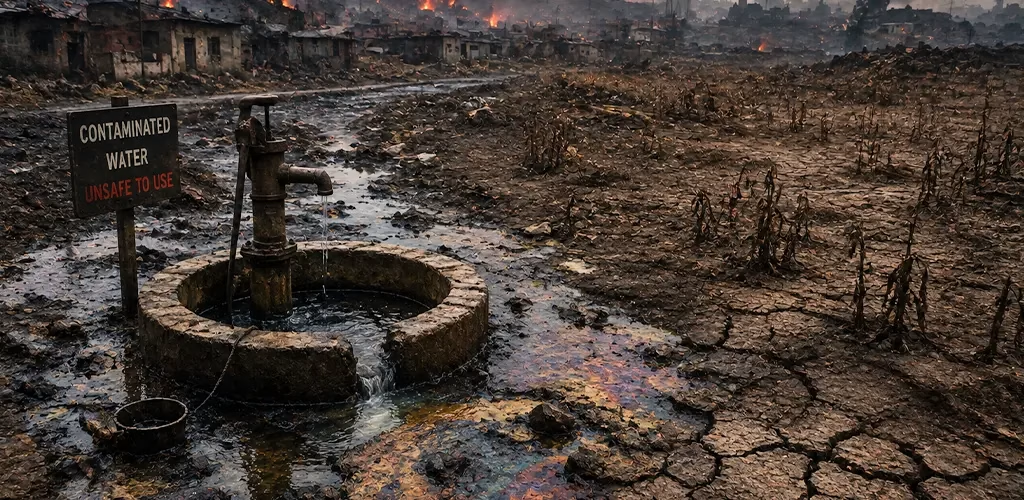
Heavy metals and harmful chemicals from the burning coal have leaked deep into the groundwater, making local wells unsafe. Soil that used to grow crops has slowly turned dry and barren. What started as an underground mine fire has now spread its toxic blanket across the entire Dhanbad region.
But Jharia is not the only place in the world to experience an underground coal fire.
Other countries have faced similar fires too, and their responses raise an uncomfortable question: could Jharia’s story have turned out differently?
From Centralia to Jharia: How Other Countries Dealt With Underground Fires
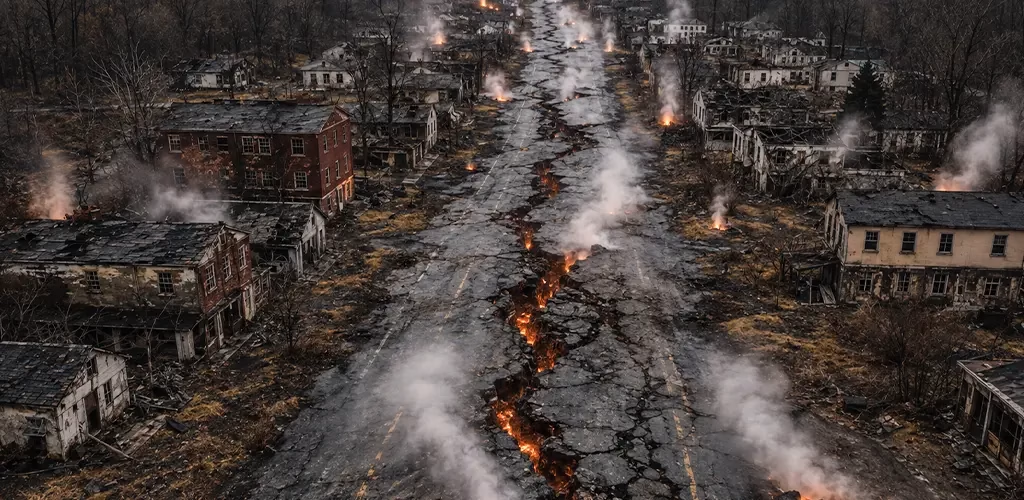
In the United States, an underground coal fire broke out in Centralia, Pennsylvania, back in 1962. The government eventually evacuated the town, relocated families and provided compensation. Today, Centralia is a ghost town, left to burn in peace.
Australia has another famous example at Burning Mountain, where an underground fire has reportedly been burning for thousands of years. But there was one major difference: people were not living directly above it.
Jharia, however, stands in a category of its own.
Millions of people live in and around this coal region, with thousands of families building their daily lives directly over the active fire zones.
Which brings us to the biggest question of all: If underground fires can be controlled or people can be moved away from them, why is the Jharia fire still burning?
A Century Later, Why Is Jharia Still Burning?
Jharia has been burning for more than a century, but that does not mean no one has tried to stop it. Water, sand, cement, clay and even nitrogen have been used in different areas, with some success.
But Jharia is not dealing with a single fire. It is a chain of interconnected fires moving through old mine tunnels, natural rock cracks, and unmined coal seams spread over vast distances.
By 1997, official reports acknowledged that completely extinguishing the underground fires was beyond existing technology, so the focus shifted towards a new strategy: relocation of people.
In 2009, the government approved the Jharia Master Plan, designed to relocate thousands of families from high-risk fire zones to newly built townships like Belgaria. But for families who depended on coal for their income, leaving Jharia also meant leaving behind their work and community. Some eventually returned.
The plan expired in 2021 with many families still in fire-affected areas. A new plan followed in 2025, offering housing along with financial support and skill training.
But Jharia has heard promises before. And behind every new plan, the same old fire continues to burn.
The Price Beneath India’s Progress
Jharia’s story is ultimately not just about coal, mines or an underground fire. It is about the people who live above that fire.
For more than a century, the high-grade coal beneath Jharia has helped power India’s steel mills, electricity and economic growth. But that progress carries a heavy human price.
That price is the child picking up coal instead of carrying a schoolbag. It is the family sleeping above burning ground. It is the worker returning to a mine because there may be no other source of income.
For the rest of the country, this coal represents power and growth. For the people of Jharia, it is simultaneously their home, their only income, and their greatest threat.
The fire has been burning for more than a hundred years. But perhaps the bigger question is not why the fire refuses to die. It is why, after all these years, so many people still have no choice but to live above it.