India and Japan: From Jail of Japanese Soldiers to an Unexpected Friend
When we hear the names Hiroshima and Nagasaki, we can only think of the barbaric bombings in World War II – the destruction that changed Japan forever.
But what followed was the most unexpected friendship that thrived despite having a very complicated past. This is the story of India and Japan’s friendship, which survived a link of brutality in Purana Qila of Delhi and started on a note of hope.
Purana Qila: The Forgotten Japanese Prisoners
Today, Purana Qila is a place people visit to relive Delhi’s history. But back in 1942, its stone walls held a very different story.
During World War II, Britain and Japan were at war, and Japanese civilians living in territories under British control were treated as enemy nationals. Many were brought to India and placed in internment camps.
Purana Qila became one of those camps.
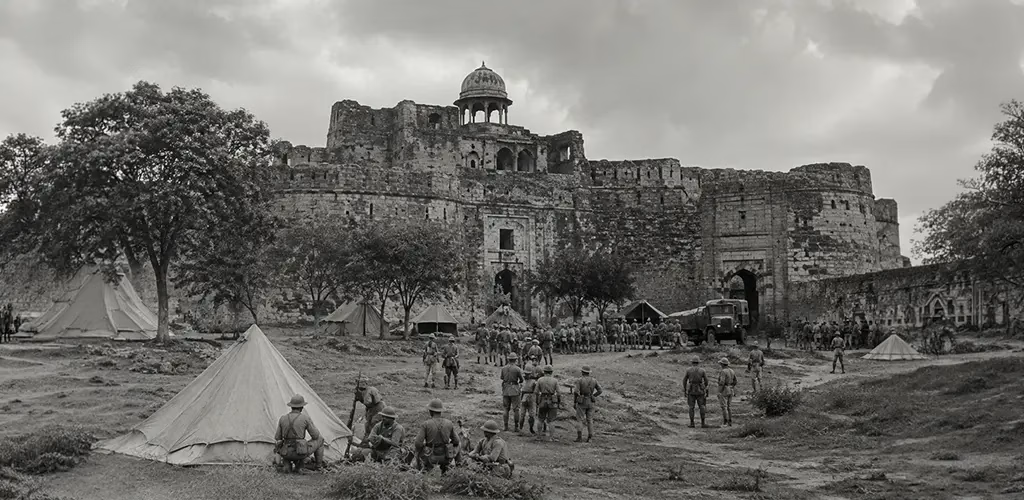
By the end of 1942, around 2,115 Japanese internees were being held there, many of them people who had come from Singapore. These civilians lived under the surveillance of British guards, far away from everything they knew.
None of them could have imagined what was being planned across the ocean, or how a secret scientific project was about to change their homeland forever.
Hiroshima: The Morning That Changed Japan Forever
By August 1945, the Second World War was reaching its final stage. Germany had already surrendered, but Japan was still fighting.
Then came August 6.
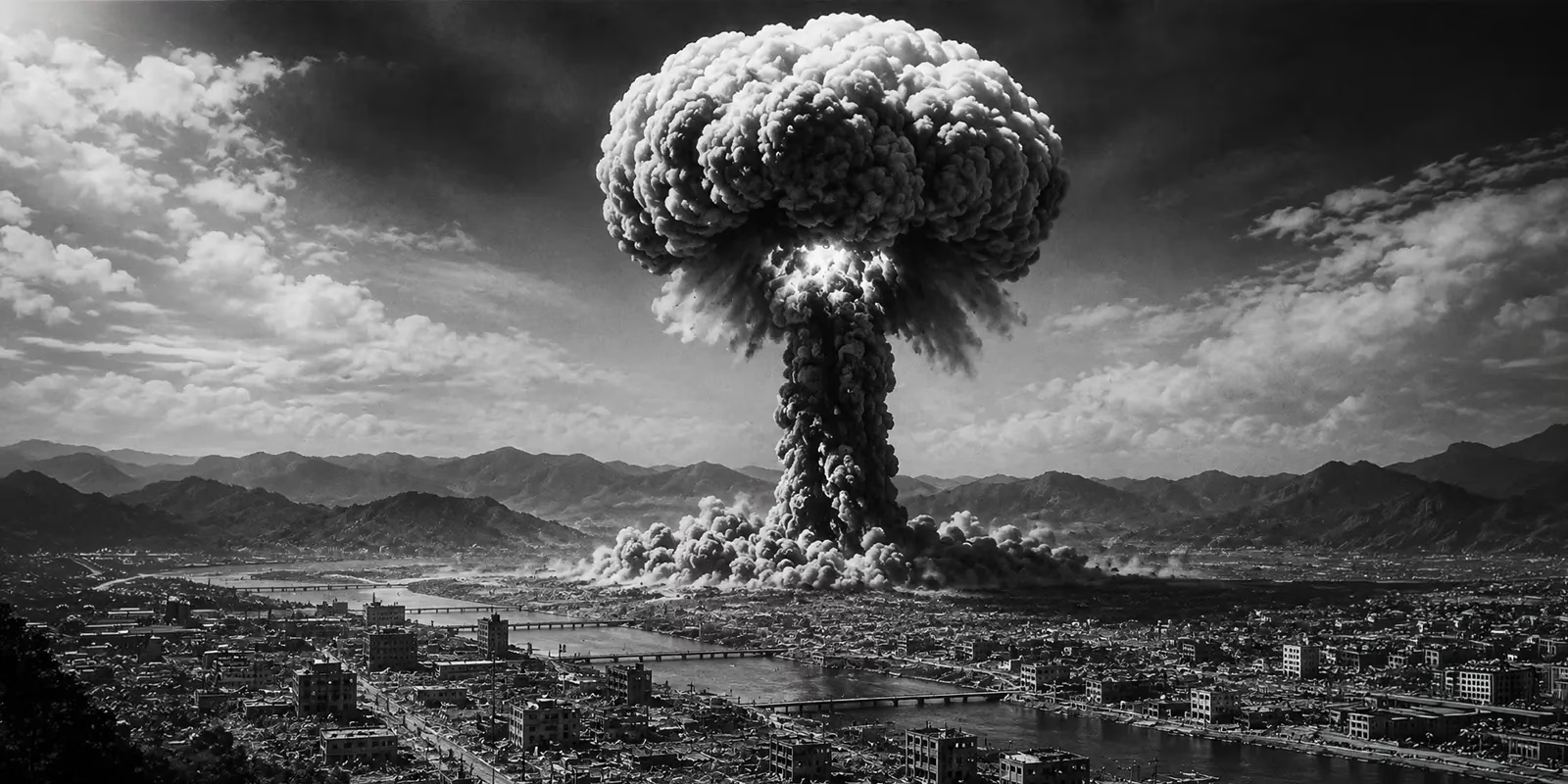
At 8:15 in the morning, an atomic bomb was dropped on Hiroshima. Within seconds, thousands of lives vanished, and an entire city turned to dust. Those who survived came to be known as hibakusha and were left to spend decades battling severe radiation illness and unfair social stigma. The blast destroyed buildings, but it also scarred an entire generation.
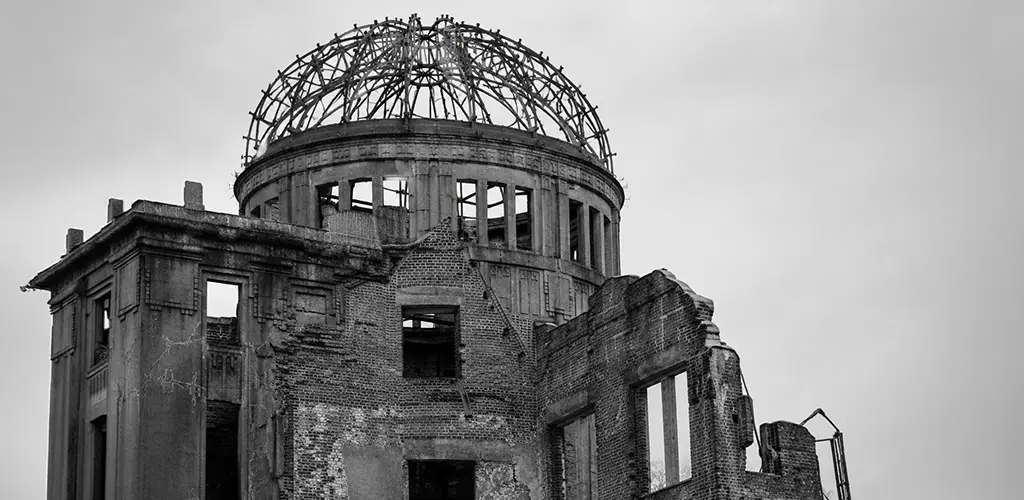
But the war was still not over, as an unbelievable twist of fate was waiting for another Japanese city just three days later.
On August 9, a second atomic bomb flew toward Japan. Nagasaki was never meant to be the target; the bomber was actually heading for the city of Kokura, but thick smoke and heavy clouds blocked the view of the city. After making three failed passes, the crew ran low on fuel. They made a quick decision to change direction and head toward their backup choice: Nagasaki.
At 11:02 a.m., the bomb fell over Nagasaki, taking thousands of innocent lives.
Six days later, Emperor Hirohito announced Japan’s surrender, bringing World War II to an end. But as Japan lay in ruins, how did the very country where Japanese citizens were once detained as wartime threats step forward to offer a hand of comfort?
The Elephant That Brought a Smile to Japan
Four years after the war, in 1949, Jawaharlal Nehru received hundreds of letters from Japanese schoolchildren. They had one simple request: could India send them an elephant?
Japan was still struggling under postwar poverty and grief. Tokyo’s Ueno Zoo had lost its animals during the war, and children needed something to smile about. Nehru responded by sending a young Indian elephant named Indira.
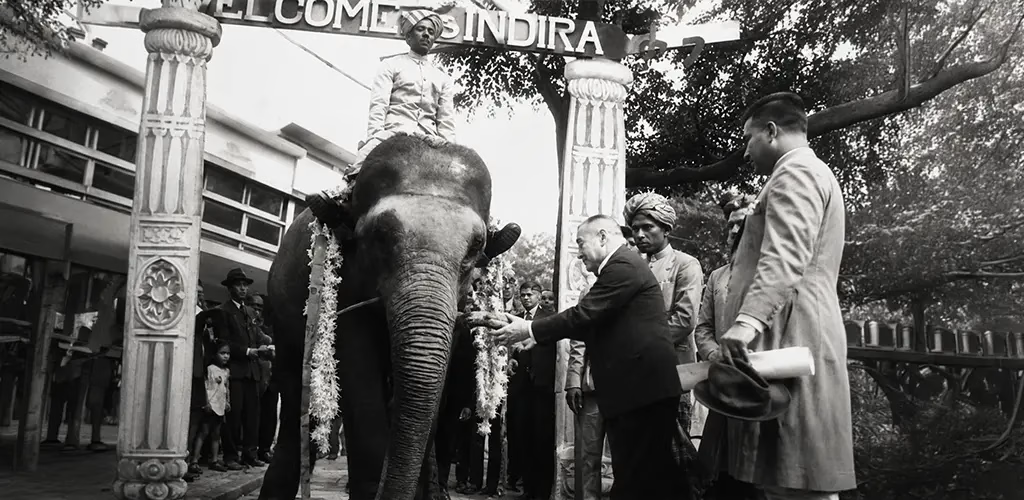
When Indira arrived in Tokyo, thousands of cheering children lined the streets. Japan’s government later called the gift a “ray of light” during their darkest days.
This small gesture helped begin a new relationship between the two countries. By 1952, India chose not to sign the Allied peace treaty in San Francisco. Instead, it signed a separate peace treaty directly with Japan, marking a new beginning in their relationship.
When India Stood in Silence for Japan
This new friendship was not just a political agreement on paper or a small exchange of sweet gestures. Over time, it grew into a lasting bond between India and Japan.
India also chose to remember Japan’s suffering in a way that only a few countries could.
Every August 6, something truly unique happens inside the Indian Parliament. Where the halls usually echo with intense political debates and fiery arguments, the Lok Sabha falls completely silent in remembrance of the lives lost in the Hiroshima and Nagasaki bombings.
Since 1985, the Indian Parliament has officially paid tribute to the victims of these atomic bombings every single year. The Speaker of the Lok Sabha reads a solemn remembrance statement, and the entire House stands together in silence.
That quiet moment recognises that while war is driven by governments and armies, it is always ordinary human beings who carry the weight of its destruction.
What Remains When the War Is Over?
The story of Hiroshima and Nagasaki is often told through dates, numbers, and military plans. But it also lives in the memory of the families detained inside Purana Qila, the people of Kokura who were spared because of a passing cloud, and the children in Tokyo who found a spark of joy in the arrival of an Indian elephant.
Tragedy shows how quickly people can destroy one another when fear takes control. But what comes after shows our quiet, stubborn ability to heal, forgive, and choose a different path.
This is perhaps where India’s story intertwines most deeply with Japan’s. In a world quick to celebrate military triumph, India stood apart by recognising the atomic bombings not as a victory, but as a universal human tragedy – a reminder that peace is not built on total destruction, but on mutual respect.