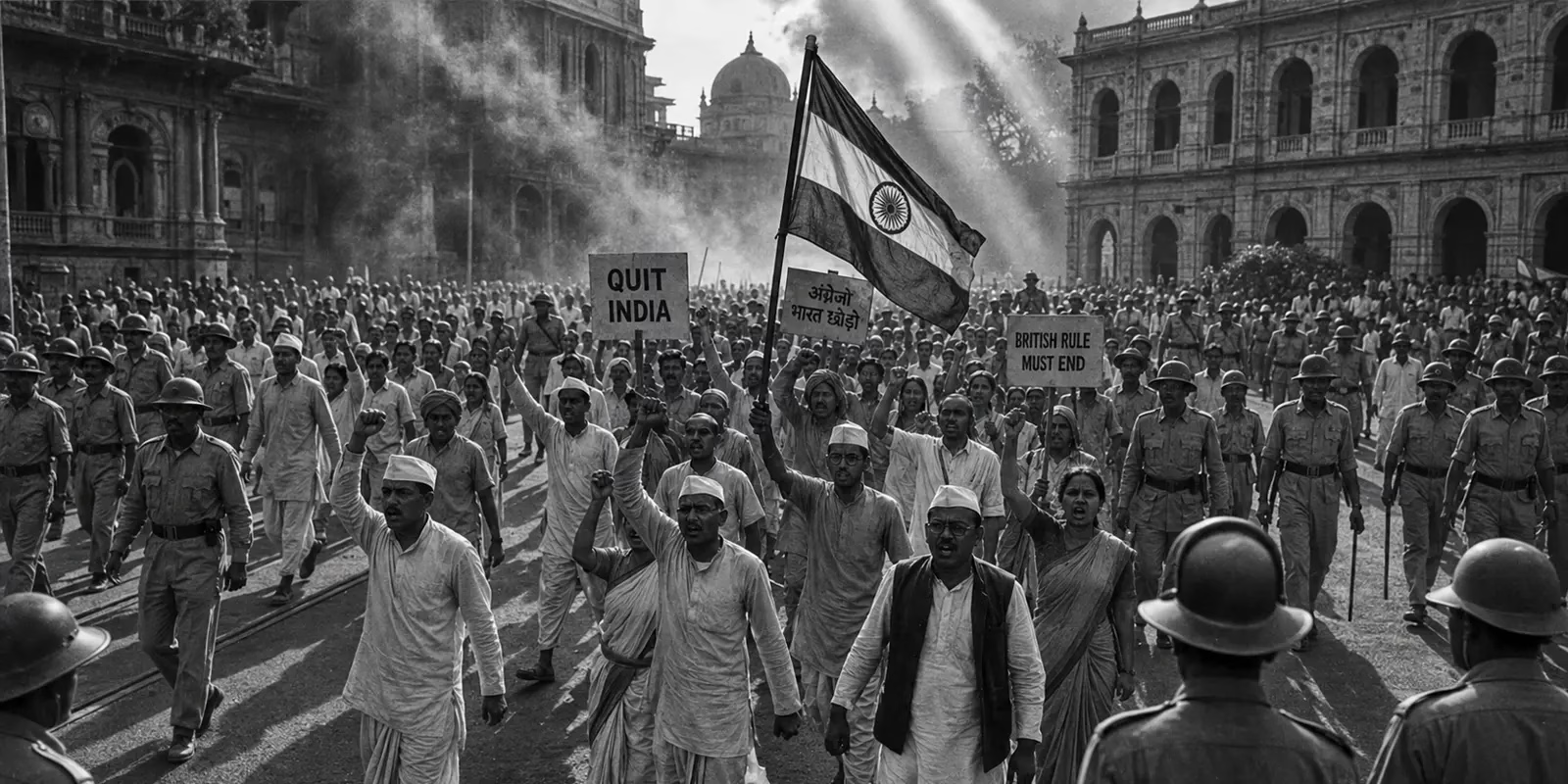
Quit India Movement: The Night India Refused to Wait
On the night of 8 August 1942, the British Empire went to bed believing it still had India under control.
A few hours later that night, Mahatma Gandhi gave his historic “Do or Die” speech at Gowalia Tank Maidan in Bombay, launching the Quit India Movement nationwide.
But by the time most Indians woke up, Gandhi, Jawaharlal Nehru, Vallabhbhai Patel, Maulana Abul Kalam Azad, and almost the entire Congress leadership had been arrested and taken away.
The British probably hoped that removing the leaders would bring the movement to a halt.
Instead, something unexpected happened.
How Students Became the Face of the Quit India Movement
Protests spread through cities, towns and villages. With no famous leaders left to give orders, a new wave of heroes stepped up and it started with kids leaving their desks.
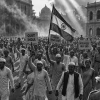
Across India, young students walked out of classrooms to lead marches, organize strikes, and print secret freedom flyers. In Patna, students became part of one of the most remembered moments of the early movement. A group of students marched toward the heavily guarded Patna Secretariat, in an attempt to hoist the Indian flag on the building. Even when British forces opened fire, the students kept moving forward, holding the flag high until their very last breath.
The movement was no longer waiting for instructions from the top. Young people were making their own choices, and the protests were spreading quickly.
But the British administration depended on something very important to keep such a large country under control: communication and transport.
And soon, those systems began to feel the pressure too.
When Britain's Networks Began to Fail
The British did not control India with weapons alone. They used trains to move troops, telegraph lines to send orders, and post offices to manage the empire.
So during the Quit India Movement, protestors targeted these networks.
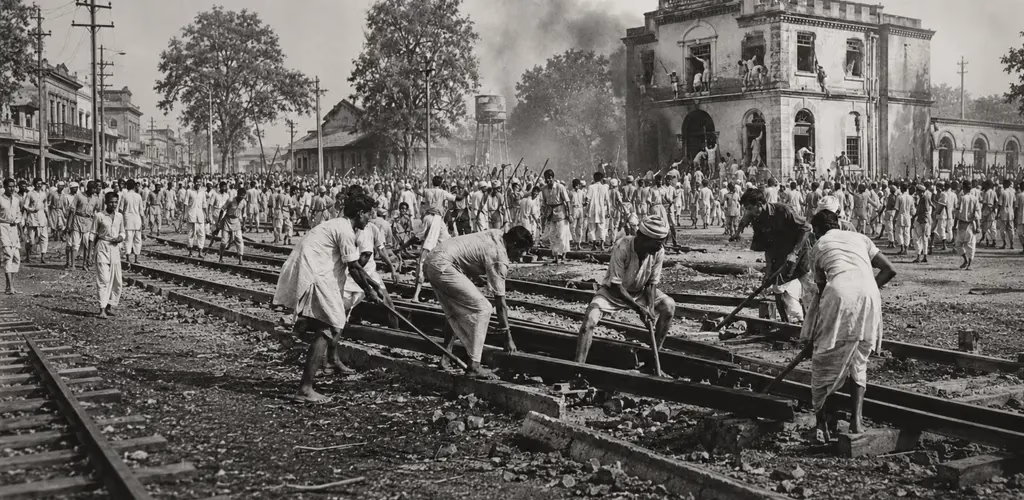
Across the country, citizens blocked railway tracks, cut communication wires, and burned down British offices. For British officials trying to run a country during World War II, this turned into a total nightmare.
They had successfully jailed the top leaders, but they could not arrest a whole country.
Yet, as roads closed and phone lines went silent, a new problem appeared: With no newspapers or phones working, how would Indians know what was happening across the country?
The Underground Radio That Defied the British
With newspapers shut down and leaders behind bars, the British thought they had silenced the nation.
They were wrong.
In Bombay, a 22-year-old student named Usha Mehta was ready to challenge the world’s largest empire using nothing more than a microphone and a secret frequency.
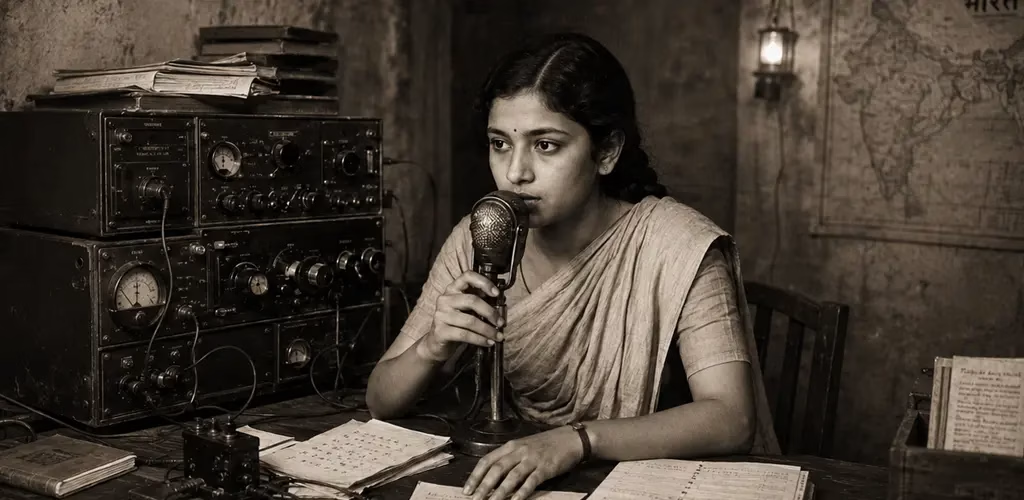
Along with a small group of friends, she started Congress Radio, a secret station that broadcast the unfiltered truth of the movement across India. Every week was a dangerous game of hide-and-seek. The people behind the station had to keep moving and work in secret because the British were searching for them.
For months, a college student outsmarted the entire British intelligence network.
The Independent Regions of the Quit India Movement
The protests did not look the same everywhere. In some regions, people didn’t just challenge the British government; they completely replaced it.
In places like Ballia, Tamluk, and Satara, local groups drove out British officials and set up their own parallel governments, running local courts, health centres, and security teams on their own.
Panicked by the scale of the uprising, the British army responded with ruthless force. Police opened fire on crowds, villages were burned, and over 100,000 people were thrown into prison. By 1943, the open rebellion was crushed and pushed underground.
The British won the battle on the streets. But they lost the war for India.
They managed to suppress the movement on the ground. They had not managed to erase the demand behind it.
The Turning Point in India's Freedom Struggle
The Quit India Movement did not bring independence overnight. The mass arrests were brutal, the crackdown was severe, and the silence that eventually returned to the streets made it look like the British Empire had won.
But victory on paper is not victory over the human spirit.
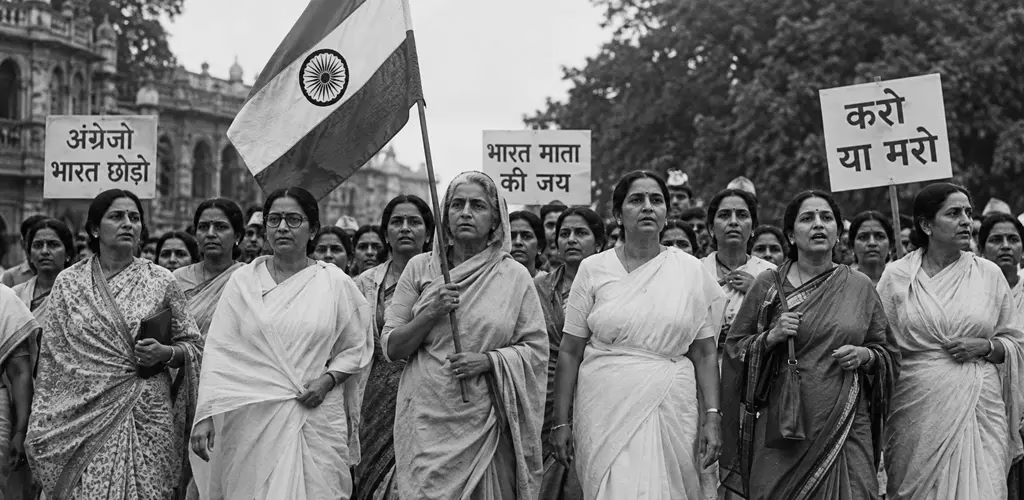
The events of 1942 proved that the urge for independence had moved far beyond politicians and speeches. When the famous leaders disappeared into prison cells, young students, factory workers, and underground radio broadcasters carried the entire nation on their shoulders.
By trying to destroy the uprising from the top, the British only revealed how deep its roots had grown in every home, classroom, and village across India.