The Silent Disappearance of India's Indigenous Tribes
If a library containing thousands of years of human history, traditional medicine, and ancient wisdom burned down tonight, it would make headlines across the world.
Yet, across India, something very similar is happening in total silence.
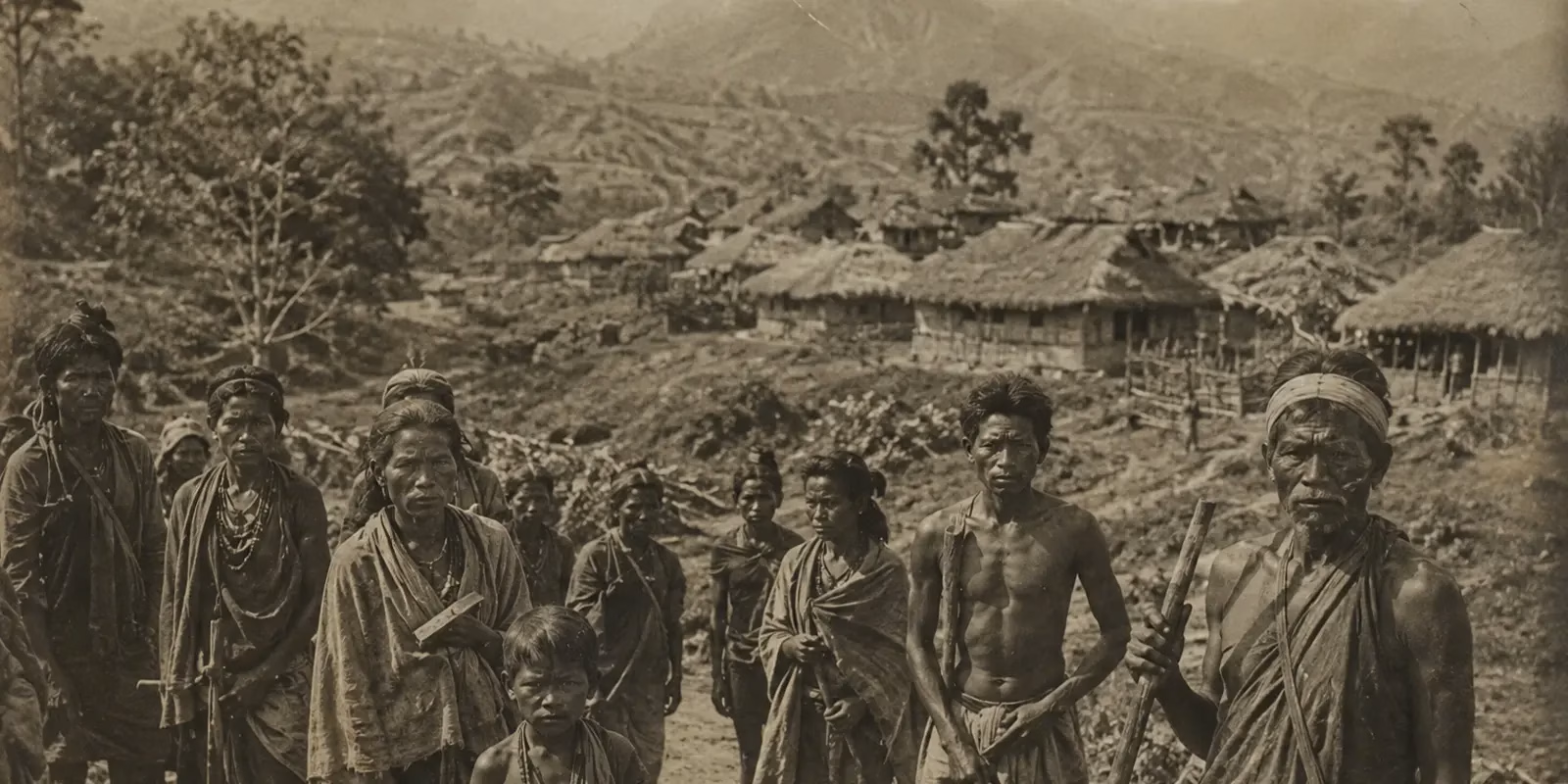
Hundreds of indigenous communities are facing a difficult reality. For centuries, these tribes have lived closely with nature; forests were their homes, rivers their lifelines, and generations of knowledge their guide.
Today, as roads cut through mountains and younger generations head towards cities for education, jobs, and modern lives, that ancient connection is beginning to change.
Behind every tribe is a quiet struggle between holding on to traditional ways and adapting to an uncertain future. Here are four communities that show just how differently this change can unfold.
Bonda Tribe: A Culture Opening Up to the Outside World
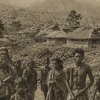
Deep in the isolated highlands of Odisha live the Bonda, one of India’s indigenous communities with a long history of living in close connection with the surrounding forests.
What makes their society particularly remarkable is the important role traditionally played by Bonda women.
Dressed in bright glass beads, brass rings, and handwoven cloth, Bonda women play a central role in everyday life. They work in the fields, contribute to managing the family’s resources, and carry generations of knowledge about the surrounding forests and medicinal plants.
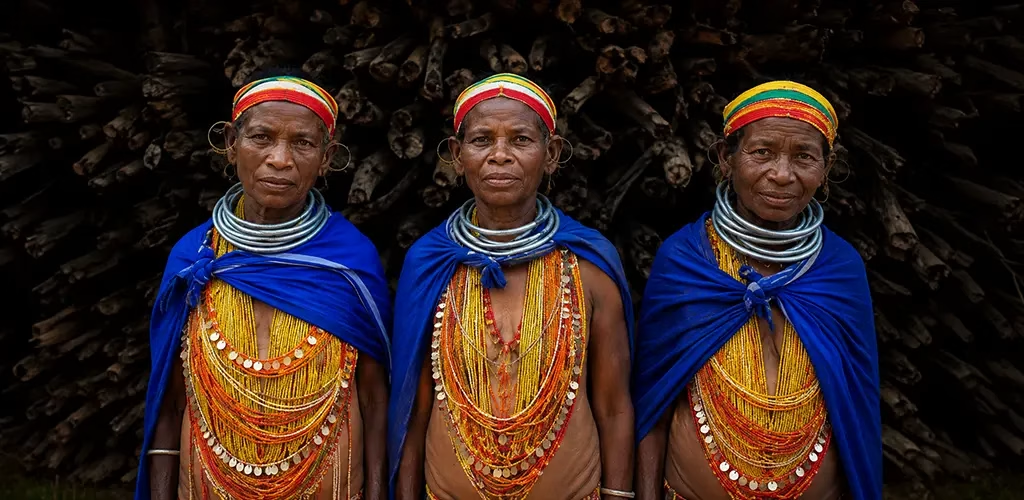
For centuries, their remote location helped protect their culture from outside influence. But today, electricity, modern clothing, mobile phones, and better road connectivity are slowly reaching their communities.
As the modern world comes closer, younger Bonda men and women face a difficult crossroads: how much of their traditional way of life can they preserve while embracing new opportunities?
This struggle between tradition and change is not limited to Odisha. Far away in the mountains of Uttarakhand, another community has seen its traditional way of life transformed by forces beyond its control.
Bhotia Tribe: The Mountain Community Protecting Ancient Traditions
High in the Himalayan regions of Uttarakhand lives the Bhotia community, whose life has always been deeply connected with the mountains.
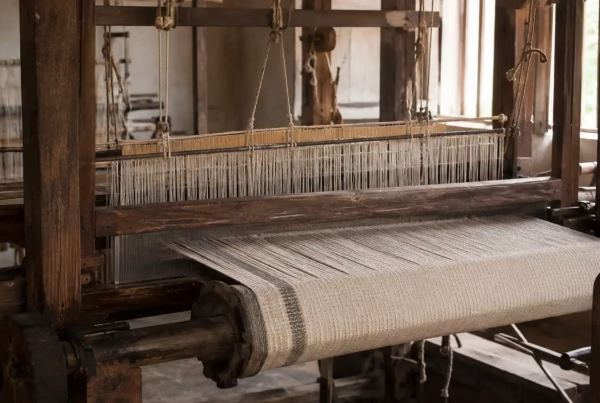
For centuries, Bhotia people travelled through high-altitude routes, trading wool, herbs, and other goods between India and Tibet. Their traditional clothing, handwoven crafts, and knowledge of mountain plants reflect their deep bond with their environment.
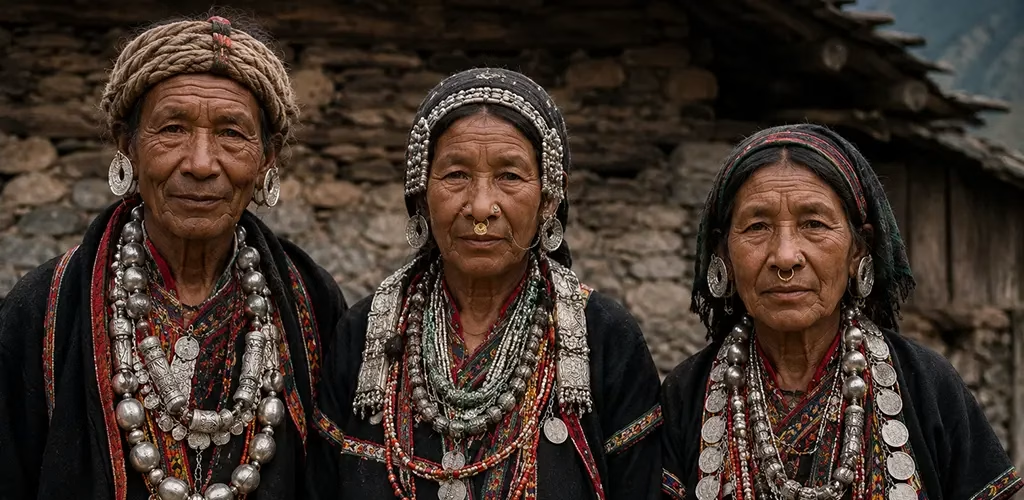
However, changing borders and the decline of traditional trade routes transformed their way of life. Many families had to move away from their seasonal journeys and find new sources of livelihood.
Today, younger generations are also moving towards cities for education and jobs, creating new challenges in preserving their language, crafts, and customs.
Yet, the Bhotia community continues to protect its heritage through festivals, art, crafts, and stories passed down through generations.
But not every community’s story of survival looks the same. For the Siddi community, preserving their heritage has meant carrying a culture across continents and adapting it to a completely different home.
Siddi Tribe: The Indo-African Community
When most people think of India’s cultural diversity, they think of different regional languages, spices, and festivals. But in the states of Karnataka, Gujarat, and Maharashtra lives a community whose roots trace back to another continent entirely.
This is the Siddi community, whose ancestors came from East Africa. Over centuries, their forefathers arrived on Indian shores through different routes and circumstances, including as traders, sailors, soldiers, and enslaved people brought by foreign merchants.
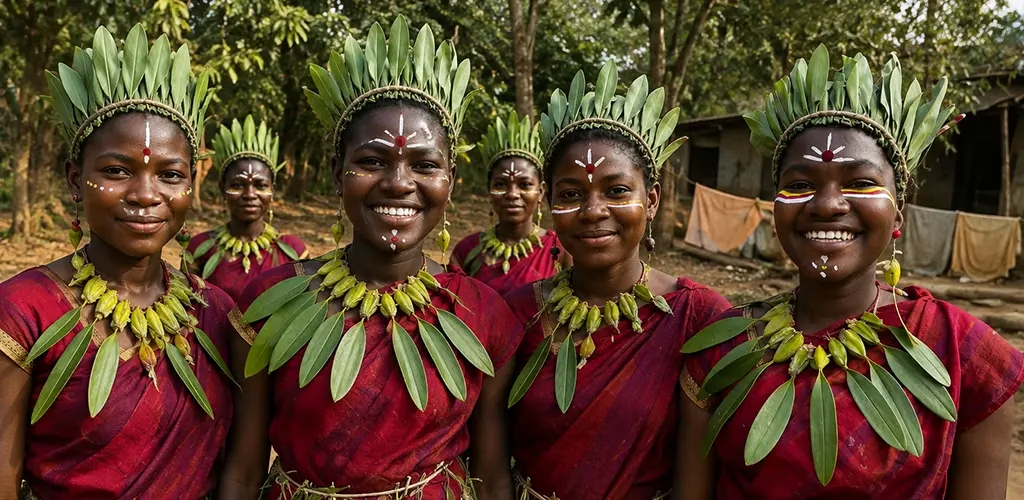
Over generations, the Siddis adopted Indian languages, clothing, and local customs while retaining elements of their African heritage. During village celebrations, the rhythmic Dhamal music and dance remain an important part of that heritage.
The Siddis are a living reminder that India’s history is full of unexpected journeys – and that a culture can survive by adapting rather than remaining unchanged.
But while the Siddi story travelled across the sea, another Indian community represents a way of life that has remained deeply connected to the forests for generations.
Cholanaikkan Tribe: India's Hunter-Gatherer Community
Deep within the rainforests of Kerala lives the Cholanaikkan community, one of India’s most isolated hunter-gatherer communities.
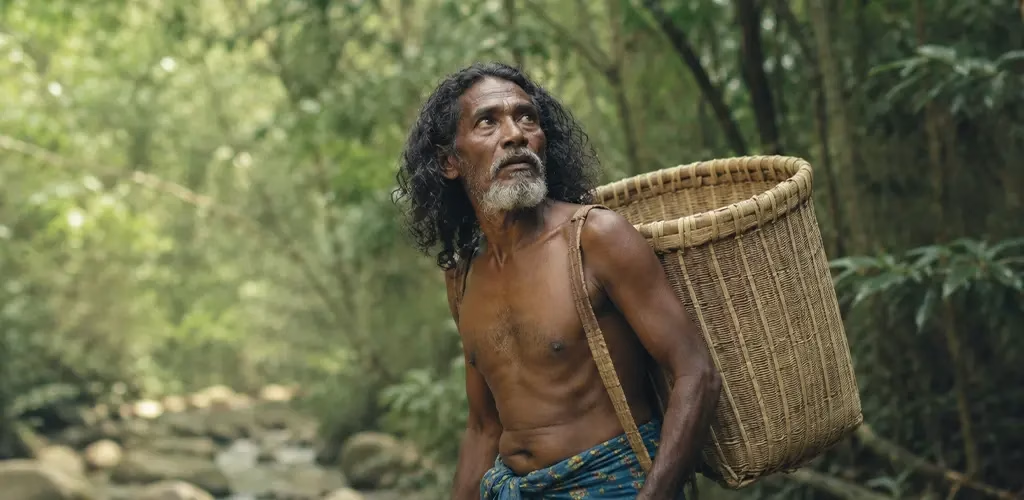
For generations, the Cholanaikkan have lived closely within the forests, relying on the natural environment around them for food and other resources. Their knowledge of the forest is highly detailed, allowing them to recognise plants, navigate the landscape, and understand signs left by animals and changing weather.
Because they lived so deep in the wilderness, they remained relatively isolated from modern society until fairly recently.
But as tourism, deforestation, and changes in forest access affect their traditional surroundings, their way of life is also under pressure. Government resettlement and the introduction of modern housing and livelihoods have further changed the way many community members interact with their traditional environment.
When a community that has lived closely with the forest for generations is suddenly asked to adapt to concrete houses, modern livelihoods, and a different way of life, it raises a difficult question: how much can a culture change before some of its most important traditions are lost?
The Cost of Losing a Culture
When an indigenous culture disappears into the background of modern history, the world loses far more than a piece of nostalgia.
We lose unique languages, traditional knowledge, natural remedies, sustainable ways of living, crafts, and stories that have been passed down through generations.
The Bonda, Bhotia, Siddi, and Cholanaikkan communities are not museum exhibits or characters from a history book. They are living cultures adapting to a world that is changing around them.
Their stories show that preserving a culture does not necessarily mean keeping it frozen in the past. But when traditional knowledge is no longer passed down, a part of that culture can disappear forever.
Perhaps the true test of progress is not how quickly we can modernise every corner of the country, but whether we can move forward without leaving behind the ancient voices that have been part of India’s story for generations.