World Organ Donation Day: From Ancient Sacrifice to Modern Organ Donation in India
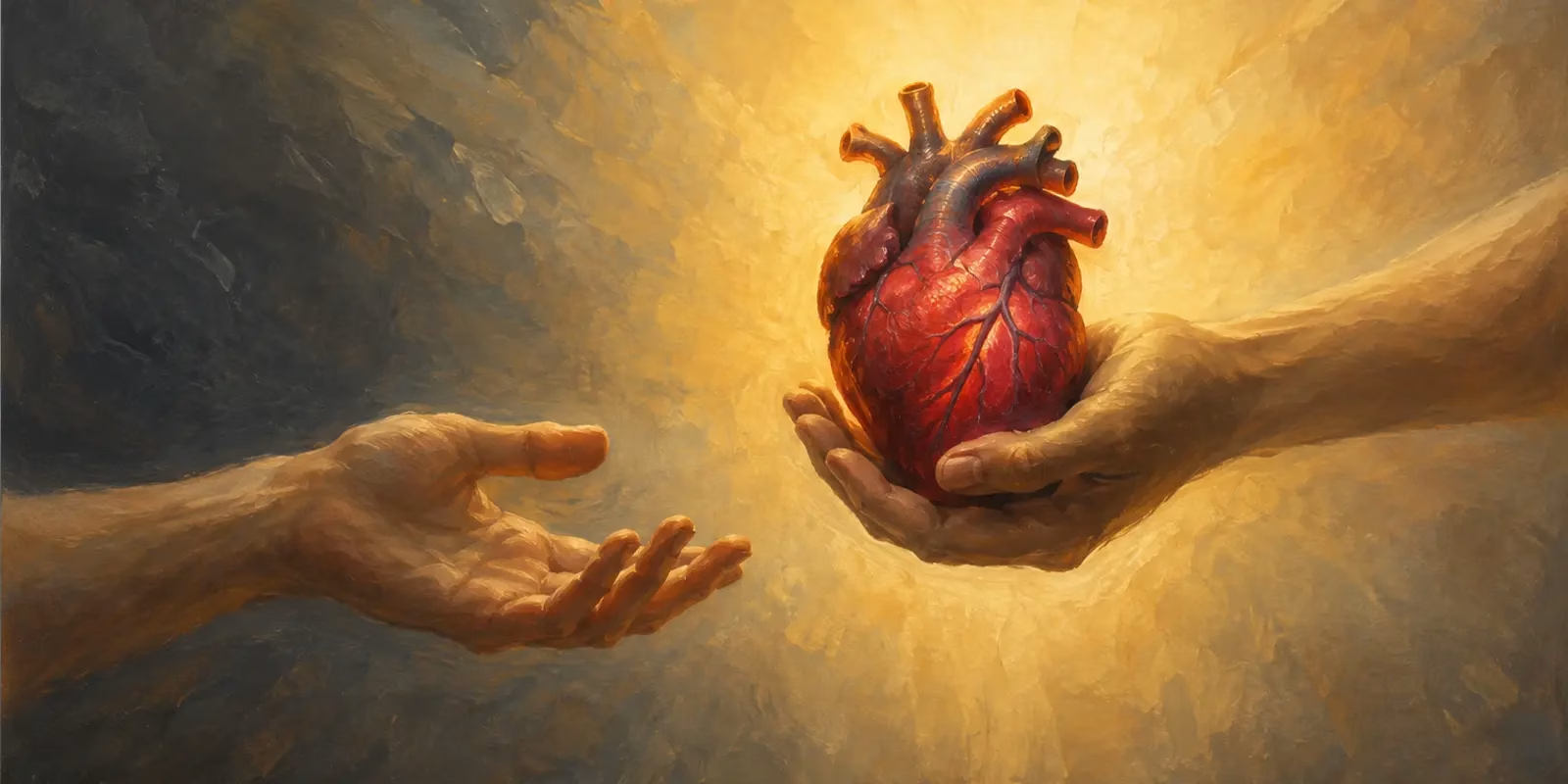
Would you donate a part of your body so someone else could keep living?
It sounds like a question rooted in modern medicine, but the idea behind it is far older. Long before surgeons could even think about transplanting a heart from one chest to another, Hindu mythology already had stories of organ donation and transplant.
To understand how India reached its modern organ donation milestones, we need to go back to these stories and explore where this idea truly began.
The Sage Who Gave His Bones Away
One of the earliest examples of organ donation comes from the story of a revered rishi known for his penance and self-discipline, Sage Dadhichi.
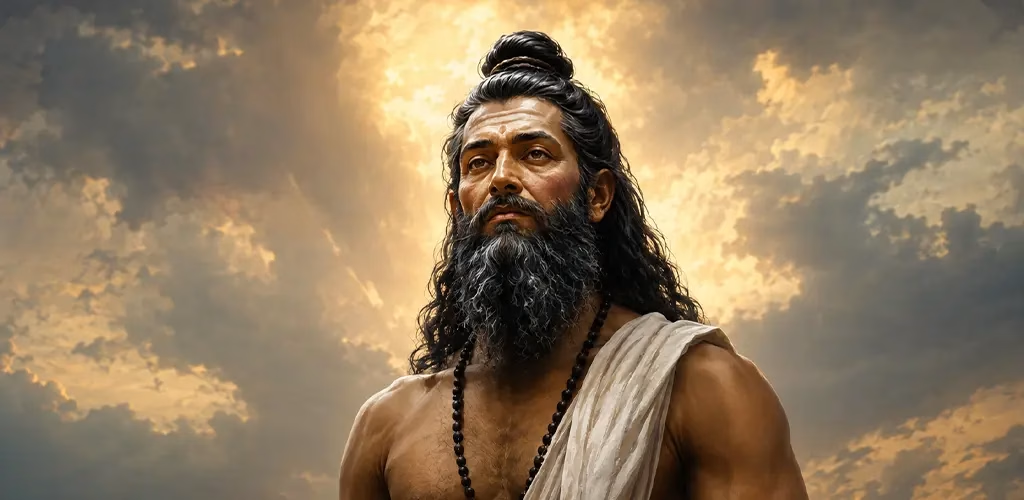
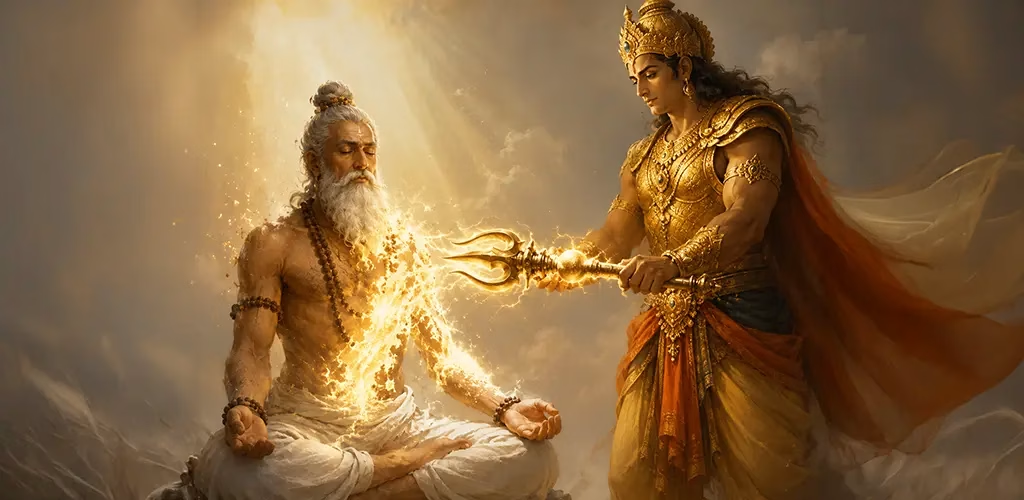
According to legend, a demon named Vritra had stolen all the water, leaving the earth in drought and darkness. The gods were fighting against Vritra with everything they had, but every blade shattered against an ancient boon that protected the demon from all weapons of wood, metal, or stone. As despair settled over the heavens, they discovered that their only hope was a weapon forged from the unbreakable bone of a powerful sage.
These bones belonged to Dadhichi.
When Lord Indra came to him, explaining the terrible fate facing the world, Dadhichi knew that his life was a small price to pay for the survival of creation and gave up his physical body through deep meditation. From his spine, Lord Vishwakarma forged the Vajra, the thunderbolt weapon of Lord Indra, used to strike down the demon and bring back water to the earth.
But Dadhichi’s was not the only story where a body part crossed from one being to another to bring someone back to life.
Lord Ganesha's Head: India's First Transplant Story
Could the idea of organ transplants have existed in ancient India?
One of the most familiar stories in Hindu mythology is of a boy who was brought back to life with the head of an elephant. This is the story of Lord Ganesha.
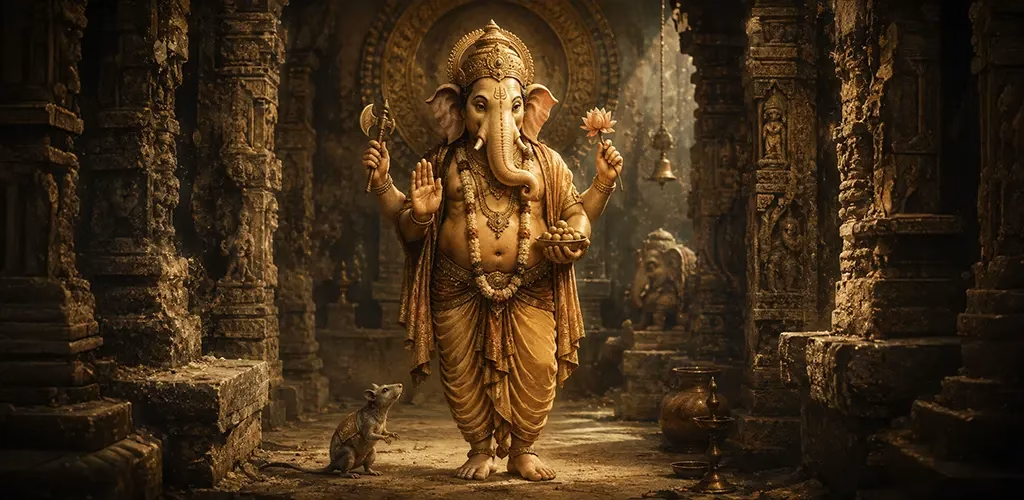
According to Hindu scriptures, Goddess Parvati created a boy from turmeric paste to guard her home while she bathed. When Lord Shiva returned and the boy refused to let him enter, unaware of who he was, Shiva severed the boy’s head in anger.
Goddess Parvati was devastated when she saw what had happened. Realising that he had killed her son, Lord Shiva set out to restore the boy’s life. He sent his followers to find the head of the first living being they encountered, facing north. They returned with the head of an elephant, which was placed on the body of that boy and brought him back to life.
That boy later became Lord Ganesha.
This story belongs to Hindu tradition, not medical history. Yet, its striking idea of replacing a body part to restore life has often drawn comparisons with the concept of organ transplantation.
But when did the idea of replacing a body part to save a life finally move from sacred stories into the world of modern medicine?
The Kidney Transplant That Changed Indian Medicine
India’s first successful organ transplant did not happen easily. Through the mid and late 1960s, a few hospitals across the country attempted kidney transplants using deceased donors. The outcomes were disappointing, and the medical community remained unsure whether such a complex procedure could truly succeed in India.
The turning point came on February 2, 1971, at Christian Medical College, Vellore. A team led by surgeon Dr Mohan Rao and nephrologist Dr K. V. Johny performed India’s first successful live-donor kidney transplant. It was a cautious beginning, but the result changed everything. Just ten days later, the same team performed a second successful kidney transplant, confirming that the first was not an accident.
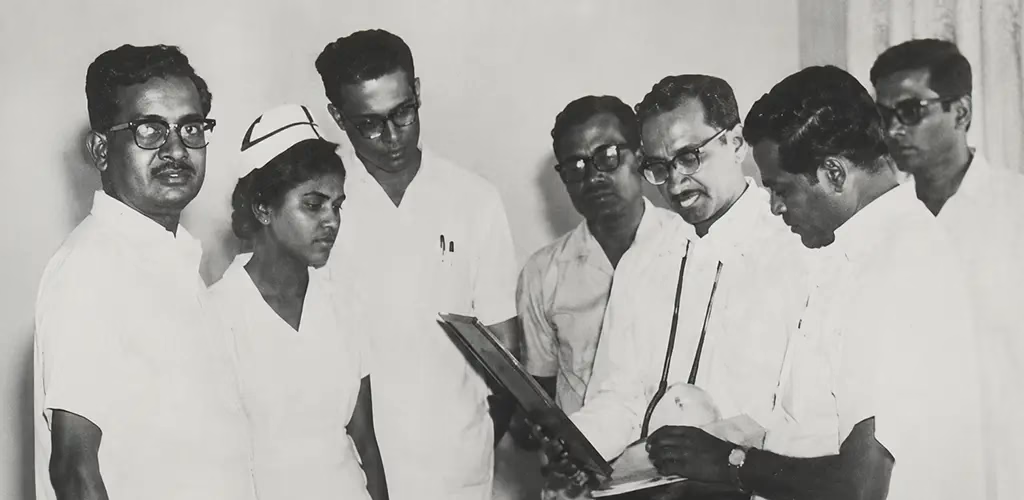
The first successful organ transplant did more than saving a life. It gave Indian hospitals, doctors and families the confidence that organ donation was not just theoretically possible, but practically achievable within the country’s own medical system.
What began as an uncertain surgery at CMC Vellore eventually transformed organ transplantation in India, turning a once-distant possibility into a second chance at life for thousands of patients.
From Ancient Stories to Modern Medicine
What lived for generations only in sacred stories eventually found its way into a hospital in Vellore, transforming ancient imagination into living science. The scriptures became the surgery, but the spirit behind them never changed.
Today, India lives out that same story through transplant surgeries and hospital teams who spend entire nights perfecting a single procedure so that someone else gets a second chance at life.
Organ donation is not a modern invention India borrowed from the West. It is an ancient idea about sacrificing to save a fellow human’s life.