Sawan Shivratri: The Night That Ends the Kanwar Yatra
Do you know there are two Shivratris in a single year, and most people only know about one of them?
While everyone is aware of Mahashivratri, the grand spring festival celebrating Shiva’s cosmic marriage, its monsoon cousin deserves just as much spotlight. Falling in July or August during the holy month of Sawan, Sawan Shivratri is far more personal.
If Mahashivratri is a celebration of love and union, Sawan Shivratri is about raw sacrifice: devotion proven through sweat, blistered feet, and physical endurance.
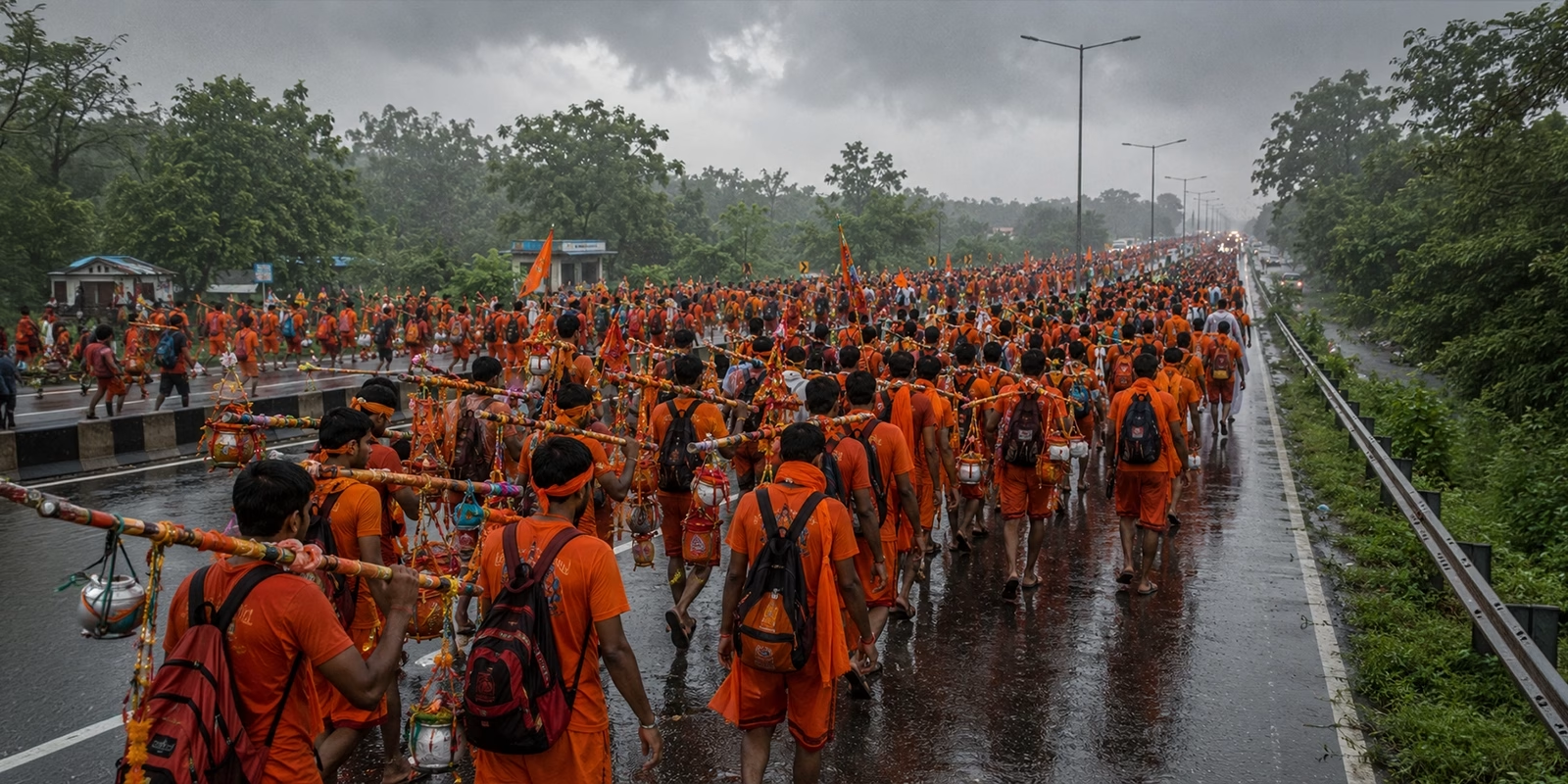
And this struggle has a name. It’s called the Kanwar Yatra, and its story starts long before any highway turned orange.
From Poison to the Kanwar Yatra
According to Hindu mythology, gods and demons once joined forces for Samudra Manthan, the churning of the cosmic ocean to gain the elixir of immortality. But before anything good could be obtained, something terrifying emerged first.
A deadly poison called Halahala.
It was so powerful that it could destroy the entire universe. Nobody knew what to do. The gods panicked, the demons backed away, and the poison kept spreading.
That is when Lord Shiva stepped in.
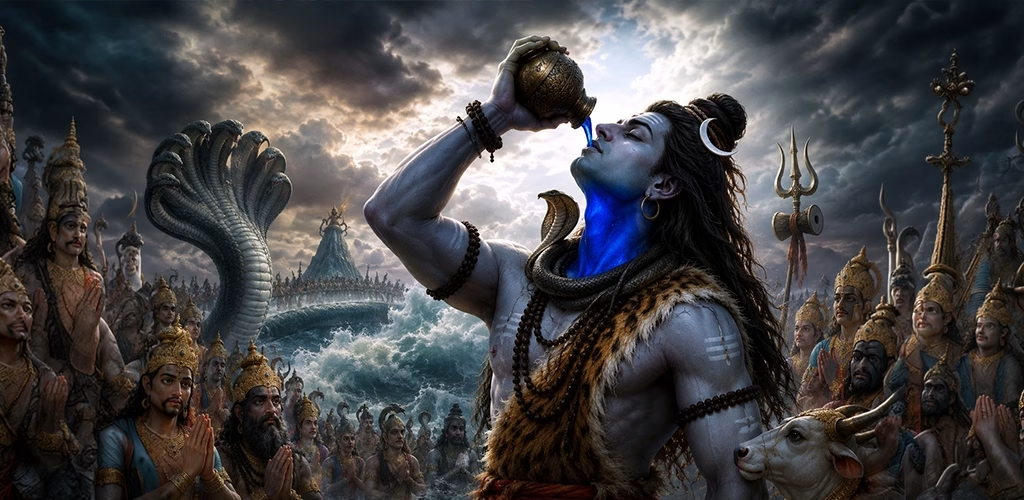
He drank the poison himself to save the universe. It was so powerful that it turned his throat blue, which is why he is known as Neelkanth, the blue-throated one. But drinking the poison came with a terrible price. Shiva began burning from within as the poison took effect.
Seeing him suffer, the gods rushed to bring holy Ganga water and poured it over him, hoping it would cool the burning.
And it did.
This simple act of pouring water over Lord Shiva to ease his suffering is closely connected, in tradition, with the idea behind the Kanwar Yatra. Every Kanwariya who carries Ganga water to a Shivling is believed to be repeating that same act of devotion, offering water to Lord Shiva as a gesture of faith and gratitude.
But if this tradition goes back to such an ancient story, one question naturally follows.
Who was the first person to actually carry water to Lord Shiva like this?
Ravana: The First Kanwariya
This is the part of the story that catches most people off guard, because the first kanwariya wasn’t some ordinary devotee. It’s Ravana.
Long before his conflict with Lord Rama, Ravana was remembered as one of the most devoted followers of Lord Shiva. His devotion wasn’t quiet either.
According to local traditions, Ravana once carried Ganga water on a Kanwar all the way to Pura Mahadev in present-day Baghpat, where he offered it to Lord Shiva as abhishek, a sacred ritual of pouring water over the Shivling.
Some versions say he did it to seek forgiveness. Others say he simply wanted to show his devotion to Lord Shiva through an act that required effort and dedication. Either way, this act is widely believed to be the very first Kanwar Yatra ever recorded, long before the pilgrimage became the massive journey we see on India’s highways today.
There’s something almost poetic about this. A figure remembered mostly for his flaws is also remembered as the one who started one of the most disciplined and devoted traditions in Hindu culture. It’s a reminder that devotion doesn’t always come from perfect people. Sometimes it comes from people trying to fix something within themselves.
And that idea of walking with a purpose and carrying something sacred eventually became the heart of the different forms of Kanwar Yatra seen today.
Kanwar Yatra: From Padyatra to Dandawat
The Kanwar Yatra is not just one single way of walking. Over time, different forms of the journey have developed, each demanding its own level of effort and devotion.
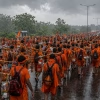
The most common is the Khadi Kanwar. This is probably the version you picture when you think of the yatra. Pilgrims walk the entire distance on foot, taking short breaks to eat or rest, but making sure the Kanwar never touches the ground. It is a steady and disciplined journey that can take several days.
Then comes the Dak Kanwar, which takes things much further. These pilgrims move almost non-stop, with some groups taking turns carrying the Kanwar so that the journey never stops. There is little time for sleep or long breaks, making it a fast and exhausting race to the temple.
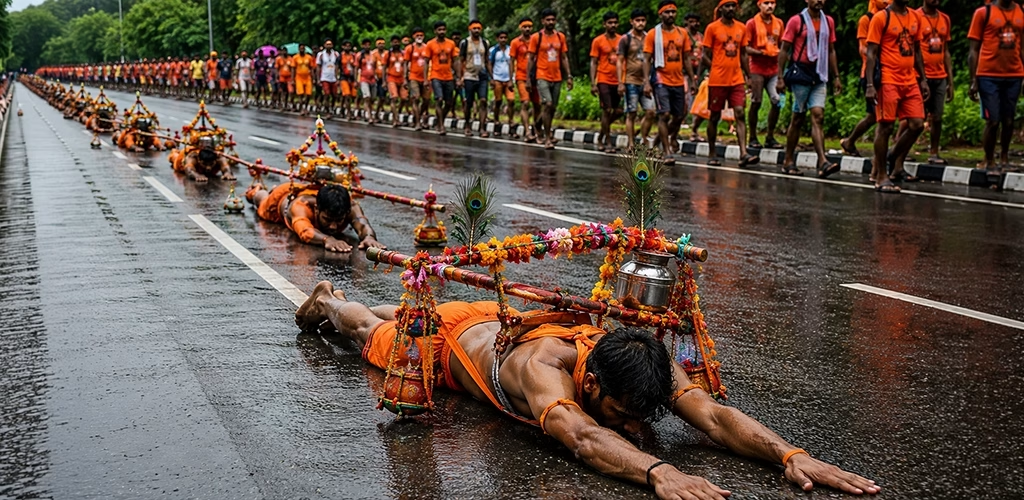
And then there is the Dandawat Kanwar, one of the most difficult forms of the journey. Instead of walking normally, pilgrims move by repeatedly lying flat on the ground, marking the spot with their hands, standing up and moving to that mark before lying down again. They repeat this for kilometres, sometimes taking weeks to cover a distance that would normally take only days.
Three different ways of making the same journey.
Sawan Shivratri: When the Journey Finally Ends
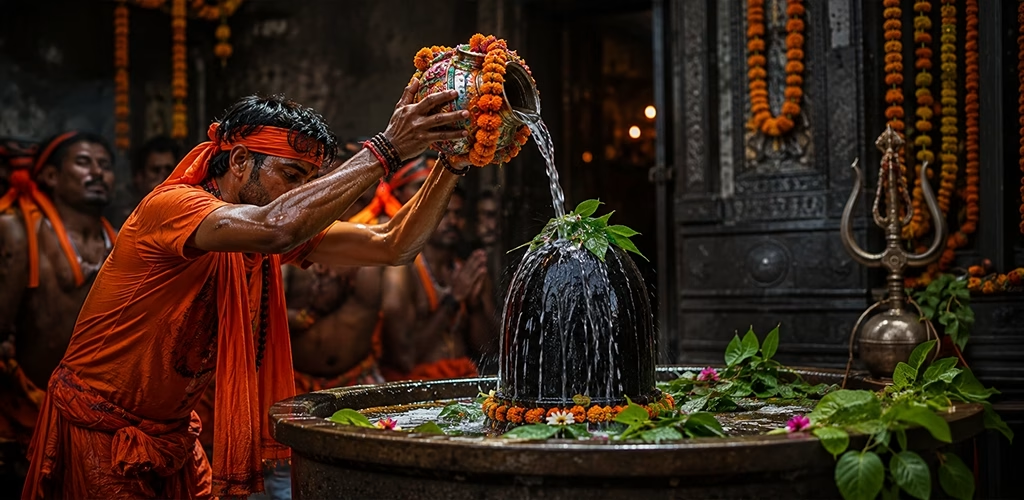
After days of walking, running or slowly moving forward, the journey finally reaches its destination on Sawan Shivratri.
The last drops of Ganga water are poured over the Shivling, bringing the long physical journey to an end.
But perhaps that is not the only journey taking place.
The Kanwar, with its two pots balanced on a single pole, can also remind us of the burdens we carry in everyday life. We balance responsibilities, worries, hopes and beliefs, trying to keep everything from falling apart.
For many Kanwariyas, the long walk is a test of patience and faith.
And when they finally reach Shiva, they are not simply offering water. They are also leaving behind some of the weight they carried within themselves.
Perhaps the real destination was never just the temple. The long road, the tired feet and the weight on the shoulders were all part of the spiritual enterprise.
By the time the Kanwar reaches Shiva, the pilgrim has carried much more than just water.