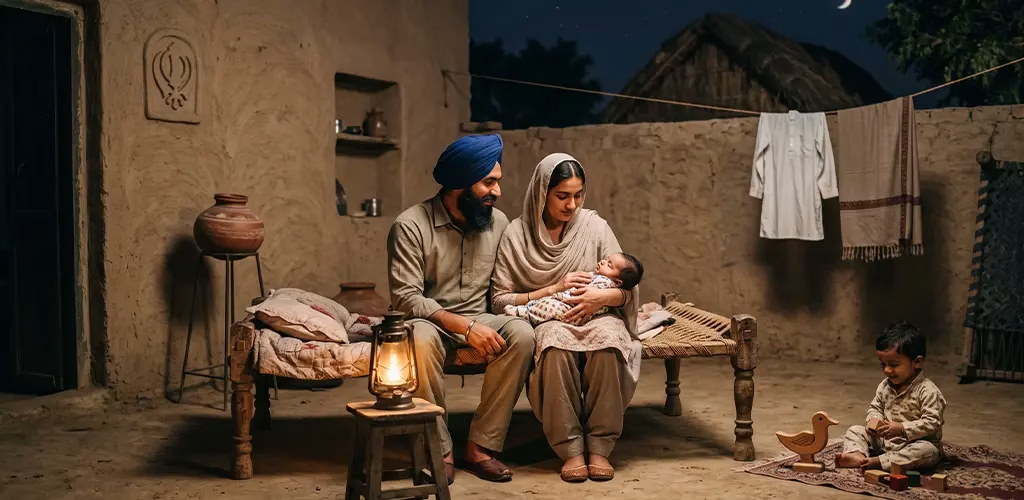
Stories of True Love That Even the Partition Could Not Separate
“Mai Vaapas Aaunga”, screamed Keenu in the film while boarding a train during Partition that led him to India, while his love, Jiya, waited for him in Pakistan.
This simple visual from the latest Imtiaz Ali’s release has left everyone teary-eyed. The backdrop of the India-Pakistan partition furthers the emotions of longing and pain. But at the same time, knowing that this is just a film makes it easier to move on.
However, not every love story with a backdrop of a horrific and macabre event, such as the India-Pakistan partition, is fiction. On the Partition Horrors Remembrance Day, this is an ode to that true love story that blossomed despite everything grotesque that was happening in the Indian subcontinent.
A Love that Survived Social Stigmas but Not Borders
Imagine an innocuous relationship turning into the biggest heartbreak of your life and one of the darkest chapters of history. And all of it, only because the world decided that your religion mattered more than your relationship.
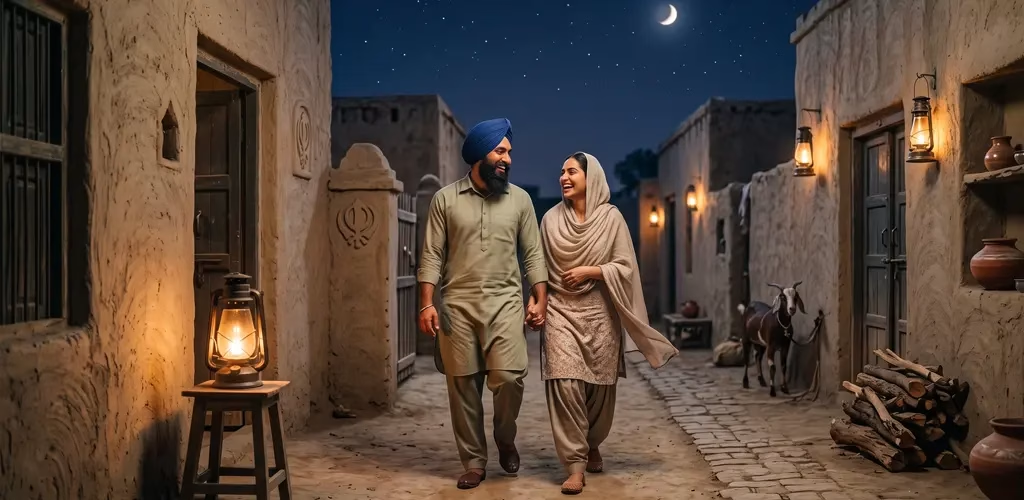
This is exactly how the story of Boota Singh and Zainab played out. Their lives were brought together by the violence of Partition, and the very borders that created it, tore it apart. This love saga fell victim to the unending horrors of Partition at every turn, only to get immortalised as a tragedy.
The Beginning of Benevolence in Adversity
One thing that Partition inflicted upon the common people very magnanimously was separation – from their land, families, and the feeling of “home”. Muslims in the Indian part of the subcontinent were pushed out, while the Sikhs and Hindus on the other side were forced to be part of the exodus too. The communal violence was on a level that even to think of it would shiver bones. Women were abducted, molested, raped, and many times murdered. The men were forced to be executed – brutally and mercilessly. Children lost their parents, parents lost their children, and almost everyone lost the essence of belonging.
In 1947, one of these victims in Punjab was Zainab, a young Muslim woman travelling with her kafila bound for Pakistan. The communal violence and troops who perceived themselves as the flag-bearers of communal security struck her family. This led Zainab to separate from her family.
What happened next is told differently in different accounts. Some say she was being chased by rioters, while others mention that she had been abducted and was being held by men who were demanding money for her release.
But then came in her saviour – Boota Singh.
Protection from a Stranger, a Lifetime of Love
Boota was a Sikh ex-soldier who had served in the British Indian Army on the Burma front during World War II. Being a man of principles, Boota saw what many people didn’t – an innocent woman beyond religion and communities. Thus, he chose to intervene.
He paid around Rs 1,500 from his precious savings to free Zainab from the kidnappers and save her life along with her dignity. But for a woman who had lost everything, that wasn’t enough- she needed a place to reside, to get shelter under. And it was then that Boota Singh chose to do something that many men might not have – sheltering her.
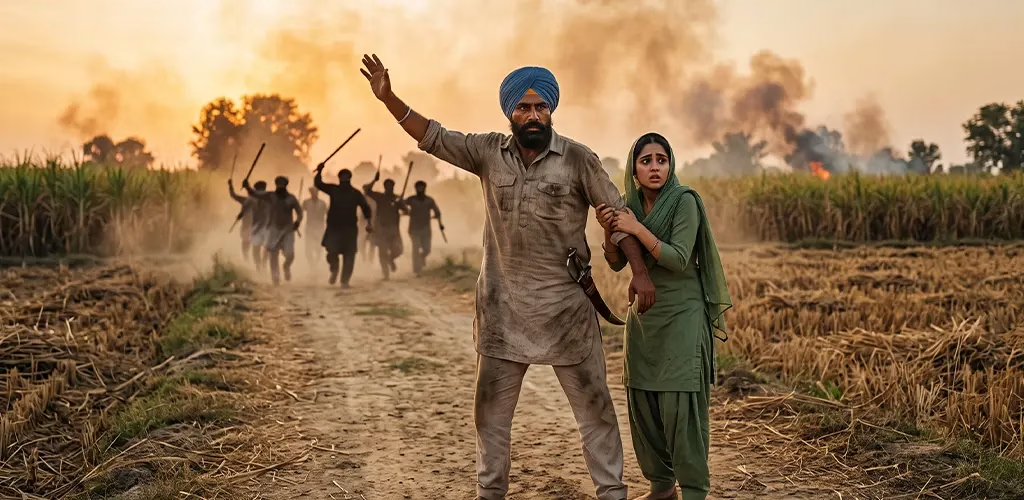
But sheltering a young Muslim woman under the roof of an unmarried Sikh man was enough to invite suspicion in a village already torn apart by communal hatred. The villagers objected and even retaliated. According to the societal norms set by them, Zainab either had to leave for a refugee camp or simply marry him.
What began as a platonic protection took the shape of an amicable friendship so strong that the thought of getting bound into conjugal ties did not bother them. Therefore, around 1947, Boota and Zainab married.
A Happy Marriage, Stemming from Trauma and Rejection
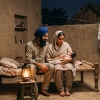
Many perceive the marriage of Zainab and Boota Singh as an inescapable option. However, the violence only brought them together and stopped right at their door; the marriage was filled with only endearment. The two built a life together and started their family with two daughters, Tanveer and Dilveer.
For many years to come, this wasn’t a fairy tale but the content life of the commonality – an ordinary family living together, a privilege that the Partition had taken away from millions.
But their happiness existed in a world that was still trying to divide people along religious lines. And Partition never truly ended at the borders.
When Governments Decided the Fate of Love
When governments make mistakes, they choose their own terms to fix them. Soon after the Partition was over and people across borders finally settled into the life they accepted as their destiny, India and Pakistan began efforts to recover the lost. Women who had been separated from their families or had crossed communal lines during the violence were being spotted and deported.
Under these recovery policies, relationships between people of different communities were often treated as cases of abduction, even when the woman had built a life with her new family – because true cases of the Partition horrors included lives of women where mere non-consensual entanglement with a man was termed as their present life.
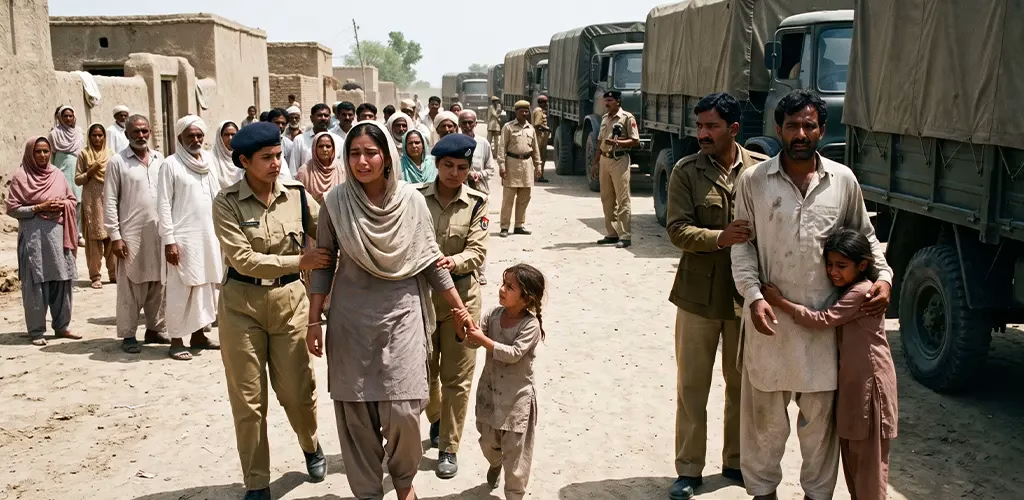
Zainab was eventually found and taken to Pakistan, along with one of her daughters. But what is consent when the government labels religion as the deciding parameter. Her wishes were not even listened to.
For Boota, this was unbearable. He did everything he could – refusing to accept, pleading to authorities, and even converting to Islam, but nothing worked. But eventually, he was forced to opt for a route that he never wished to embark upon – crossing the borders illegally.
Upon converting to Islam, he took the name Jamil Ahmad. Later, he sold his possessions and crossed the border illegally with his other daughter to find Zainab.
The Longing that Turned into Yearning
Boota Singh finally reached her family near Lahore.
But the reunion he had imagined for years turned into another heartbreak.
Instead of being welcomed, Boota was beaten and handed over to the authorities. Yet even then, he refused to give up. He took his case to court, claiming Zainab as his wife and believing that she would recognise the life they had shared.
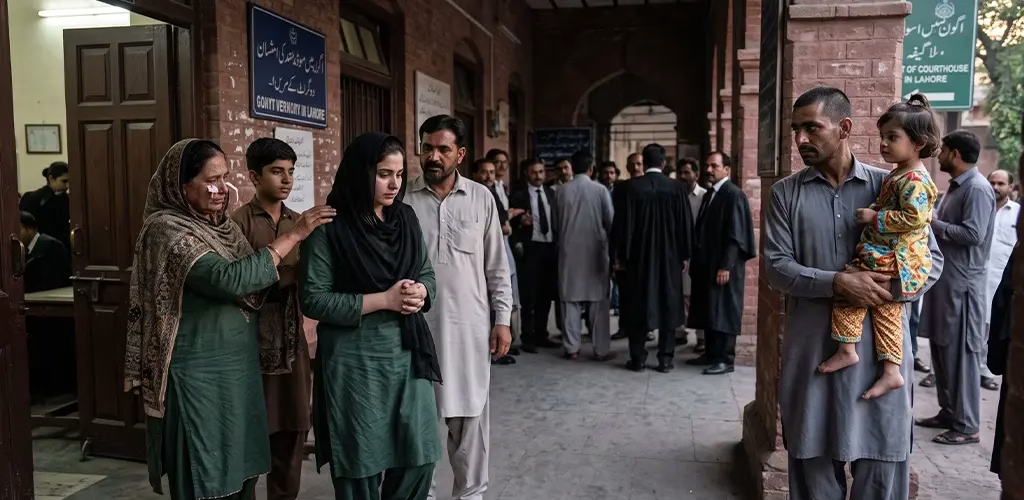
But when Zainab appeared before him, surrounded by her family, the story took another turn. She denied the marriage and refused to return with him. Accounts suggest that she had been remarried within her family, while the circumstances of her statement must also be understood in the context of the immense family and community pressure surrounding her.
For Boota, however, there was little left to hold on to. The woman for whom he had crossed a border, changed his religion and risked everything was no longer coming back with him. The longing that had carried him across the border had now turned into a grief he could not bear.
A Heartbroken Ending
On 19 February 1957, near Shahdara in Lahore, Boota made the decision that would turn his personal tragedy into a story remembered for generations.
He stepped in front of a moving train with one of his daughters – the child survived; Boota did not.
Even in his final moments, it is said that his thoughts remained with Zainab. He reportedly left a note expressing his wish to be buried in her village, hoping that perhaps death could take him back to the place where his love had once belonged.
But even that wish could not be fulfilled.
When his body was taken towards the village, local residents refused to allow him to be buried there. The man who had once crossed a border for love was denied a place beside the woman he had loved even in death.
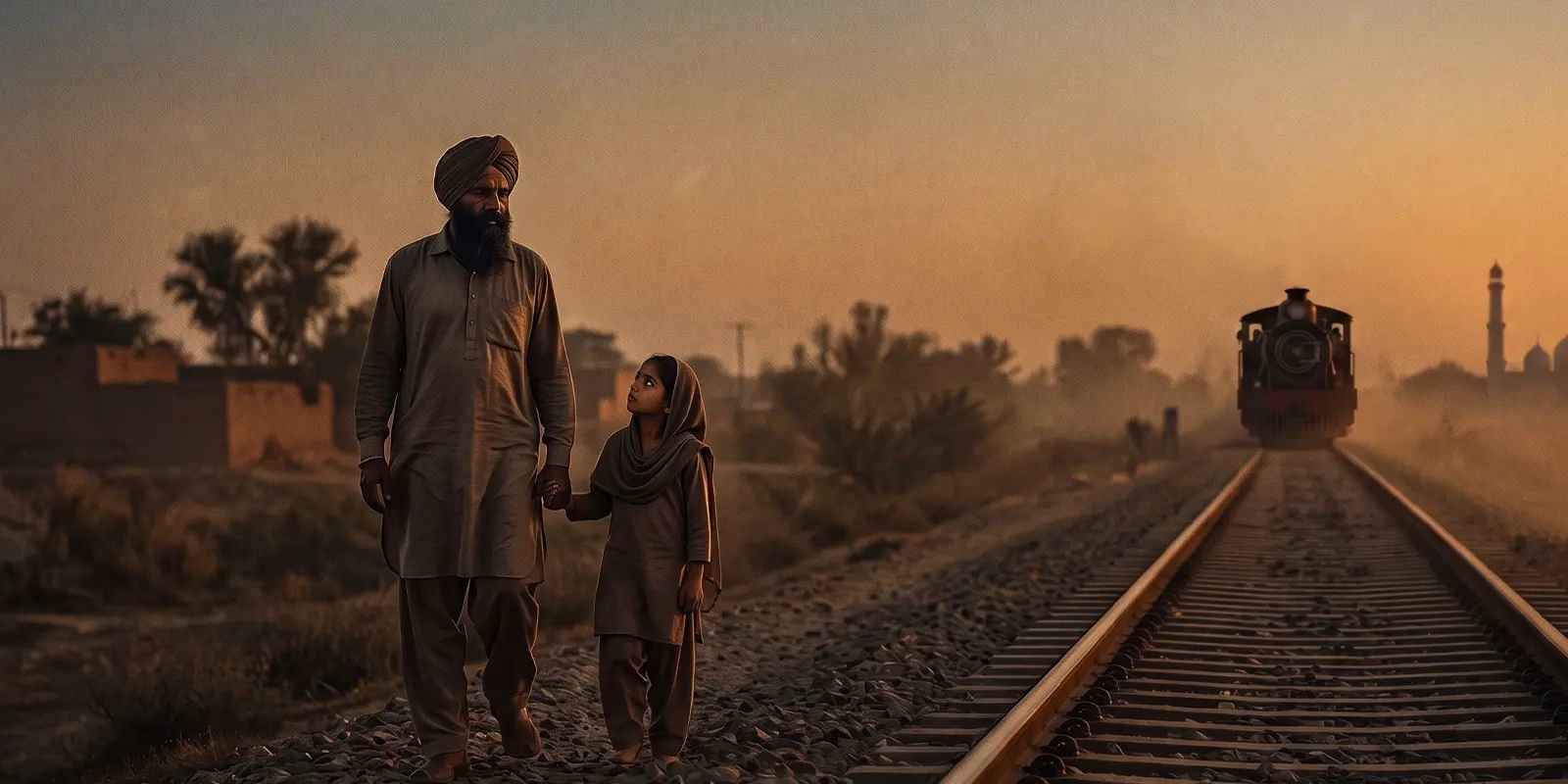
Boota was eventually buried at Lahore’s Miani Sahib graveyard.
But his story did not end there. Over the years, his grave became a place where people came to remember a man whose love had been caught between two countries, two communities and a history that gave individuals very little say in their own lives.
He came to be remembered as Shaheed-e-Mohabbat – the martyr of love.
A Love Story That Partition Could Not Erase
Perhaps what makes the story of Boota Singh and Zainab so heartbreaking is not simply its ending.
Their story reminds us that Partition was not merely about dividing land or creating two nations. It also divided families, marriages, homes and lives – often leaving ordinary people with little control over what happened to the people they loved.
Boota and Zainab’s story may have ended in heartbreak, but it could not be erased. Because sometimes, the deepest scars left by history are not found on maps. They are found in the lives of people who simply wanted to stay together.