Sadbhavana Diwas: The Promise India Makes and Forgets Every Year
Imagine a promise that an entire country makes every year, yet most of its citizens have never actually heard the words out loud.
That is exactly what Sadbhavana Diwas is.
While most national days come with parades, speeches or public celebration, this one unfolds quietly, mostly inside government offices, far away from the noise most festivals usually bring.
Where the Words Actually Came From
Sadbhavana Diwas is observed every year on August 20, marking the birth anniversary of Rajiv Gandhi, India’s sixth Prime Minister, who was assassinated in May 1991 during an election campaign in Sriperumbudur, Tamil Nadu.
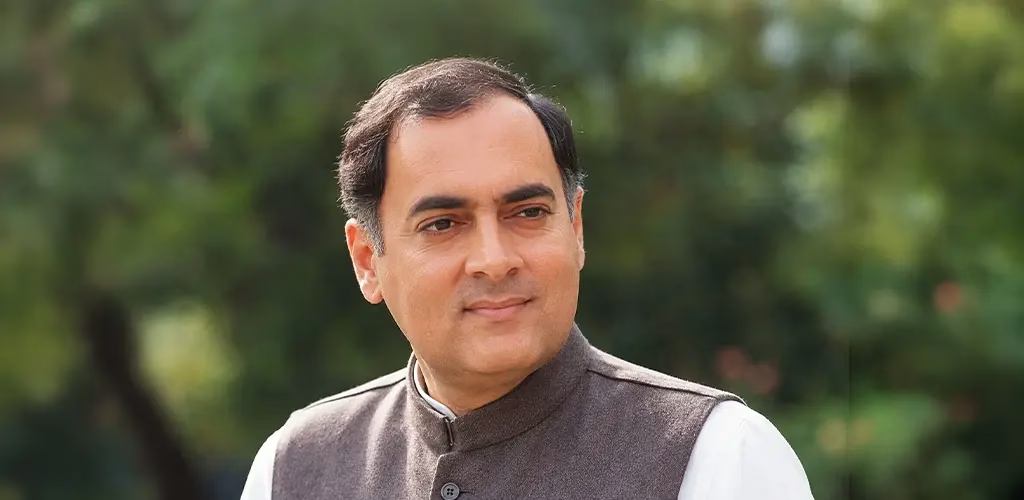
A year after his death, the Indian National Congress decided his birthday would not simply be marked with grief. Instead, in 1992, it was turned into a day built around a single spoken promise, one meant to protect the very idea Rajiv had quietly stood for through his years in office: communal harmony and national unity. That promise is what people now know, or rather barely know, as the Sadbhavana pledge.
But what does this pledge actually say?
The Words Almost No One Has Heard
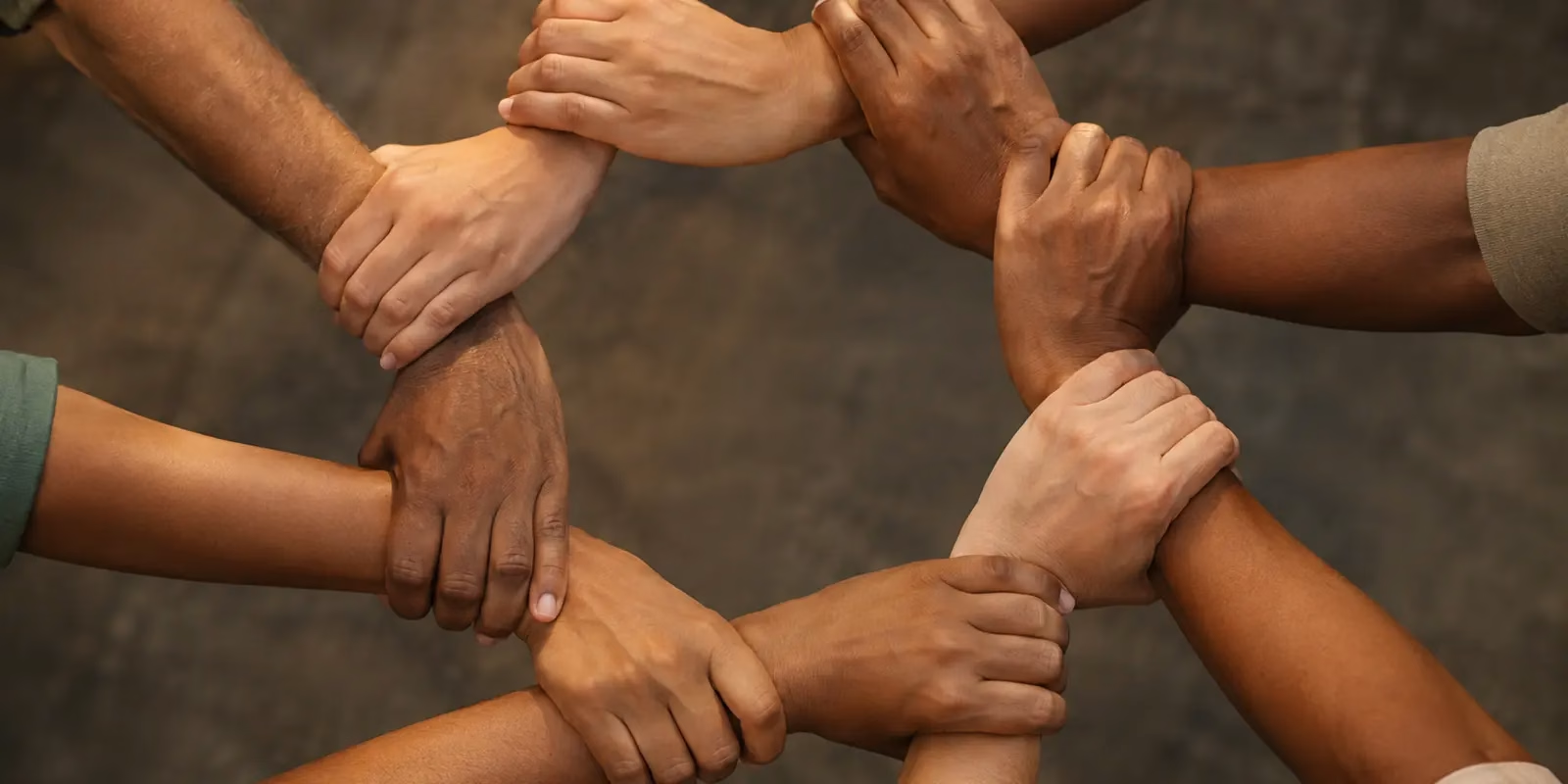
On Sadbhavana Diwas, government employees and officials across the country recite an oath promising to work toward emotional unity among all Indians, regardless of caste, religion, region or language, and to resolve every disagreement only through dialogue, never violence.
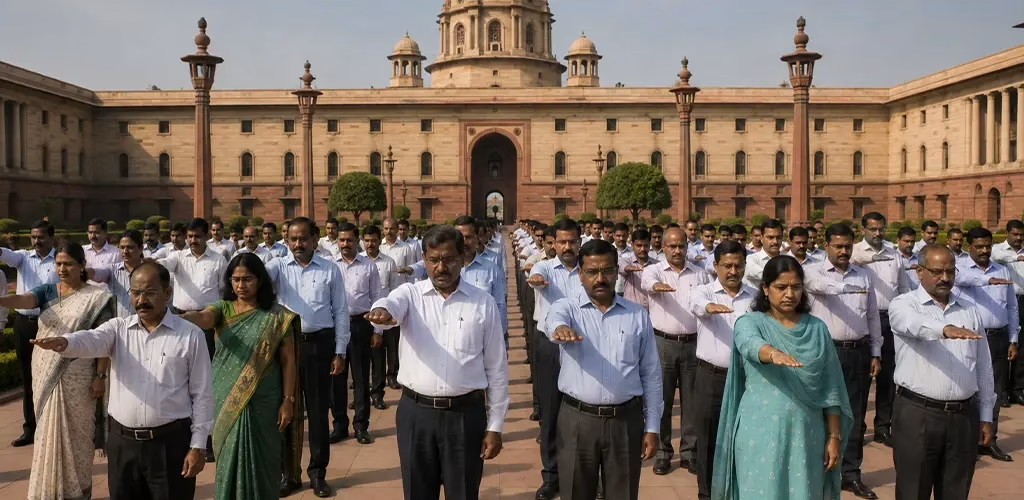
Read those words slowly, and they almost sound like something you would expect at a wedding, two sides binding themselves to each other with a promise. Except here, the two sides are not two individuals. They are many, often divided identities that make up one country.
There is no grand ceremony behind this pledge, no stage, no crowd. Just a room, a few officials, and a handful of sentences repeated out loud before everyone quietly returns to their desks.
Which raises an obvious question. Why does something this meaningful stay this invisible?
A Promise With No Audience
Most national observances in India come with some form of public participation, a march, a school assembly, a televised address. Sadbhavana Diwas has almost none of that.
It exists mainly within the walls of government offices, recited by people whose job requires it, rather than citizens who chose to be part of it.
That quietness is not necessarily a flaw.
In some ways, it makes the pledge feel less like a performance and more like an honest, private commitment, the kind made without needing an audience to witness it. But it also means an entire generation of Indians has grown up without ever knowing this promise exists at all.
What a Forgotten Pledge Still Manages to Say
Sadbhavana Diwas is often mistaken for just another date on the calendar, one more name added to India’s long list of official observances. But strip away the formality, and what remains is a country quietly renewing a promise to itself every single year, whether anyone is watching or not.
Perhaps that is the real story worth remembering.
Not the ceremony, not the paperwork, but the simple idea that unity is not something a country gets to declare once and forget. It has to be repeated, promised again and again, even in rooms nobody else ever walks into.