The ‘Sugar in Milk’ Story That Welcomed the Parsis to India
What if you were told that an entire community could find a new home because of a spoonful of sugar?
It sounds almost too simple to be true. Yet, for centuries, the story of sugar dissolving into a bowl of milk has been one of the most beloved stories associated with the arrival of the Parsis in India.
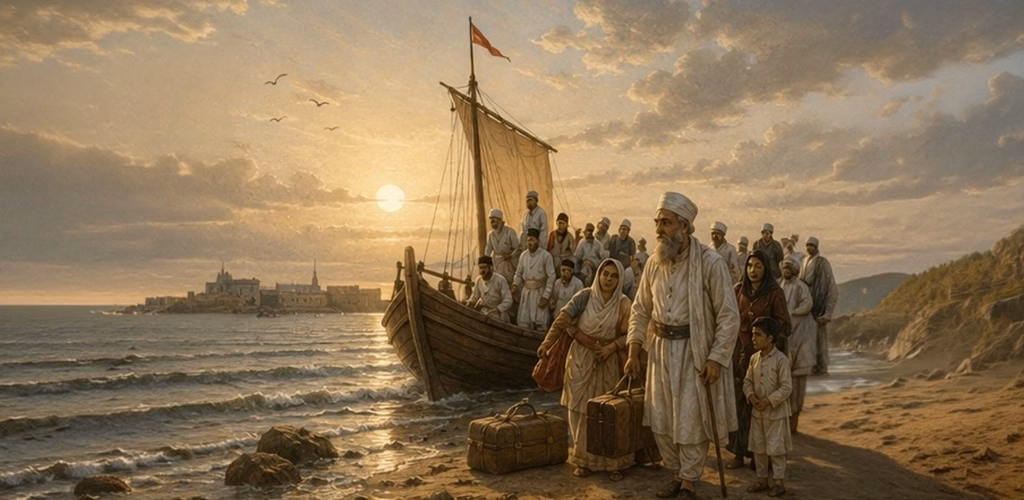
The legend tells of a group of Zoroastrians who fled Persia after facing increasing religious pressure and persecution following the Arab conquest of the Sasanian Empire. After travelling across the sea, they eventually reached the shores of Gujarat, seeking a place where they could practise their faith freely.
What happened when they met the local ruler is remembered not just as a story of migration, but as a beautiful metaphor for how the Parsi community came to see its relationship with India.
And as India celebrates the Parsi New Year, the story becomes even more significant.
When Persia Was No Longer Home
The Parsis trace their ancestry to Zoroastrians from Persia, present-day Iran.
After the Arab conquest of the Sasanian Empire in the 7th century, Zoroastrian communities faced increasing pressure. Over the following centuries, groups of Zoroastrians began leaving Persia in search of safety and a place where they could continue their religion.
One such group eventually reached the western coast of India.
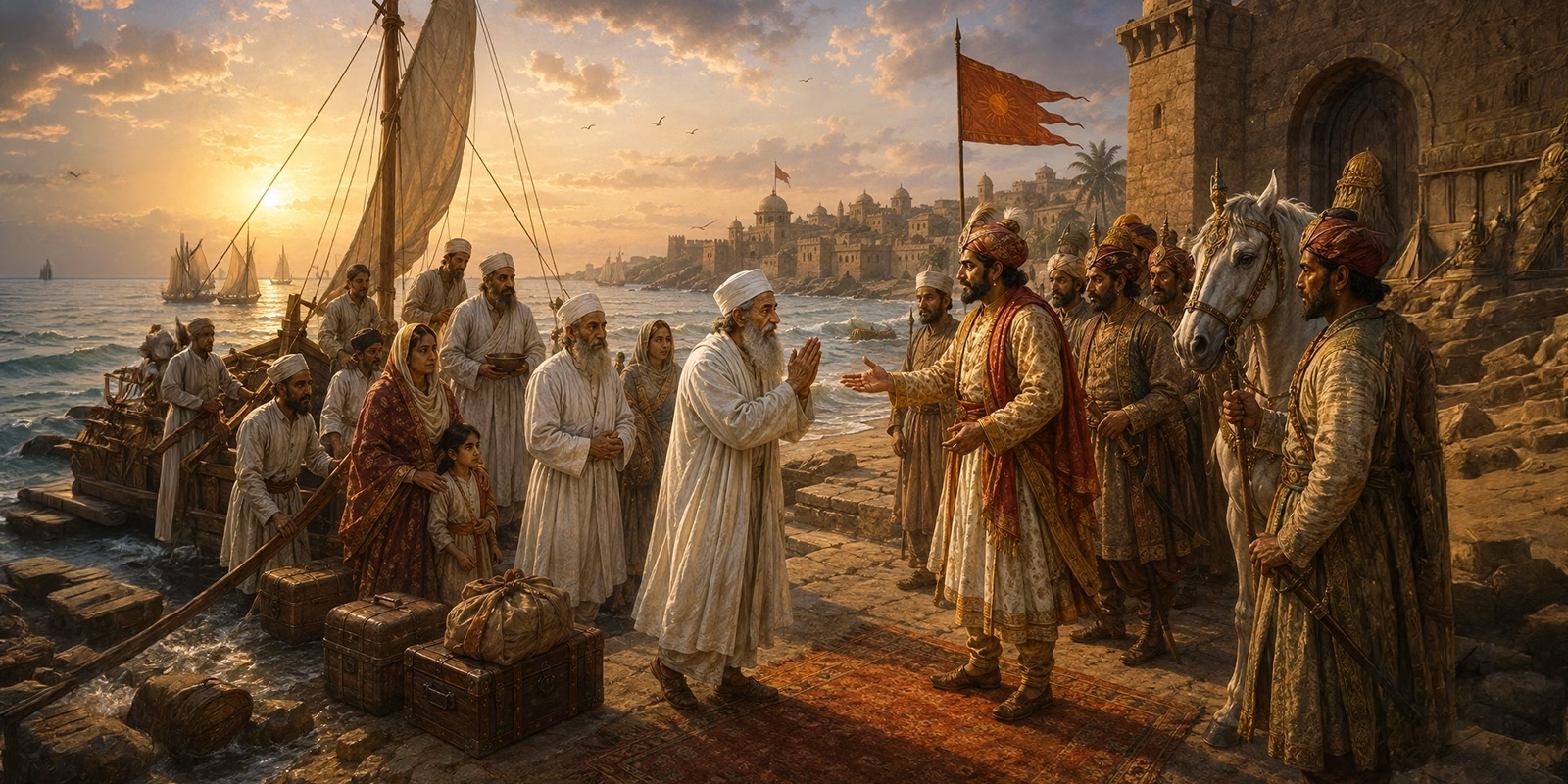
They landed in or around Sanjan, in present-day Gujarat, and approached the local Hindu ruler, traditionally known as Jadi Rana, seeking permission to settle in his kingdom.
But there was a problem.
The kingdom was already home to its own people, and the arrival of a large group of refugees raised an obvious question – how could they accommodate more people without disturbing the existing social order?
And that is where the famous bowl of milk enters the story.
A Bowl of Milk and a Spoonful of Sugar
The language barrier meant that the conversation between the newcomers and the king was largely symbolic.
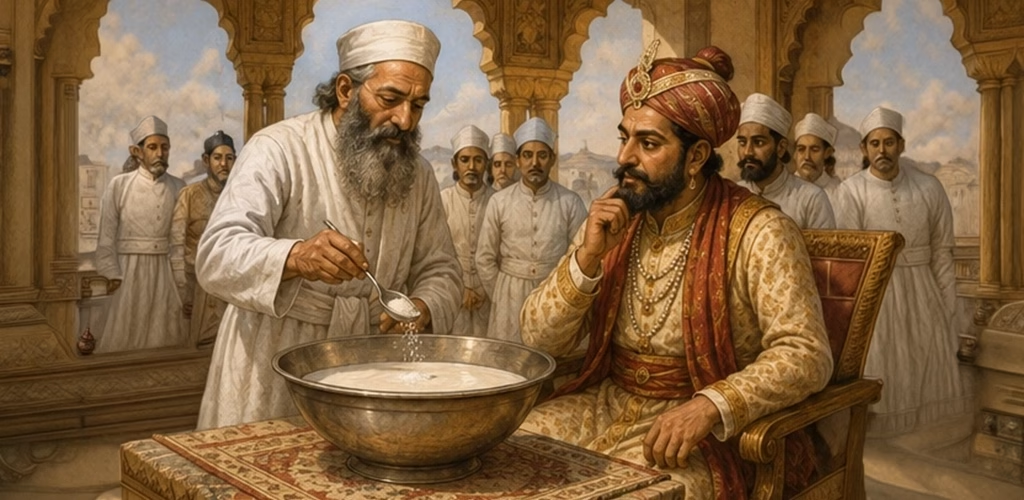
According to the popular legend, Jadi Rana presented the Zoroastrian refugees with a vessel filled to the brim with milk.
The message was clear.
His kingdom was already full. There was no room for more people without the milk spilling over.
The Parsi priest understood the message.
Instead of arguing, he took a spoonful of sugar and carefully added it to the milk. The sugar dissolved without increasing the level of the liquid.
The message was just as clear.
The Parsis would be like the sugar – blending into the society around them, adding sweetness and enriching it without displacing anyone.
Impressed by the wisdom and humility of the response, Jadi Rana agreed to let them stay.
And one of India’s most enduring stories of assimilation was born.
A New Home, But Not a New Identity
The permission to settle did not necessarily mean that the newcomers could live exactly as they had in Persia.
According to the traditional account, Jadi Rana placed certain conditions before granting them asylum.
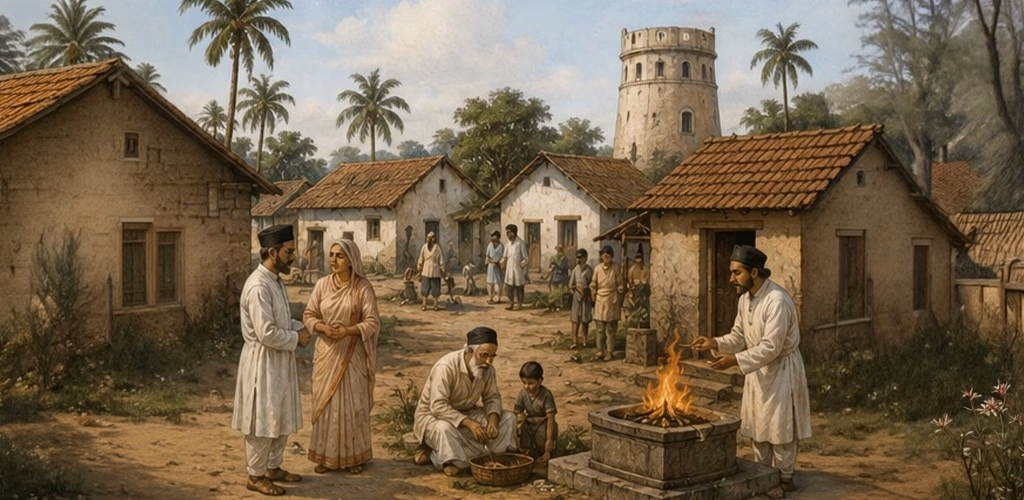
The Parsis agreed to adopt Gujarati as their local language. Their women would adopt the local style of dress, including the sari, and the community would live peacefully under the ruler’s authority.
In some versions of the story, they were also expected not to carry arms and not to seek conversions.
The refugees accepted these conditions.
They cleared land and established their settlement at Sanjan, where they were eventually able to practise their Zoroastrian faith openly.
Their sacred fire, known as Iranshah, also became an important symbol of their connection to their ancestral homeland.
But perhaps the most remarkable part was that they adapted without abandoning who they were.
They learnt the language around them, adopted aspects of local culture and became part of the society – while continuing to preserve their religion and distinct identity.
From Refugees to a Community Rooted in India
The story of the Parsis did not end with their arrival at Sanjan.
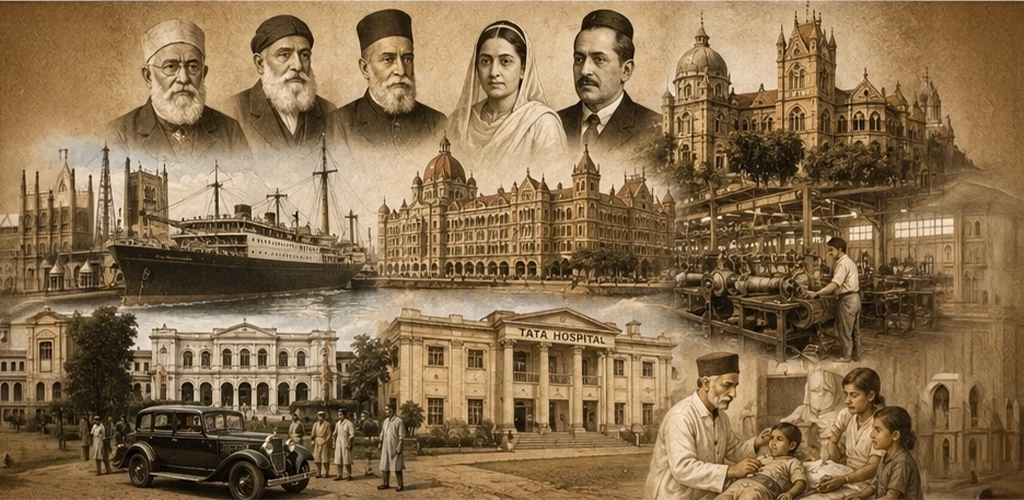
Over the centuries, the community spread to different parts of western India, particularly Gujarat and later Bombay, now Mumbai.
They became involved in trade, education, industry and philanthropy, building institutions that would eventually become part of India’s social and economic landscape.
Parsi industrialists such as Jamsetji Tata became associated with India’s industrial transformation, while Parsi philanthropists contributed extensively to education, healthcare and public institutions.
Despite being a relatively small community, their influence became much larger than their numbers.
In many ways, this is where the sugar-in-milk metaphor acquired a life beyond the original legend.
They had promised to add sweetness.
And generations later, the story became a way of describing exactly how the community understood its place in India.
The Philosophy Behind the Sweetness
The story resonates even more deeply when viewed through the central ethical principles of Zoroastrianism: Humata, Hukhta, Hvarshta – Good Thoughts, Good Words and Good Deeds.
The metaphor of sugar in milk reflects this philosophy beautifully.
The aim was not to replace what already existed.
It was to contribute to it.
The Parsis maintained their religious traditions, built their own institutions and preserved their cultural identity, while becoming deeply involved in the society around them.
This balance between preserving one’s identity and participating in a larger society has remained one of the defining features of the Parsi experience in India.
How Much of the Story Is History?
There is, however, an important detail often left out of the beautiful legend.
The sugar-in-milk story is a tradition, not a historical event that can be independently verified in every detail.
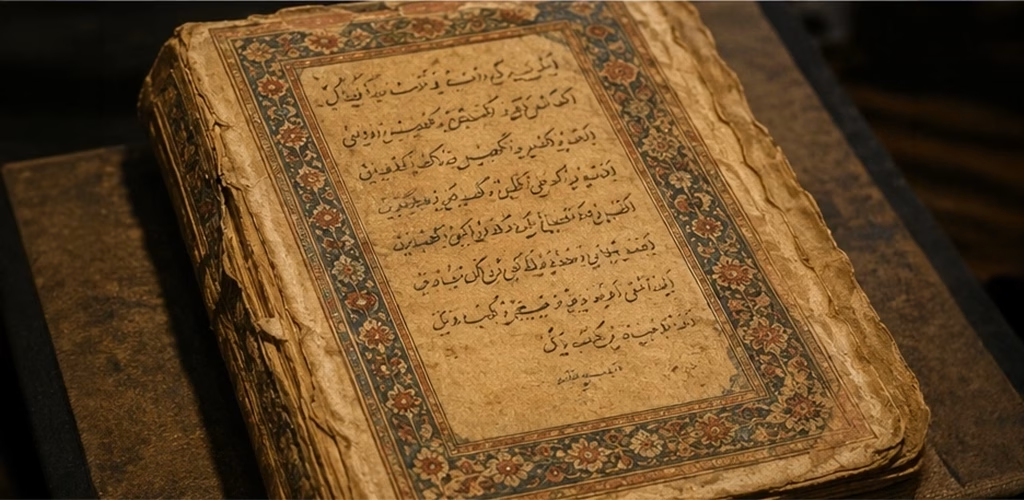
One of the primary written accounts of the early Parsi settlement is the Qissa-i Sanjan, a Persian narrative poem written around 1599 – 1600 by the Parsi priest Bahman Kaikobad – centuries after the community’s traditional arrival in India.
The milk-and-sugar episode is closely associated with this tradition and has been passed down through oral accounts, poetry and later retellings. Historians have also pointed out that some details may have developed as folklore over time.
Even the precise date of the Parsi arrival and the identity of Jadi Rana remain subjects of historical debate.
But that does not make the story meaningless.
Sometimes, a legend survives because it captures something that a list of dates never could.
The Sugar That Stayed
Today, the Parsis remain one of India’s smallest religious communities.
Yet their contribution to the country has been anything but small.
Their story is one of migration, adaptation and survival – of people who arrived on unfamiliar shores after leaving behind the land of their ancestors and slowly built a new home without giving up the faith that brought them there.
Perhaps that is why the bowl of milk remains such a powerful image.
The milk was India.
The sugar was the Parsi community.
And the promise was that one could become part of something larger without erasing either side.
As the Parsi New Year is celebrated in India, the old story takes on a new meaning once again.
Because more than a thousand years after those refugees are believed to have arrived on the shores of Gujarat, the sugar has not disappeared.
It dissolved into the milk – and left its sweetness behind.