India's Other Independence Day: The Story of Dadra and Nagar Haveli
What do you think of when you hear “Independence Day”? Probably August 15, 1947, the British leaving, and the tricolour rising over Delhi.
But not every part of India was actually free that day.
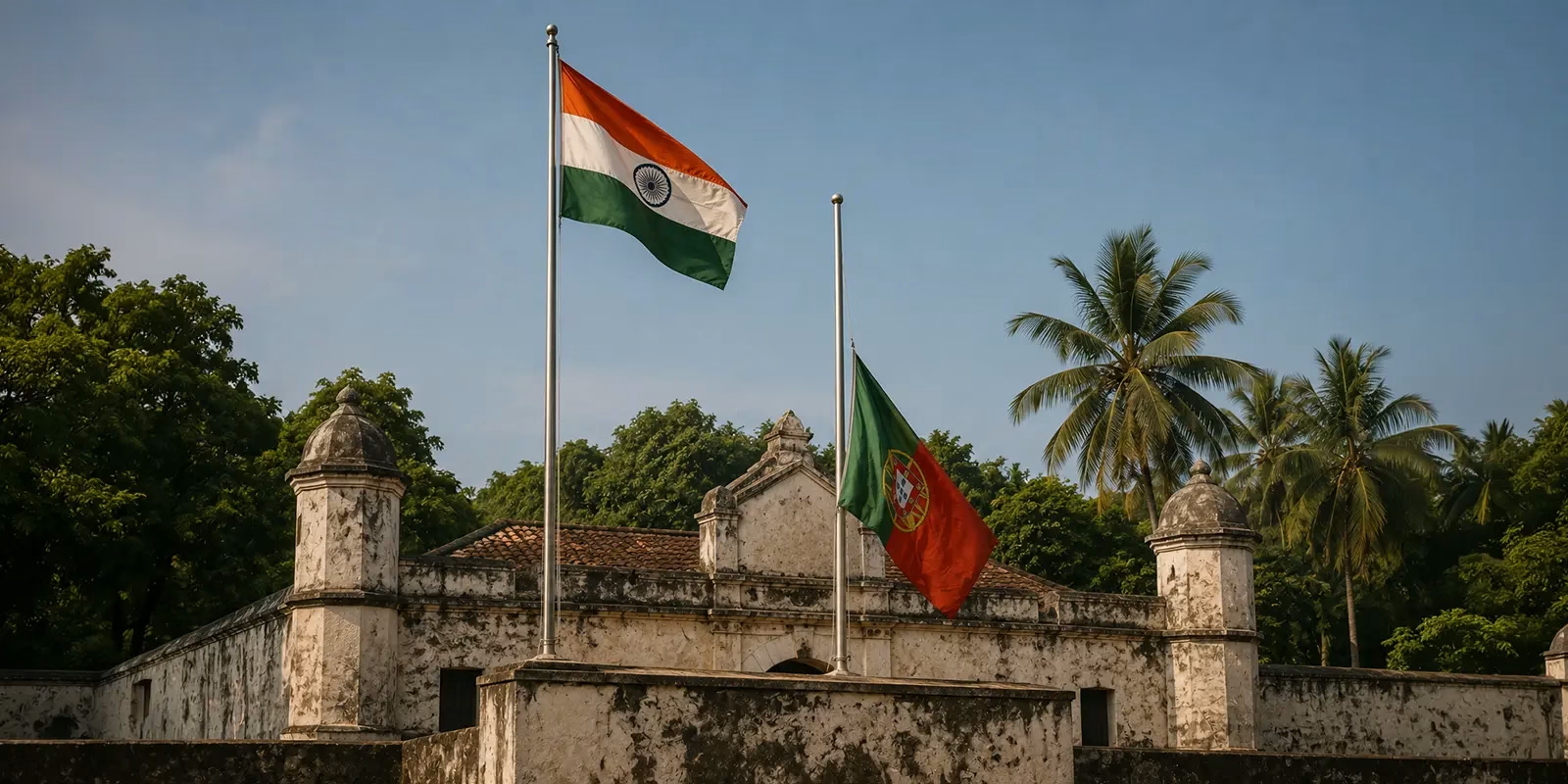
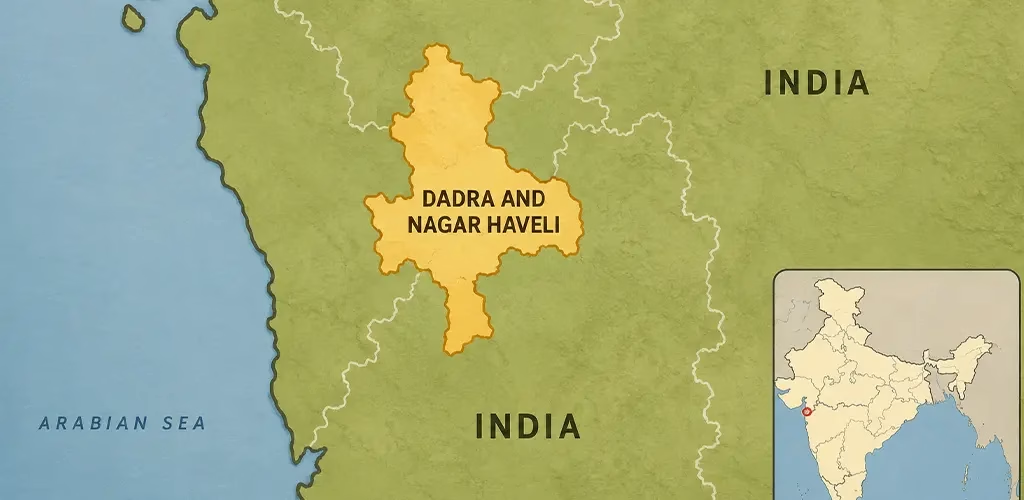
Tucked away in a small cluster of 72 villages, a place called Dadra and Nagar Haveli was still living under a completely different foreign flag, one that had no plans of coming down anytime soon.
The Land Portugal Refused to Let Go Of: Dadra and Nagar Haveli
Today, Dadra and Nagar Haveli is rarely mentioned when we talk about India’s freedom struggle.
But even after India became independent in 1947, the region was still under Portuguese rule and for them things very different. They did not consider Dadra and Nagar Haveli, or nearby Goa and Daman, to be colonies. To them, these places were simply part of Portugal, just thousands of kilometres away from home.
For the newly independent Indian government, this created a difficult situation. Being part of NATO, any direct military action against Portugal could have turned a local conflict into a much bigger international problem.
So India held back.
And that meant Dadra and Nagar Haveli remained in a strange position. It was surrounded by India, connected to India by its people and culture, yet it was still ruled by Portugal.
But for the people actually living there, waiting for diplomacy to solve the problem was not easy. Their daily lives were already being shaped by Portuguese rule.
The Everyday Cruelty That Sparked a Rebellion
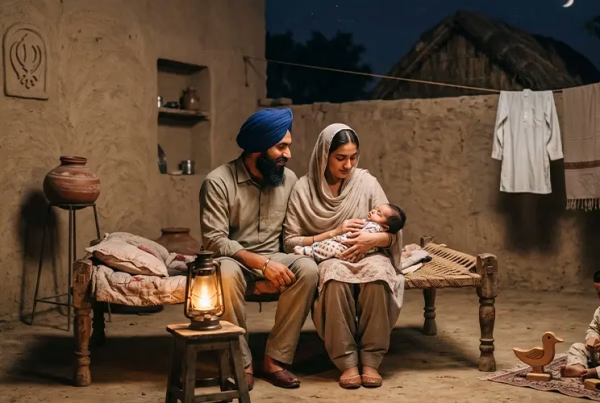
Life under Portuguese rule was difficult, especially for many tribal communities living in the region.
One of the biggest problems was a system of forced labour known locally as khavti. People could become trapped in debt and then be forced to work for years without fair pay. In some cases, entire families remained caught in the same system.
They had no control over their land, their work or the way their communities were governed.
For years, this suffering continued quietly.
But eventually, news of what was happening reached young nationalists in other parts of India.
They began asking a simple question: If India was already free, why were people just across the border still living under foreign rule?
That question slowly turned into something much bigger.
The Unlikely Army That Planned in Silence
The people who eventually rose against Portuguese rule were mostly in their late teens and early twenties, with no army training and barely any money between them. So they knew they could not fight like a regular army. Instead, they relied on planning, local support and their knowledge of the land.
They divided themselves in three groups working together. One handled planning and funds. Another brought real guerrilla experience from Goa. The third was made up of local tribal fighters led by a woman named Jeturbai Ghum, who knew the terrain better than any outsider ever could.
To fund the mission, they received help from unexpected places, including fundraising concerts by the singers Lata Mangeshkar and Mohammed Rafi. Weapons were smuggled in from a black market in Hyderabad, dismantled and moved in pieces so nobody would notice. Locals even disguised themselves as vendors and beggars to observe Portuguese positions.
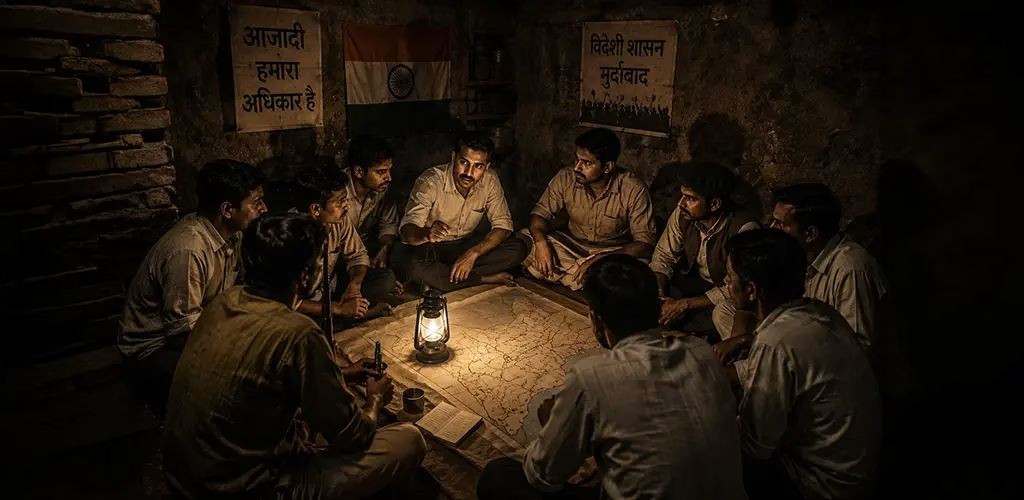
None of this happened overnight. It was planned slowly, carefully, and almost invisibly, long before a single shot was ever fired.
The Battle That Freed Dadra and Nagar Haveli
On 31 July 1954, the uprising finally began, the odds looked almost impossible.
Barely twenty-two or twenty-three fighters were going up against a Portuguese force of 375 soldiers, fully armed with machine guns and proper military equipment. Instead of a direct fight they could never win, the group used guerrilla tactics inspired by the old fighting style of the Maratha king Shivaji, using noise, fireworks, and clever misdirection to make their small numbers seem much larger than they actually were.
One Portuguese post after another came under pressure. The resistance spread through the region, while Portuguese forces became increasingly isolated.
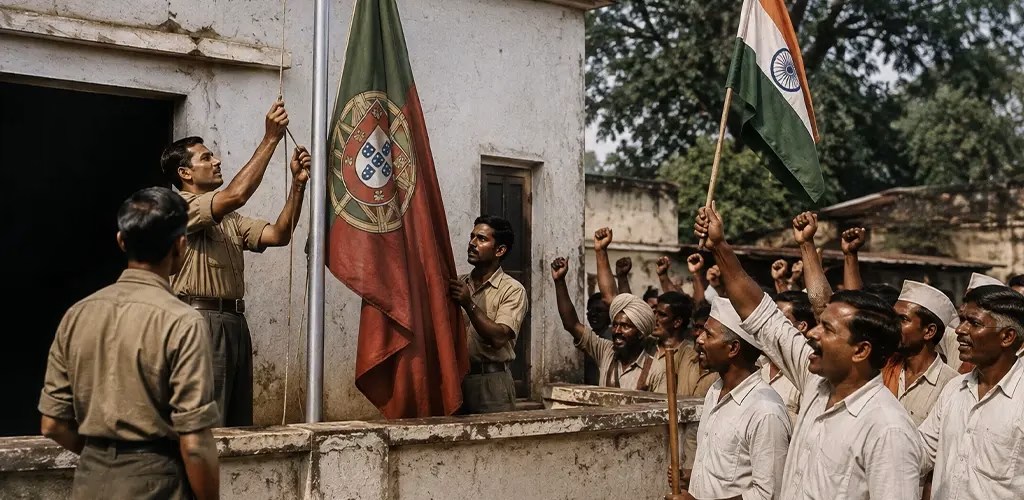
By 11 August 1954, Portuguese authority in Dadra and Nagar Haveli had effectively collapsed.
The Portuguese flag came down.
But winning the fight created a completely new problem: what would they do with the freedom they had just won?
The Fighters History Nearly Forgot
After the victory, many of the young fighters simply returned to their ordinary lives.
They did not receive the kind of recognition we usually associate with freedom fighters. For years, many received little financial support or official acknowledgement for what they had done.
Their names slowly faded from the larger story of India’s independence.
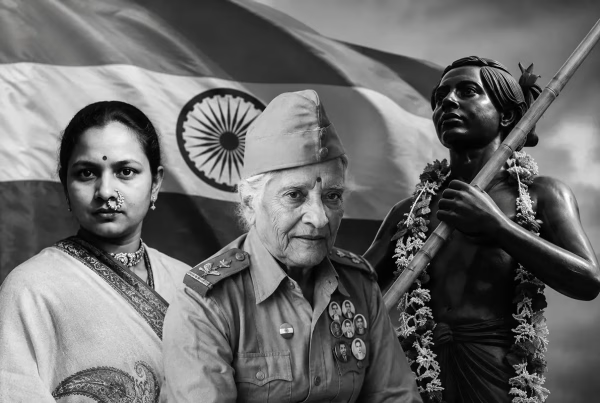
It was only much later, during Atal Bihari Vajpayee’s government, that many of these fighters were formally recognised as freedom fighters.
And that makes the story even more unusual.
They had helped free a part of India that was still under foreign rule years after 1947, yet most Indians had never heard their names.
Perhaps that is why Dadra and Nagar Haveli deserves to be remembered today, not as a footnote, but as another chapter of India’s long journey to freedom.