When Snakes Become Gods: Stories Behind Nag Panchami
Imagine walking into a village where a cobra is not chased away, but welcomed into the house. Where a snake can quietly enter a courtyard, rest in a sacred alcove and leave without anyone screaming in fear.
For most people, snakes instinctively evoke fear. But in Hindu traditions, they have occupied a very different place for centuries. Nagas are not merely creatures but divine beings, protectors and powerful figures in Hindu cosmology.
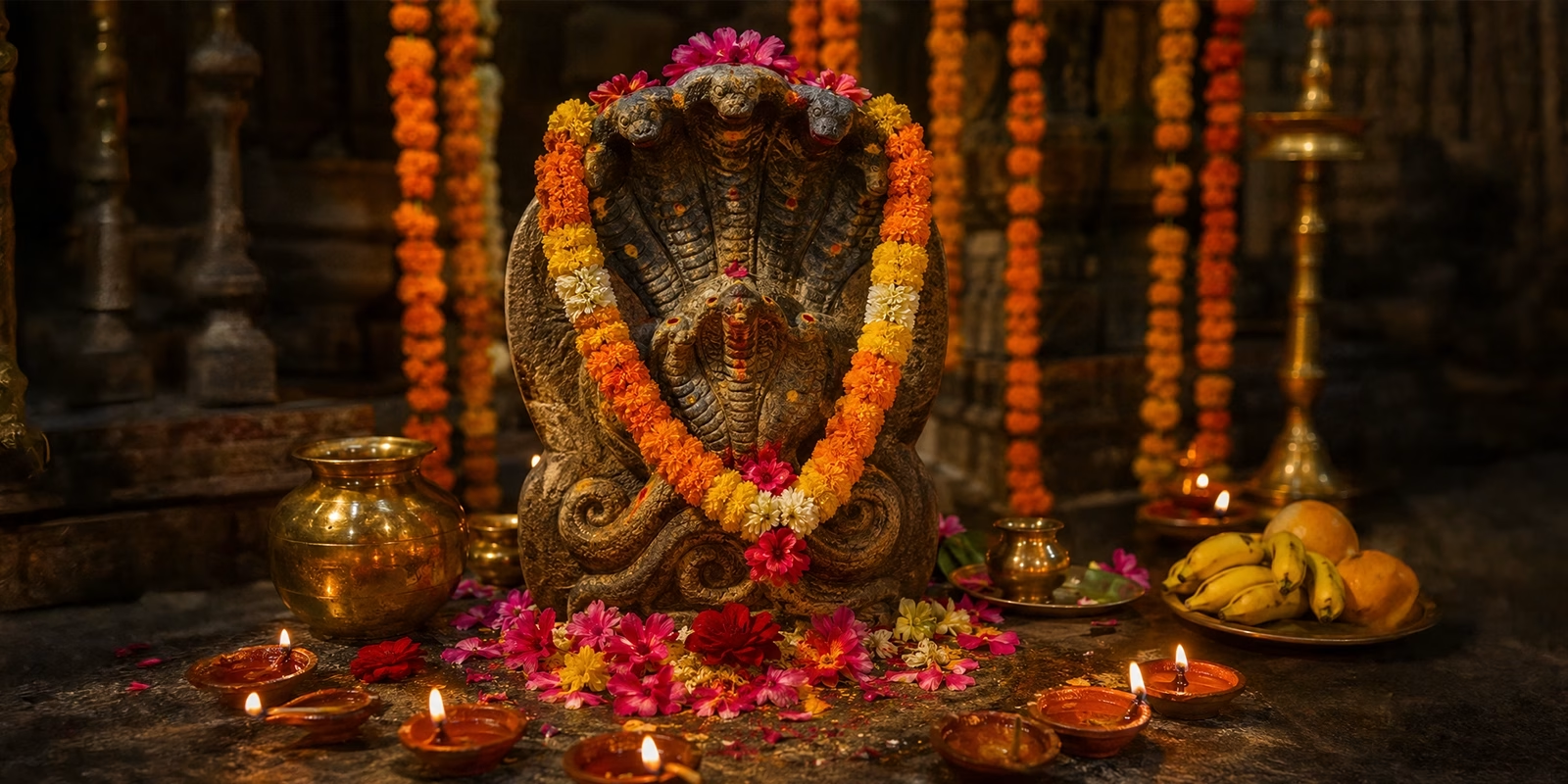
This reverence comes alive every year on Nag Panchami, a festival dedicated to the worship of Nagas or serpent deities. In 2026, Nag Panchami will be observed on 17 August, the fifth day of the bright half of Shravan.
But the festival is about much more than worshipping snakes. Its stories stretch from the cosmic ocean and Lord Vishnu’s resting place to the banks of the Yamuna, and even to a village in Maharashtra where cobras are still treated as divine guests.
Why Are Snakes Worshipped in Hinduism?
In Hindu mythology, serpents have never been restricted to the idea of danger.
They represent fertility, protection, eternity and cosmic energy. They are associated with Patala, the subterranean realm, and are closely connected with some of Hinduism’s most powerful deities.
Lord Shiva wears Vasuki around his neck, while Lord Vishnu rests upon Shesha in the cosmic ocean. Nagas therefore occupy a sacred space between the mortal and divine worlds.
Nag Panchami is traditionally observed to seek protection from snakebites, family well-being and relief from serpent-related afflictions such as Sarpa Dosha.
But the story behind the festival goes much deeper.
The King Who Wanted to Destroy Every Snake
One of the most prominent legends associated with Nag Panchami comes from the Mahabharata.
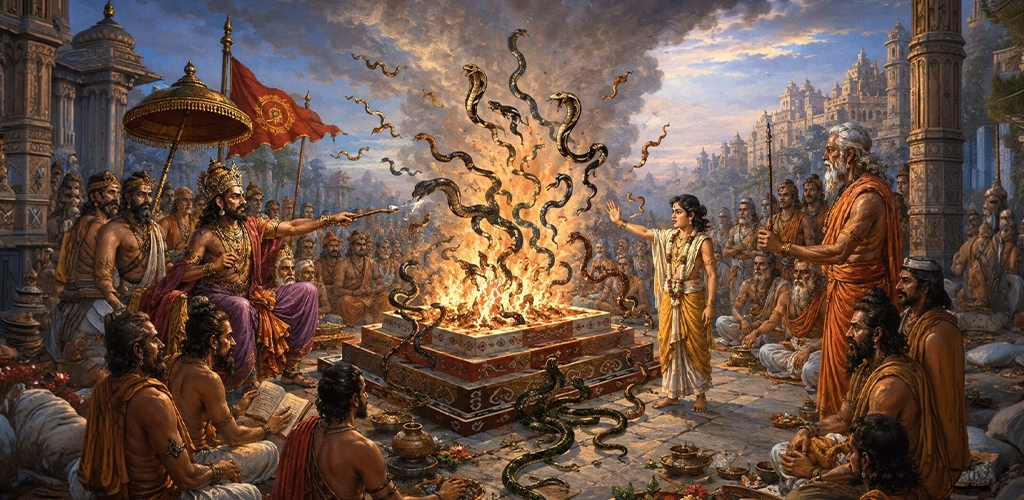
King Parikshit was killed by the serpent king Takshaka after a curse. His son, Janamejaya, was consumed by grief and anger and decided to destroy the entire Naga race.
He began the massive Sarpa Satra, a snake sacrifice in which serpents were summoned into the sacrificial fire.
But just as the destruction seemed unstoppable, sage Astika intervened. Born to a Naga mother, he persuaded Janamejaya to stop the sacrifice.
The king eventually agreed, saving the Nagas from complete destruction.
The day this intervention is traditionally remembered is associated with Shravan Shukla Panchami — the day celebrated as Nag Panchami.
At its heart, therefore, the festival carries an idea of coexistence: that even creatures humans fear have a place in the larger balance of nature.
The Serpent Who Holds the Cosmos
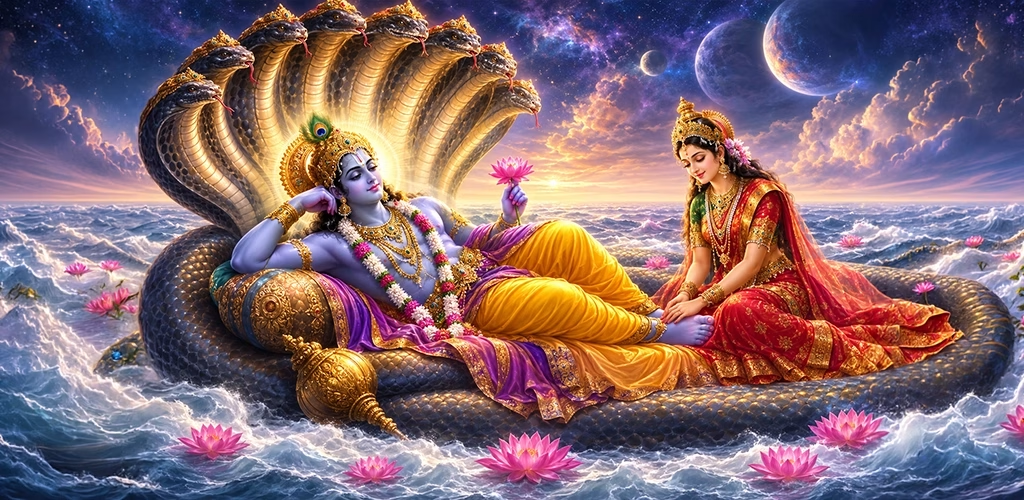
Among the many Nagas revered in Hinduism, Sheshnag holds a particularly significant position.
Also known as Shesha or Ananta, he is described as the primordial serpent king and is often depicted with countless hoods.
According to Hindu cosmology, Shesha supports the Earth or the universe upon his hoods. He is also the eternal resting place of Lord Vishnu, who reclines upon him in the Kshira Sagara, the cosmic ocean.
His association with the divine does not end there.
Shesha is believed to have incarnated as Lakshmana, the devoted brother of Lord Rama. In some traditions, Balarama, the elder brother of Krishna, is also regarded as his incarnation.
When devotees worship Nagas during Nag Panchami, they are therefore engaging with a tradition in which serpents are woven into the very structure of the cosmos.
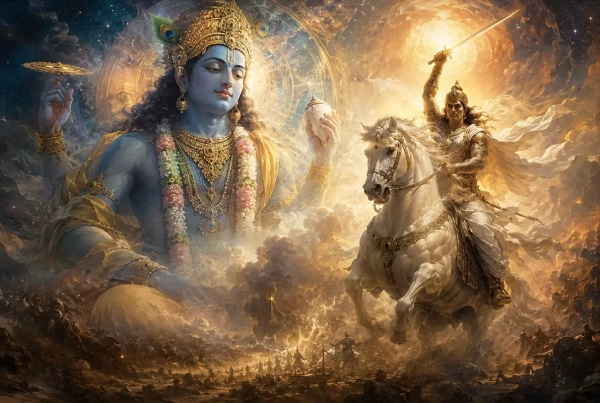
When Krishna Danced on Kaliya’s Hoods
Another beloved story associated with Nag Panchami belongs to the childhood of Lord Krishna.
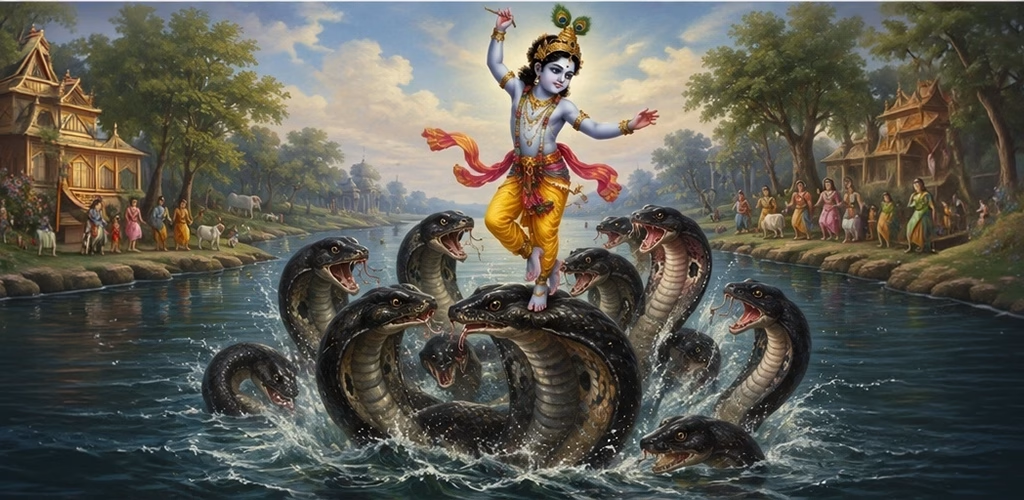
The Yamuna River had become poisoned by Kaliya, a massive multi-hooded serpent whose presence made the waters dangerous.
Krishna eventually confronted Kaliya and climbed onto his hoods, dancing upon them and overpowering him. He then forced the serpent to leave the Yamuna.
The story is remembered in several traditions associated with Nag Panchami. Yet it is not merely about defeating a dangerous serpent.
It is also about restoring balance — between humans, nature and the forces that inhabit it.
The Village Where Cobras Are Family
Around 200 kilometres from Pune lies Shetphal, a village in Maharashtra’s Solapur district that has earned the reputation of being India’s “Snake Village”.
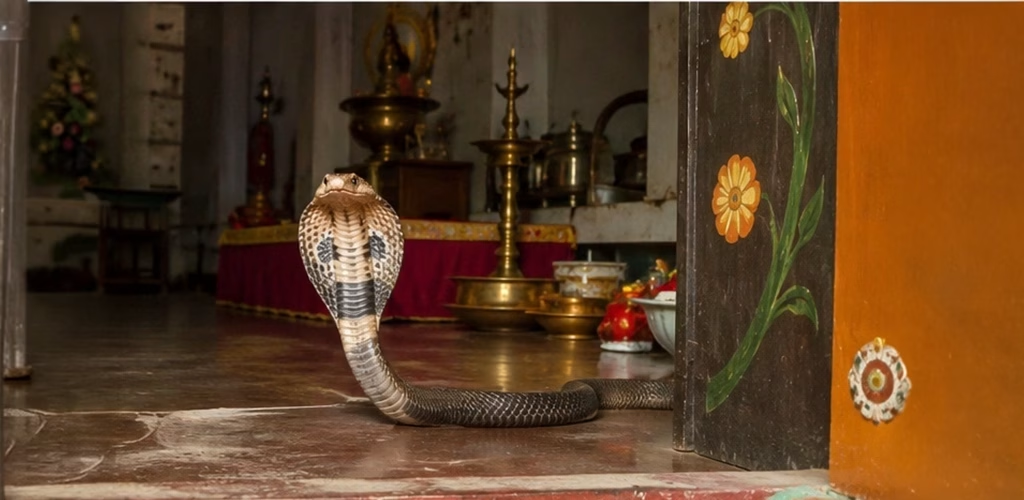
Here, cobras are not treated in the way most people would treat a snake entering their homes.
They are treated as divine guests.
Many houses traditionally have a dedicated sacred space or alcove where snakes can rest undisturbed. These spaces are even incorporated into some houses when they are constructed.
Cobras may move through courtyards, streets and other parts of the village. Children grow up seeing them as a familiar part of their surroundings rather than immediately associating them with danger.
The belief is deeply connected with Nag Devta and Lord Shiva. The snakes are regarded as protectors and divine beings rather than animals that need to be controlled.
The tradition becomes particularly visible during Nag Panchami, when rituals and celebrations bring greater attention to the village’s unusual relationship with serpents.
Where Vasuki Found Protection
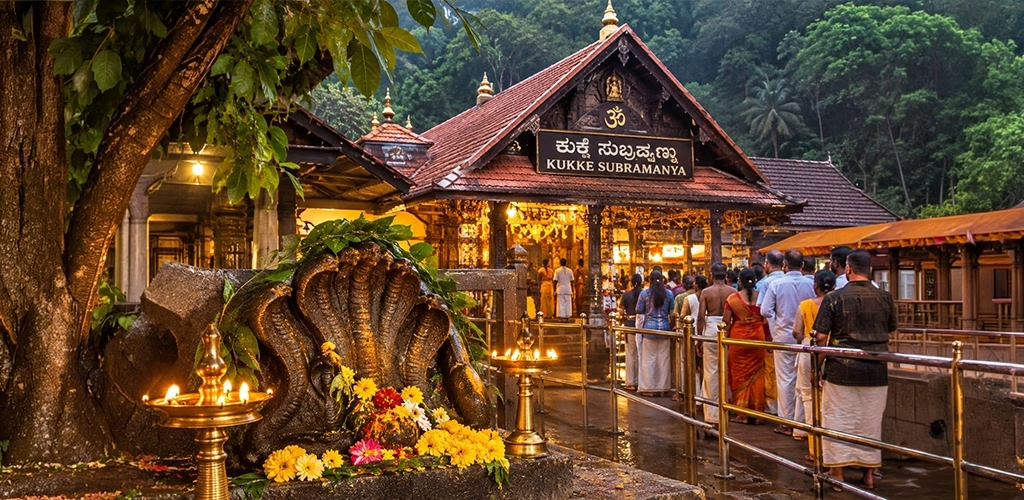
If Shetphal represents coexistence with living serpents, the Kukke Subramanya Temple in Karnataka represents one of India’s most important centres of Naga worship.
Situated in Subramanya village in Dakshina Kannada, the temple is dedicated to Lord Subramanya, also known as Kartikeya or Murugan.
According to legend, serpent king Vasuki and other Nagas sought refuge from Garuda, the eagle associated with Lord Vishnu and traditionally regarded as an enemy of snakes.
Subramanya offered them protection.
The temple therefore worships Subramanya alongside Vasuki and Shesha, and devotees from across India visit it seeking protection and relief from traditional serpent-related afflictions.
Rituals including Sarpa Samskara, Ashlesha Bali and Naga Pratishta form an important part of the temple’s practices.
A Tradition Spread Across India
Naga worship is not limited to Nag Panchami or a handful of temples.
Across India, serpents are revered through stone Naga idols, household shrines, sacred anthills and temples dedicated to particular serpent deities such as Vasuki and Takshaka.
Offerings may include flowers, turmeric, vermilion, sweets and prayers. In some communities, milk is traditionally offered to snakes, although many modern practices use idols or images instead of live animals.
The rituals vary from region to region, but the sentiment remains similar — the belief that humans share the world with forces of nature that deserve reverence rather than needless destruction.
A Festival About More Than Snakes
Nag Panchami may appear to be a festival centred around one of the creatures humans fear the most.
But its stories reveal something much larger.
There is the serpent that supports the cosmos. The Naga protected by a deity. The serpent defeated to restore the Yamuna. The king who was asked to stop destroying an entire species. And a village where people continue to make space for cobras inside their homes.
Together, these stories present serpents not merely as creatures of danger, but as symbols of power, protection, balance and eternity.
Perhaps that is the deeper message of Nag Panchami.
Because long before modern ideas of wildlife conservation, Indian traditions had already imagined a world where humans, animals and the divine were not entirely separate.
And every Shravan Shukla Panchami, the Nagas are remembered once again-not simply as snakes, but as a part of a much larger cosmic and cultural story.