Old Tehri: The Town That Sleeps Beneath the Water
Imagine going back to the house where you grew up, only to find a lake where your street used to be.
Not a ruined building. Not a changed neighbourhood.
Just deep water.
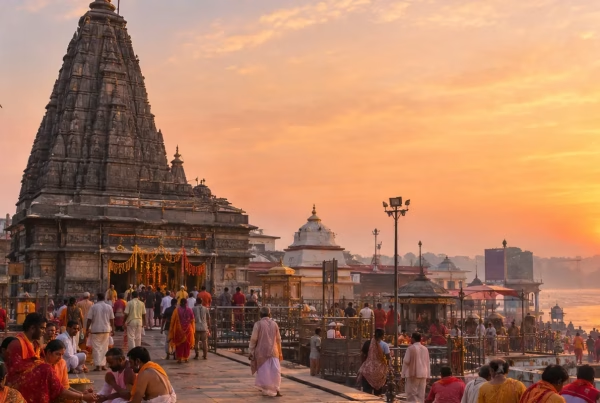
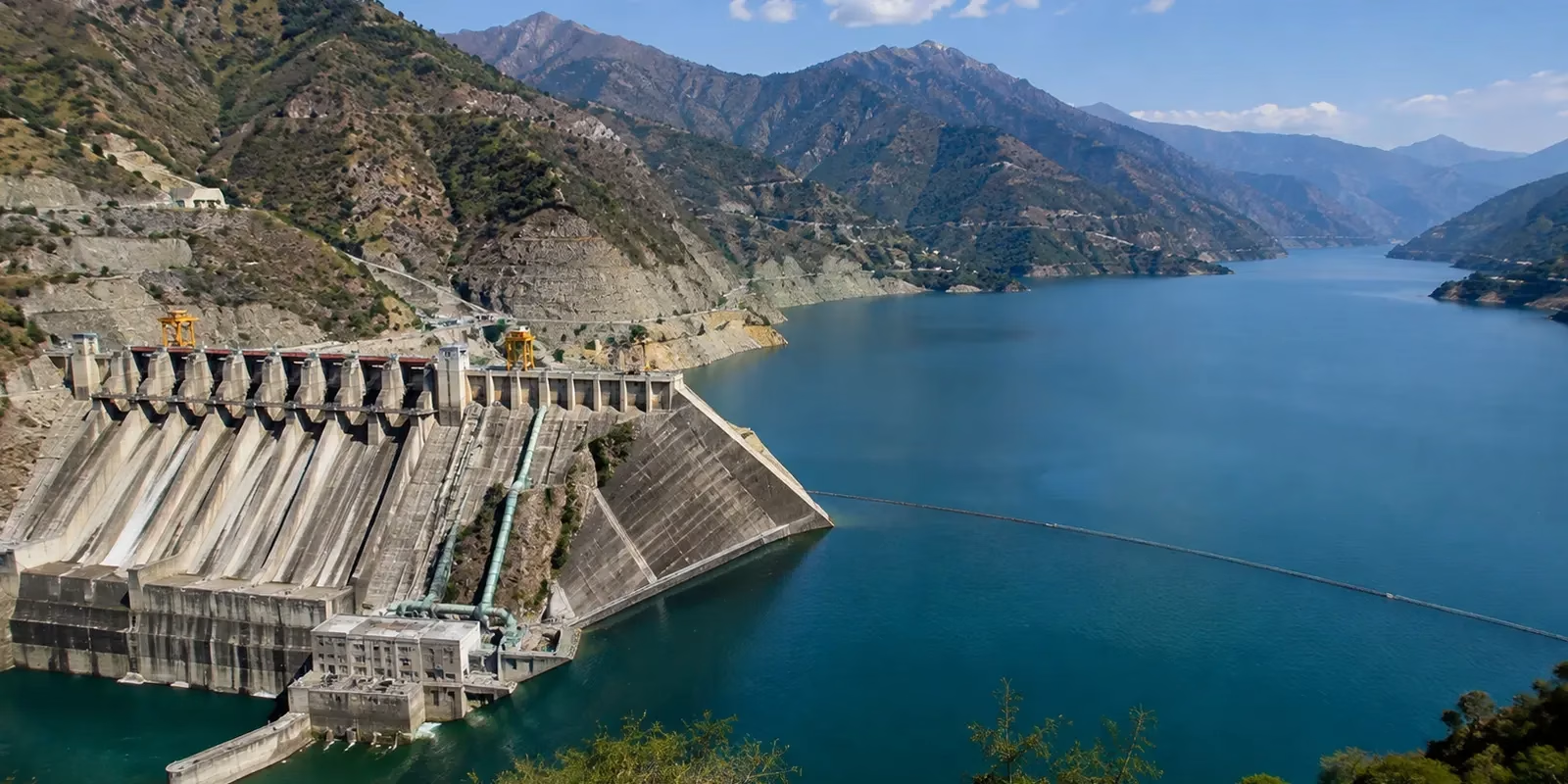
For thousands of families in Uttarakhand, this isn’t an imaginary situation. It is what happened to Old Tehri, once a royal capital with a palace, temples and a famous clock tower. Today, the town lies beneath the waters of the Tehri reservoir.
A King Who Had to Build a New Capital
Old Tehri’s story began after the loss of another capital.
In 1804, the Gorkhas invaded Garhwal, and Raja Pradyumna Shah, the last king of the united Garhwal kingdom, died fighting them. His young son, Sudarshan Shah, was forced to grow up in exile.
When the British defeated the Gorkhas in 1815, Sudarshan Shah got part of his kingdom back. But the old capital, Srinagar, remained under British control.
So he needed a new capital.
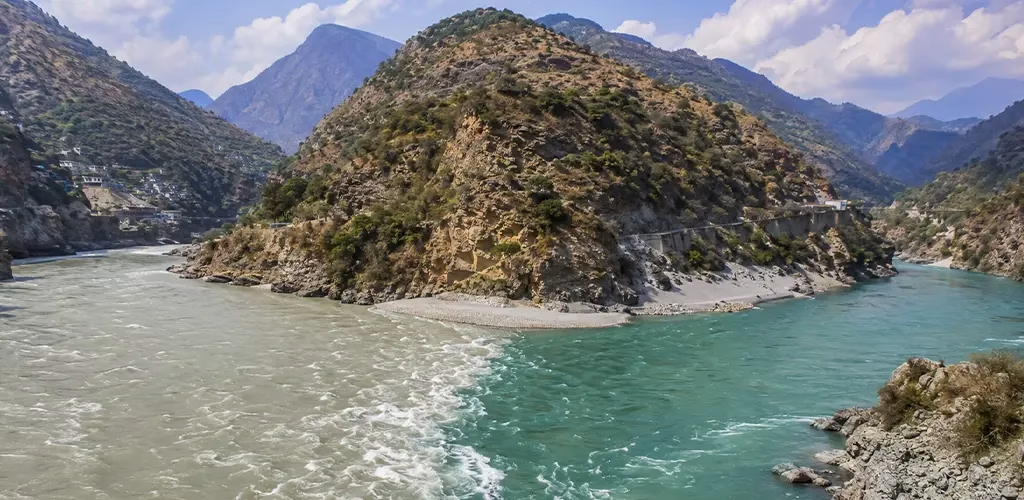
He chose the place where the Bhagirathi and Bhilangana rivers meet and founded Tehri there.
The name is often connected to Tri-hari, a place believed to wash away the sins of the mind, speech and body. Whatever the exact origin of the name, the area already had a connection with pilgrims and traders before it became a royal capital.
Kings, Saints and Rebels in One Small Town
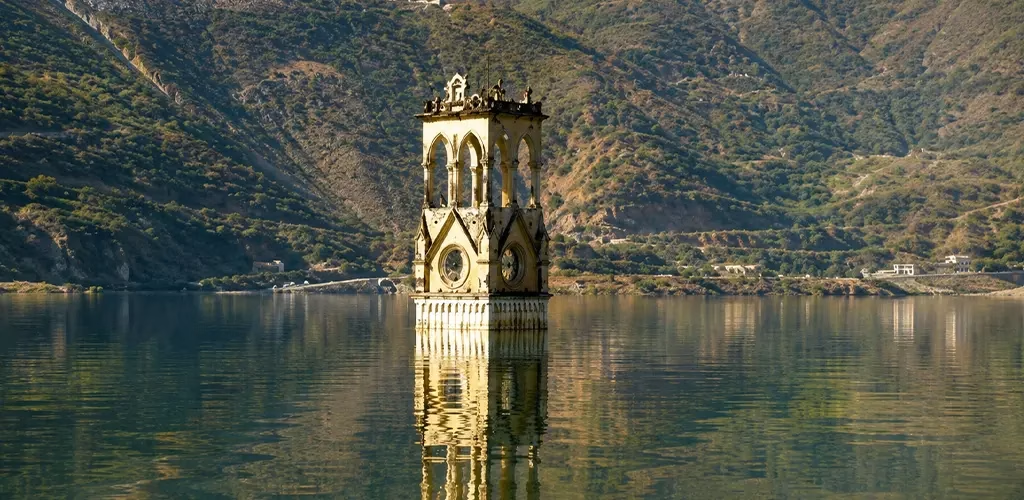
Under the Shah kings, Tehri grew into the centre of a princely state. Palaces and courts came up, and in 1897 the Ghanta Ghar, the clock tower, started marking time for the town. The capital later shifted to Narendranagar, but for most people Tehri stayed the heart of the kingdom.
The town also attracted saints. Swami Rama Tirtha, the Vedanta monk who carried Indian philosophy abroad, died in the Ganga near Tehri in 1906. Temples, ghats and evening aartis were part of everyday life.
But Tehri also had people who challenged the rulers.
In 1930, villagers in the Tilari area of the state protested harsh forest laws and were fired upon. In 1944, a young Gandhian named Sridev Suman died in Tehri jail after an 84-day fast, asking for a voice for ordinary people. In 1949, the kingdom merged with independent India, and the royal era ended.
Life in a Town Built Around Two Rivers
Old Tehri was never a big city, and that was its charm. Mornings meant temple bells and woodsmoke. Shopkeepers pulled up their shutters, children walked to school on lanes their grandparents had used, and everybody more or less knew everybody.
In a place like that, a lane isn’t just a lane. It’s where your uncle proposed, where the teacher scolded the boys, where the festival procession always paused. The palace and the clock tower stood over all of it.
The Dam That Took Decades to Build
The idea of a dam on the Bhagirathi was studied from the mid-twentieth century. India was a young country short on power, and the river promised electricity, irrigation and flood control for millions.
Not everyone agreed. Critics pointed out that the Himalayas are young and seismically active, and that a huge dam in that zone was a serious risk. Sunderlal Bahuguna, who lived in these hills, spent decades walking, fasting and campaigning against it. He didn’t stop the project, but he made the country ask what a dam like this really costs.
The dam went ahead anyway. At 260.5 metres, the Tehri Dam is among the tallest in the world.
The Year the Water Began to Rise
In October 2005, the diversion tunnels were closed and the reservoir began to fill. Around a hundred thousand people across the region had to leave. Many moved to New Tehri, a planned town on the ridge above. Others settled much farther away.
New Tehri has proper roads and modern houses. Older residents often say it just doesn’t feel like home.
Think about what they left behind. The temple where a child was named. The lane where they learned to walk. The courtyard where someone’s mother lit a lamp every evening. Compensation can cover a house. It can’t cover that.
The water covered the lower streets first, then the palace, and finally the clock tower. The town didn’t fall. It just went quietly under.
When the Lake Goes Down
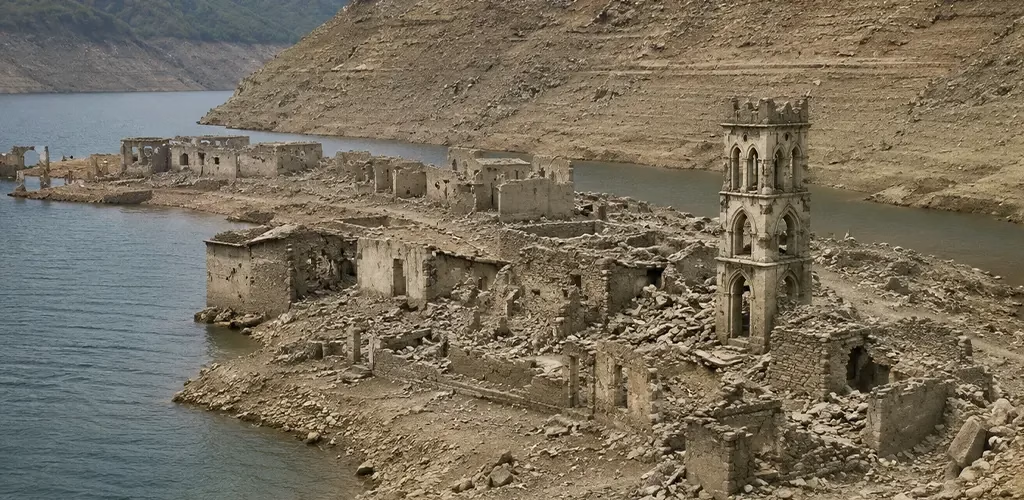
Here’s the part that stays with you. When the reservoir level drops, usually in the drier months, parts of Old Tehri come back into view. Old walls, stretches of lanes and the broken shells of houses reappear, and locals say the clock tower can sometimes be seen again.
Former residents travel a long way to look. Picture an old man pointing at a pile of stones and saying, “That was our house.” Or a young person raised in New Tehri on stories of a town they never saw, finally standing where it used to be.
It’s a strange thing to think about. A town that took two centuries to build sits there, and the only thing that reveals it is a falling water level. Then the monsoon arrives, the lake fills, and Old Tehri disappears again until next time.
What the Lake Gave, and What It Took
Today, the reservoir is also one of Uttarakhand’s tourist attractions, with water sports and views across the Himalayan hills.
The Tehri Dam produces electricity and helps supply water to cities far from the hills, including Delhi. Those benefits are real, and they are an important part of the story too.
But so is the cost.
The people who lived in Old Tehri had to leave their homes so that a much larger project could take their place.
Today, all of that sits beneath a reservoir.
And whenever the water falls and the old ruins begin to appear again, they offer a small reminder of the town that used to be there.
Old Tehri may be underwater, but its story is still being passed from one generation to another.