Bhagat Singh's Jail Notebook: The Death He Chose on Purpose
Bhagat Singh knew he was going to die. Instead of panicking, he picked up a pen.
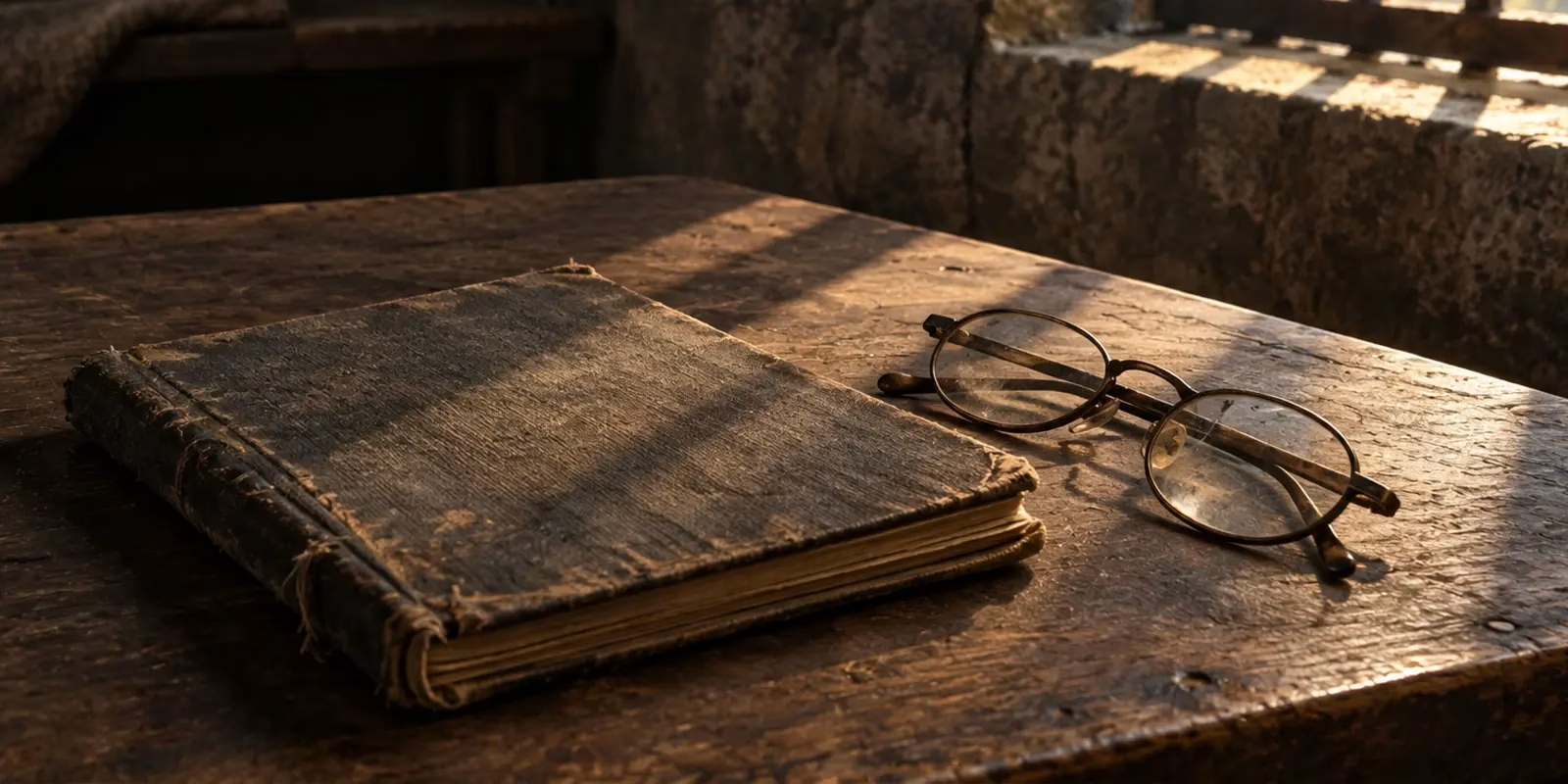
While he sat in a Lahore jail cell waiting for his execution date, he spent a good part of his time reading. Not just reading, but taking notes, in a 404-page notebook the jail itself had handed him.
A Reading List Nobody Expected
The jail gave Bhagat Singh that notebook on 12th September 1929, as part of an agreement struck during one of the hunger strikes he and his comrades were running.
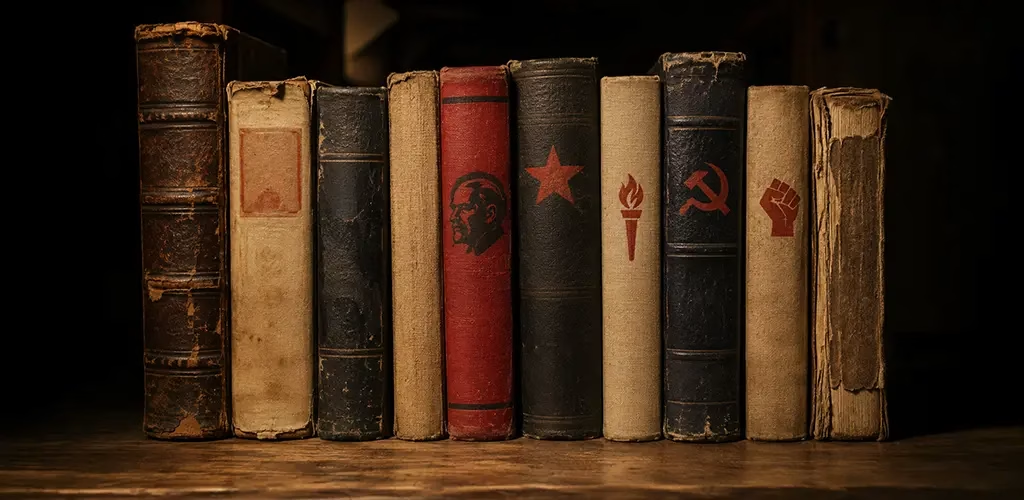
What he did with it is remarkable. Out of 404 pages, he filled around 140 with quotes and notes pulled from close to a hundred different authors. Marx, Lenin, Rousseau, Thoreau, Trotsky, and dozens more. Most of these books were banned by the British government at the time.
He was not skimming. He was studying, the way a man builds an argument he plans to use. Ideas about revolution, about socialism, about what a free society actually owes its people. This was not a man killing time in a cell. This was a man sharpening something.
And here is the part that changes how the notebook should be read. Bhagat Singh already knew he was likely to hang. He was not studying to survive. He was studying to make sure his death meant something.
Choosing to Die on Purpose
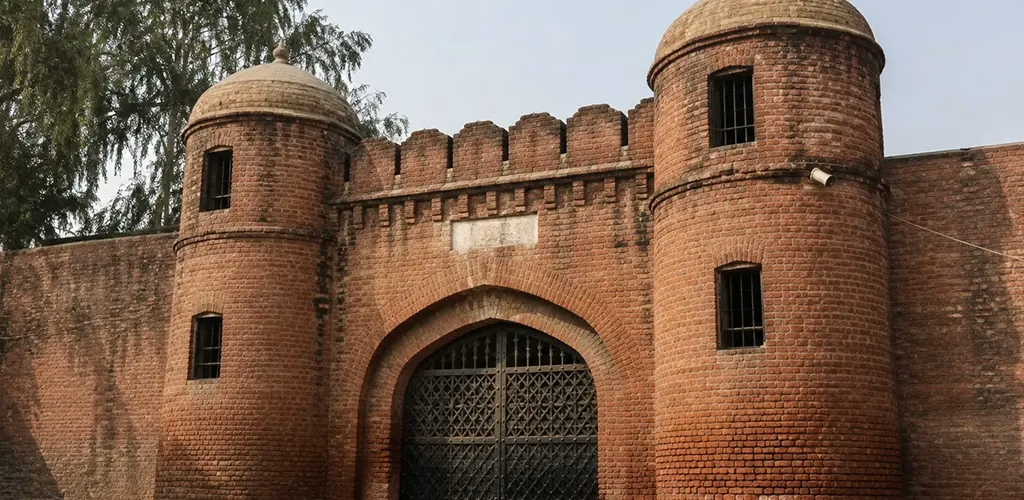
When Bhagat Singh’s father tried filing a mercy petition on his behalf, Bhagat Singh found out and was furious. He did not want mercy. He said so plainly, in his own words: he was not a terrorist, he was a revolutionary, and his death would shake British rule harder than his life ever could.
A twenty-three-year-old, sitting in a cell, turned down the one real shot he had at staying alive. He had decided his execution would do more for India than his freedom would.
He was not wrong. When the British sentenced Bhagat Singh, Rajguru and Sukhdev to hang, none of them asked for a lighter sentence. They asked to be shot instead, like soldiers, not hanged like common criminals.
That was the point they were making. They wanted the British forced into a public act of brutality the entire country would see and remember. A quiet execution would not do that. A hanging, drawn out and visible, would.
Why the Notebook Mattered
The notebook fed directly into that decision. Every idea Bhagat Singh copied down, every revolutionary he studied, was building toward a choice he had already made: his death needed to mean more than his own life.
He wanted Indians to see exactly what the British were willing to do to a twenty-three-year-old who loved his country, and feel something they could not unfeel.
It worked. His hanging did not quiet the independence movement. It did the opposite. It lit something across the country that the British spent the next decade and a half trying, and failing, to put out.
Why This Still Matters
We usually remember Bhagat Singh as the man who threw a bomb, who shouted Inquilab Zindabad in a courtroom, who died young and fearless. All of that is true.
But there is something far more striking about the man who sat quietly in a cell, filling page after page with someone else’s words, calmly building the case for his own death.
He did not stumble into martyrdom. He read his way into it, one banned book at a time.
That notebook is the last real look we get into how he thought, right up to the end. He did not die for a cause blindly. He died for it on purpose, eyes wide open, hoping the rest of the country would finally open theirs too.