Madras Day: How a Fishing Village Became One of India's Biggest Cities
Imagine a metropolitan city tracing its beginning back to a narrow strip of sandy coast and a handful of fishing huts.
That is exactly how the story of Madras begins.
Every year on 22 August, the city now known as Chennai celebrates Madras Day – a tribute to the deal that first put this stretch of the Coromandel Coast on the map. It isn’t a public holiday, and it doesn’t come with fireworks.
But for a city that grew from almost nothing into one of India’s largest urban centres, it remains a moment worth pausing for.
A Trading Post in Search of a Home
The story of Madras goes back to 1630s, the East India Company already had a base on the Coromandel Coast, a small factory at Armagon. But the site had its limits, and the Company wanted somewhere better suited to trade.
That search brought an English official named Francis Day down the coast. Along with fellow Company agent Andrew Cogan, Francis found a patch of land just north of the Portuguese settlement of São Thomé, a quiet stretch of shore home to a small fishing settlement known locally as Madraspatnam.
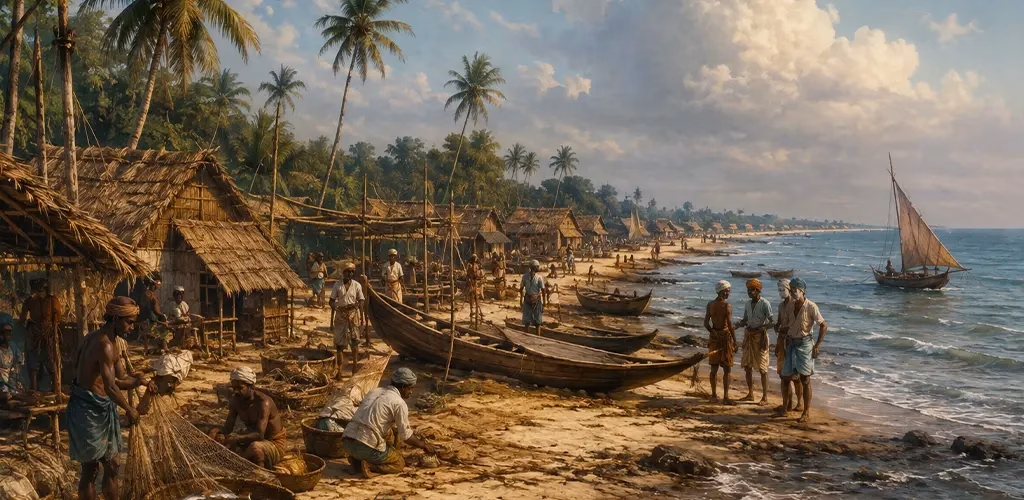
It was at Madraspatnam, on 22 August 1639, that Day struck a deal for a narrow, three-mile strip of land from Damarla Venkatadri Nayaka, a local chieftain governing the coast for the Raja of Chandragiri. The agreement let the Company build a fort and warehouse on the site. It was a small transaction on paper, but it would change the entire coastline around it, and give Madras its start.
From a Sandy Shore to Fort St George
The grant alone didn’t create a city. It took people willing to actually build one.
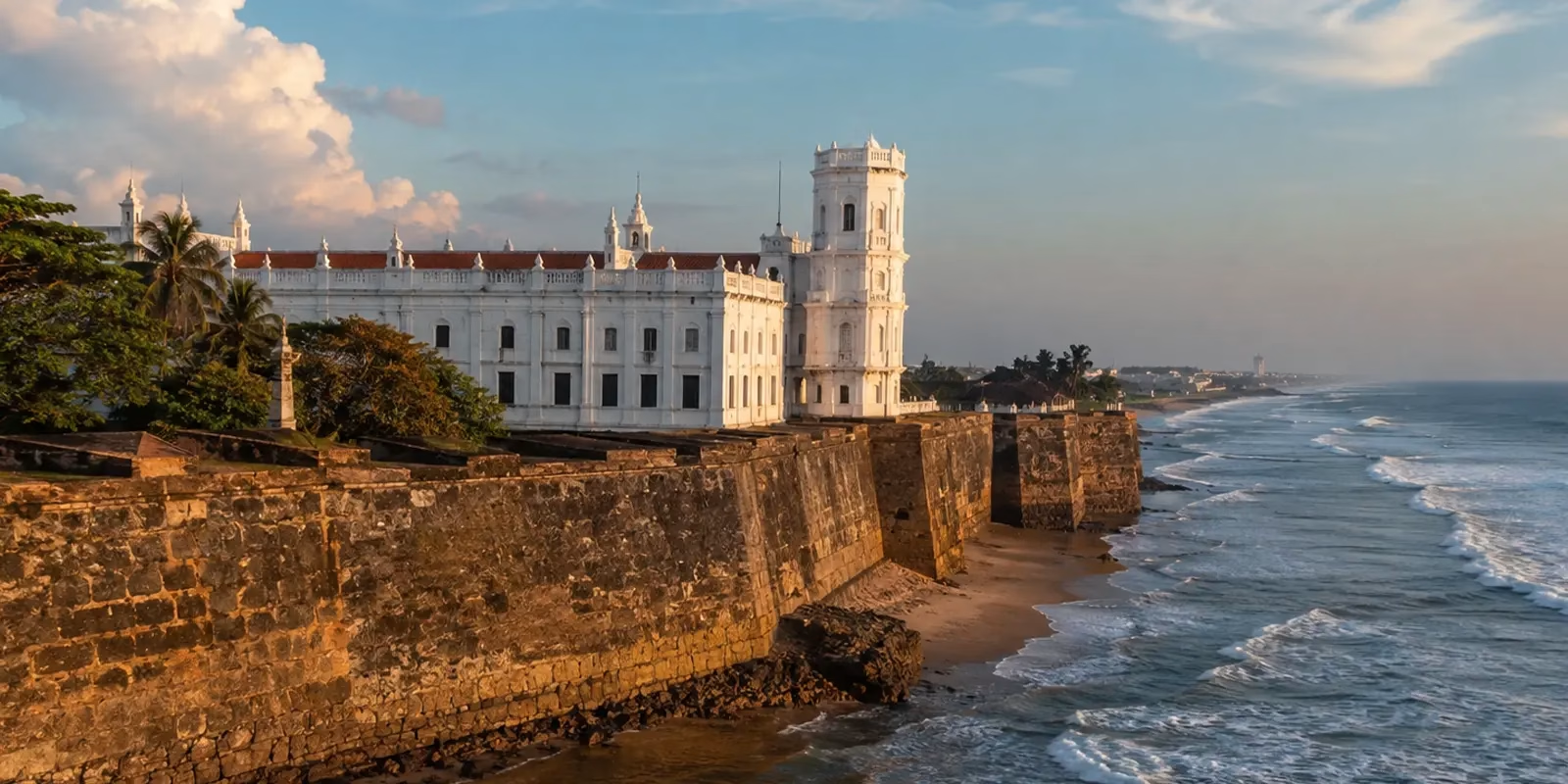
In February 1640, Day and Cogan arrived at Madraspatnam with around a hundred workers, soldiers, and Company servants, and began laying the foundations of what would soon become Fort St George, the walled heart of early Madras. Within weeks, a fortified enclosure was taking shape on land that had recently held little more than fishing huts and sand dunes.
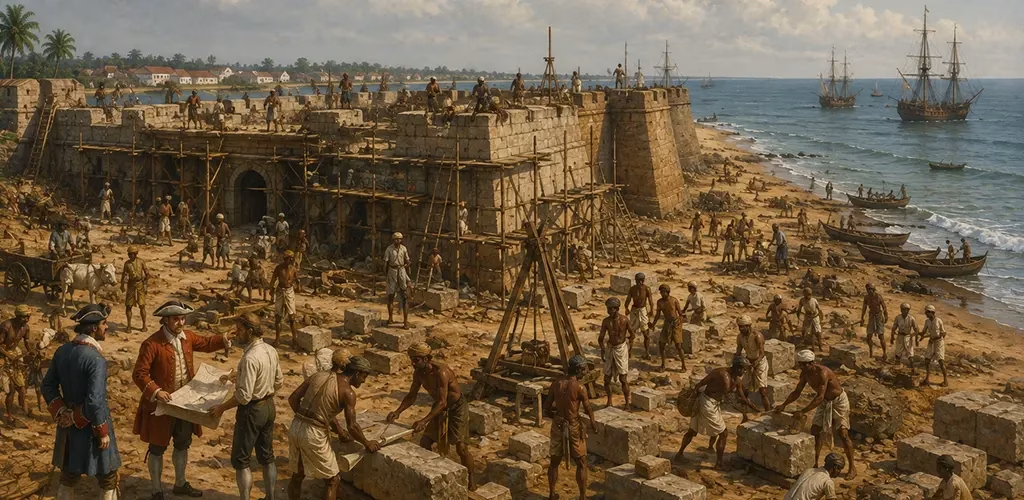
The fort quickly became more than a trading post. It drew merchants, artisans, and settlers from nearby regions, all pulled in by the promise of a new, protected hub for trade. Within a few years, Madras had a population in the thousands. What began as a narrow strip of coastline was slowly turning into a real town.
Madras: A City Built From Many Smaller Ones
As Madraspatnam grew, it began absorbing the settlements around it. Neighbouring villages, each with their own name and identity, were gradually folded into the growing town clustered around Fort St George.
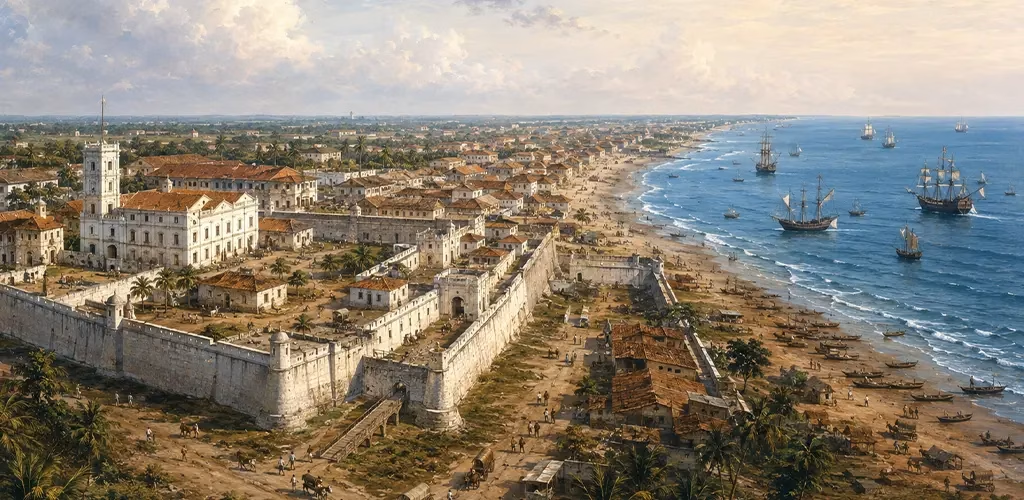
This pattern, small villages merging into one larger whole, would go on to define Madras for centuries. The city wasn’t built in one sweep. It was stitched together, piece by piece, from communities that already existed long before the East India Company ever arrived.
By the time Madras became the seat of a colonial presidency in the following century, it bore little resemblance to the fishing settlement Francis Day had first walked past.
The Birthday a City Never Forgot
Centuries later, that original patch of coastline has become Chennai, home to millions, and the anchor of southern India’s economy, culture, and trade.
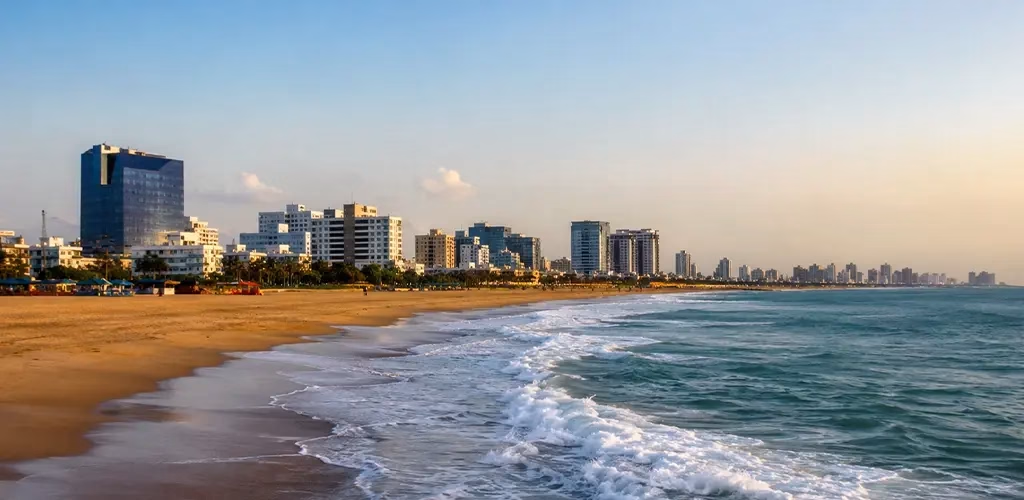
Madras Day exists because a group of local historians and journalists felt a city this old deserved to know its own story. Since it began in 2004, the day has grown into a season of walks, talks, and exhibitions across Chennai, each one tracing a small thread back to that original grant of land.
Perhaps that is the real value of remembering 22 August 1639. Cities rarely announce the moment they begin. Most simply grow, layer over layer, until no one quite remembers what came first.
Madras did have such a moment, small and easy to overlook at the time. Yet it set everything else in motion, from a fort on a fishing shore to a metropolis that has never stopped growing since.