Denganmal's Waterwives: The Marriages Built Around a Single Chore
Somewhere in Maharashtra, a man’s second marriage has nothing to do with love, and everything to do with a job no one else in the house can do: walking for hours, every single day, to bring back water.
And there’s a name for the woman who takes on that role: a waterwife.
This isn’t an old folk tale passed down for generations. It’s a living arrangement, still practised today, in a cluster of villages where water rarely reaches the tap, because in most of these homes, there is no tap.
At the centre of it all is a village called Denganmal!
Denganmal: Village That Married Its Way Around A Drought
Denganmal lies roughly 140 km from Mumbai, home to a few hundred residents and, even now, no functioning pipeline. For decades, its households have dealt with water shortages in much the same way, by adding another wife to the family, not for companionship, but for labour.
One such story belongs to a farmer named Sakharam. A photograph on his wall holds three women, Tuki, Sakhri, and Bhaagi, each carrying a very different weight within the same household.
Tuki was his first wife. When she became pregnant, the daily walk to fetch water, several hours long, grew impossible for her to manage alone. Rather than turning to hired help, Sakharam remarried. His second wife, Sakhri, had already been left by an earlier husband and had no home of her own to return to, so she stepped into the water-fetching role in Tuki’s place.
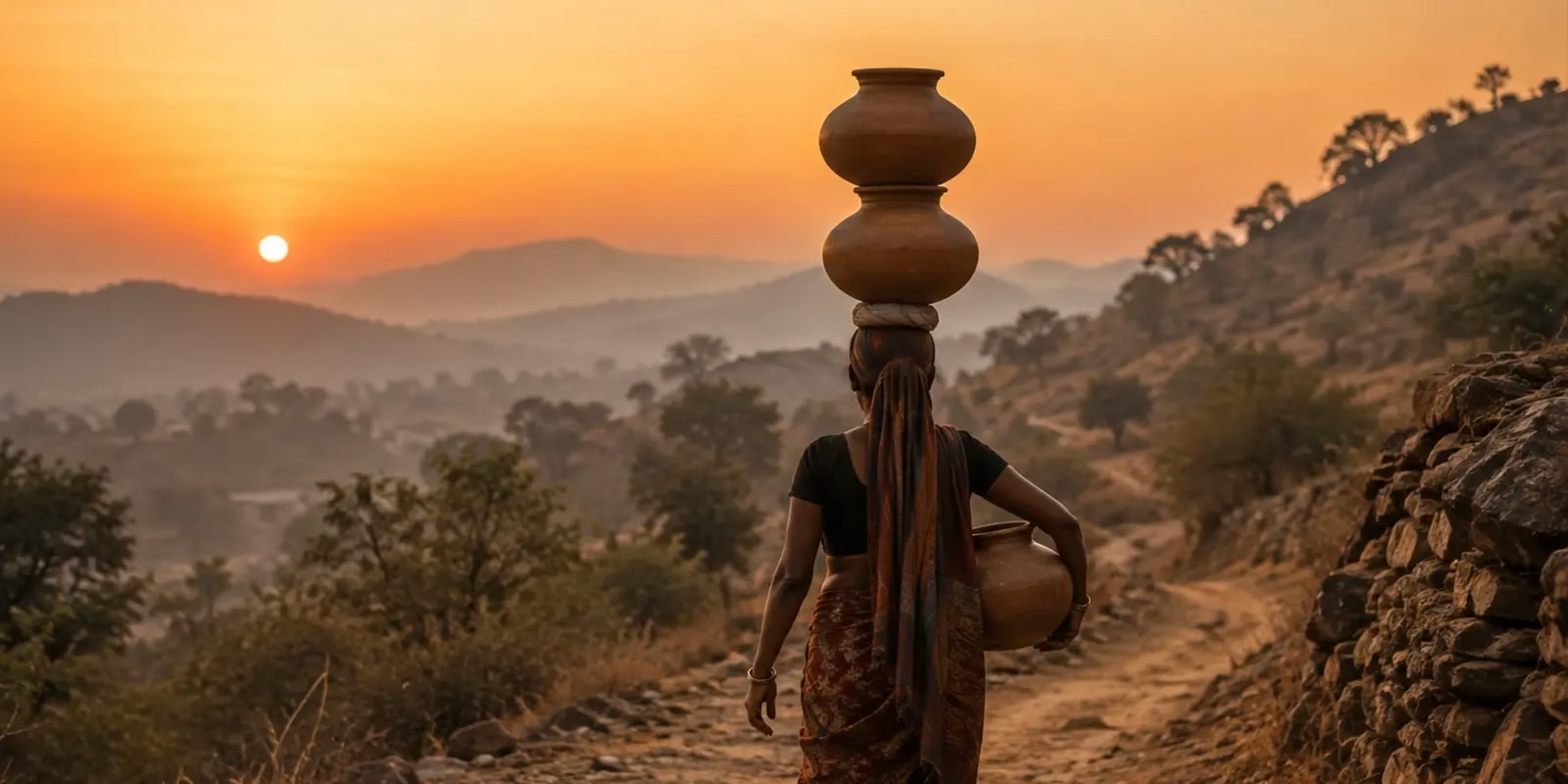
Years later, Sakhri’s own body began to give out under the strain. Chronic pain made the walk unbearable. So Sakharam married a third time, to Bhaagi, a 26-year-old widow, who now carries the pots that once sat on Sakhri’s shoulders.
Today, the household runs almost like a quiet, unspoken factory. Bhaagi handles water. Sakhri works the farm. Tuki keeps the home. Each wife has her own room and her own kitchen, and for those married in purely for water duty, no physical relationship with Sakharam at all. No shared bed, no children from that marriage, only a role that needed filling.
Polygamy remains technically illegal under India’s Hindu Marriage Act, yet even the local panchayat rarely intervenes. In villages like Denganmal, survival has quietly outranked the law.
Sakharam’s household is not an outlier. It is simply one version of a pattern repeated across the village.
Why the Water Never Reaches Denganmal
Perhaps the cruellest part of Denganmal’s story is not the absence of water, but its closeness. The village is surrounded by it, and still cannot drink it.

The Bhatsa Dam is barely 3 km away. Its reservoir sends water 140 km in the opposite direction to fill Mumbai’s taps, showers, and swimming pools, while Denganmal itself has never been connected to that same supply.
It was this gap between two numbers, 3 km and 140 km, that eventually pulled international attention toward the village. In 2015, photographs taken by Reuters photojournalist Danish Siddiqui showed Denganmal’s women hauling water for hours on end, and the images travelled far beyond India’s borders. For a settlement of roughly 500 people, a single pot holding about 15 litres could mean an entire morning spent walking.
The Making of a Waterwife
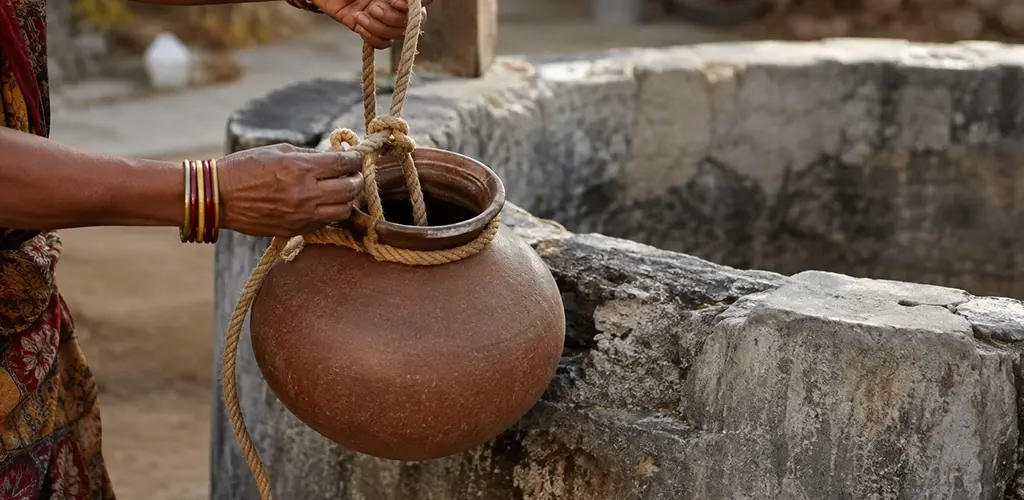
But there is an obvious question that follows: Why not simply pay someone to fetch the water instead?
Because hired labour comes with conditions: wages, days off, the option to walk away. Water, unlike a labourer, does not wait for any of that. What these households actually needed was not an employee but a permanent member of the family, someone who had no choice but to show up, every day, without exception.
That need is exactly what the waterwife system was built to fill.
In most cases, these women receive no share of family property, no equal standing within the household, and no marital relationship with the husband whose name they now carry. If they arrive with children from an earlier marriage, their authority over those children is often limited too.
What looks like a wedding on paper functions, in practice, closer to an unwritten labour contract, one in which a woman is valued chiefly for what she can carry rather than who she is.
What Pushes a Woman to Say Yes
The women who become waterwives are rarely choosing between many options. Most are widows, women abandoned by earlier husbands, single mothers, or women with nowhere else left to go.
Turning down such a marriage often means facing life without a home, an income, or any real social standing. Accepting it means shelter, and a place within a household, even if that place comes on deeply unequal terms.
In return, the expectation is simple and unrelenting: bring the water home, whatever the day happens to bring.
The Toll That Doesn't Show Up in the Statistics
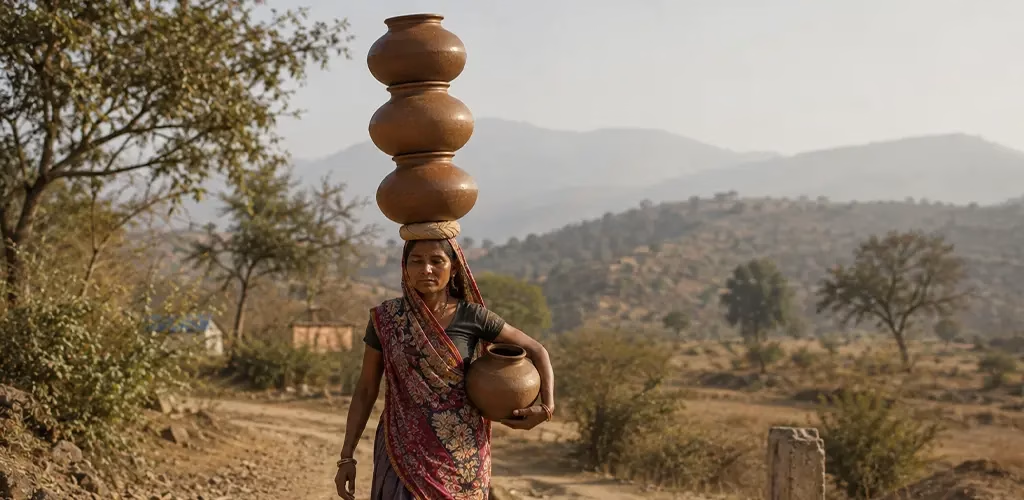
A household typically needs about 100 litres of water a day, which usually means five to six trips carrying pots of 30 to 45 kilograms each, balanced on the head or hip. This is no occasional chore. It is a daily physical demand that does not pause for illness, injury, or even childbirth.
One such incident happened with a Denganmal woman returning to fetch water just ten days after giving birth.
A village elder, Ambu Hema Awali, told reporters that years of carrying weight this way had left visible marks on the women: hair loss, stunted growth in younger girls fetching water from an early age. Some women said they now walk in groups after dark, since going alone no longer feels safe, cutting further into the little rest they get.
Medical reports from communities like this point to a familiar list of injuries: spinal damage, anaemia, malnutrition, and chronic pain that builds quietly over years of repetition. In Denganmal, water is not simply scarce. Getting it home has slowly become a health crisis in its own right.
Did Global Attention Actually Fix Anything?
When Denganmal’s story reached international news outlets, it briefly became impossible to ignore.
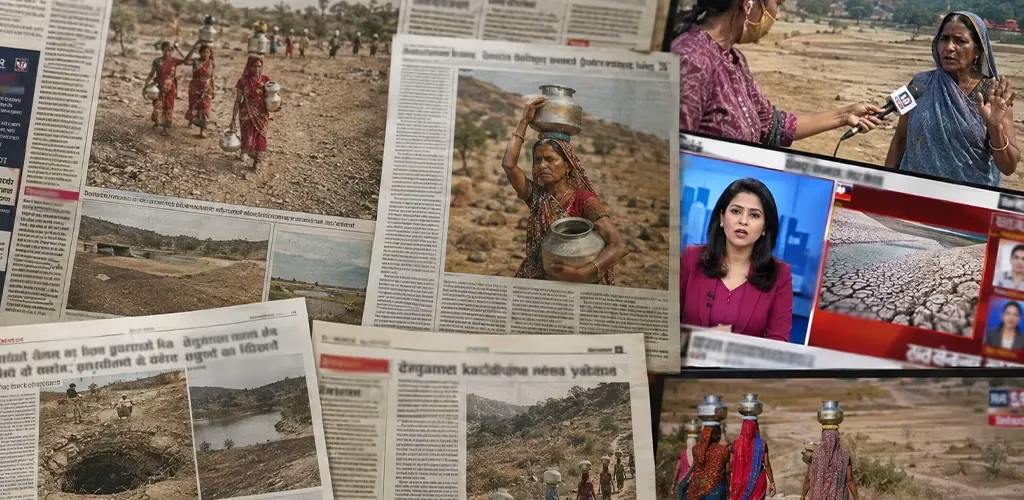
All the village had ever asked for was a modest 3 km pipeline to the dam already visible from its fields. Since 2019, India’s Jal Jeevan Mission has pushed piped water access from around 17% of rural households to over 80% nationally, but the last available reports suggest Denganmal is still waiting for its own 3 km.
A Chore That Becomes An Identity
Every time a tap opens in a city and water arrives in seconds, that same journey, in Denganmal, still takes hours, carried on someone’s body, day after day.
Perhaps,this was never really a story about polygamy. It’s a story about how far one missing pipeline can travel through a person’s entire life.