Maharana Pratap: A Story Beyond the Battle of Haldighati
Every year, Maharana Pratap Jayanti remembers one of the most powerful symbols of resistance in Indian history. While most people associate him with the famous Battle of Haldighati and the legendary loyalty of his horse Chetak, Maharana Pratap’s story goes far beyond a single battle.
What made him unforgettable was not just bravery in war, but the extraordinary life he chose after defeat, exile, and relentless pressure from one of the most powerful empires of the time.
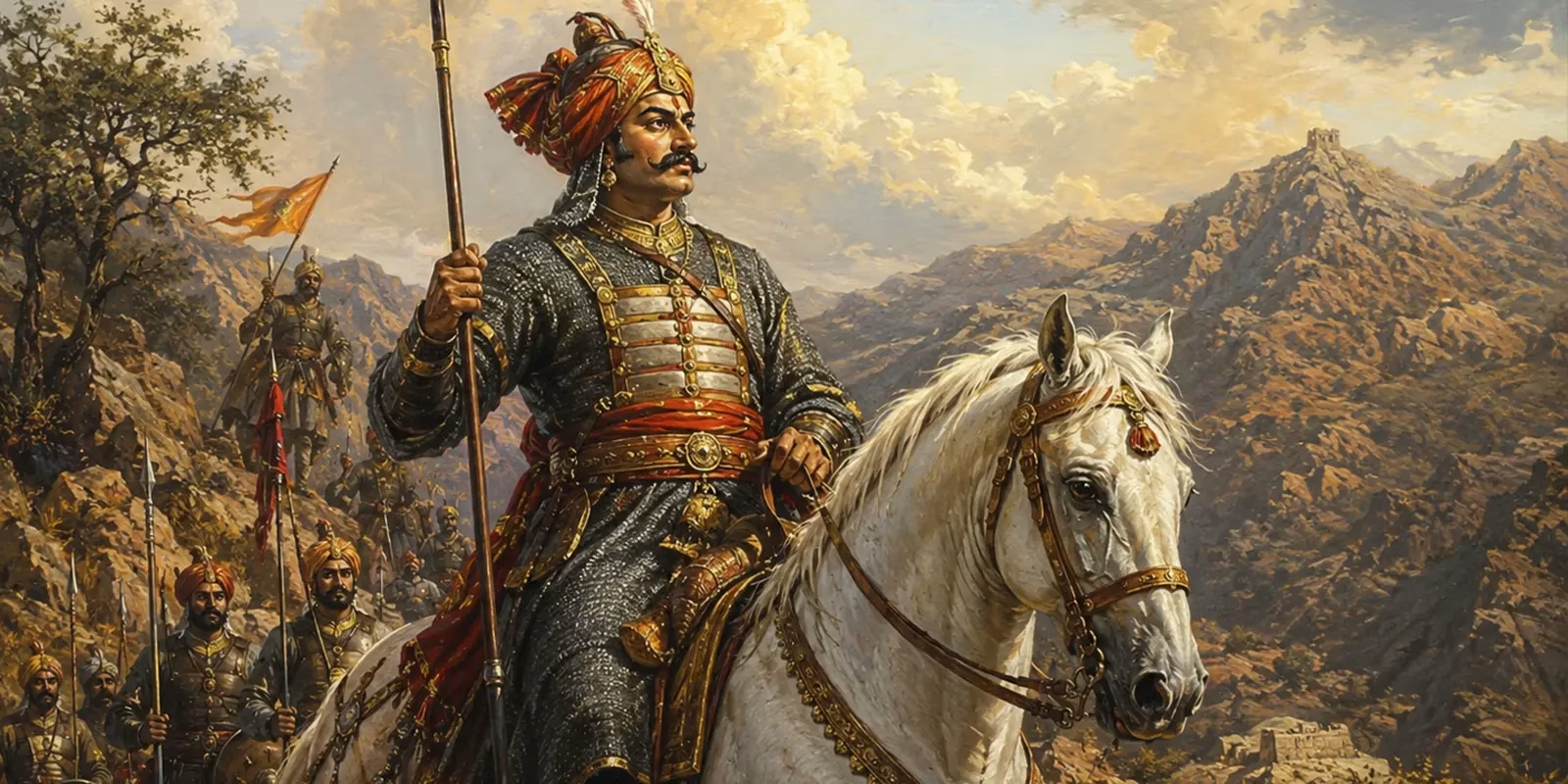
Maharana Pratap in battle armor standing in the rugged Aravalli hills with Chetak beside him, symbolising resilience, independence, and Rajput pride.
The King Who Chose Hardship Over Surrender
One of the most striking aspects of Maharana Pratap’s life was the personal vow he took after losing Chittor. He is believed to have pledged that until Mewar regained its honour, he would not sleep on a royal bed or eat from metal plates.
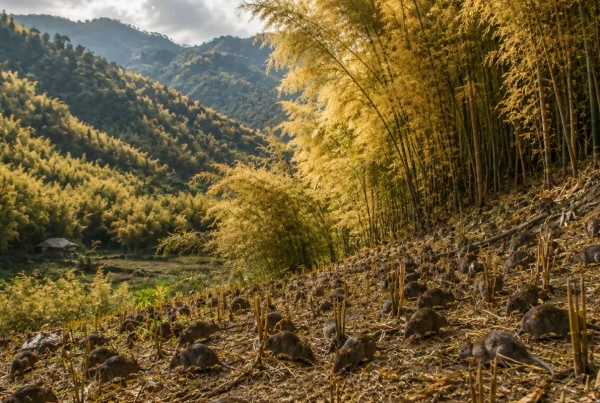
Instead of palace life, he lived in forests and caves of the Aravalli hills with his family and followers, surviving through extreme hardship. Folk legends speak of the family eating grass rotis during exile. One story recounts how even that meagre meal, prepared for his daughter, was snatched away by a wild animal – a moment so painful that Pratap briefly considered peace with Akbar. According to tradition, a powerful letter from Rajput poet-warrior Prithviraj Rathore reminded him of his duty and reignited his resolve.
Even today, some Rajput households symbolically place straw beneath beds or leaves beneath plates in memory of this sacrifice.
The Warrior Who Never Fought Alone
Maharana Pratap’s resistance was not built only on royal armies. One of the lesser-discussed but most important parts of his story is his alliance with the Bhils of the Aravallis.

The Bhils knew the forests, mountain passes, and hidden routes better than anyone else. They became Pratap’s scouts, archers, protectors, and closest allies during years of guerrilla warfare. Unlike many rulers of the period, Pratap treated tribal communities with respect and integrated them into his administration and military strategy.
His forces were also remarkably inclusive for their time, including soldiers and commanders from different castes and communities. His resistance became less about dynasty and more about protecting the sovereignty of Mewar itself.
Haldighati Was Not the End
The Battle of Haldighati is often remembered as a dramatic clash between Maharana Pratap and Mughal forces led by Man Singh I. But historically, the battle did not end Mewar’s resistance.
Pratap escaped. And that changed everything.

Instead of continuing direct large-scale warfare, he transformed the hills of Mewar into a network of resistance. He attacked Mughal supply lines, retook abandoned outposts, used hidden forest bases, and constantly shifted locations to avoid capture. The rugged geography of the Aravallis became his greatest weapon.
His strategy frustrated repeated Mughal campaigns and eventually led to one of his most important victories – the Battle of Dewair in 1582. Often called the “Marathon of Mewar,” the battle helped Maharana Pratap reclaim large parts of his territory and break several Mughal positions in the region.
The Story of Chetak Still Lives On
No story about Maharana Pratap is complete without Chetak, the blue-grey Marwari horse that became a legend in Indian folklore.

During the Battle of Haldighati, Chetak was severely wounded but still carried Maharana Pratap away from the battlefield. Folk ballads describe the horse making a massive leap across a stream before collapsing from injuries.
The image of Chetak has endured not just as a symbol of loyalty but as an emotional representation of sacrifice and companionship in battle.
A Different Kind of Warrior King
Many lesser-known stories about Maharana Pratap reveal a ruler deeply guided by ethics and honour. One famous incident involves his son, Kunwar Amar Singh, capturing the women of Mughal noble Abdur Rahim Khan-i-Khana after a conflict. Maharana Pratap reportedly rebuked his son and ordered the women to be escorted back safely with full respect.

The gesture deeply moved Rahim, the celebrated poet and Mughal commander, who is said to have thereafter refused to campaign against Mewar again.
Such stories shaped Maharana Pratap’s image not only as a warrior, but as a ruler defined by dignity and restraint.
Why Maharana Pratap Still Inspires
Maharana Pratap’s legacy survives because it represents something larger than military victory. He never fully reclaimed Chittor during his lifetime, yet he became immortal in memory because he refused to abandon the idea of independence.
His story is remembered across Rajasthan. More than four centuries later, Maharana Pratap Jayanti continues to celebrate not just a king, but a spirit of endurance against overwhelming odds.