Jarawa Tribe: A World Untouched by Time
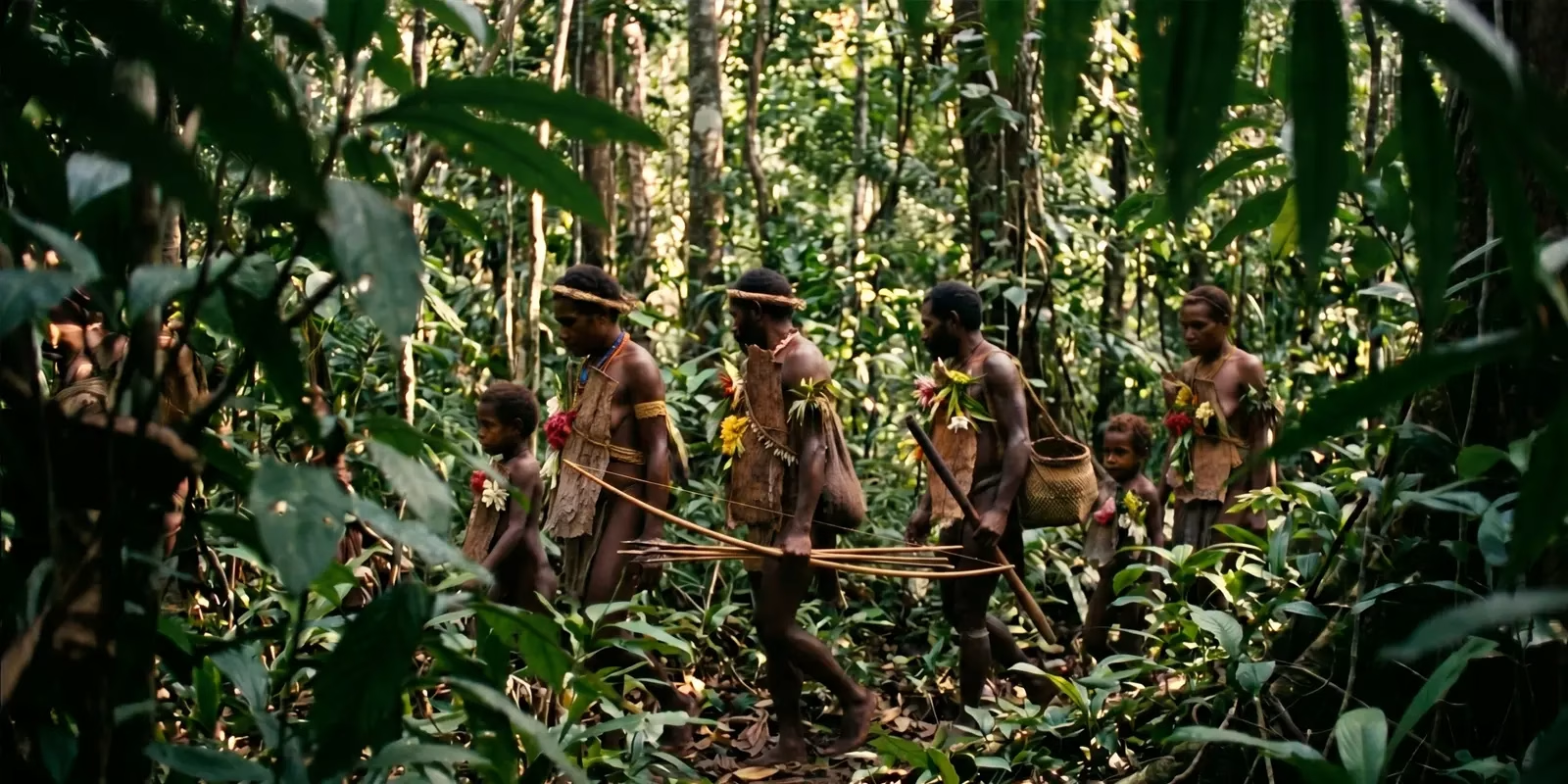
Imagine living in a world where time is measured only by the rising sun and your grocery store is a wild, dense jungle.
For the Jarawa people of the Andaman Islands, this is everyday reality. They have lived here for thousands of years, completely untouched by modern technology, cell phones, or cities.
But how does a community thrive for centuries in a wild forest without any modern tools? The answer lies in a series of ancient traditions of the Jarawa tribe, secrets that start with the very way they find their food.
A Day in the Life of the Jarawa Tribe
Every single morning, the jungles of Andaman wake up without a single alarm clock.
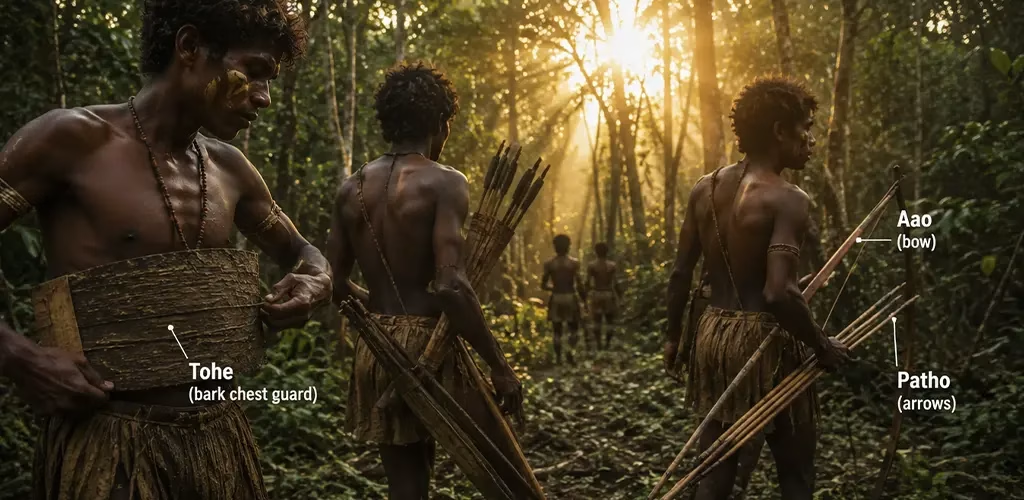
As the first rays of light hit the trees, the Jarawa people are already moving. The men pick up their bows, called Aao, and arrows, known as Patho. Before they walk into the thick brush, they wrap a heavy bark guard called a Tohe around their chests to protect themselves. They spend their days tracking wild boar, hunting monitor lizards, and catching fish.
At the same time, the Jarawa women walk deep into the forest with a different mission. They are masters of foraging, searching for sweet fruits and wild tubers. But their favourite prize is something much sweeter, and much more dangerous to get: wild honey.
Honey is not just a tasty treat for the Jarawa, but the main thing that keeps them alive during the dry months when other food is scarce. But how do they take honey from thousands of angry wild bees without a protective suit or smoke?
Honey-Hunting Secret of the Jarawa Tribe
The Jarawa way of taking down a beehive is unlike anything else on Earth.
Instead of using fire to smoke them out, they turn to a special plant called Ooyekwalin. They chew on these specific leaves, and the sap of the plant mixes with their saliva to create a completely natural and powerful bug repellent.
When they reach the buzzing hive, they simply blow this juice straight out of their mouths toward the bees. Amazingly, the bees immediately fly away, leaving the honeycomb completely bare.
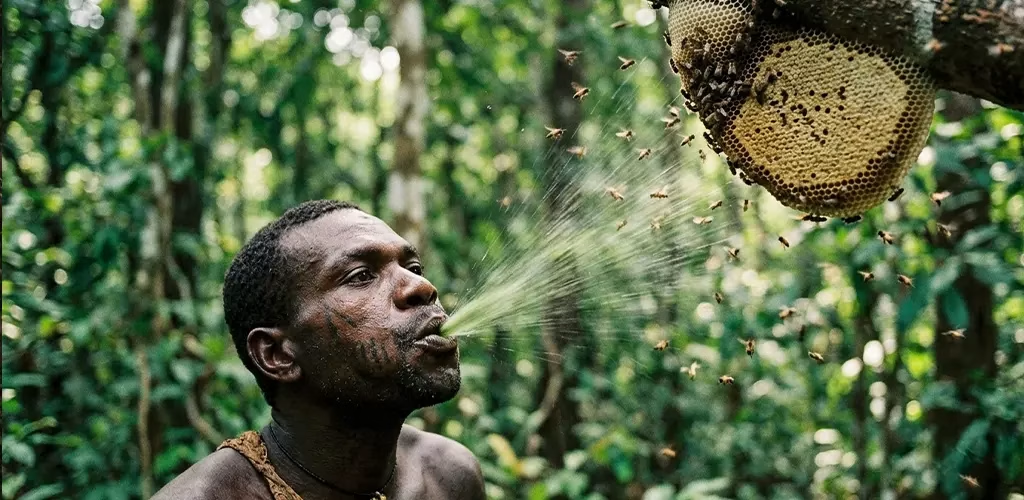
Once the honey is brought safely back to the camp, the whole Jarawa tribe celebrates by singing together. But as soon as the feast is over, they do something truly bizarre.
The entire Jarawa tribe takes a mandatory bath together. No outsider knows why they do this. Is it a spiritual ritual, or is there a hidden practical reason? While this remains a mystery, it is not the only secret they keep. In fact, their biggest secrets are not about food at all; they are about their age-old matchmaking traditions.
How the Jarawa Choose Life Partners
Family life for the Jarawa begins in a very simple, peaceful way. Babies are born inside small, temporary huts on wooden planks, with a warm fire crackling nearby and tribal elders helping the mother.
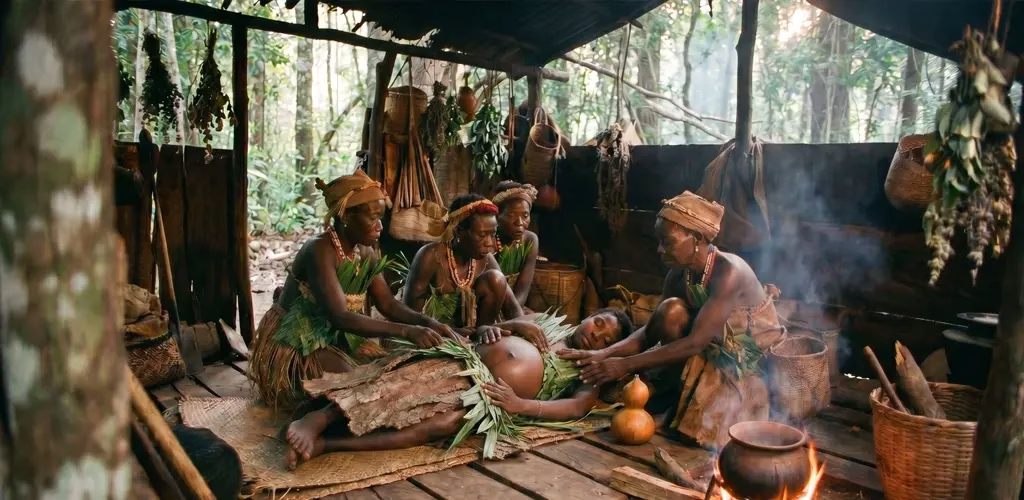
But by the time that baby turns one or two years old, their entire future is already set in stone. The elders of the tribe look at the different nomadic groups and decide exactly who that child will marry when they grow up.
This is not about money, land, or status. It is a unique system designed purely to keep the small tribe close and united. There are no big parties at this stage, just a quiet promise between two families.
But what happens when these babies grow up into teenagers? How do they learn to live with a partner they did not choose?
The Silent Agreements
Even though the Jarawa couple was matched as toddlers, they do not marry right away as they grow up. First, they must go through a fascinating trial period.
The teenager leaves their own family and goes to live in the camp of their future in-laws. This allows them to see how they fit in with the family and learn to work together. Even during this time, the rules are strict; they still sleep in separate huts made for young single people.
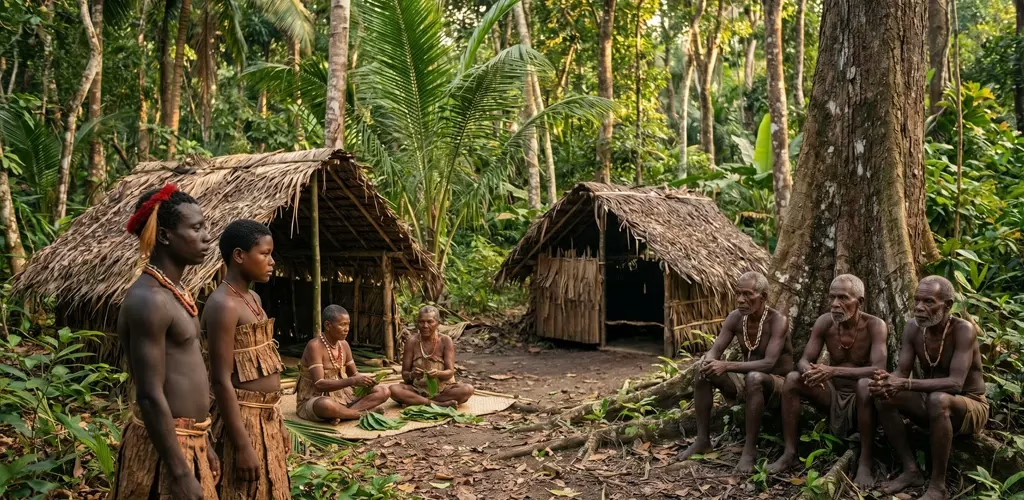
But what happens if the two teenagers simply do not get along? What if the match falls apart?
To this day, not a single researcher or anthropologist has been able to find out. The Jarawa tribe keep the rules of a cancelled marriage completely hidden from the outside world. Do the elders get angry, or do they just find a new match? It is a puzzle that remains unsolved, much like the greatest mystery of their daily survival.
The Jarawa's Final Secret
For thousands of years, the Jarawa tribe has faced poisonous insects, sharp thorns, and dangerous jungle animals every day. They have done all of this without electricity, pharmacies, or modern healthcare.
So, what happens when a member of the Jarawa tribe gets deeply sick or badly hurt in the middle of the jungle? They simply turn to the forest itself, which provides them with everything they need to cure wounds and illness.
But just like their family traditions, the Jarawa tribe guards these natural secrets to keep their ancient world entirely their own.