The Untold Story of Lokmanya Bal Gangadhar Tilak
Can a festival become a weapon against an empire?
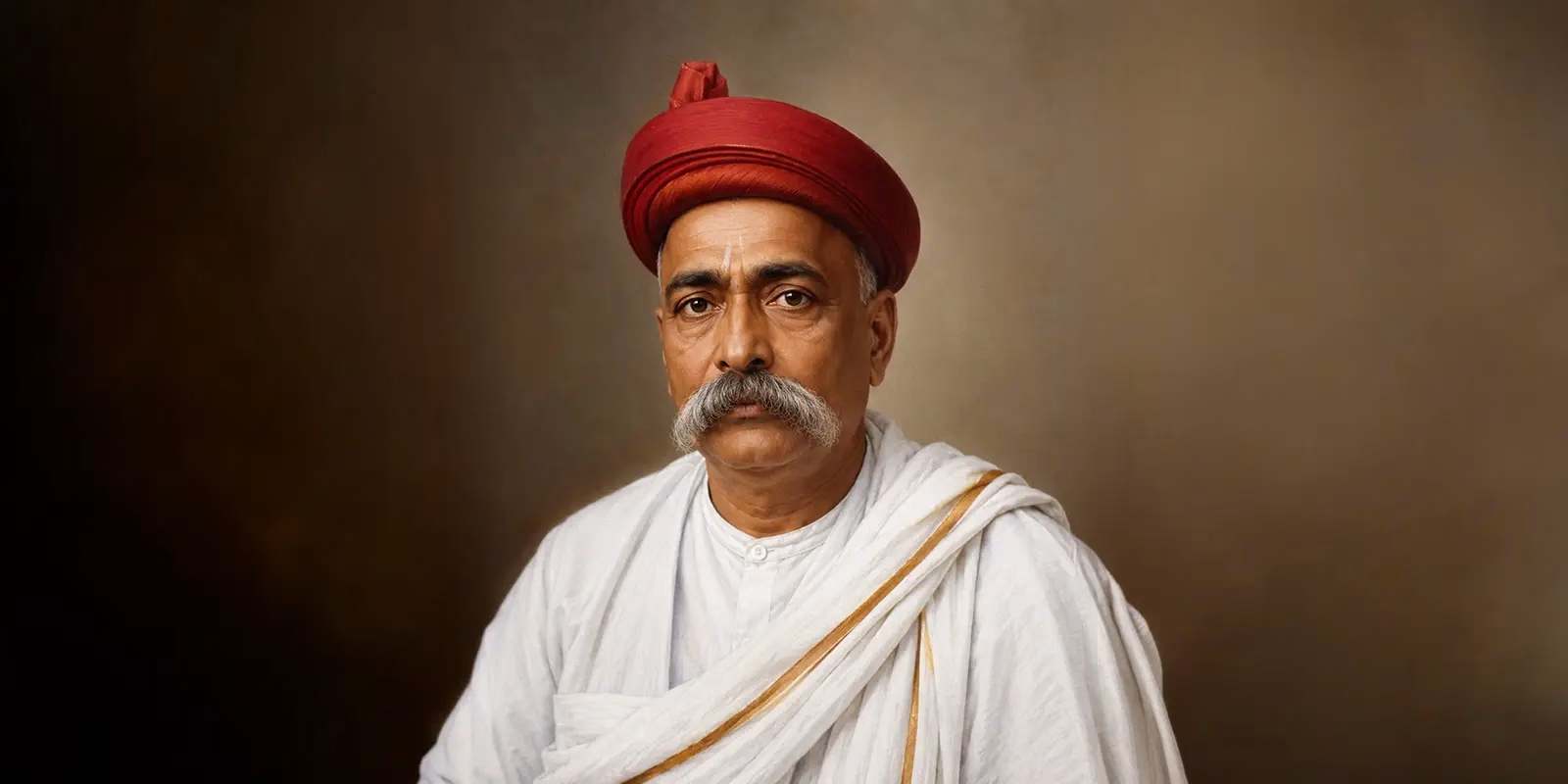
That is exactly what Lokmanya Bal Gangadhar Tilak did. While he is remembered as one of the greatest freedom fighters of India, he also changed the way Ganesh Utsav was celebrated and turned it into a symbol of unity and resistance.
Most of us know Lokmanya Tilak for his famous quote, “ Swaraj is my birthright, and I shall have it.”
But there is so much more to his story.
The Newspapers That Challenged the British
Bal Gangadhar Tilak was a scholar and teacher who believed that education could change society. He spent his early years teaching young minds, hoping that knowledge would create a stronger and more aware nation.
But as the British Raj became harsher, he realised that education alone was not enough. Most Indians were still unaware of what the British government was doing, and without public awareness, the dream of freedom would remain distant.
So, Tilak looked for a way to reach the masses beyond the classroom.
At that time, many political leaders tried to bring change by writing letters and sending petitions to the British government, asking for fair treatment and political reforms. But these appeals were nothing more than pieces of paper for the British government.
Tilak knew that petitions alone would not change anything, so he chose a different path. He started two newspapers, Kesari in Marathi and The Mahratta in English. Through these newspapers, he openly criticised British policies, spoke about the suffering of common people, and encouraged Indians to think about self-rule or Swaraj.
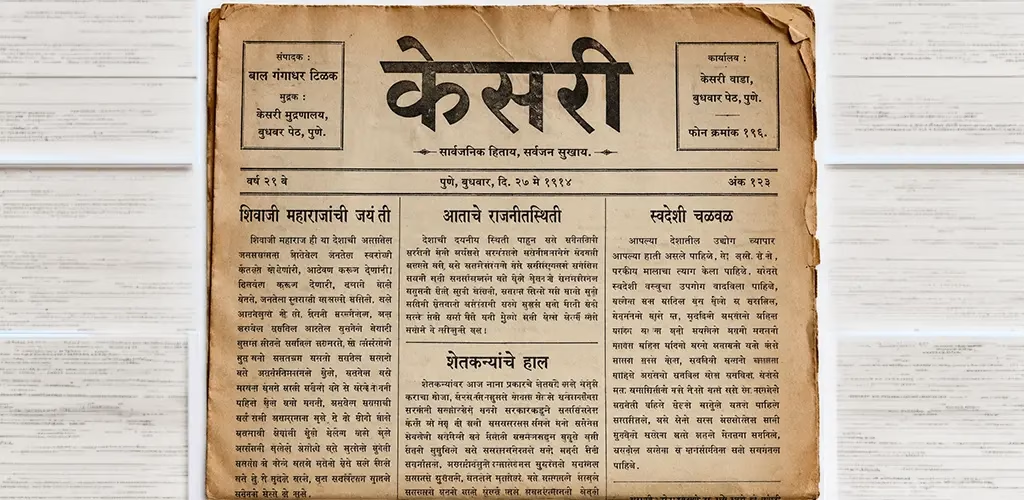
With every article, more people started questioning British rule and spoke openly about freedom. As Tilak’s influence grew, he became a serious threat to the British, and in an attempt to shame him, they gave him an insulting title.
Ironically, it became one of the names by which history remembers him today.
How Tilak Earned the Title "Father of Indian Unrest"
In 1910, a British writer, Sir Valentine Chirol, titled Lokmanya Tilak as the “Father of the Indian Unrest” in his book Unrest.
The British meant it as an insult, but Tilak accepted it and wore it like a badge of honour. For him, if speaking for the nation made the British Raj uncomfortable, he knew he was doing something right.
His words had reached thousands of people, but now he needed a way to bring them together physically. But there was one problem. The British closely monitored political meetings and often stopped large public gatherings.
So, how could Tilak organise a large gathering under these restrictions?
When Ganesh Utsav Became More Than a Festival
Tilak spotted a loophole in this law and took advantage of it.
While political meetings were banned, the British were careful about not interfering with religious festivals. They feared that doing so could spark public outrage.
Tilak saw an opportunity, and in 1893, he turned Ganesh Utsav, which families traditionally celebrated inside their houses, into a grand, ten-day public event known as Sarvajanik Ganeshotsav. A few years later, he did the same with Shivaji Jayanti, turning it into another large public celebration.
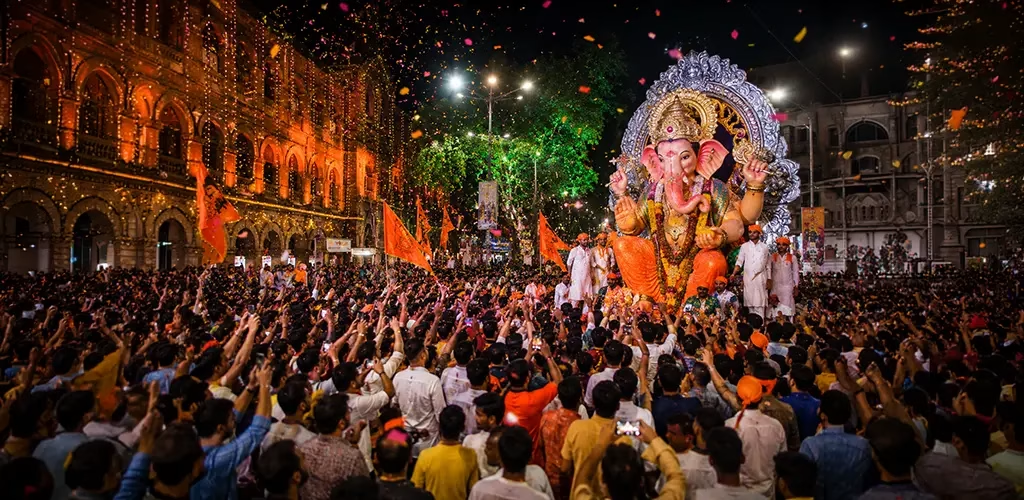
These gatherings seemed nothing more than religious festivals with music, prayers, and food. But Tilak had turned them into something much more powerful. Nationalist leaders used these gatherings to deliver speeches, raise funds for the freedom movement, and encourage young Indians to join the cause.
The British saw crowds celebrating and praying while Tilak saw thousands of Indians learning to stand together as one nation. Every gathering strengthened the feeling that Indians could stand united, regardless of caste or background.
It did not take long for the British to realise that these festivals were becoming much more than religious celebrations.
But as Tilak’s influence grew, so did the British government’s fear of him.
When Muhammad Ali Jinnah Fought for Tilak
To silence him, the British repeatedly charged Tilak with sedition over his speeches and newspaper articles demanding Swaraj. But every trial only made him more popular among Indians.
One of the most remarkable courtroom battles was held in 1916.
Tilak was imprisoned under a sedition case, and he needed a top lawyer to fight his case in the Bombay High Court. He chose Muhammad Ali Jinnah, one of the most popular lawyers at that time.
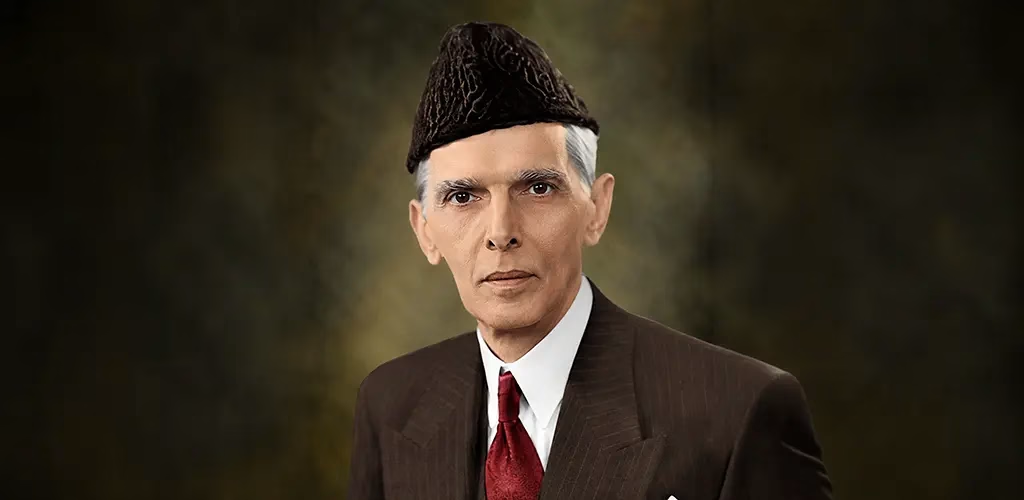
Jinnah argued that criticising government policies and demanding self-rule could not be treated as a crime. He told the court that speaking against injustice was very different from trying to overthrow the government. His arguments convinced the court, and Tilak was acquitted. This victory strengthened the bond between the two leaders.
Later that same year, both Tilak and Jinnah played important roles in the Lucknow Pact of 1916, when the Indian National Congress and the Muslim League came together to demand greater political reforms.
As Tilak’s influence continued to grow, it reached far beyond courtrooms and political meetings. His courage and ideas inspired a new generation of young revolutionaries.
From Tilak to Bhagat Singh
When Bhagat Singh was growing up, Tilak had already become one of the strongest voices of Indian nationalism.
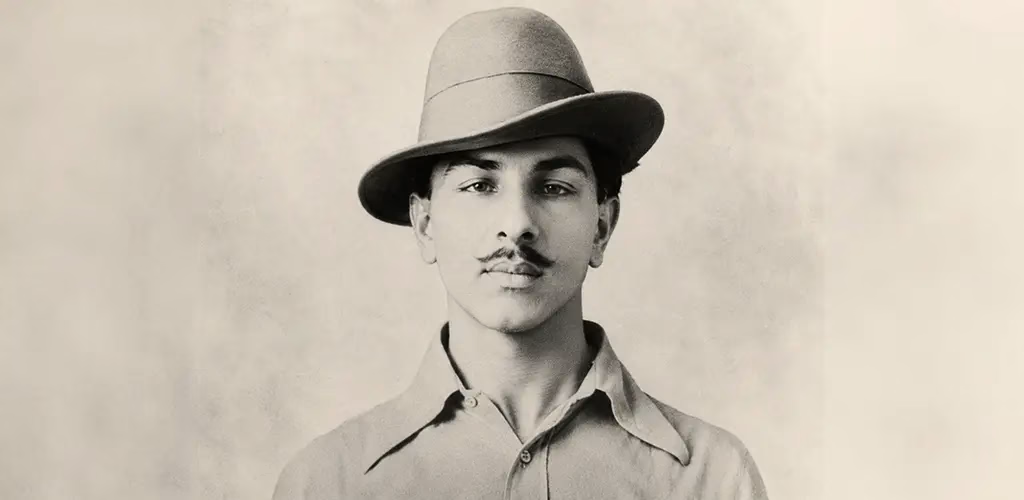
Bhagat Singh was raised in a family of freedom fighters in Punjab. Growing up in such an environment, he was exposed to the same spirit of resistance from an early age.
Both the leaders chose different paths. Tilak believed in awakening the masses through public movements, while Bhagat Singh later took the path of revolutionary action.
Despite choosing different paths, both believed that freedom is never given to those who remain silent. It has to be demanded.
This belief did not end with the freedom movement. It continued to inspire generations of Indians who believed that speaking up is the first step towards change.
More Than a Century Later, the Fight Continues
More than a hundred years ago, Lokmanya Bal Gangadhar Tilak raised his voice against an unjust British government. He taught people that justice and self-respect are not favours to be granted but rights worth fighting for.
Today, a similar spirit can be seen on the streets of Delhi. Students are raising their voice against paper leaks, unfair exams, and a corrupt education system. Their fight is different from Tilak’s, but it is driven by the same belief that staying silent never brings change.
The faces have changed. The issues have changed. But the courage to question injustice still remains the same.