Chandrashekhar Azad: The Name the British Could Never Defeat
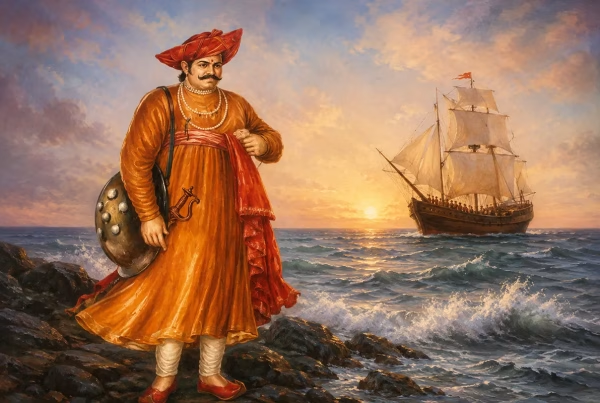
A young teenager made this unprecedented promise that the British would never be able to capture him, and he kept that promise until his last breath.
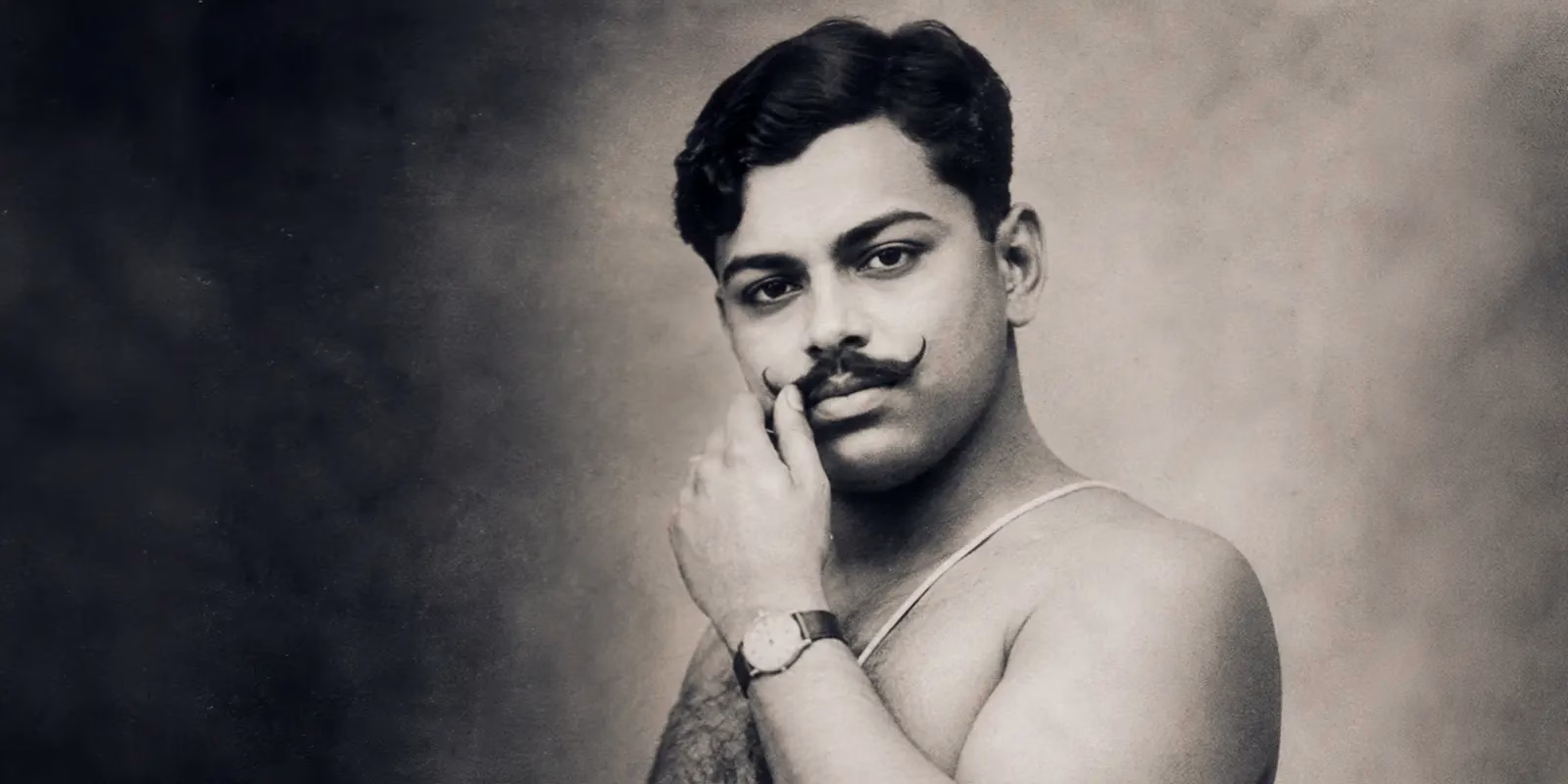
This is the extraordinary story of Chandrashekhar Azad – India’s revolutionary who was most sought after by the British.
But he wasn’t born with the name “Azad.” He earned it through an act of courage that changed his life forever.
The Early Life of Chandrashekhar Azad
Long before Chandrashekhar Azad Tiwari became Chandrashekhar Azad, he was just a young boy born in 1906 in the small village of Bhavra in Madhya Pradesh.
The village was surrounded by the forests where the Bhil tribe resided. As a child, Chandrashekhar was never interested in being part of routine life, like quietly sitting inside a classroom. Instead, he spent most of his time exploring the forest with tribal kids. They taught him raw skills like how to use a bow and arrow, finding his way through the jungle, and hitting a target with accuracy.
Bothered by this unconventional approach to life, Chandrashekhar’s parents wanted him to study Sanskrit and become a priest like a normal Brahmin boy; therefore, they sent him to Varanasi. But destiny had a very different plan for him.
The Day Chandrashekhar Earned the Name 'Azad'
When Mahatma Gandhi launched the Non-Cooperation Movement in 1921, news spread like wildfire across schools and colleges. Students were stepping out on the streets, and young Chandrashekhar couldn’t just sit back and watch, so he also joined the movement without thinking twice.
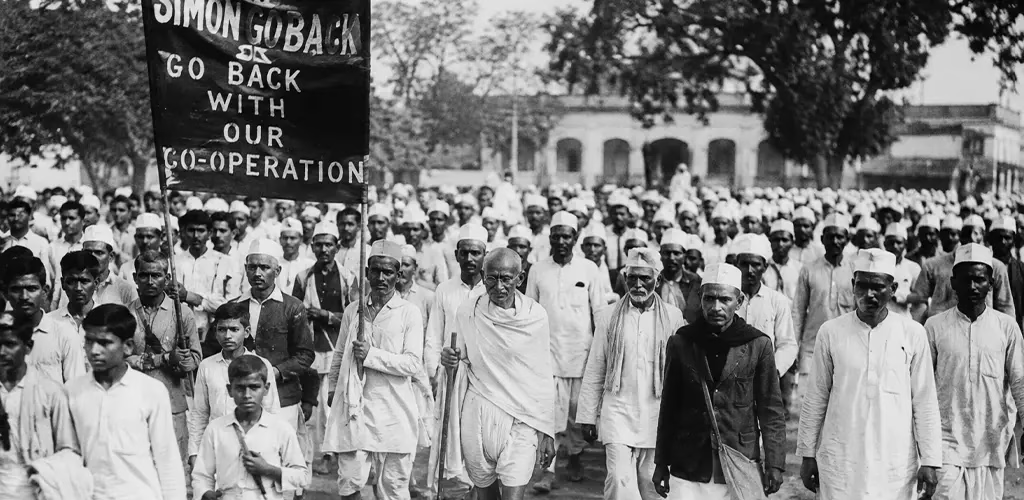
At just the age of 15, he joined a street protest. During the protest, police caught him and presented him to a British judge. The judge asked him for his name, and what happened next is one of the most remarkable events in Indian history.
Chandrashekhar looked straight into the judge’s eyes and exclaimed, “My name is Azad (Free), my father’s name is Swatantrata (Freedom), and my home address is Jailkhana (Jail).”
The judge turned furious and ordered the police officers to whip him 15 times on his bare back as a punishment. But every single time the whip hit him, Azad cried “Bharat Mata Ki Jai!” By the time he walked out of that courtroom, people appreciably named him Chandrashekhar Azad, and he swore he would live up to that name forever.
The British thought the punishment would scare him. Instead, it pushed him towards a life they could never control.
When Azad and Bhagat Singh Joined Hands
After Gandhi cancelled the movement due to violence in Chauri Chaura, many young revolutionaries felt disheartened as they didn’t want the movement to stop again.
Azad decided that waiting around was not going to work anymore. He joined an underground group called the Hindustan Republican Association to directly act against the British brutality.
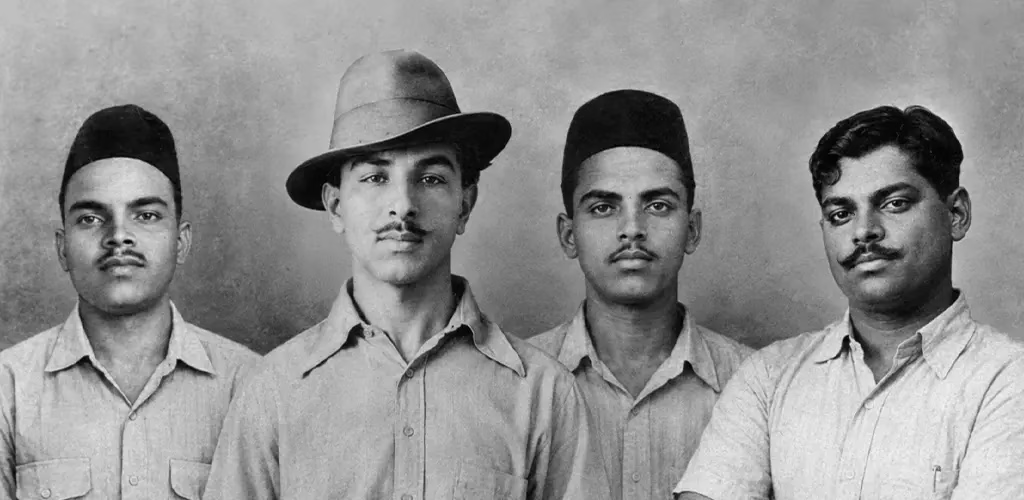
For a while, things seemed to move forward. But one incident changed everything. After the famous Kakori train robbery in 1925, the British police arrested almost all the senior leaders. The whole group broke apart, and Azad was left completely on his own. Azad didn’t want the organisation to fall apart, so he joined hands with Bhagat Singh, Sukhdev, and Rajguru to rebuild the organisation as the Hindustan Socialist Republican Association (HSRA).
Running a secret group while the police were looking for him everywhere wasn’t easy. So, the question arises: how did Azad lead his team without getting caught?
The Secret Life of Azad
Azad started living in disguise, from living as a temple priest near Jhansi to working as a car driver. He moved around right under the noses of British officers who were searching for him day and night.
Because Azad was so good at hiding, he was able to keep his group going and plan new steps for freedom.
He was always one step ahead, but fate was quietly setting up his final battle in a quiet park.
The Last Bullet Chandrashekhar Azad Fired
On February 27, 1931, Azad went to Alfred Park in Allahabad to meet a friend and discuss plans to help Bhagat Singh get out of prison.
But an informer tipped off the British police about this. Within a few minutes, British officers surrounded the park, and they opened fire. Azad hid behind a tree and kept fighting against the armed policemen just long enough for his friend to safely escape.
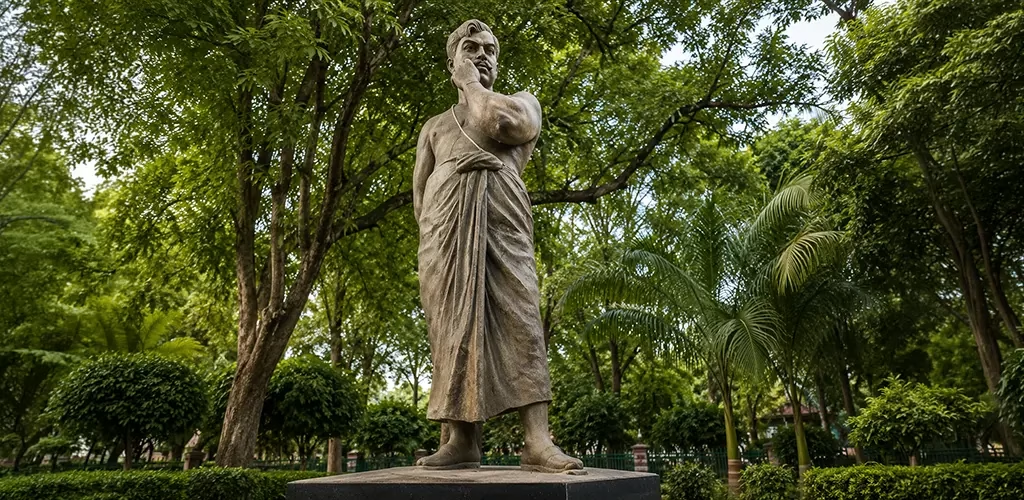
After fighting for as long as he could, Azad looked at his pistol. There was only one bullet remaining. He knew exactly what this meant.
A few years back, Azad vowed that he would never be captured alive, and in that moment he decided to keep that promise until he breathed his last. Instead of surrendering, he fired the final bullet at himself.
The Man Who Stayed True to His Name
When the gunfight at Alfred Park came to an end, Chandrashekhar Azad was lying lifeless beneath the tree where he had fought his final battle. The British officers finally stood before the man they had spent years trying to capture. But they still couldn’t.
Chandrashekhar stayed true to the promise that he made as a teenager – a promise to be worthy of the name he had chosen for himself. He was born Chandrashekhar Tiwari, but he lived and died as Azad. He was born under British rule and took his last breath with British guns pointed at him. But even then, the British could not take away the one thing he had protected all his life: his freedom.