Chandrayaan-2: A Story of Hope and Heartbreak that Changed India's Space Fate
We remember missions that succeed and try to forget the failures. But for India, Chandrayaan-2 exists as a story of learning. Even though it failed to meet its desired fate, it remains etched in the hearts forever.
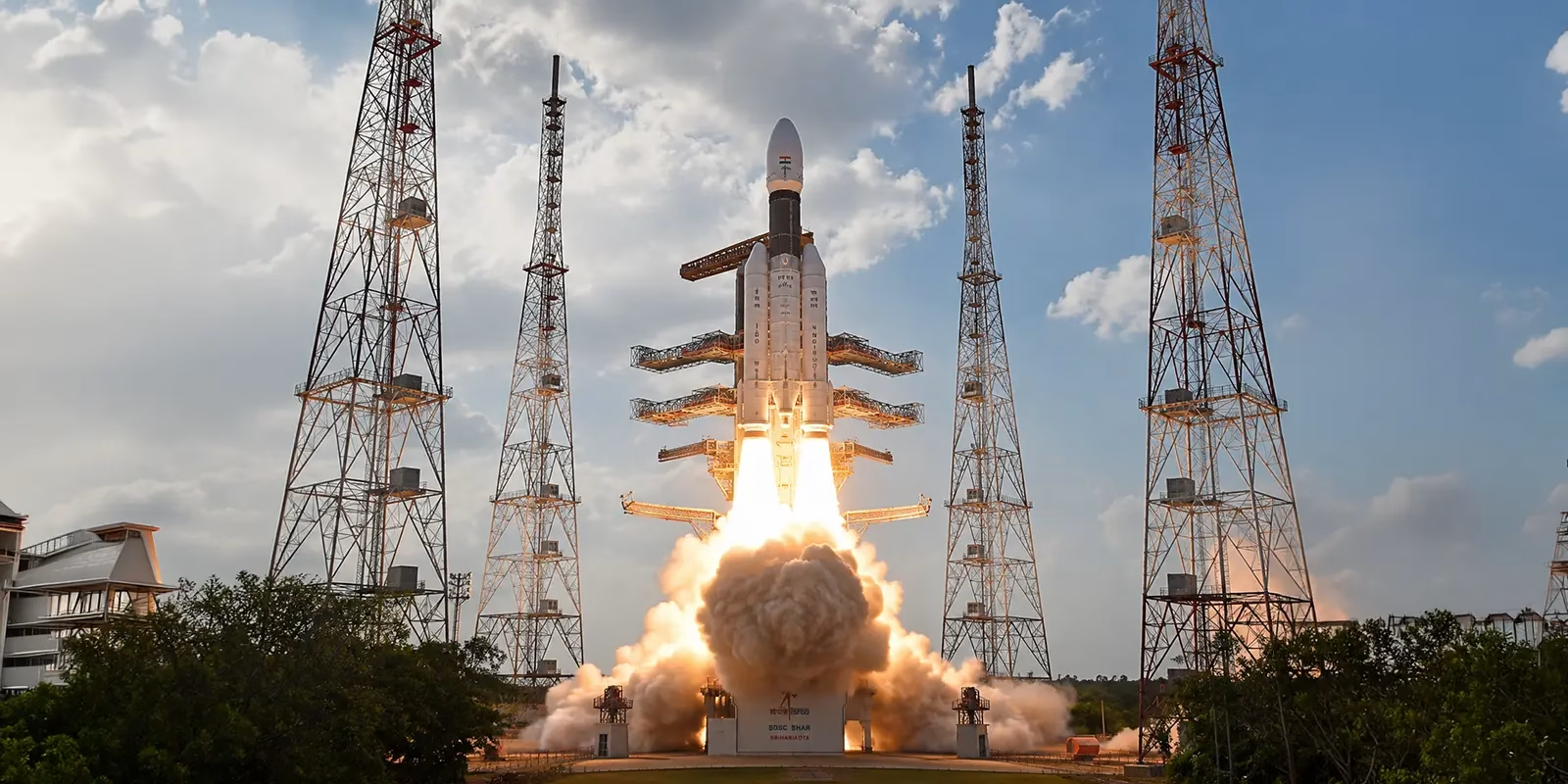
On 22 July 2019, millions of Indians looked toward the skies as a towering rocket slowly rose above Sriharikota, carrying one of India’s boldest dreams- to soft-land a spacecraft on the Moon, and that too on the mysterious south polar region, a place no nation had successfully explored before.
Before the rocket could place India on a victorious pedestal, it met an unfortunate fate. Seven years later, Chandrayaan-2 is remembered not as a failure, but as a mission that changed India’s space future.
But there are some unknown and unheard stories that made Chandrayaan-2 what it is today – a precious failure!
A Halted Launch That Birthed India's 'Bahubali'
When strength is often talked about, India hardly skips a title – Bahubali.
When ISRO’s most powerful launch vehicle took flight, it earned an affectionate name in the country – Bahubali. Over 43 metres tall and weighing around 640 tonnes, the GSLV Mk III, which is now known as LVM3,3 was constructed for extraordinary strength.
There was a reason why ISRO needed a vehicle this powerful. The launch was scheduled a week before, but a tiny helium leak in the cryogenic stage caused the launch to be called off. ISRO called off the launch less than an hour before liftoff. The change in plans was disheartening but highly cautious.
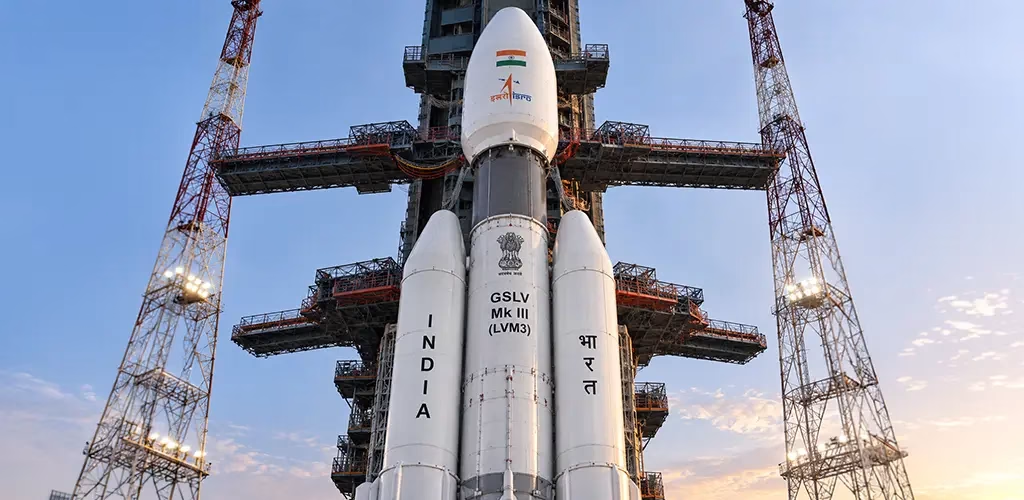
That one decision eventually changed the plans but in a much better way. When Baahubali finally lifted off on July 22, it placed Chandrayaan-2 into a higher orbit than the one that was originally planned and saved precious onboard fuel for the journey ahead.
Three Spacecraft But One Extraordinary Mission.
Chandrayaan-1 orbited the Moon,n but Chandrayaan-2 was designed as a different lunar exploration system.
It comprised:
- Orbiter – to study the Moon from above.
- Vikram Lander – to perform India’s first soft landing.
- Pragyan Rover – to drive across the lunar surface and conduct experiments.
A question that most people always think of is: was the Moon’s south pole a convenience or a marathon that India was choosing?
The true reason behind ISRO deliberately targeting the Moon’s south pole was scientific and strategic. The south pole of the Moon is a region filled with permanently shadowed craters. These craters are believed to contain frozen water. Scientists believe these ancient ice deposits could reveal more about the Moon’s history and further support future human exploration.
In the past, only a few countries dared to go there, but India chose it for its very first landing attempt.
The Fifteen Minutes When an Entire Nation Prayed
Nearly seven weeks later, on the night of 6 September 2019, India was not witnessing a launch but history happening.
Everyone was hoping and praying.
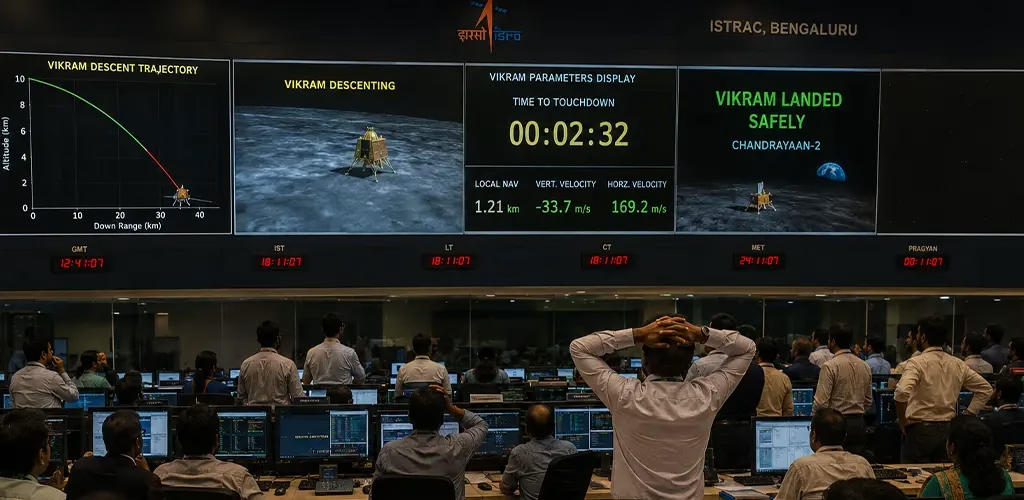
When the descent of Vikram began from nearly 35 kilometres above the lunar surface, “The Fifteen Minutes of Terror” commenced.
The lander had to slow from thousands of kilometres per hour to almost walking speed while navigating rocks, slopes and craters entirely on its own, but nothing about the manoeuvre was routine.
With Vikram barely 2.1 kilometres above the Moon, communication suddenly stopped, and the control room fell silent. Across the country, millions were waiting for a signal that never made it to the Indian devices. The lander’s engines generated slightly higher thrust than expected, and the guidance software struggled to compensate for these deviations. This led to the spacecraft losing stability and later crashing onto the lunar surface.
For many watching live, it felt like the dream that had just been crushed.
The Successful Spacecraft Everyone Forgot
In that moment, the story of landing on the moon ended there for many people. But there was more to the story that was coming forth.
While headlines focused on the lander, the Chandrayaan-2 Orbiter remained perfectly healthy. And, even years later, it is still studying the Moon. The instruments have mapped lunar minerals, studied exospheres, investigated water molecules and photographed the Moon in detail. Scientists estimate that the orbiter achieved well over 95% of the mission’s scientific objectives, making Chandrayaan-2 one of ISRO’s most productive planetary missions.
What everyone thought had failed delivered almost everything it planned to.
The Women Who Completed The Indian Dream
What most people remember about Chandrayaan-2 is an emotional image – Prime Minister Narendra Modi embracing an emotional Dr K. Sivan after the landing attempt and other scientists crying and pensive after the failed landing, but there are inspiring stories hidden behind the same visuals.
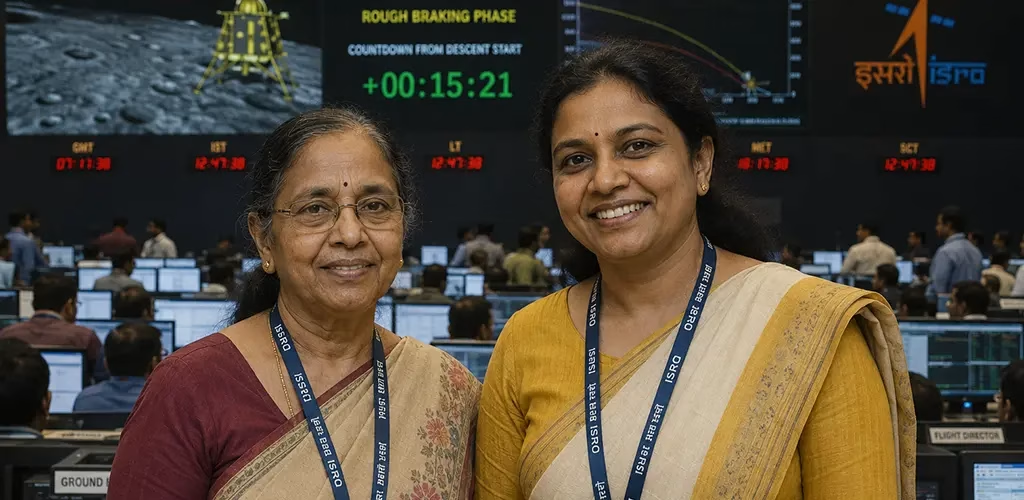
One of Chandrayaan-2’s most inspiring stories was far away from the attention of the television cameras. For the first time in ISRO’s history, two women led one of India’s most ambitious space missions. Muthayya Vanitha served as Project Director, while Ritu Karidhal, often called India’s Rocket Woman, guided the mission as Mission Director.
The leadership challenged stereotypes and inspired a generation of young girls to find their way to science.
Failure That Became a Blueprint
Space agencies rarely succeed on the very first attempt.
NASA, Roscosmos, ESA and even China learned through many failures before they mastered the famous soft landings. ISRO chose the same destiny. The Indian engineers dissected every second of Vikram’s descent, redesigned software, expanded landing tolerances, strengthened guidance algorithms and improved hazard detection systems.
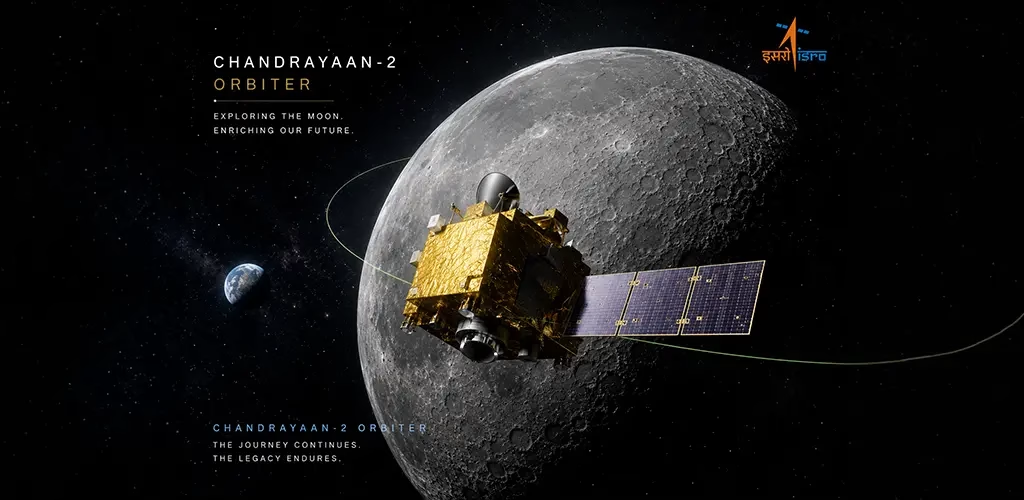
Chandrayaan-2 is mostly remembered as a failed landing, but there is much more to that story. What the world saw as a failure, and India disheartedly accepted as fate, was nothing but the beginning of a much bigger story.
Every mistake turned into an engineering improvement, and every disappointment became data and eventually, these lessons directly shaped Chandrayaan-3.
On the launch anniversary, Chandrayaan-2 deserves to be remembered not as the mission that almost landed on the Moon, but as the mission that taught India how to!