July 22, 1947: The Birth of the National Flag of India
Ever wondered what the Indian flag looked like before independence?
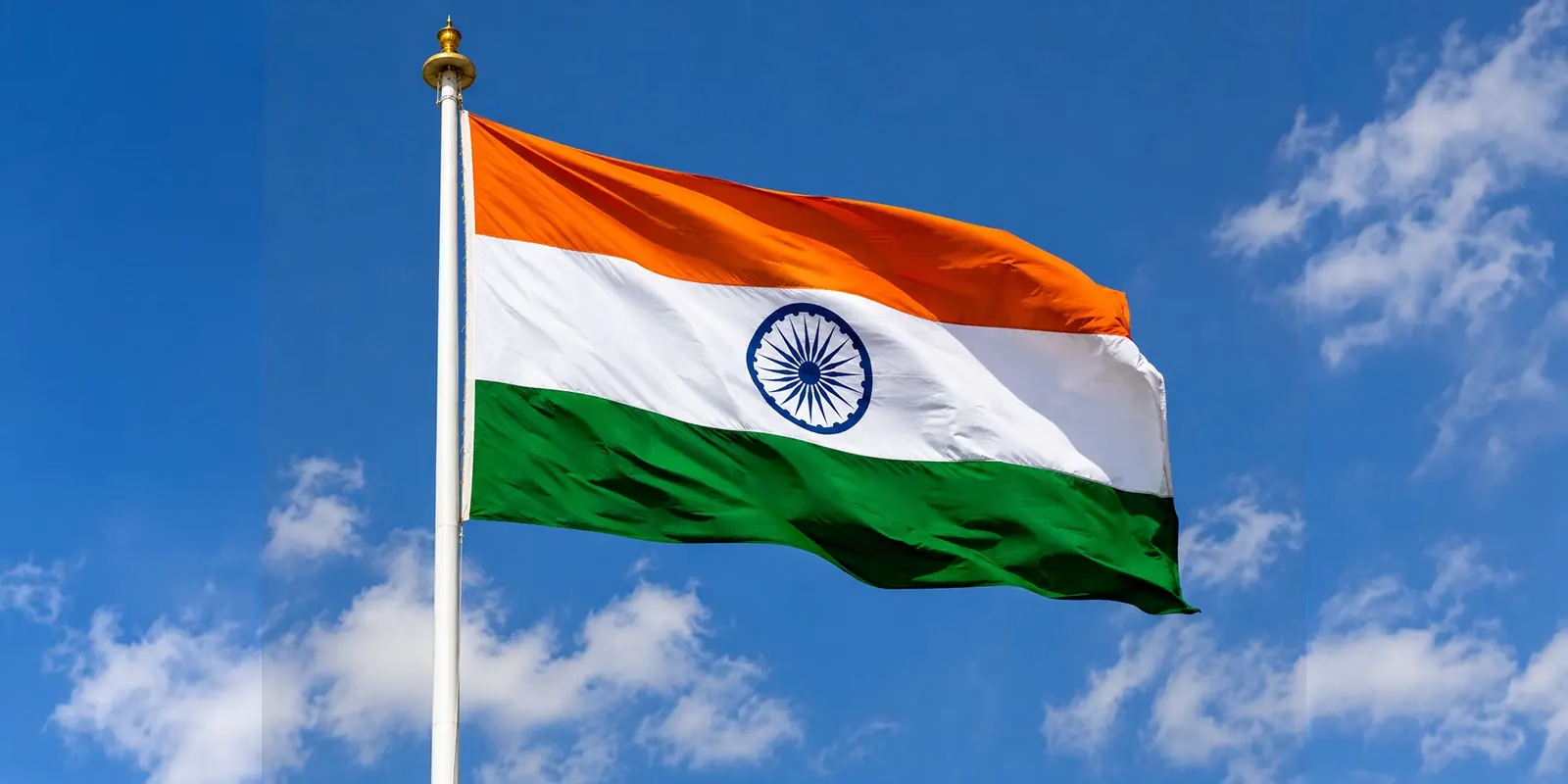
Every year on 22 July, India celebrates National Flag Adoption Day. It marks the exact moment in 1947 when the Constituent Assembly adopted the tricolour as the official flag of free India, just weeks before British rule came to an end.
But the Indian flag was not designed and implemented overnight. It was shaped over years through ideas, debates, sacrifices, and the dream of free India.
The story of the Indian flag is not simply about choosing three colours. It is the story of a nation slowly finding its identity.
The Calcutta Flag (1906): When India Raised Its First National Flag
The story of the Indian National Flag goes back to 1906, long before independence.
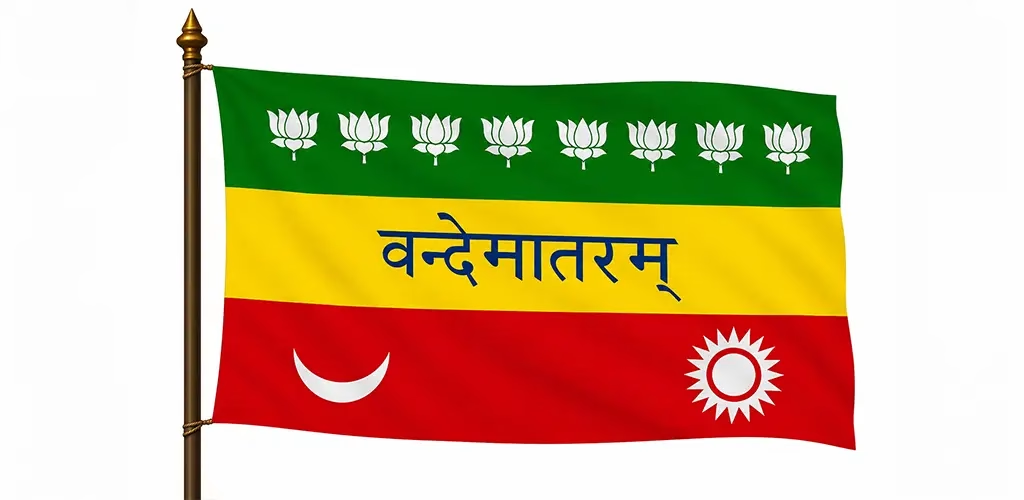
The first version of an Indian nationalist flag was unfurled at Parsee Bagan Square in Calcutta. This flag looked completely different from the one we know today. It had three horizontal stripes of orange, yellow, and green. The top stripe of the flag had eight half-opened lotus flowers, the middle yellow stripe had the words Vande Mataram written across it, and the bottom stripe featured a sun and a crescent moon.
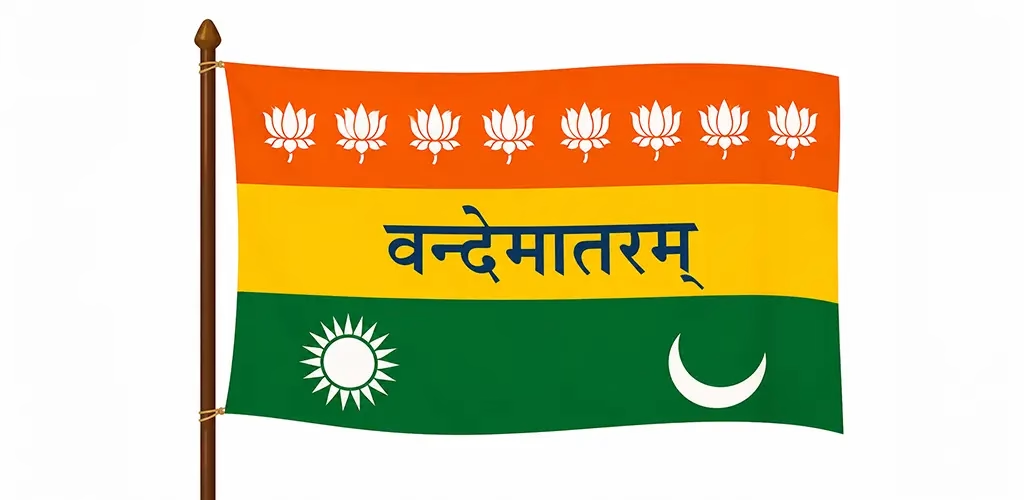
This flag was created out of pure outrage. The British had just divided Bengal to break the unity of the freedom movement. In response, Indian leaders created this flag to show that the people would not be split apart.
Just a year after the creation of the Calcutta flag, the freedom movement crossed international borders.
In 1907, Bhikaiji Cama raised a similar flag at Stuttgart, Germany. It was the first time the Indian flag was raised on foreign soil.
However, these flags were only the beginning. As the freedom movement grew stronger, India’s demands also began to change.
The Home Rule Flag (1917): The Flag That Asked for Self-Rule
In 1917, during the Home Rule Movement led by Bal Gangadhar Tilak and Annie Besant, a completely new flag was designed. This one looked very different from the earlier designs.
This flag had five red and four green alternating horizontal stripes, along with seven stars representing the Saptarishi constellation. However, the most surprising element was the British Union Jack in the top left corner.
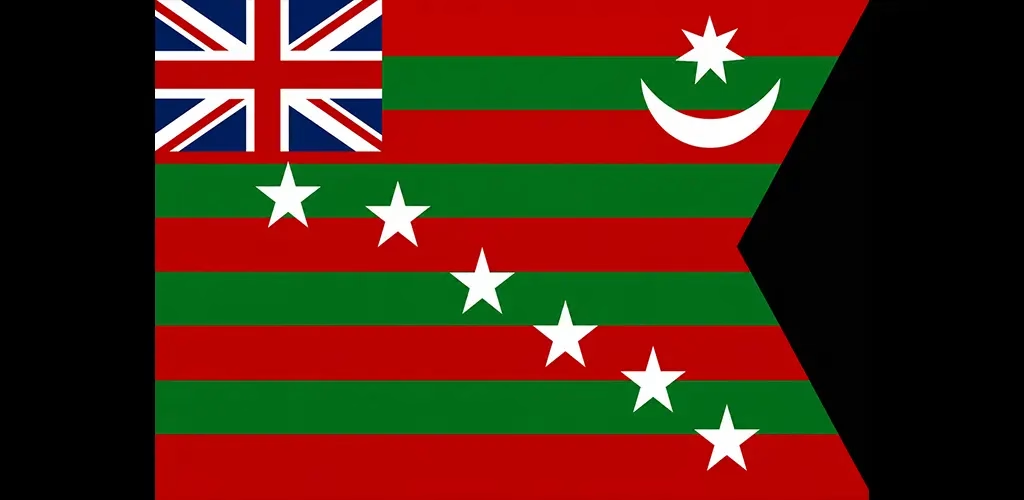
At first glance, it may seem strange to see the British flag on an Indian flag. But there was a reason for it. This flag represented the demand for self-governance, but within the framework of the British Empire.
As the years passed, however, Indians no longer wanted limited self-rule. They wanted complete independence. And for that dream, the country needed a new flag that belonged to every Indian.
The Unofficial Flag of 1921: Pingali Venkayya's Dream for India
In 1921, Pingali Venkayya, a freedom fighter, noticed that the freedom movement needed one flag that every Indian could recognise and unite under. He spent years studying flags from around the world and presented a new design to Mahatma Gandhi.
The original version had just two colours representing two communities: red for the Hindus and green for the Muslims. But Gandhi believed the flag should represent every Indian. To fix this, he suggested adding a white stripe at the top to represent all the other religions, and placing a charkha, or spinning wheel, at the centre.
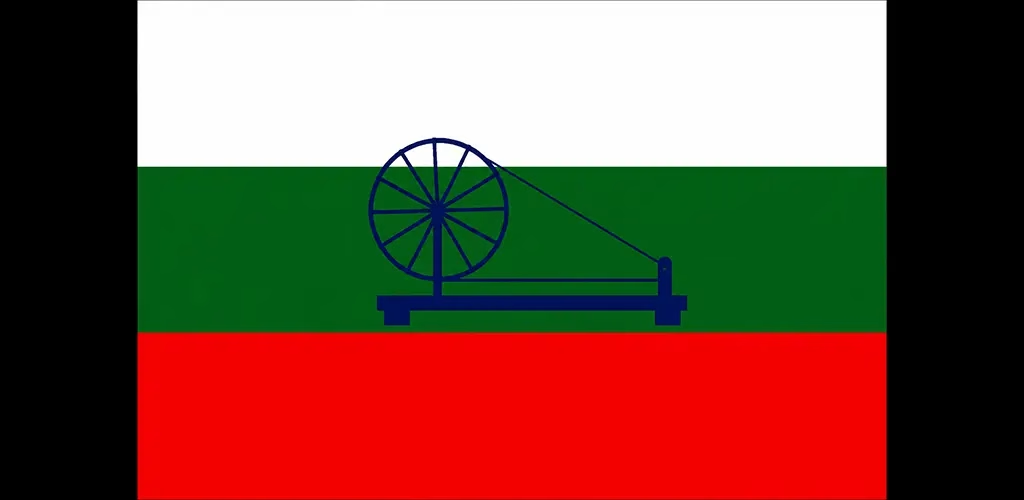
The charkha was a symbol of self-reliance, hard work, and the Swadeshi movement that encouraged Indians to use goods made in their own country instead of buying British products.
While the 1921 flag gained immense popularity, it also faced some criticism.
The Swaraj Flag (1931): The Flag That Reached Every Indian
As the freedom struggle became intense, people started arguing over the colours. Many leaders felt that linking colours to specific religions was not a good idea because it could create differences instead of unity.
To solve this problem, the Indian National Congress adopted a new tricolour that was far away from religious meanings. Instead, each colour was given a value that every Indian could relate to.
Saffron would now represent courage and sacrifice. White symbolised peace and truth, while green meant faith, growth, and prosperity.
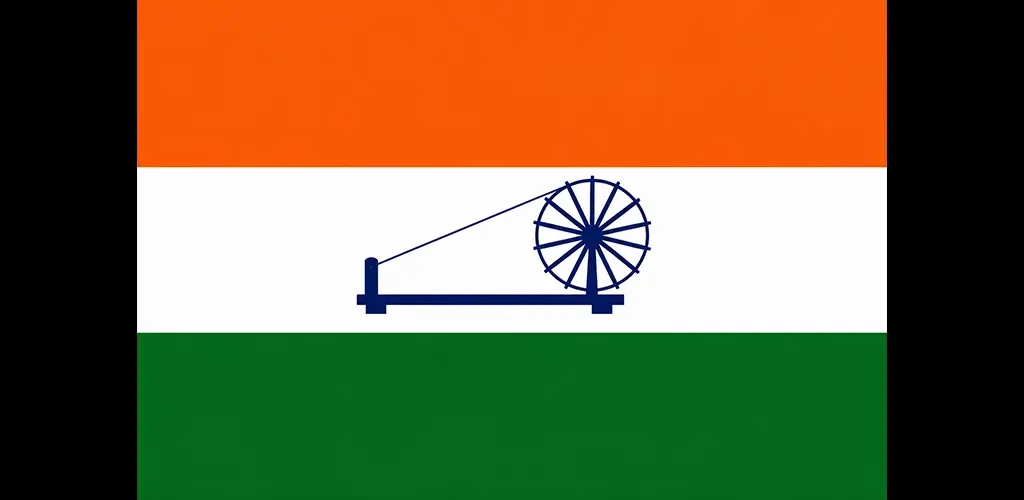
By giving the colours a meaning based on values instead of religions, the leaders made sure the flag brought people together instead of dividing them. It became a symbol of unity and the shared dream of Swaraj.
The National Flag (1947): The Final Tiranga
By 1947, independence was only weeks away.
India needed an official flag for the new nation.
A committee led by Dr Rajendra Prasad was formed to finalise the design. The committee made one crucial change to the 1931 Swaraj flag. They replaced the spinning wheel with the Ashoka Chakra, the 24-spoke navy blue wheel of law from the ancient Lion Capital of Ashoka at Sarnath.
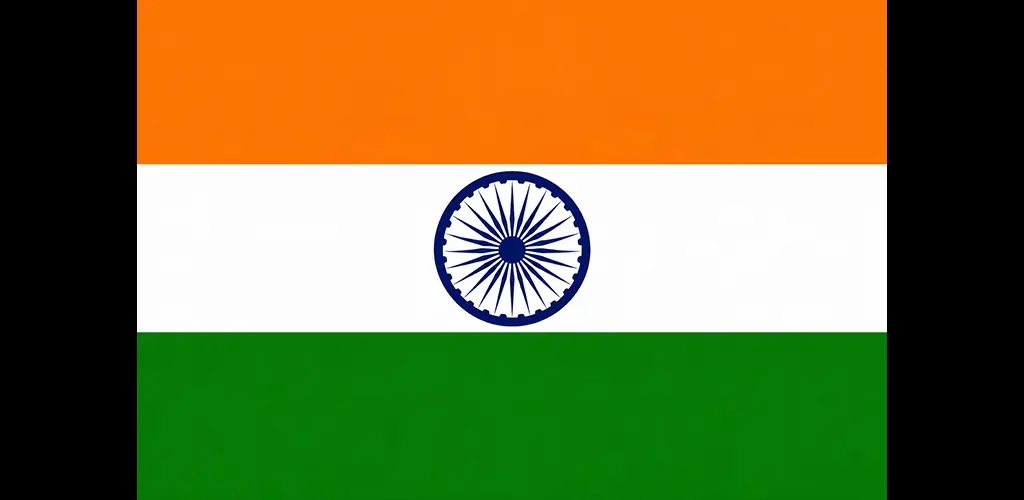
The Ashoka Chakra symbolised justice, progress, and the belief that a nation must always keep moving forward.
Then came the historic day.
On 22 July 1947, Jawaharlal Nehru presented the final design before the Constituent Assembly. The Assembly accepted it as the national flag of independent India. And a few weeks later, on 15 August 1947, the same tricolour flew over free India for the very first time.
More Than A Flag, A Symbol Of Sacrifice
During the freedom struggle, carrying the tricolour was an act of courage.
Many freedom fighters were arrested, beaten, and even lost their lives while protecting it. For them, the flag was never just a piece of cloth. It represented hope, freedom, and the dream of an independent India.
When the tricolour was officially adopted on July 22, it carried the weight of all those sacrifices.
Today, every time the Indian flag flies high, it reminds us that it carries the dreams, courage, and sacrifices of millions who believed in one united India.