International Youth Day: When Indian Youth Refused To Wait
What do you expect a nineteen-year-old to do? College, exams, maybe a part-time job, figuring life out one confused day at a time, or even marriage.
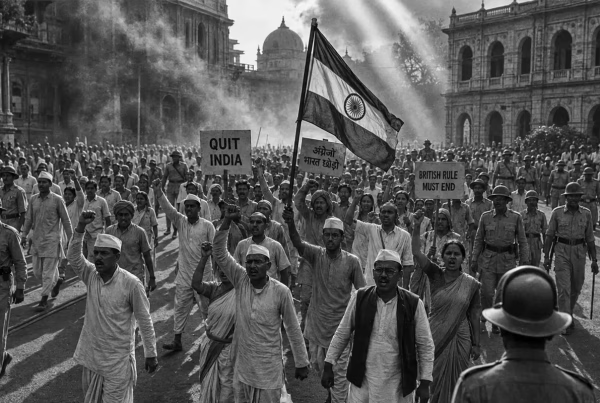
But imagine stepping into battles no adult had the guts to fight, irrespective of their gender. At an age when most young Indians were trying to fit into the societal norms, a handful of young Indian women quietly rewrote history.
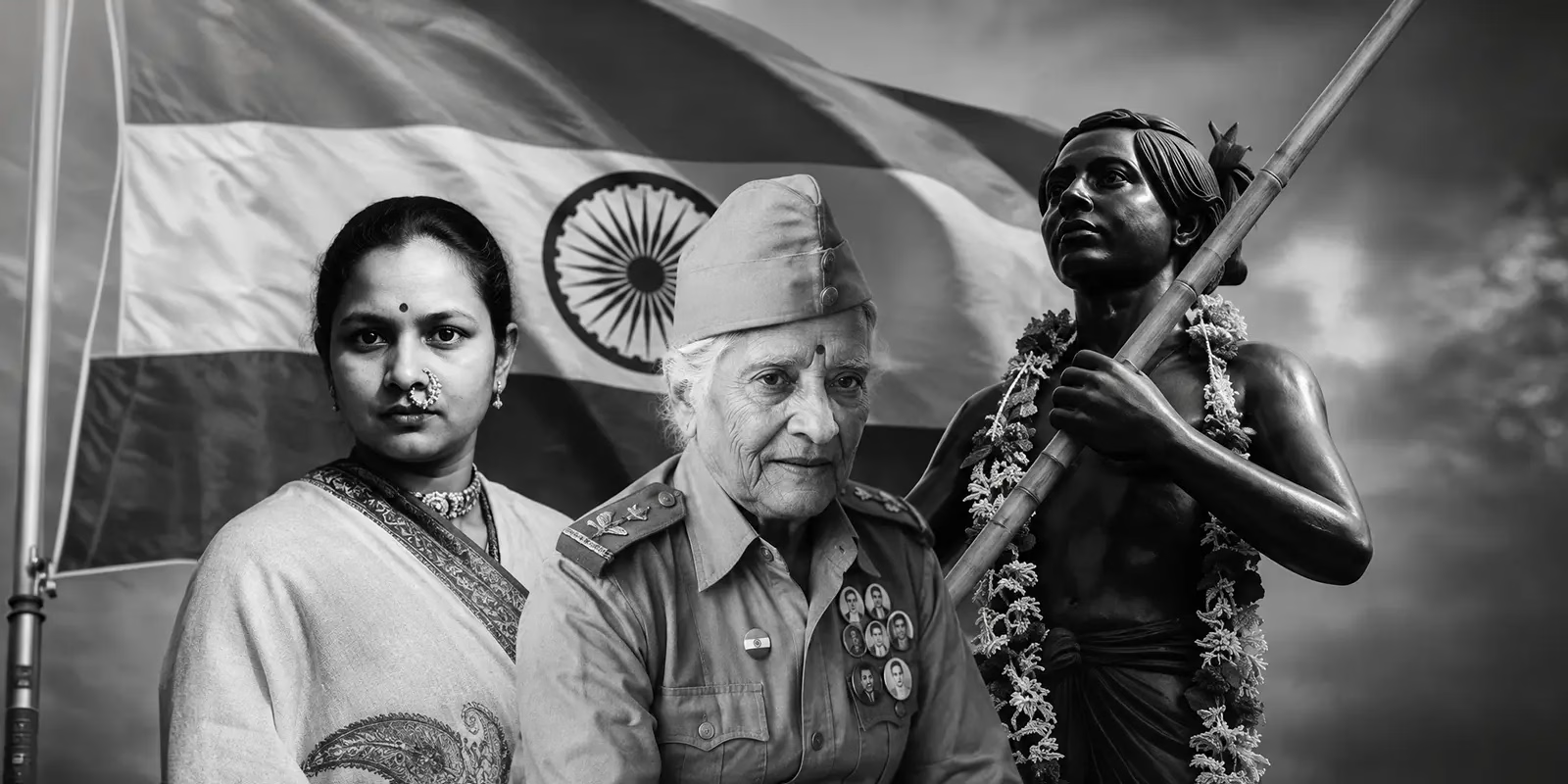
This International Youth Day, we look past the standard history books to the teenagers who refused to wait for their turn.
The Young Woman Who Changed Indian Medicine
Imagine being married at nine, losing your first baby at fourteen because medical care was nonexistent for women, and deciding right then that you were going to change medicine forever.
This is exactly what Anandibai Joshi did.
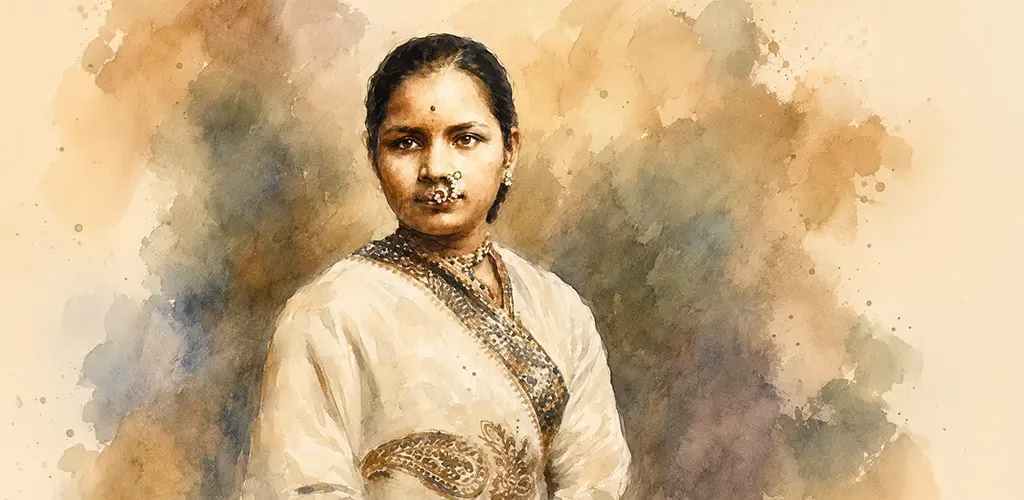
At a time when young women were expected to stay strictly behind veiled curtains, she packed her bags at the tender age of nineteen and sailed across the ocean to America, completely alone, to study Western medicine. Society insulted her immeasurably, but she stood her ground.
By 1886, at just twenty-one, she graduated as India’s first female doctor. She returned home to roaring crowds lining the docks just to catch a glimpse of the young woman who made the impossible happen.
The Youngest Spy of India
While Anandibai was blazing trails in medicine, a sixteen-year-old in Burma was preparing to play a far more dangerous game.
Growing up in a wealthy family, Saraswathi Rajamani could have lived a life of quiet luxury. But after hearing Netaji Subhas Chandra Bose’s speeches, something shifted in her. She wanted to join the youth movement fighting for India’s independence, without waiting until she was considered old enough.
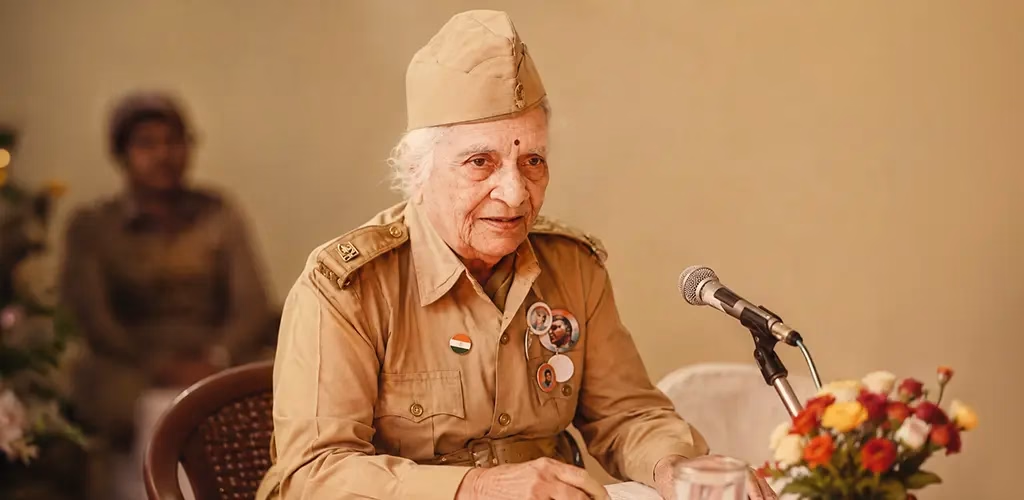
At sixteen, she joined the Rani of Jhansi Regiment, a women’s unit under the Indian National Army, and quickly became one of its youngest and most fearless members. But her real weapon wasn’t a gun. It was a disguise.
Posing as a young boy working as a domestic helper in British military camps, she intercepted crucial intelligence and smuggled it back to the Indian National Army. When her fellow female spy was captured, Rajamani didn’t run. She disguised herself as a dancing girl, drugged the guards, rescued her partner, and dodged enemy bullets in the jungle for three days, all while she was still a teenager.
A young girl walked deliberately into danger and protected secrets at great personal cost, while many others her age were focused simply on surviving the war from a distance.
The 12-Year-Old Who Defied the British
Most twelve-year-olds are afraid of the dark, but Baji Rout was a different kind of kid.
It was a rainy night in 1938 in Odisha. A group of British soldiers rushed to the river, chasing Indian freedom fighters. They spotted young Baji by his boat and ordered him to row them across immediately.
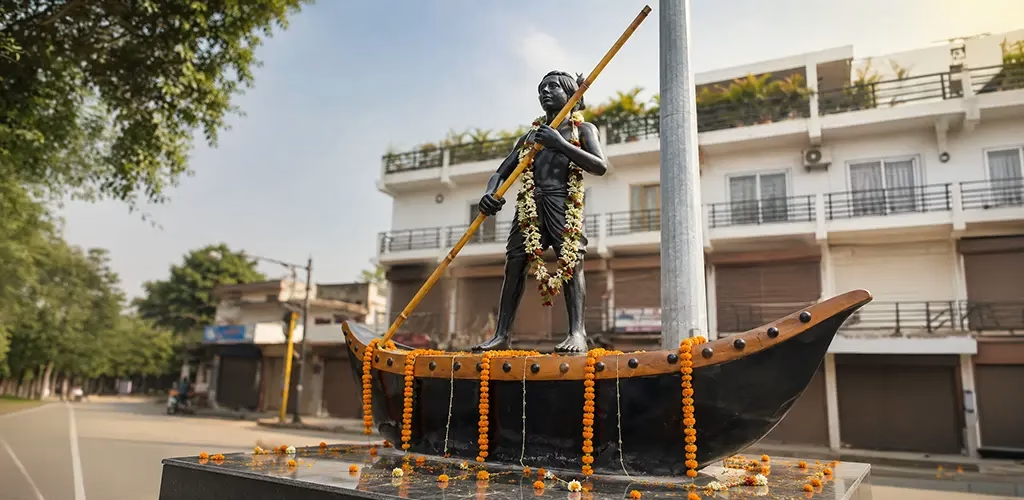
Baji knew that if he took them, his people would die. Standing right in front of armed men, the young boy looked them in the eye and said no. The British soldiers threatened him, hit him, and aimed their rifles at his chest, but Baji held his ground, refusing to move his boat an inch.
Furious Britishers shot him, and Baji died right there on the riverbank, giving up his life so his fellow young Indians could run to safety.
The Other Side of India’s History
When you look at the lives of these young Indians, one thing hits you hard: none of them waited for history to give them permission. They were just young kids caught in the heavy gears of an empire, yet they refused to be helpless.
We often talk about history as if it were written only by old, powerful leaders in quiet rooms. But this nation was built on the blood, sweat, and secret tears of youth who sacrificed their tomorrows so that we could have our today.
That raises a question: how many revolutions were lost simply because the world was too busy telling the young to wait their turn?