The Story India First Told Through a Lens
Long before phones lived in every pocket, a single photograph could take days to get captured and even longer to be seen by anyone at all.
Yet somewhere between the smell of chemicals and the patience of standing perfectly still, India found a whole new way to remember itself. This World Photography Day, look back at the people who picked up a camera when almost nobody in the country knew what to do with one, and quietly built the visual memory of a nation.
The Photograph That Started It All
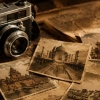
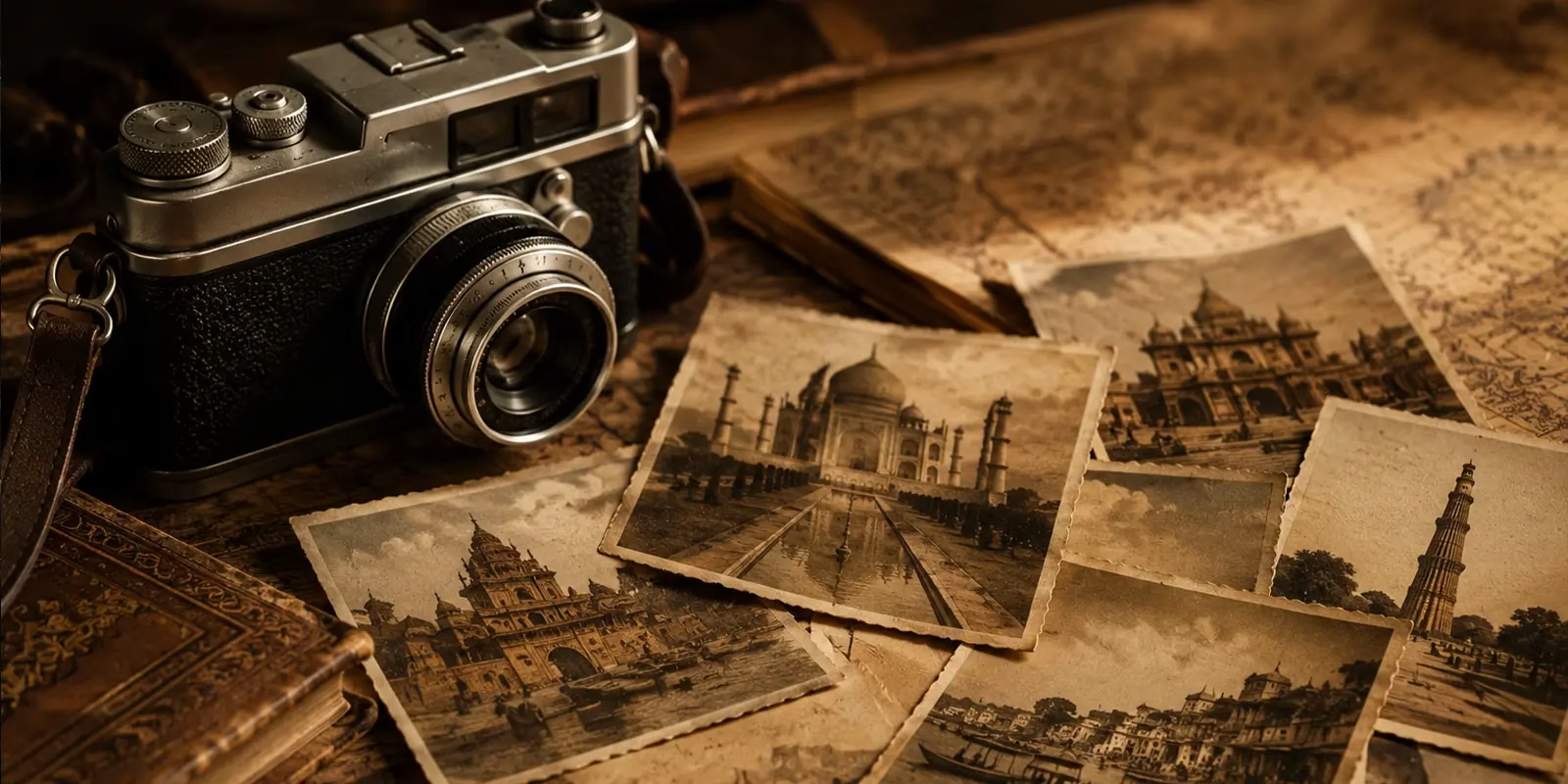
India’s earliest brush with photography goes back further than most people realise. According to historical records, the earliest surviving photographic capture in India dates to 1840, a lithograph based on a daguerreotype of the Sans Souci Theatre in Calcutta. The camera itself did not fully arrive on Indian shores until the 1850s, brought in largely by British officials, army officers and a handful of curious travellers who saw the country as one giant, unphotographed subject.
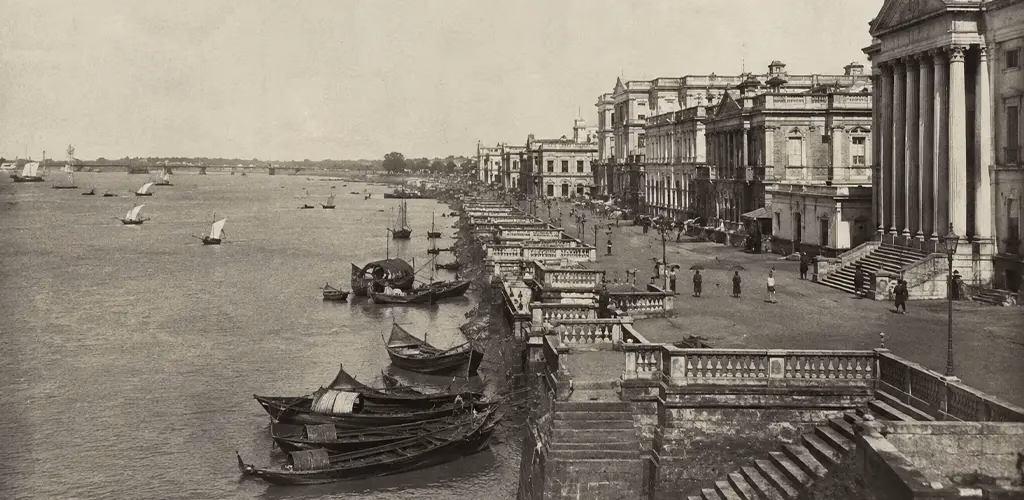
These first images captured temples, forts, rivers and busy streets, often more out of colonial curiosity than artistic ambition. But this world photography day-worthy chapter mattered for one simple reason. It proved that India could be seen exactly as it was, without a painter’s imagination standing in between.
It would take a few more decades before an Indian himself picked up the camera and turned it into something far more personal.
The Engineer Who Became India's First Great Photographer
That man was Raja Deen Dayal, and his story did not begin anywhere near a camera. He started out training to be a civil engineer, eventually joining the Public Works Department in Indore as a young draftsman. Photography was simply a passion on the side, until it slowly became impossible to ignore.
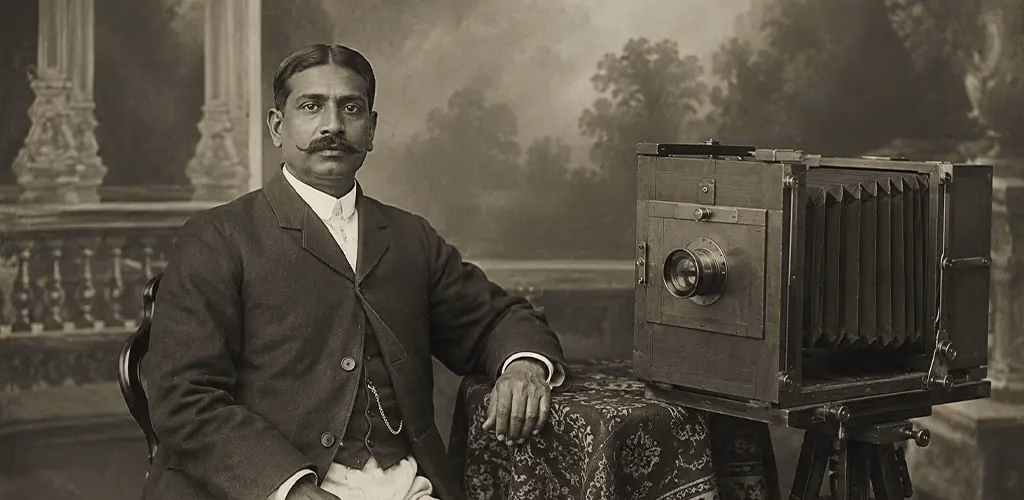
By 1874, Deen Dayal had begun photographing seriously, and his talent soon caught the attention of powerful patrons, including the Nizam of Hyderabad, who appointed him as official court photographer in 1894. He went on to document royal palaces, grand processions, ancient monuments and the everyday textures of princely India, eventually opening studios in Indore, Secunderabad and Bombay. For a country still new to the medium, Deen Dayal proved that photography could belong to Indians too, not just to the colonial officials who had first brought it in.
While Deen Dayal was documenting kings and palaces, it would take several more decades before a woman finally stepped behind the camera and changed what an Indian photograph could capture.
The Woman Who Cycled Through History
Her name was Homai Vyarawalla, and she is remembered today as India’s first woman photojournalist. Born in 1913 in Navsari, Gujarat, she began her career in the late 1930s, at a time when the very idea of a woman handling a camera professionally was met with quiet ridicule.
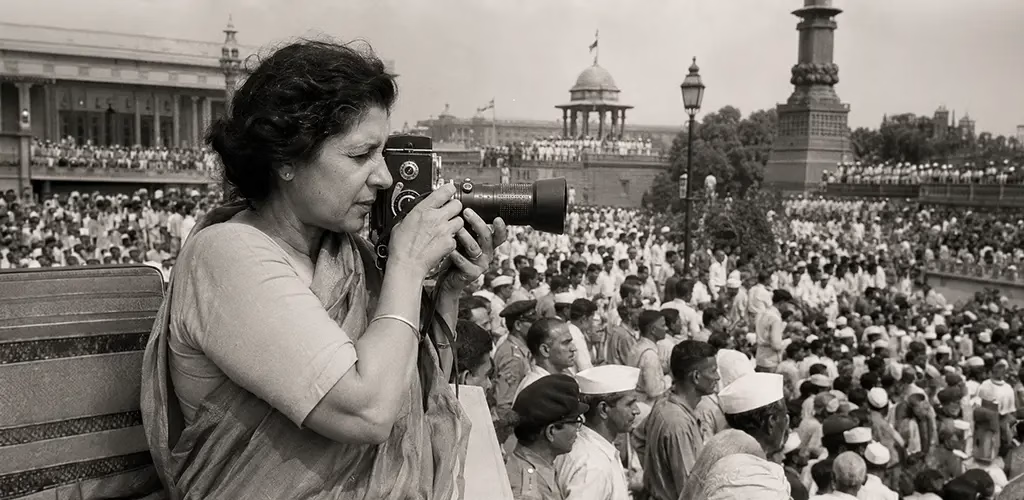
She often published her early work under her husband’s name, and later under the pseudonym Dalda 13, before eventually working for the British Information Services from the 1940s onward. Riding a bicycle through the streets of Delhi in a simple sari, camera in hand, Vyarawalla photographed some of the most defining moments of India’s freedom movement, including leaders like Mahatma Gandhi, Jawaharlal Nehru and Mohammed Ali Jinnah. Her lens did not just capture politics. It captured a nation on the edge of enormous change.
That change, however, did not arrive gently. And some of the most haunting photographs from this period came from a moment India still finds difficult to look back at.
When the Camera Captured Heartbreak
As independence arrived in 1947, it brought with it the horror of Partition, and photography became one of the few honest witnesses to what really happened. Images from that time show overcrowded trains, refugee columns stretching across horizons, and families carrying whatever little they could save. These were not staged portraits or royal processions. They were raw, urgent and often unbearable to look at, yet they remain some of the most important photographs in Indian history.
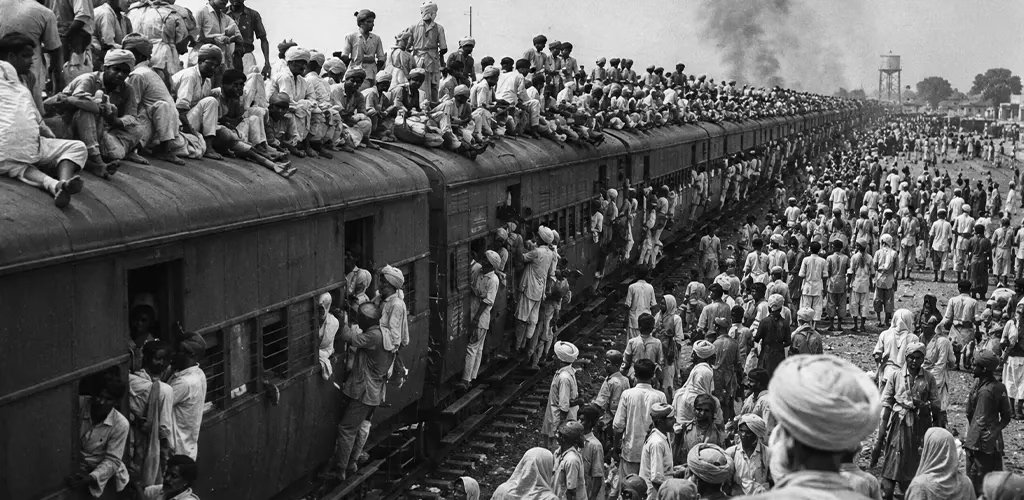
Partition photography reminds us that a camera does not only preserve beauty. Sometimes, its most important job is to preserve truth, even when that truth is painful.
What a Camera Really Remembers
From a faint lithograph in 1840s Calcutta to a woman cycling through Delhi with a camera on her shoulder, India’s relationship with photography has always been about more than just technology. It has been about who gets to be seen, who gets to do the seeing, and what gets remembered long after the moment has passed.
This World Photography Day, perhaps that is worth sitting with. Every photograph, however old or ordinary, once held a version of the present that no longer exists. And somewhere in that stillness lies the real magic of photography, the ability to hold on to a moment the world has already moved past.