

Coconut and its Connection with New Beginnings
You must have seen someone stepping forward and smashing a coconut on the ground right before the beginning of anything important.
But have you ever wondered why?
It looks like a small, almost forgettable ritual. But behind it is a story that stretches back thousands of years.
How the Coconut Became an Offering
In Vedic times, rituals often involved animal sacrifice, offered as a way of showing complete surrender to the divine.
But as spiritual practice slowly evolved, communities began looking for a gentler substitute, something that could carry the same meaning without any bloodshed.
A fruit soon found its place as that offering, and it was coconut.
Its hard shell, round shape and the way it breaks open made it feel familiar as an offering, while keeping the ritual bloodless. It came to be known as Shriphal, which means the fruit of prosperity, and gradually found its place in temples and homes.
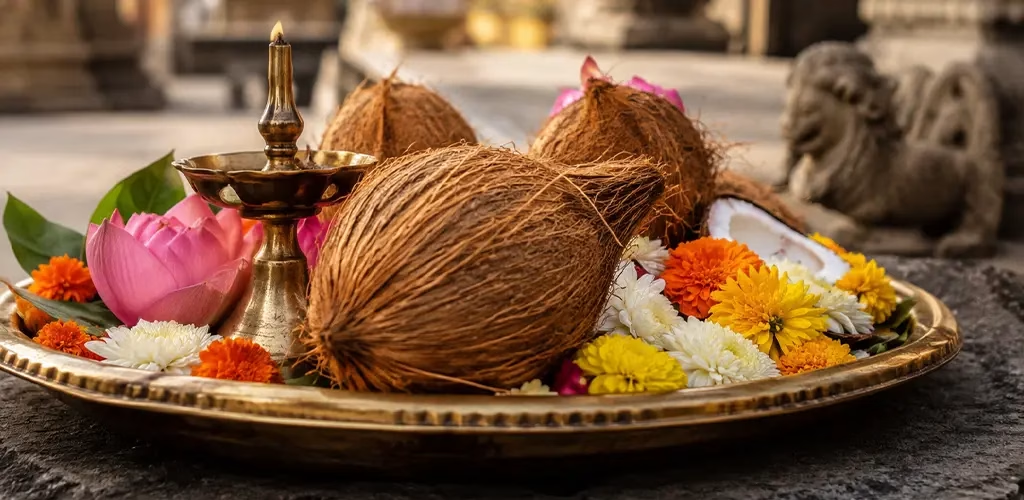
But the coconut was not simply chosen as a replacement. Almost every part of it came to carry its own meaning.
The Three Layers Hidden Inside a Coconut
A coconut is more than just a fruit in Hindu symbolism.
Hindu tradition describes a person through three layers: the physical body, mind, and a deeper self that carries past impressions. The coconut is said to reflect all these three. Its rough husk represents the body, the white flesh the mind, and the water inside the deeper self.
Even its shape carries meaning. The three marks on top are often seen as three eyes, with the third linked to inner wisdom and deeper understanding.
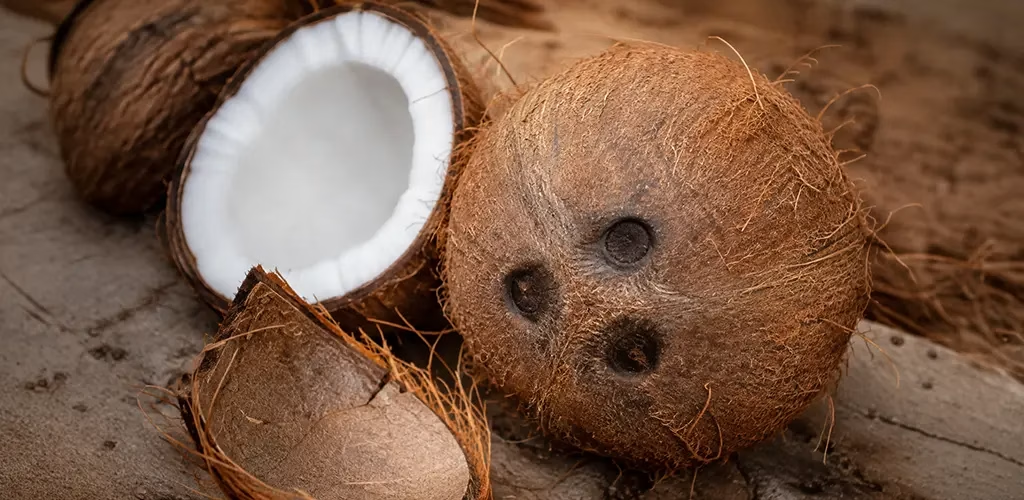
Once you see the coconut this way, breaking it starts to feel less like a ritual and more like a reflection of ourselves.
The Meaning Behind That First Crack
The hard shell of the coconut is often linked to the ego, the part of us that holds on to pride, control and self-importance.
Breaking it open symbolises breaking through that ego and making room for humility. The water spilling out represents letting go of negativity, while the soft white fleshy part, later shared as prasad, becomes a symbol of openness and generosity.
In most of the temples, this idea has become even more personal. Devotees break hundreds of coconuts or more during a festival, treating each one as another small act of surrender and a chance to let go of something within themselves.
Some has even describe the sharp crack of the shell as strangely satisfying. Perhaps because, for a moment, it feels like something inside them has been released too.
Why the Coconut Still Opens Every New Chapter
What makes the coconut endure is the meaning people have found in its simplicity. It grows through harsh conditions, yet its final purpose is often to be broken open and given away.
Maybe that is the quiet lesson hidden inside this fruit.
Before anything new can truly begin, something old has to be let go of first, whether that is fear, pride, or simply the weight of an ego we did not realise we were carrying. And perhaps that is exactly why, centuries later, people still reach for a coconut before stepping into anything unfamiliar or new.