The Hindu Months Inspired by the Cosmic Nakshatras
What if the cosmos refuses to let you get married?
This is what happens for a stretch every year, as the Hindu calendar pauses major ceremonies like weddings. It falls right in the middle of Chaturmas, the four holy months of fasting, and it’s called Bhadrapada.
Most people know about the halt, but almost nobody knows where the name of this pause actually comes from.
This is the story of two nakshatras nobody really talks about: Purva Bhadrapada and Uttara Bhadrapada, stars that ended up naming something as significant as a month?
How a Star Gets to Name a Month
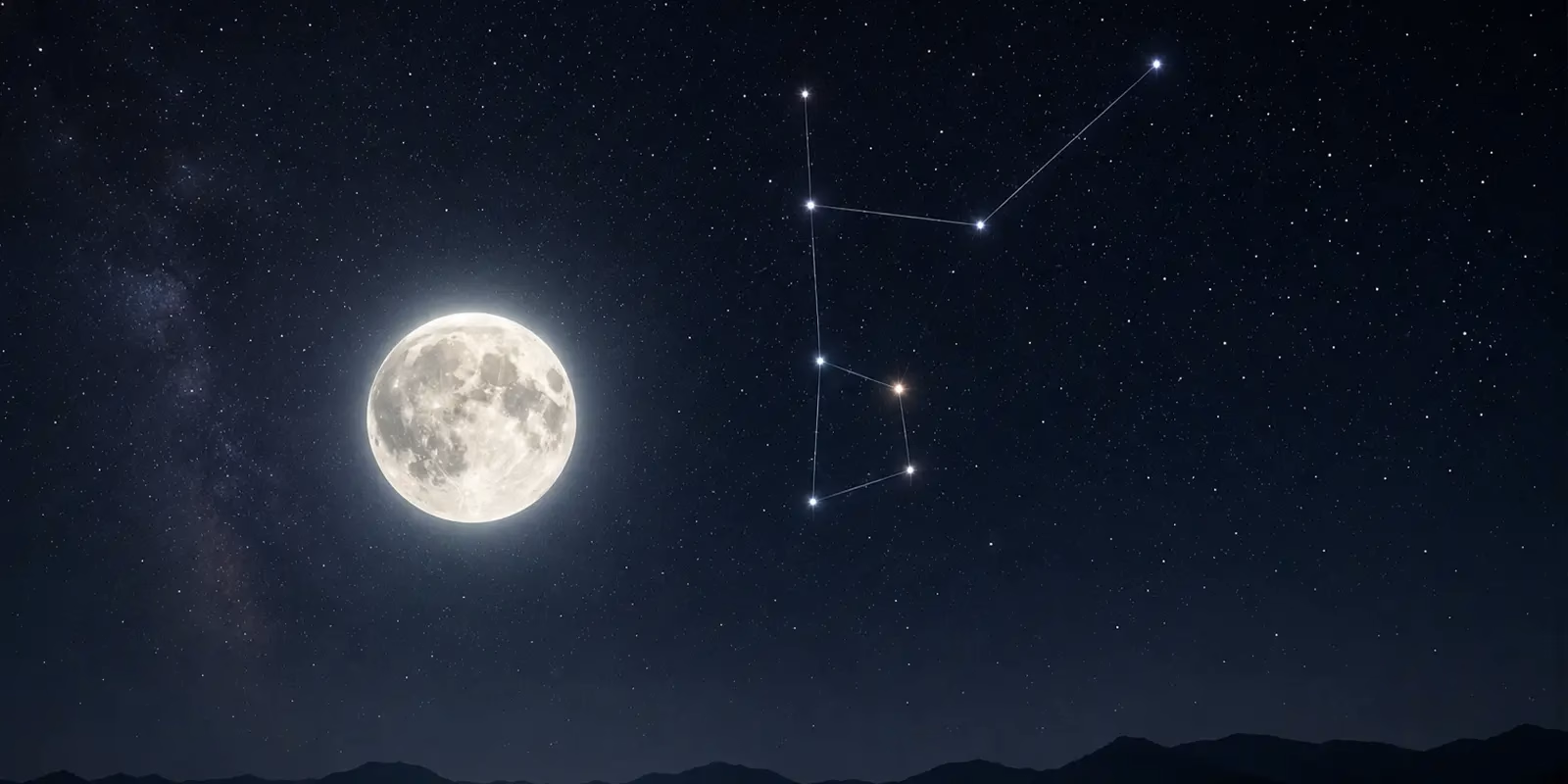
The Hindu lunar calendar divides the sky into 27 constellations called nakshatras, based on the path the moon follows across the sky. Each one has its own ruling deity, symbol, and kind of energy, shaping the days that fall under it in ways most people never notice.
Every Hindu month takes its name from whichever nakshatra the moon sits closest to on that month’s full moon night. That’s why so many Hindu months carry the name of a star rather than a god or a season.
Bhadrapada follows the same rule, named after Purva Bhadrapada, the nakshatra the moon rests near during this month’s full moon. But what does that name actually mean?
Purva Bhadrapada: The First of the Auspicious Feet
Purva Bhadrapada is the twenty-fifth of the twenty-seven nakshatras. Its name translates to “the first of the auspicious feet,” and that word feet has a story of its own.
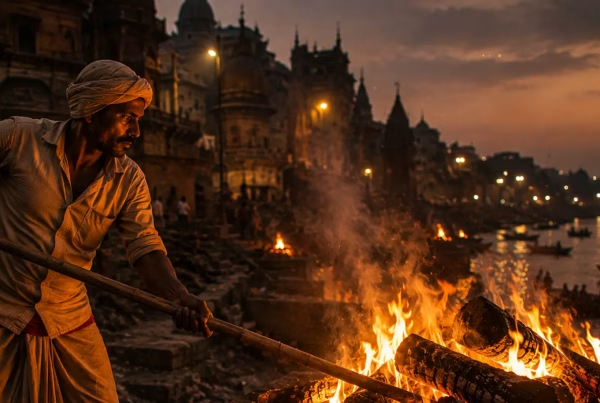
The stars of this nakshatra were traditionally imagined as the front legs of a funeral cot, used to carry a body towards its final rites. But the image was not simply about death. It was seen more as a passage from one state into another, from an ending towards what comes next.
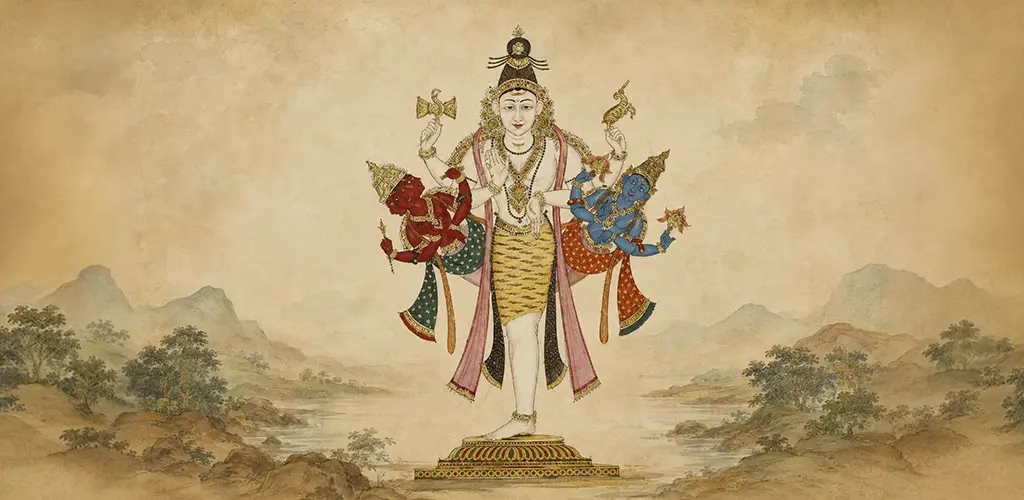
The nakshatra is ruled by Aja Ekapada, a fierce, one-footed form of Rudra, an early form of Lord Shiva. Ancient texts describe him as a figure standing on one leg, like a pillar holding up the sky. The nakshatra is linked with sudden change, often through difficult moments, making it more suited to reflection and inner work than starting something new.
But Purva Bhadrapada was never meant to carry this weight alone.
Uttara Bhadrapada: The Other Half of the Story
If Purva Bhadrapada is the front legs of that funeral cot, Uttara Bhadrapada, the twenty-sixth nakshatra, is said to form the back legs.
It is ruled by Ahir Budhnya, a serpent deity said to live in the depths of the cosmic ocean. People born under this nakshatra are said to seek stability, patience, and a way out of long-carried burdens.
The contrast between the two of them is what makes them a perfect pair: restlessness and calm, fire and stillness, an ending followed by what comes next.
A Month Shaped More by Discipline Than Festivity
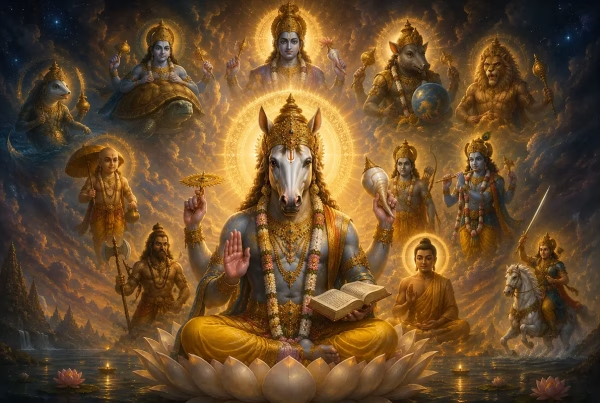
Bhadrapada period starts right after Shravan, carrying forward the same spirit of fasting into the last stretch of the monsoon. The month is mainly dedicated to Lord Vishnu, with devotees keeping fasts on every Ekadashi and Purnima that falls within it.
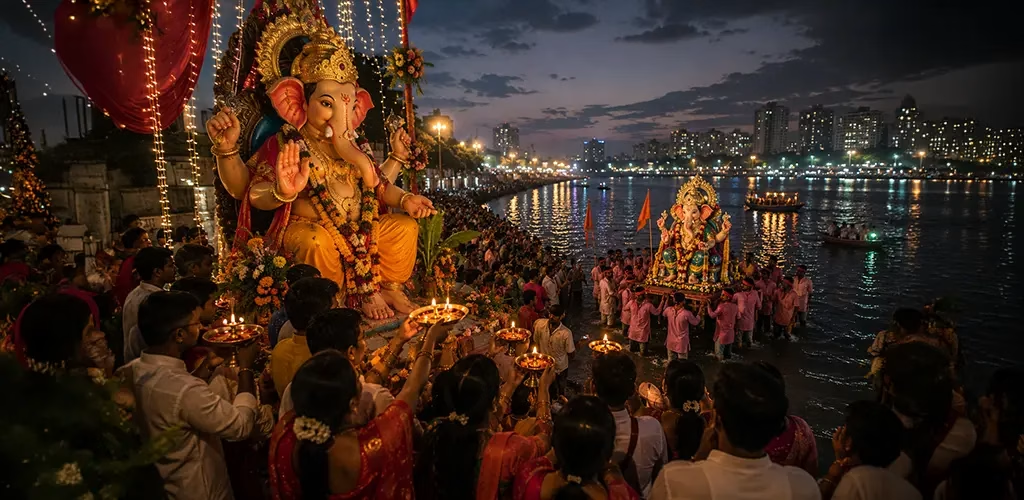
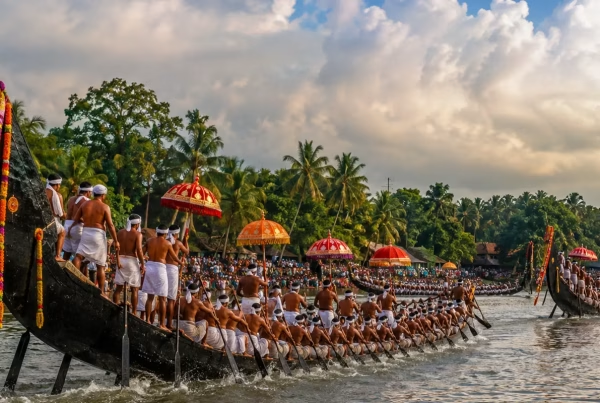
Several major observances fall within these weeks too, from Ganesh Chaturthi to Janmashtami, Rishi Panchami, and the start of Pitru Paksha, all packed into a single month. With so much happening during these weeks, it is easy to think of Bhadrapada simply as another month filled with festivals.
But perhaps the more interesting part is what all these traditions are sitting on top of: a much older idea of change, reflection and renewal.
Why Bhadrapada Is More Than a Month
The stories of Purva and Uttara Bhadrapada bring together two very different sides, fire and calm, change and stillness, endings and what comes after.
Perhaps that is why Bhadrapada feels like more than a collection of festivals. Beneath the prayers, fasts and celebrations is an older story written into the stars themselves. And maybe the most interesting part is that we still follow a calendar shaped by those stars, even when most of us no longer look up to find them.