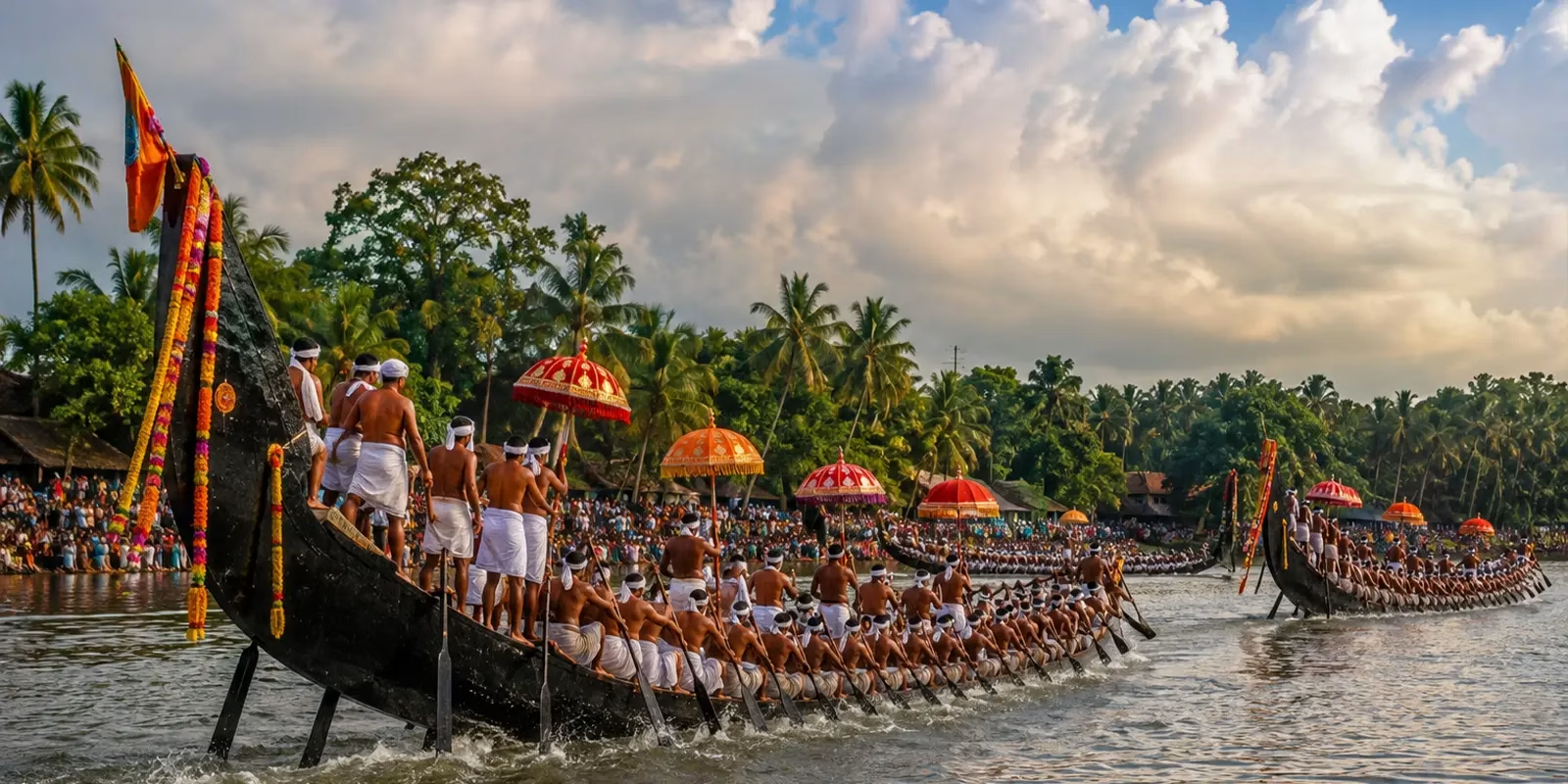
Snake Boat Race: The Heart Of Onam
For the people of Kerala, the backwaters are more than just water. They are part of everyday life, carrying people, connecting villages, and holding memories passed down through generations.
But when Onam arrives, these familiar waters take on a different energy.
The monsoon fills the rivers and backwaters, the banks begin to crowd with people, and long boats appear on the water. You might have seen boating in movies, or perhaps for you, it means a quiet ride across a lake. But in Kerala, these boats aren’t just meant to sail – they race.
From War Boat to Onam's Snake Boat Race
Imagine a boat over a hundred feet long, so narrow that two people can barely sit side by side, somehow carrying more than a hundred rowers without tipping over.
This is the snake boat race of Kerala.
The story usually starts with a 13th-century war between the kingdoms of Chembakassery and Kayamkulam. The king of Chembakassery needed boats fast enough to move through Kerala’s narrow backwater channels and outrun the enemy, so he had them built long, low, and slender.
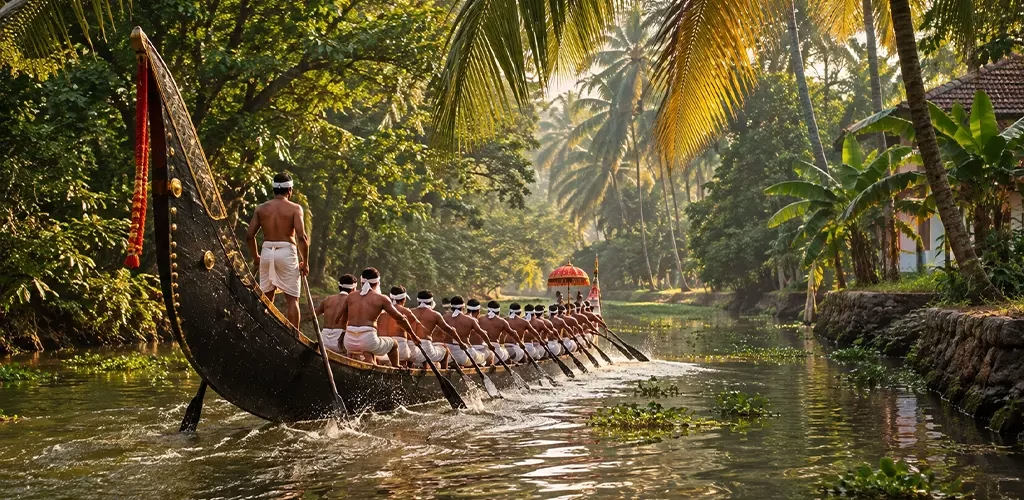
The wars eventually ended, but the boats stuck around.
Villages kept building and maintaining them, and slowly the same design that once carried soldiers into battle turned into the star attraction of Onam, the festival that gave the snake boat race its second life.
What Goes Into Building a Snake Boat
A snake boat, locally known as Chundan Vallam is carved almost entirely from Anjili wood, a type of wild jackfruit timber, using construction methods said to come from the Sthapatya Veda, an old Indian text on wooden boat-building. Some of Kerala’s boat-making families have been at this for generations, and the process itself hasn’t changed much over the centuries.
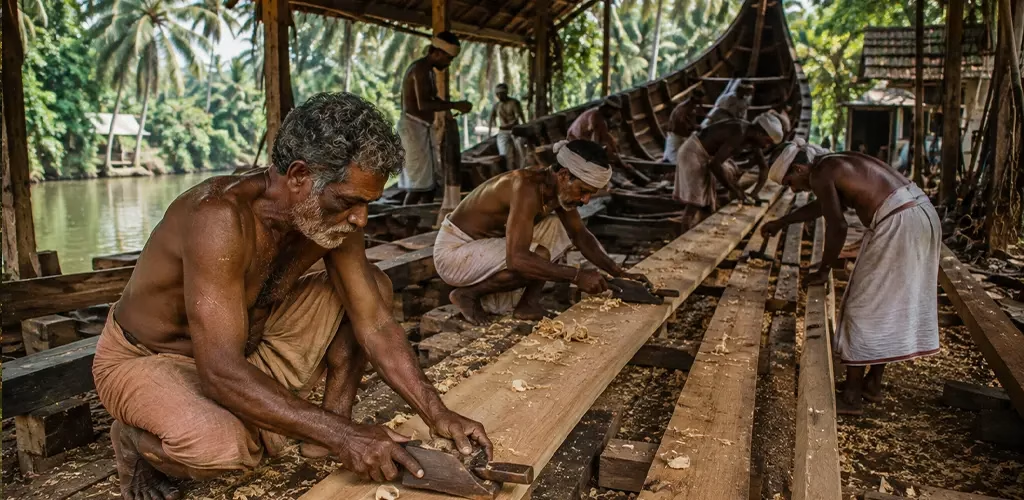
Finished boats run anywhere from 100 to 138 feet, with the stern curving up to nearly 20 feet in height. That raised back and the long, tapering front give it a shape that looks unmistakably like a cobra with its hood up, which is where the name comes from. It’s also why the hull can hold over a hundred rowers without dragging through the water.
Before the Snake Boat Race, There's a Ritual
For the villages that own them, a snake boat is rarely treated as just a boat. Many are considered sacred, tied closely to the local temple, and in some places they’re even called Palliyodams, the temple deity’s own ceremonial vessel.
Before the boat ever touches water, a priest blesses it, along with everyone rowing it. Depending on the region, that blessing goes to Vishnu or Krishna, and flowers meant for the deity end up tucked near the boat’s helm, a small nod for good luck. In Aranmula, people don’t even really call it a race. It’s more of an offering, one that just happens to take place on water instead of inside a temple.
Blessings aside, none of it matters once the race starts, because that’s when the real test begins: getting a hundred people to move like one.
Getting a Hundred Oars to Move Together
A single boat can carry around 150 people: four helmsmen, about 25 singers, and well over a hundred rowers. The singers keep everyone on beat with Vanchipattu, traditional boat songs, and the oars follow that rhythm almost exactly.
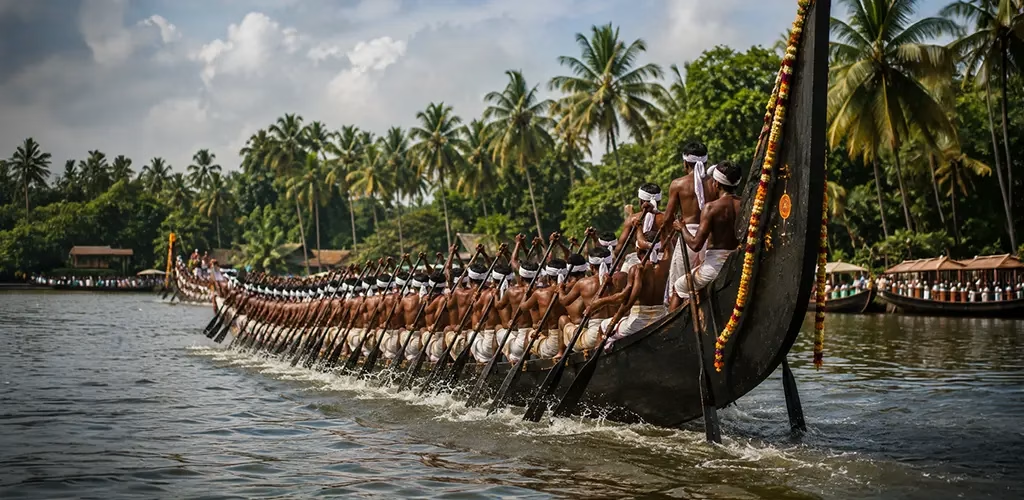
Getting that many rowers to move in sync isn’t easy. Even a small lag from a few oars can slow the whole boat down, so crews spend weeks practising before race day, training not as individuals but as one long, moving unit.
It’s this coordination, more than the boat itself, that eventually caught the attention of someone far outside Kerala.
Why the Snake Boat Race Still Draws a Crowd
In 1952, Jawaharlal Nehru watched one of these races. He liked it so much that he donated a trophy for it, and that same trophy is still raced for today at Punnamada Lake.
That single visit turned a local tradition into something the rest of the country started paying attention to. Every Onam, races like the Nehru Trophy and the Aranmula Uthrattathi still manage to gather crowds from all over the world.
What began as a way to win wars has become something else entirely; a boat that once carried soldiers now carries an entire village’s pride.