Butter Holi Festival: Holi That Nobody Plays With Colour
Imagine a version of Holi where no one throws a single fistful of gulal, and the only colour on anyone’s face is the pale white of butter and buttermilk.
That is exactly what happens in the Butter Holi Festival.
While most of India welcomes spring with clouds of colour in March, this particular Holi arrives months later, high up in the Himalayas, and follows rules of its own entirely.
Where Butter Holi Actually Happens
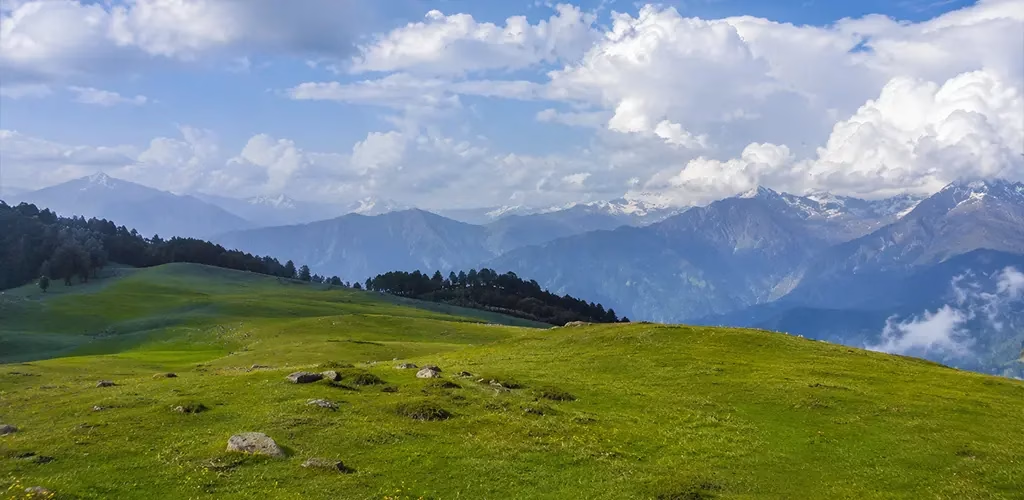
Butter Holi is celebrated at Dayara Bugyal, a vast alpine meadow in Uttarkashi district, Uttarakhand, at around 12,000 feet above sea level. The nearest village, Raithal, serves as the starting point for the festival, and reaching the meadow itself usually means an overnight trek through pine forests before the grasslands finally open up.
Locally, Butter Holi goes by other names too, Andhuri Utsav or Anduri Utsav, and sometimes simply Makhan Holi. But whichever name is used, the festival always falls on Bhadon Sankranti, typically between 16 and 18 August, marking the start of the Hindu month of Bhado.
Why Butter Holi Exists in the First Place
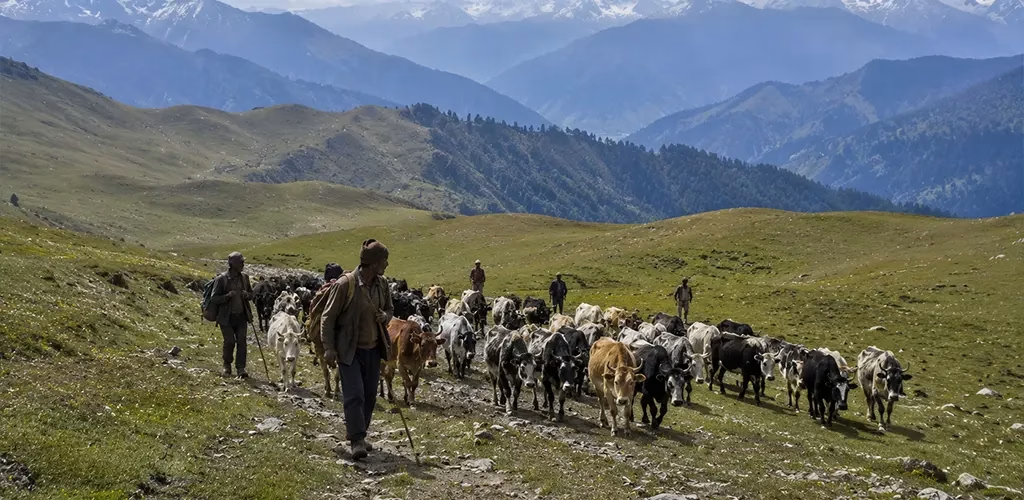
Every summer, when the snow finally melts off the higher slopes, Raithal’s villagers send their cattle, sheep, and goats up to graze on the meadows of Dayara. For weeks, the animals live off the fresh Himalayan grass, watched over by a handful of shepherds.
Butter Holi marks the moment those animals, healthy and well-fed, are finally brought back down. It is, at its heart, a homecoming festival, and a thank-you note to nature for keeping the herds safe through the grazing season.
That gratitude is directed specifically at Bugyal Mata, the local Goddess of the Meadow, believed to watch over the grasslands and the livestock that depend on them. Villages nearby also pray to Someshwar, a local form of Lord Shiva, for the community’s continued wellbeing.
How Butter Holi Is Actually Played
Weeks before the festival, homes and cattle sheds in Raithal are decorated with flowers, and invitations are sent to relatives and friends scattered across nearby villages.
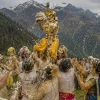
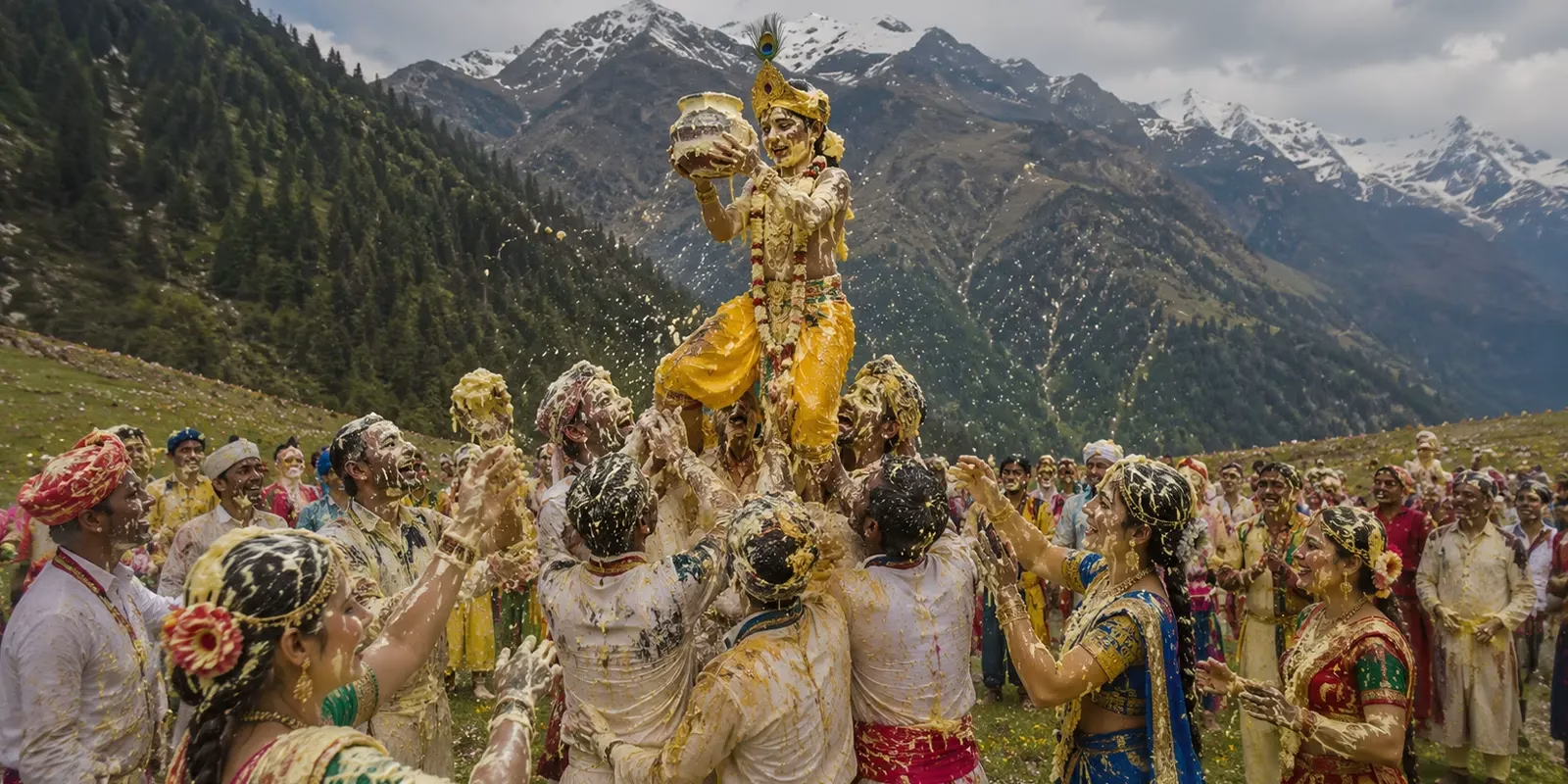
On the day itself, close to 500 villagers climb up to the Dayara meadows together, carrying fresh butter, milk, and buttermilk instead of coloured powder. Once at the top, Butter Holi begins in earnest. People smear butter on each other’s faces, splash buttermilk through the air, and dance to the beat of the Dhol-Damau, the traditional Pahadi drums that carry across the open meadow.
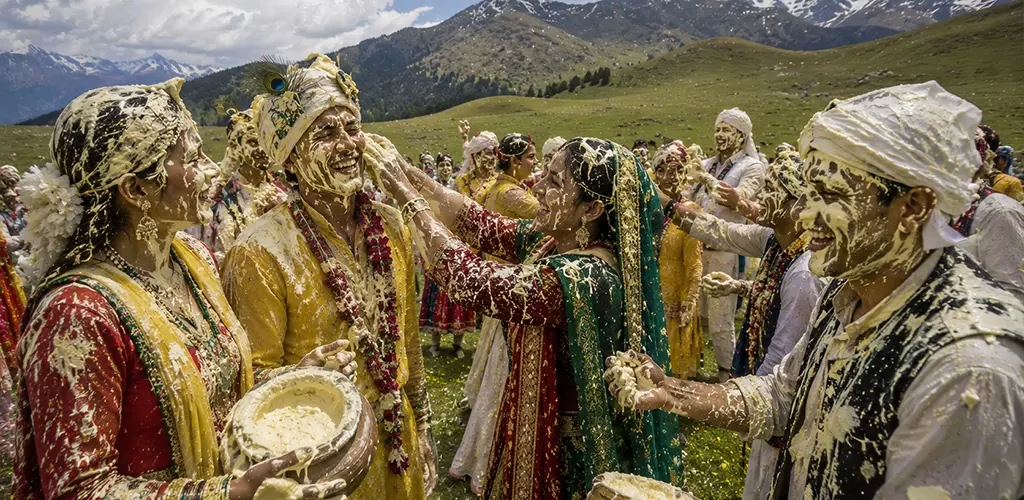
Folk dances fill out the rest of the celebration, among them Jhora, Chholiya, Thali Nritya, and the widely anticipated Pandava Nritya, performed by dancers from across the region. In recent years, a Dahi Handi-style pot-breaking contest has also found its way into the festivities, borrowing from Janmashtami traditions and adding one more layer of playfulness to an already unusual day.
A Festival the Rest of India Rarely Hears About
For a long time, Butter Holi remained known mainly to the shepherd communities of Uttarkashi, largely untouched by outside attention. It was only as trekking routes to Dayara Bugyal gained popularity that travellers began stumbling upon a Holi unlike any other, one played entirely in white.
Today, Butter Holi draws a small but growing number of visitors willing to trek uphill for it, though it remains, at its core, exactly what it always was, a community’s way of saying thank you to the land that feeds its herds.
Perhaps that is what makes Butter Holi worth knowing about. It isn’t a festival built for spectacle. It is a quiet Himalayan ritual, one where butter replaces colour, and gratitude replaces celebration for its own sake.