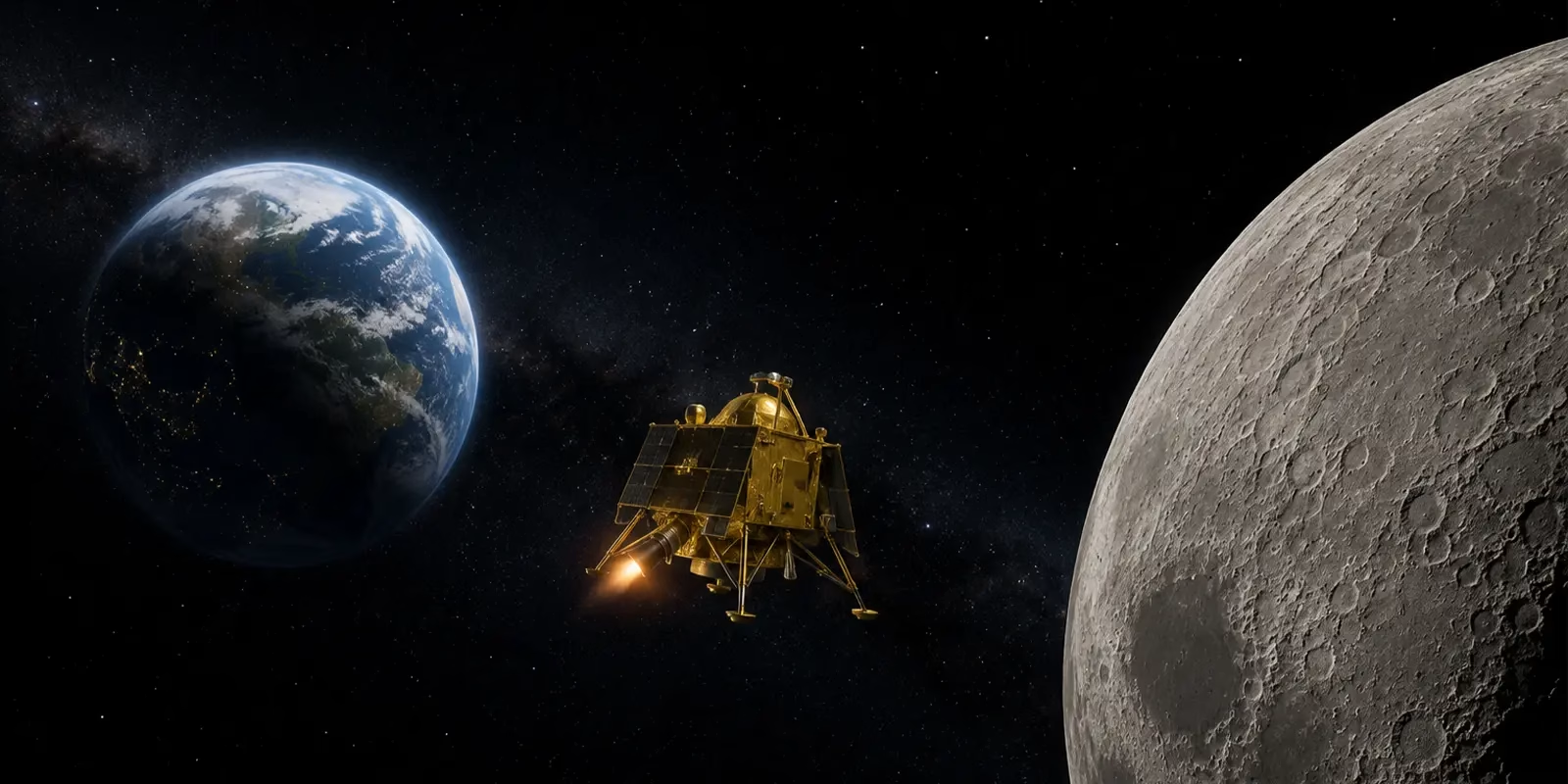
National Space Day: The Chandrayaan-3 Landing India Celebrates Every Year
Imagine a nation holding its breath for twenty minutes, watching a screen from thousands of kilometres away, waiting to find out if history was about to repeat itself, or finally break in its favour.
Four years earlier the mission, a similar wait had ended in silence. This time, it didn’t.
Every year on 23 August, India marks National Space Day, a tribute to the evening a spacecraft touched down where no country had ever landed before. It celebrates the mission that carried the weight of one earlier heartbreak, it has already earned its place on the calendar.
A Second Attempt at the Same Dream
Chandrayaan-3 was not India’s first attempt at a Moon landing. In September 2019, Chandrayaan-2’s lander, Vikram, lost contact with ground control just 2.1 km above the lunar surface, crashing in the final moments of its descent.
It was a loss felt across the country, but not one that ended the mission.
ISRO rebuilt the mission from that failure. Chandrayaan-3 launched on 14 July 2023 aboard the LVM3 rocket from Sriharikota, carrying a redesigned lander and rover meant to succeed where the earlier attempt had fallen just short.
The Twenty Minutes That Changed Everything
By the evening of 23 August 2023, Chandrayaan-3’s lander, again named Vikram, began its final descent toward the Moon’s south pole, a region far harder to reach than the equatorial zones earlier missions from other countries had targeted.
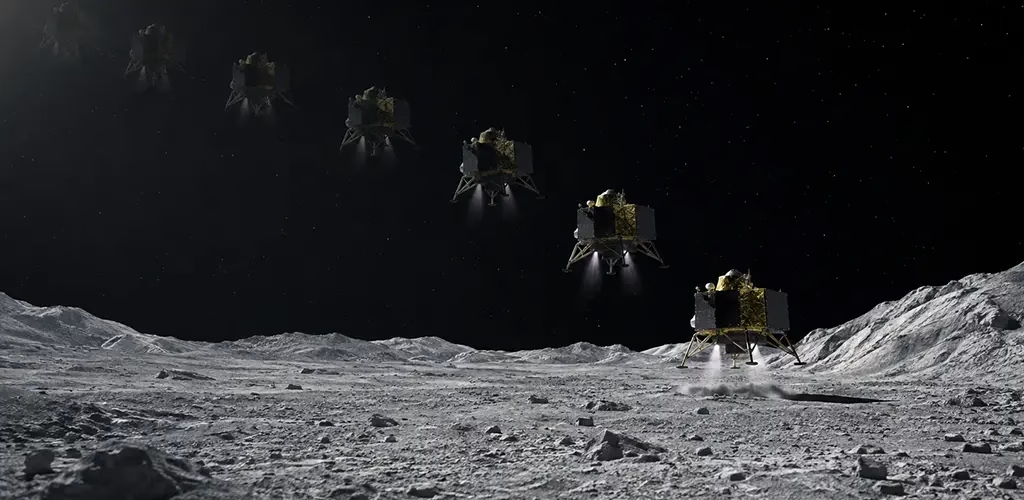
The final phase, often called the “twenty minutes of terror,” carried the memory of 2019 with it. This time, the lander held its course. At 6:04 pm IST, Vikram touched down safely, making India the fourth country to achieve a soft lunar landing, and the first to do so anywhere near the Moon’s south pole.
Minutes later, the rover Pragyan rolled onto the lunar surface, ready to begin studying the soil and terrain of a region scientists believe may hold traces of water ice.
A Name for the Place It Landed
ISRO felt, a landing this significant deserved a name of its own.
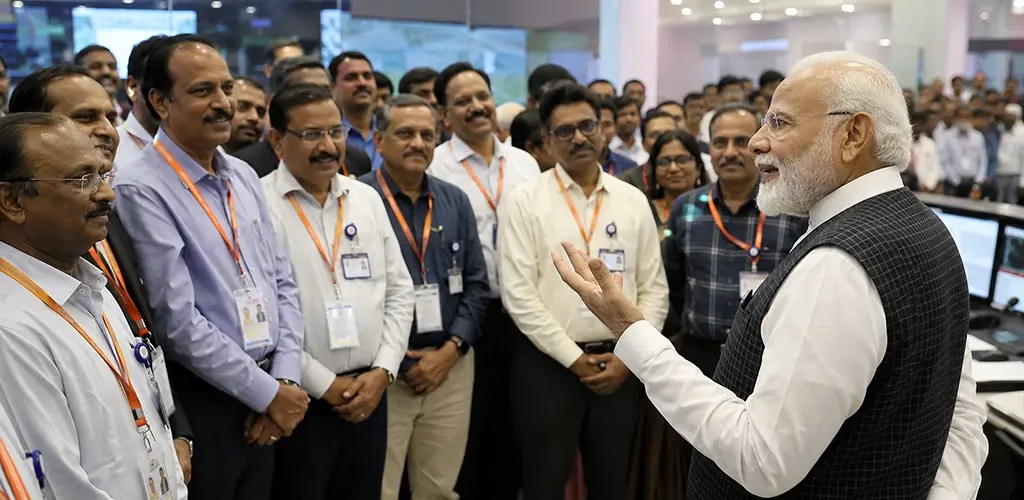
Three days later, Prime Minister Narendra Modi travelled to ISRO’s Bengaluru facility and announced that Vikram’s landing spot would be called Shiv Shakti Point. In the same address, he named the site of Chandrayaan-2’s 2019 crash Tiranga Point, a reminder, he said, that failure need not be the end of a story.
That very same day, he also declared 23 August would be observed every year as National Space Day.
Why India Still Marks This Day
The first National Space Day was celebrated in 2024, a year after the landing, under the theme “Touching Lives while Touching the Moon.” Since then, the day has grown into a season of exhibitions, competitions, and events meant to draw students toward space science.
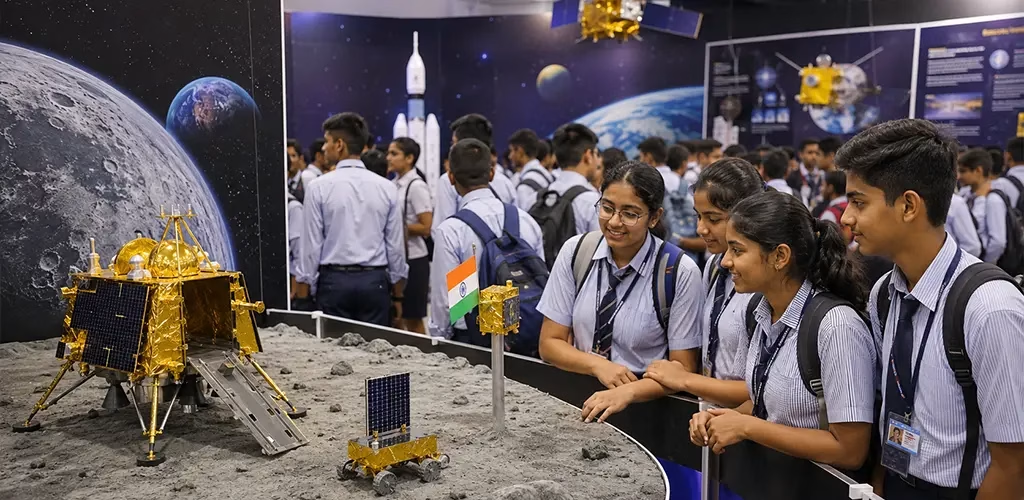
Chandrayaan-3’s success didn’t erase Chandrayaan-2’s failure. If anything, the two now sit side by side on the Moon, one marked Tiranga, the other Shiv Shakti, a reminder that a single landing rarely tells the whole story.
Perhaps that is what National Space Day is really about. Not just twenty minutes of a perfect descent, but the years, and the one earlier attempt, that made those twenty minutes.