Dom Community: People Who Light the Fire No One Else Will Touch
Imagine a community that lights someone else’s final farewell almost every single day of its life, yet is rarely allowed close to anything else.
That is the reality of the Dom community in Varanasi.
Hindu belief holds that a soul cannot find moksha unless a Dom’s hands light its funeral pyre. And yet, for centuries, this same community has been pushed to the very edge of the society it serves.
Why the Dom Community Carries This Duty
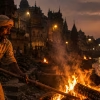
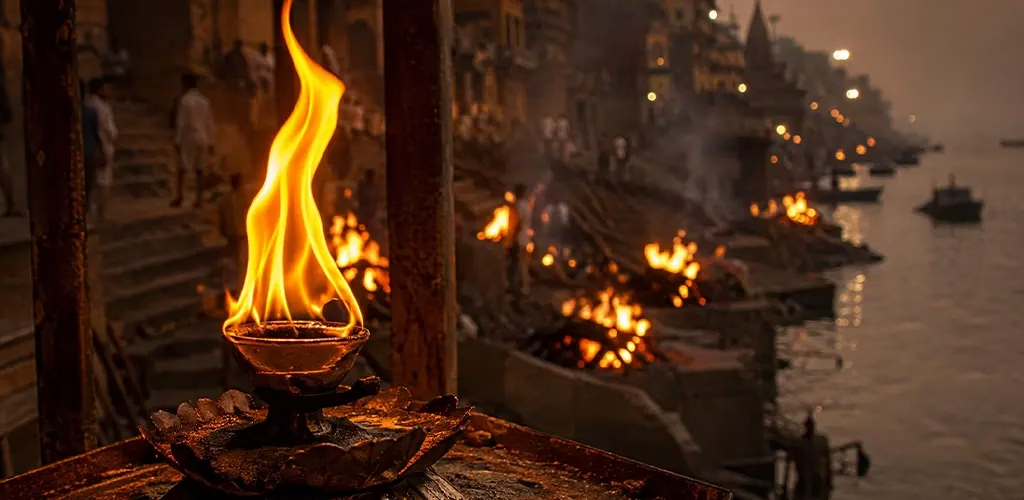
At Manikarnika Ghat, Varanasi’s oldest cremation ground, the Dom community lights every pyre using fire drawn from the Akhand Jyot, a flame believed to have burned continuously for centuries. Without a Dom’s involvement, tradition holds, the final rites remain incomplete.
Local legend traces this duty back to Lord Shiva himself. When a Brahmin dishonestly kept an earring belonging to Goddess Parvati after retrieving it from the Ganga, Shiva is said to have cursed his lineage to work at the cremation grounds forever. That lineage, the story goes, became the Dom community, a group that eventually built its own social order, complete with a hierarchy and even its own kings.
A Duty Called Sacred, A Community Called Untouchable
Despite performing a role considered essential to salvation, the Dom community has long been classified as ritually impure, simply for its association with death. Over generations, that belief hardened into social exclusion, pushing the community toward the margins even as its labour remained indispensable.
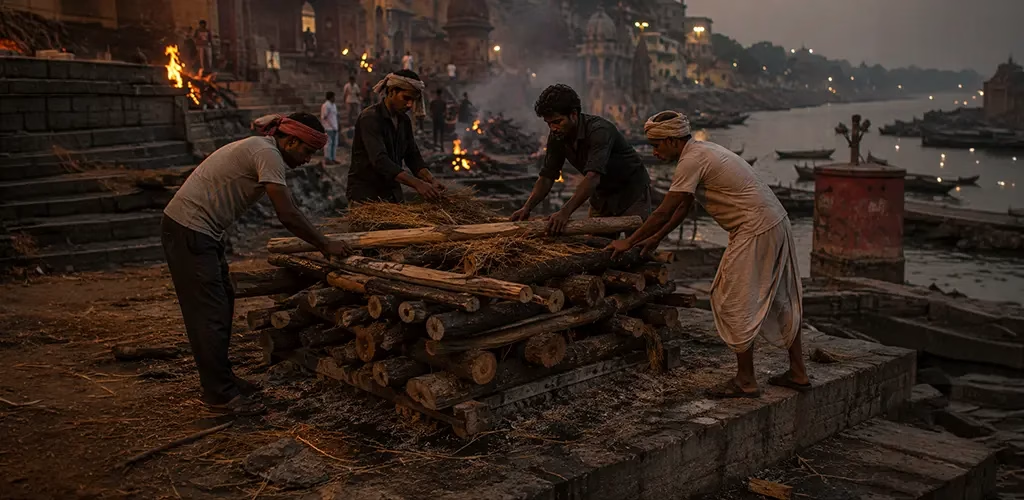
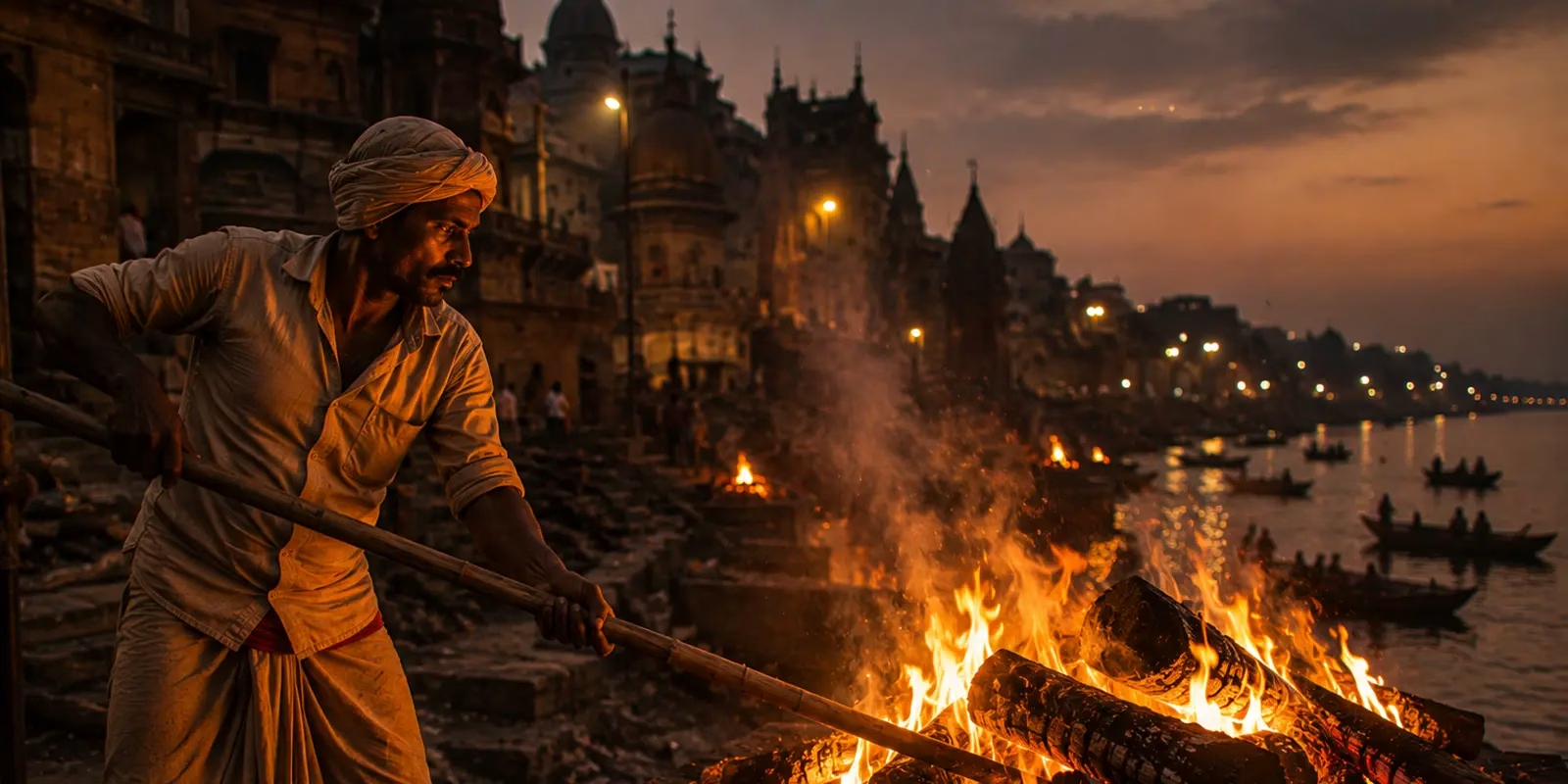
The physical toll is immense. Workers often stand near open flames for twelve to twenty hours at a stretch, without protective gear, breathing smoke through Varanasi’s heat and humidity. A single pyre earns a Dom worker roughly 250 to 400 rupees, and only on the days work actually comes their way.
The Paari System and Its Uneven Shares
Because dozens of Dom families share the responsibility, work is distributed through a rotation system known as Paari. In theory, it ensures every family gets a turn. In practice, workers describe it as deeply unequal, with influential families securing months of work a year while others wait two or three years for just a handful of days.
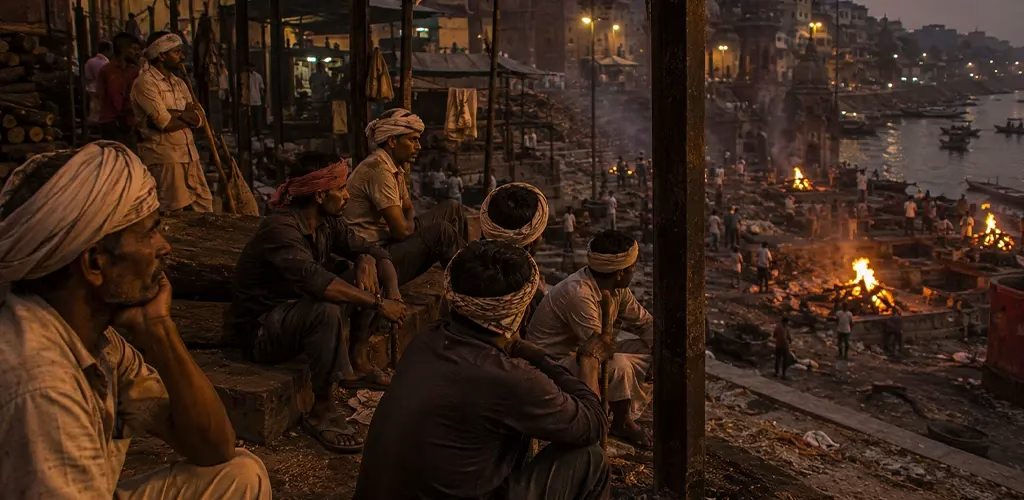
On days without a turn, some families search the Ganga’s ashes for discarded jewellery to sell. Others collect leftover wood or cloth. It is survival built around the unpredictability of someone else’s grief.
Can the Next Generation Break the Cycle
Legally, the Dom community falls under India’s Scheduled Caste list, which grants access to reservation in education and government jobs. But reservation alone rarely closes the gap. Competitive exams demand coaching, books, and stability that most Dom families simply cannot afford.
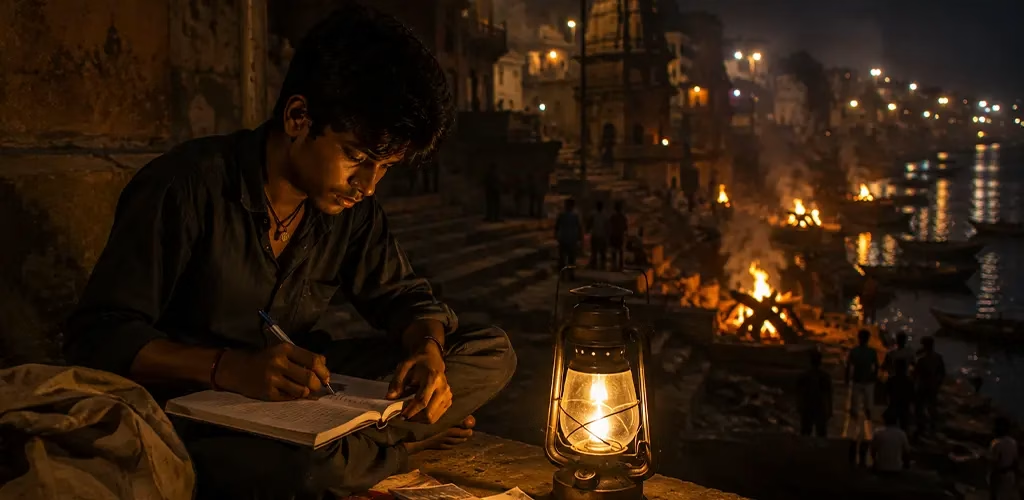
Even qualified individuals describe being turned away once their caste becomes known. One community elder put it plainly: education hasn’t changed how they’re seen. Parents keep hoping the next generation will find a way out, even when the path itself remains barely visible.
The Manikarnika Instagram Never Shows
Today, Manikarnika Ghat draws visitors chasing atmospheric photographs and captions about life’s raw truths. Rarely does that frame include the people actually doing the work, the ones whose entire lives are shaped by a fire that never stops burning.
One day, every Dom worker will also need a pyre lit, and it will be another Dom who lights it. People called untouchable their whole lives are, in the end, the only ones who grant each other that same dignity. Perhaps that is the real story here.