Lord Hayagriva: The Horse-Headed Avatar of Lord Vishnu
You must have known the Gods who were half-lion or with an elephant’s head but you might not have heard of the God with the head of a horse.
This is the story of Lord Vishnu himself.
While everyone knows about Lord Krishna and Lord Rama as Vishnu’s incarnations, Lord Hayagriva rarely gets mentioned at all.
Where Lord Krishna’s story is about love, and Lord Rama’s is about duty, Lord Hayagriva’s is about something quieter: knowledge, and what it takes to protect it. And this protection has a story of its own, one that begins with a theft nobody saw coming.
From a Theft to Lord Hayagriva's Arrival
According to Hindu mythology, Lord Brahma once sat down to create the Vedas, the sacred texts believed to hold the blueprint of the universe. But two demons, Madhu and Kaitabha, were watching closely.
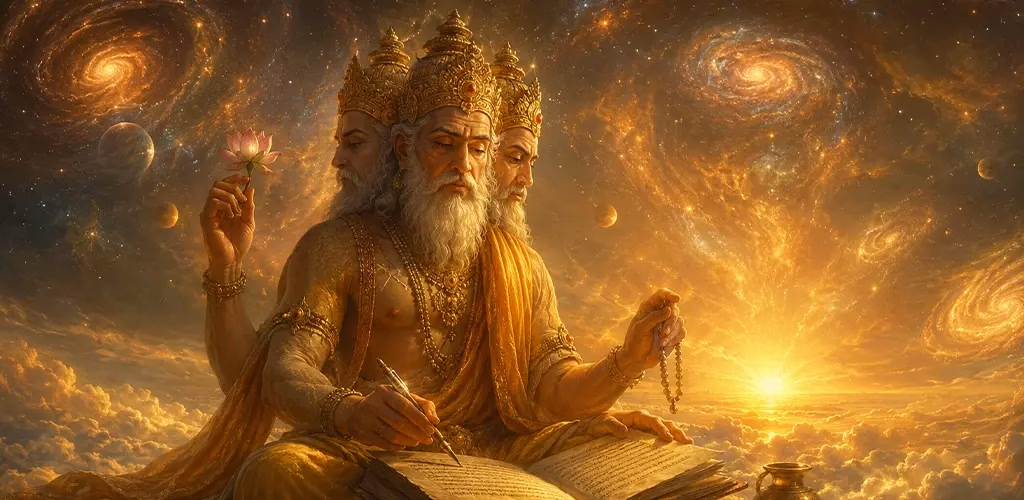
Rather than destroying the Vedas, the demons stole them and disappeared into the depths of the cosmic ocean, dragging all that knowledge down with them. Without the Vedas, creation itself came to a halt.
Lord Brahma was helpless, and the entire universe was losing its balance.
That is when Lord Vishnu stepped in, but not in a form anyone expected.
Why Lord Hayagriva Had to Be Half Horse
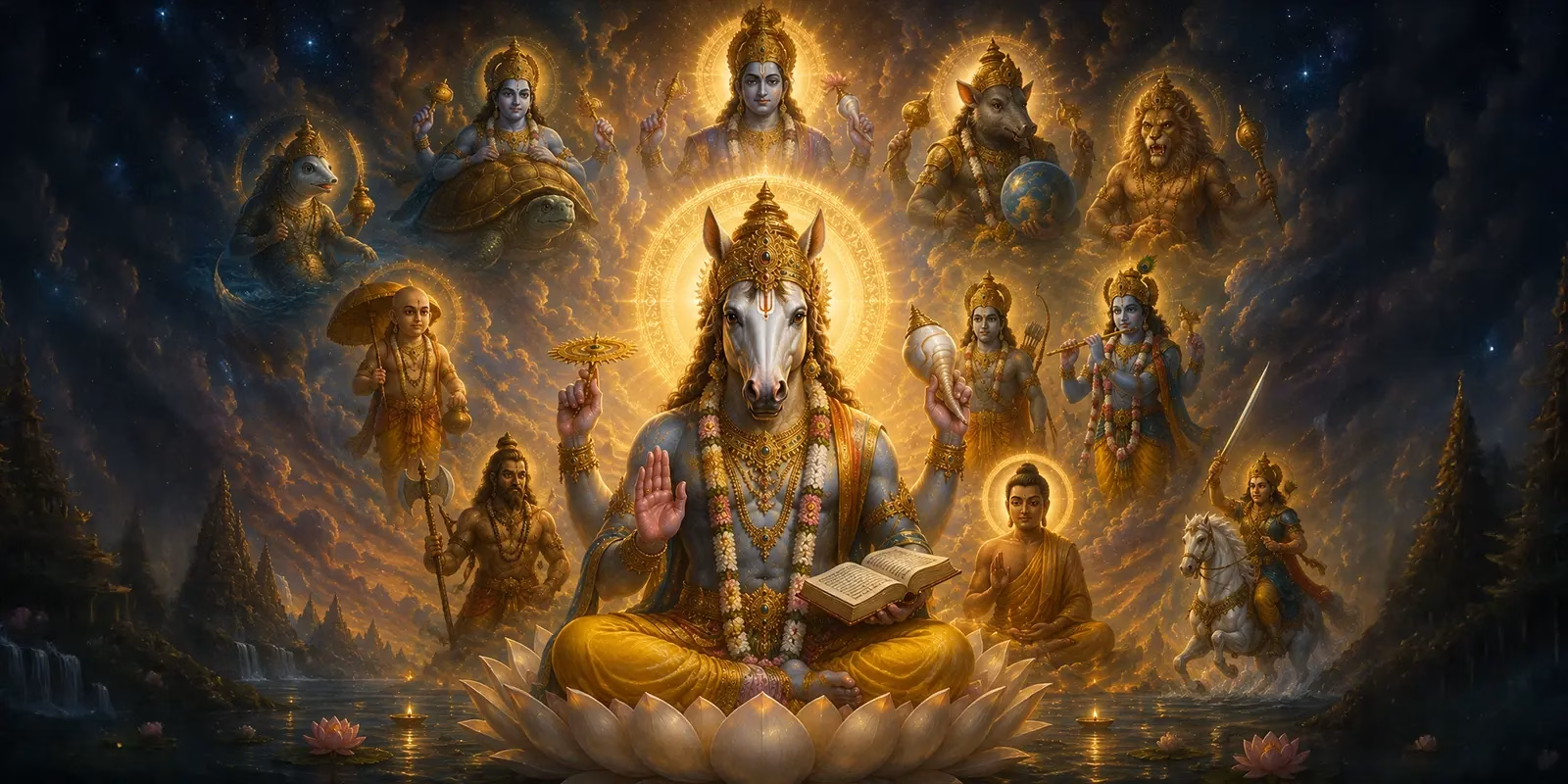
To retrieve the Vedas, Lord Vishnu took the form of a human body with the head of a horse. This was Lord Hayagriva, a name that simply means “horse-necked one.”
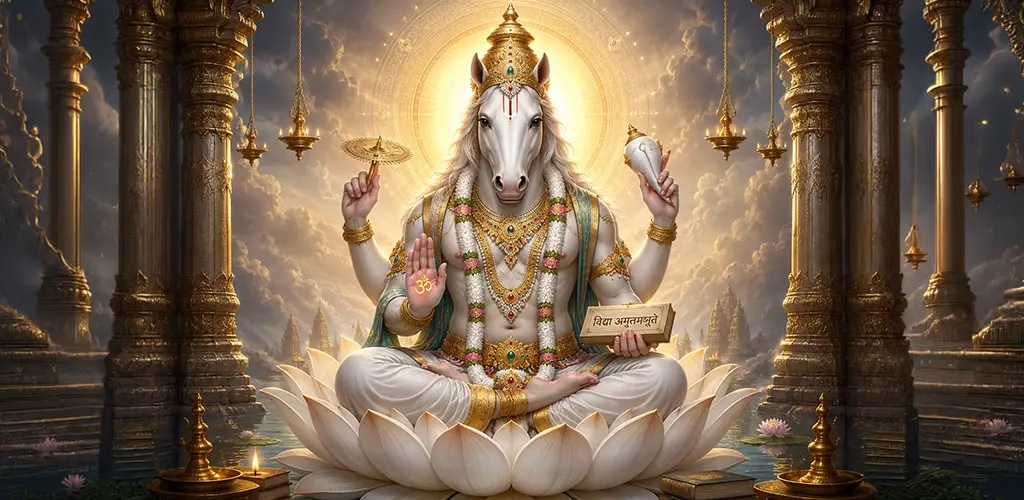
But the choice of form had a reason.
In Hindu belief, a horse represents speed, sharp instinct, and power, exactly what was needed to chase something as slippery as stolen wisdom through the depths of an ocean. Lord Hayagriva dove in, defeated Madhu and Kaitabha, and carried the Vedas back to Lord Brahma.
But if Lord Hayagriva’s story ends with the Vedas restored, why does a day dedicated to him still matter today?
A Day That Belongs to Students
Hayagriva Jayanti falls on the full moon of the Shravana month, usually in August. Unlike the louder festivals on the calendar, the day is marked quietly, with prayers and a focus on learning rather than celebration.
For many students, it is a day to seek clarity and wisdom. Some recite the Hayagriva Stotram, a hymn asking Lord Hayagriva for wisdom rather than wealth.
But the story of Hayagriva Jayanti does not end with prayers. There is also a tradition that finds its way straight into the kitchen.
The Sweet That Still Carries Lord Hayagriva's Story
In Udupi, a dessert called Hayagreeva Maddi is made from chana dal, jaggery, coconut, and a generous spoon of ghee.
It sounds like any other prasadam until you hear why it exists.
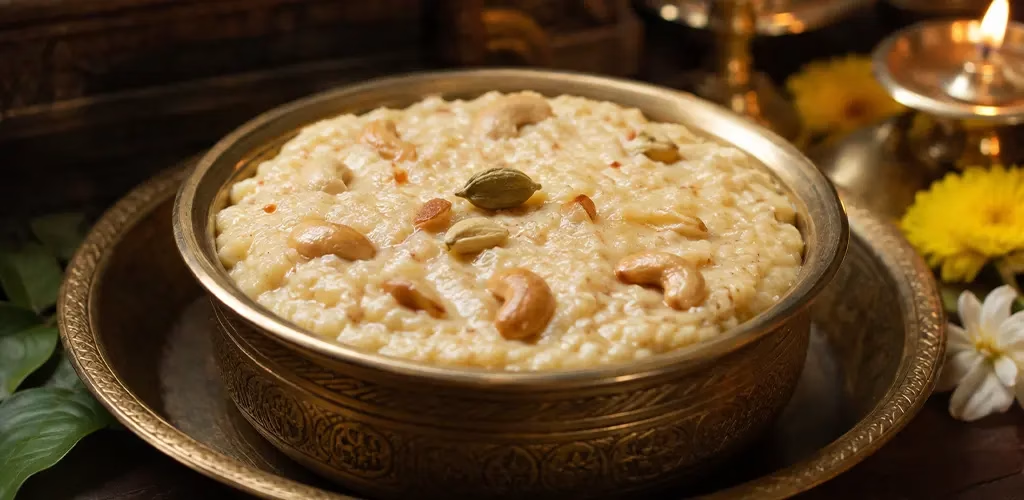
Centuries ago, a devotee named Vadirajatirtha is said to have offered cooked chana dal to Lord Hayagriva every single day, chanting a hymn while doing so. According to folklore, it is believed that Lord Hayagriva would appear as a white horse and eat what was offered. That daily ritual eventually became a dish still cooked in Udupi homes and temples, carrying Lord Hayagriva’s name into kitchens far from any temple.
When Knowledge Becomes a Legacy
For centuries, Hayagriva Jayanti has been about students, scholars, and anyone seeking wisdom over wealth.
From quiet hymns to the simple offering of Hayagreeva Maddi, Lord Hayagriva’s story has stayed alive through small, everyday traditions rather than grand celebrations.
Perhaps this is what makes his story worth remembering even today.
Knowledge was never valuable just because it existed. It became valuable the moment someone cared enough to learn it, protect it, and make sure it never disappeared again.