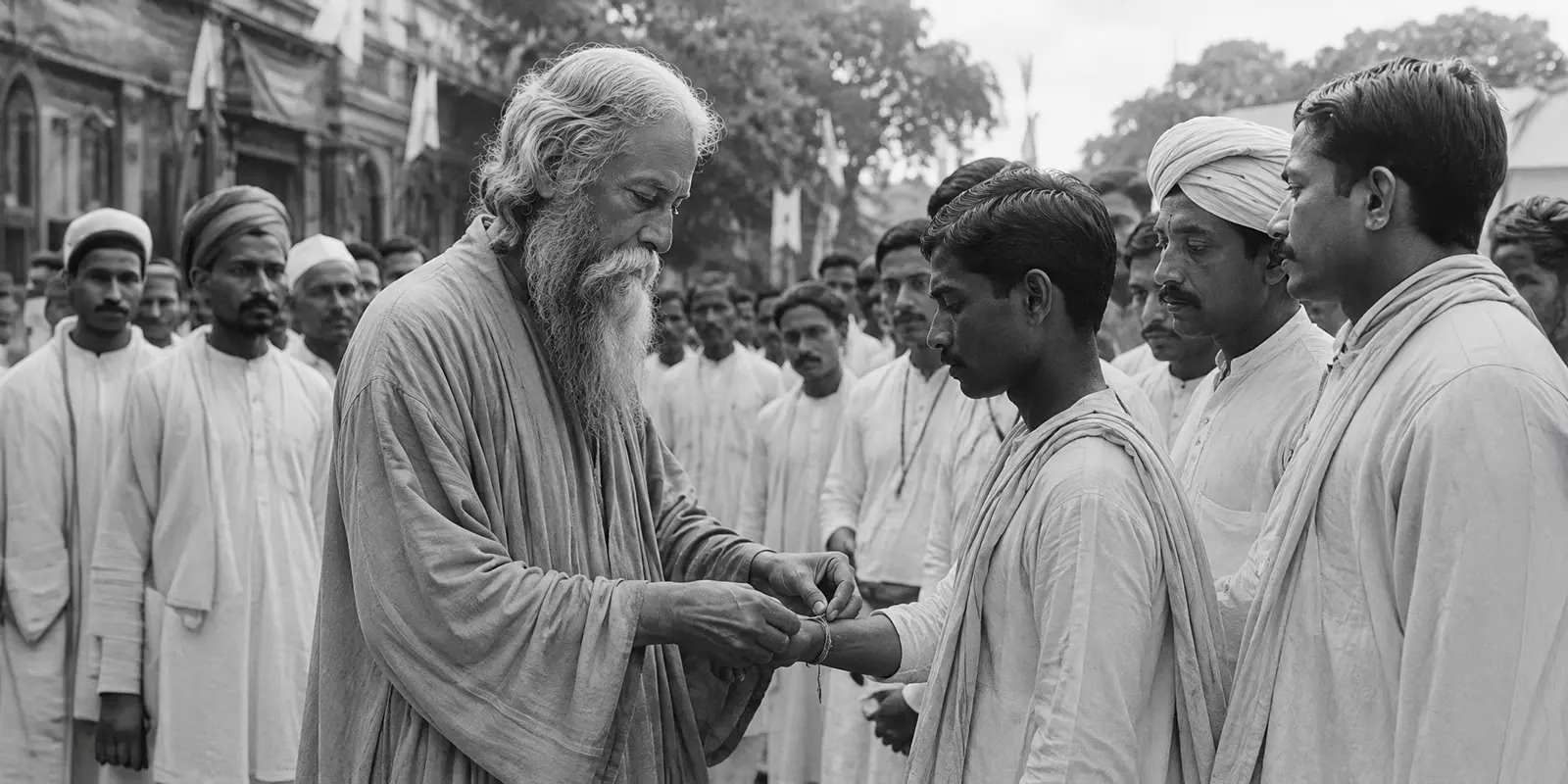
When Raksha Bandhan Became an Act of Protest
Tying a thread on her brother’s wrist, a sister seals the promise of protection on Raksha Bandhan.
But imagine that same thread of rakhi turning into a weapon of resistance against an empire. It might sound unreal, but this is exactly what happened in 1905, when Rabindranath Tagore turned a family festival into an act of protest.
A Partition Disguised as Administration
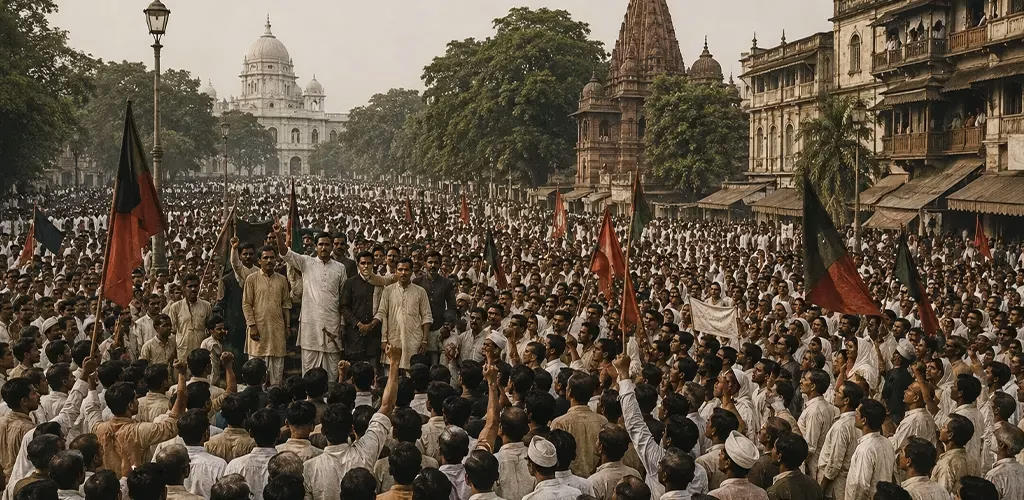
In 1905, Lord Curzon, then Viceroy of India, announced the Partition of Bengal.
It was portrayed as a practical decision, claiming that Bengal had become too large to govern effectively. But behind all that explanation was a clear political motive: dividing Hindu-majority western Bengal from Muslim-majority eastern Bengal in order to weaken a province that had become a major centre of India’s growing freedom movement.
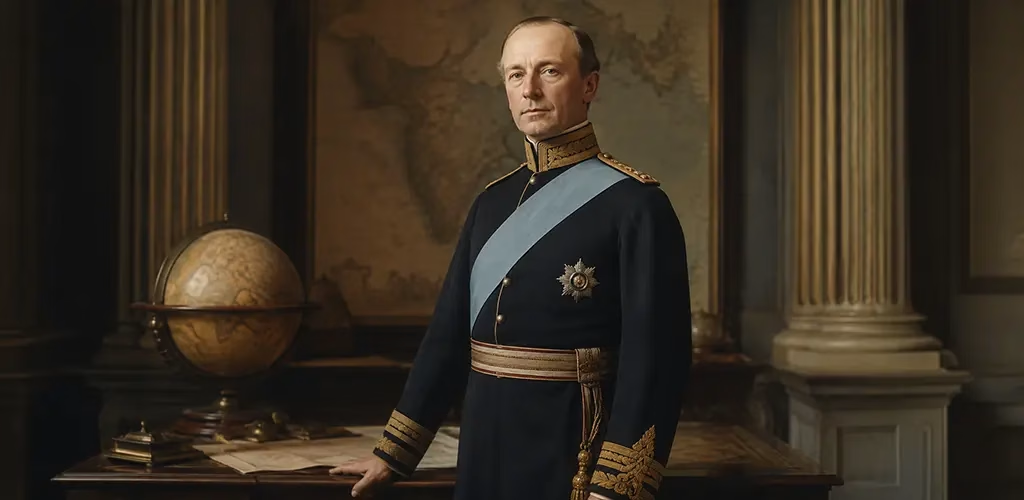
The announcement of partition resulted in protests across Bengal. The Swadeshi movement gained pace, and people publicly burned foreign goods as a form of resistance. Meetings were held in every district, and newspapers of the time carried appeals asking Bengalis not to accept the divide quietly.
Amid all this noise, Rabindranath Tagore chose a quieter symbol to unite the people of Bengal: a thread.
Why Tagore Turned to Raksha Bandhan
The partition officially came into effect on 16 October 1905, a date that fell within the very month of Raksha Bandhan.
Tagore believed that if one simple thread could bring a brother and sister together, it could also bring together two communities the British were trying to pull apart.
He declared 16th October a day of mourning and turned the day into something far more personal.
The Morning Tagore Walked Through Bengal Tying Rakhis
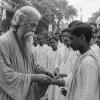
On the morning of the partition, Tagore went on a stroll tying rakhis on the wrists of everyone he met, including complete strangers.
This was not what people were used to seeing on Raksha Bandhan.
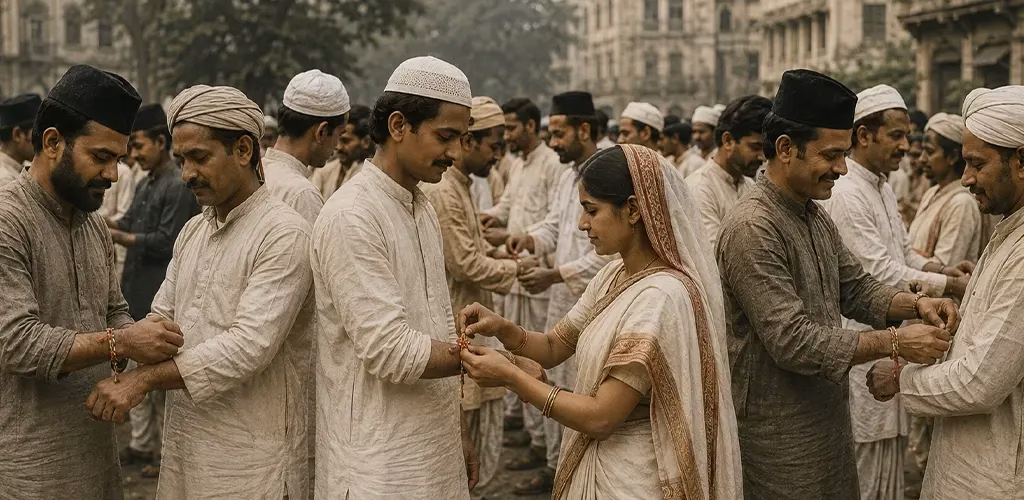
Men tied rakhis to other men. Hindus tied rakhis to Muslims, and Muslims tied them back in return.
Tagore is said to have carried so many rakhis that day that he even tried to step inside a mosque to tie them on the wrists of the maulvis inside, unwilling to leave any community out of the gesture.
Within hours, hundreds of Hindus and Muslims gathered on streets and in community halls, tying rakhis to one another as a shared refusal to be divided.
A Festival That Outgrew Its Own Meaning
The writer A Majumdar, in his book Tagore by Fireside, described what happened that day as Tagore transforming Raksha Bandhan into a secular symbol of unity, a deliberate act of resistance against the partition of Bengal.
For a day, Raksha Bandhan stopped being only about siblings and rather became a promise the whole city made to itself that no line drawn by a government could decide who its people were allowed to call family.
However, Tagore did not succeed in stopping the partition from this movement, and Bengal remained divided for years. But it showed the British that Indians could still choose to stand together even when a policy was built to pull them apart.
The Same Divide, A Different Time
In 1905, a single thread convinced two communities to stand together against a line drawn to keep them apart. More than a century later, religion still gets used the same way to decide who belongs where, and who doesn’t; only now the lines are drawn quietly instead of by an empire’s order.
Tagore’s idea of rakhi didn’t erase those divisions, and it was never meant to last forever. But for one day, it proved that these divisions can slide, and maybe that’s still worth remembering.